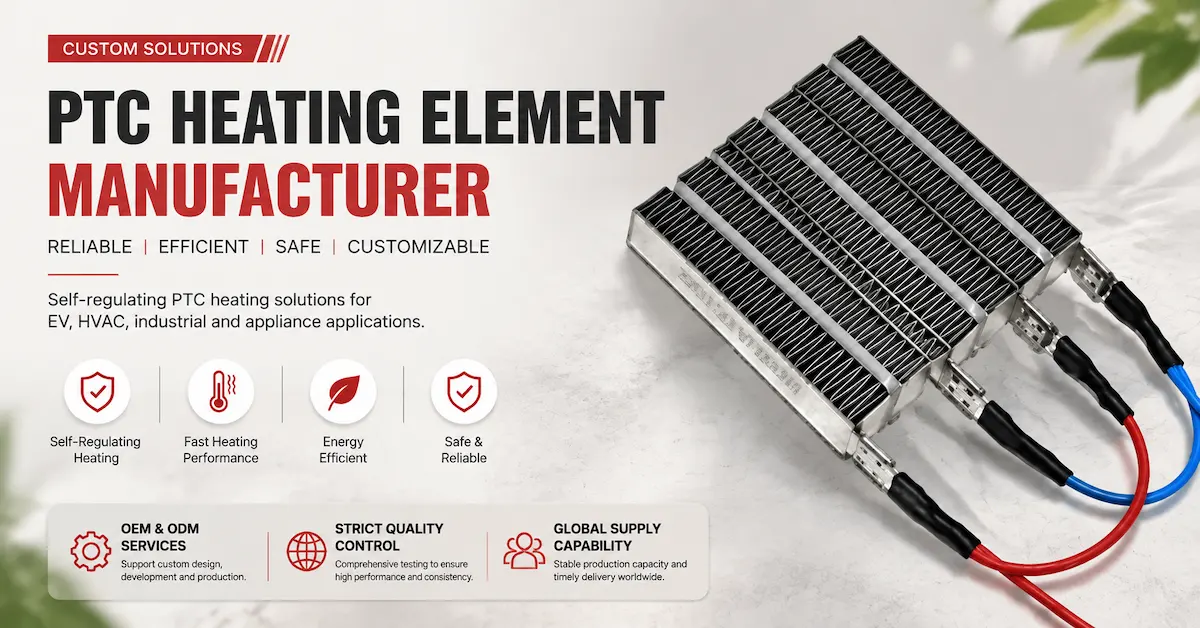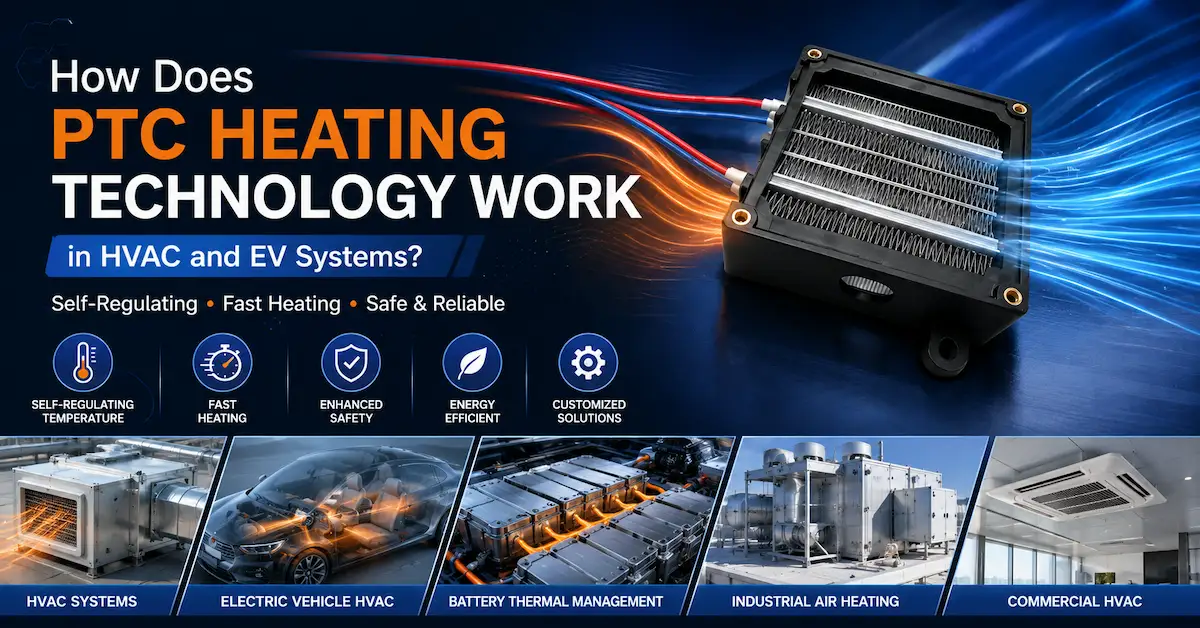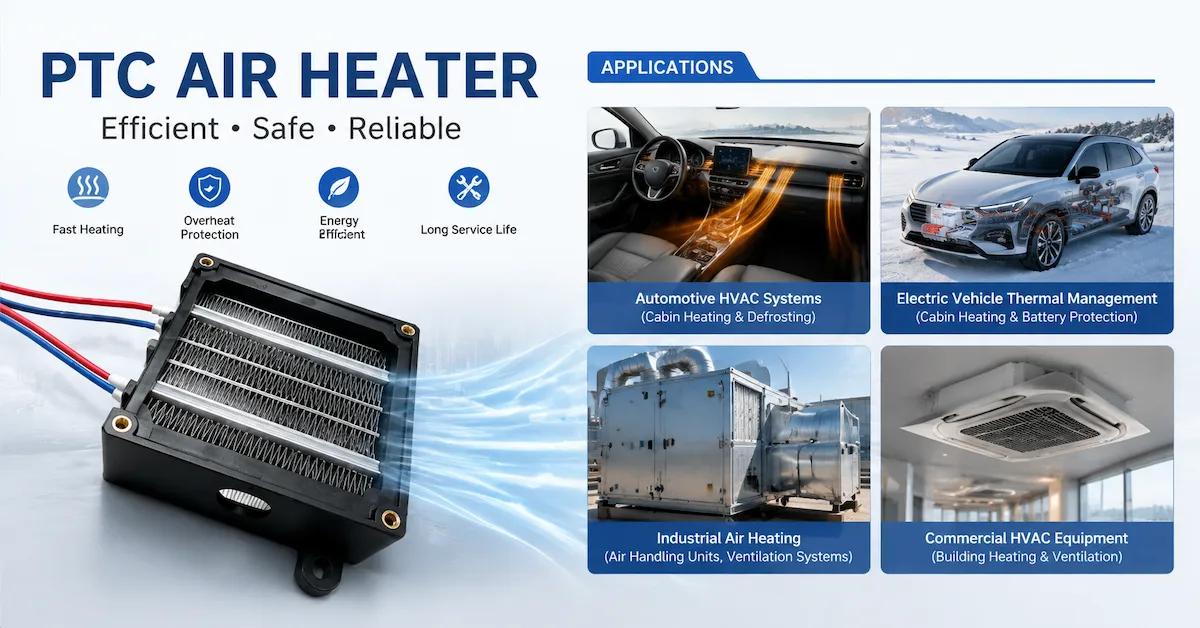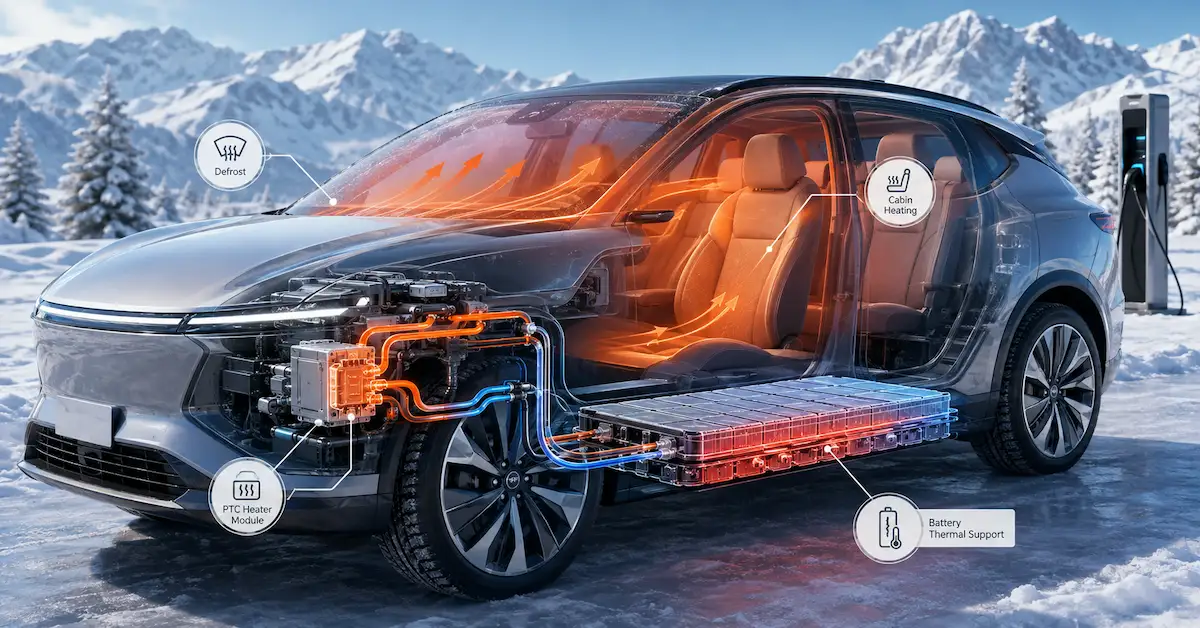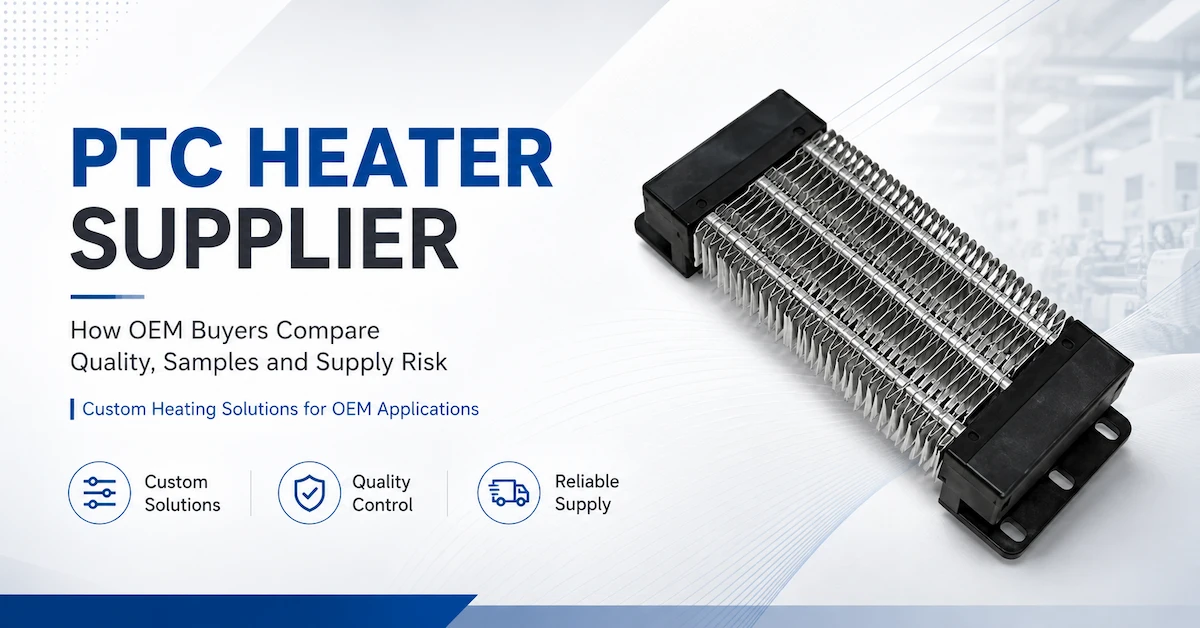
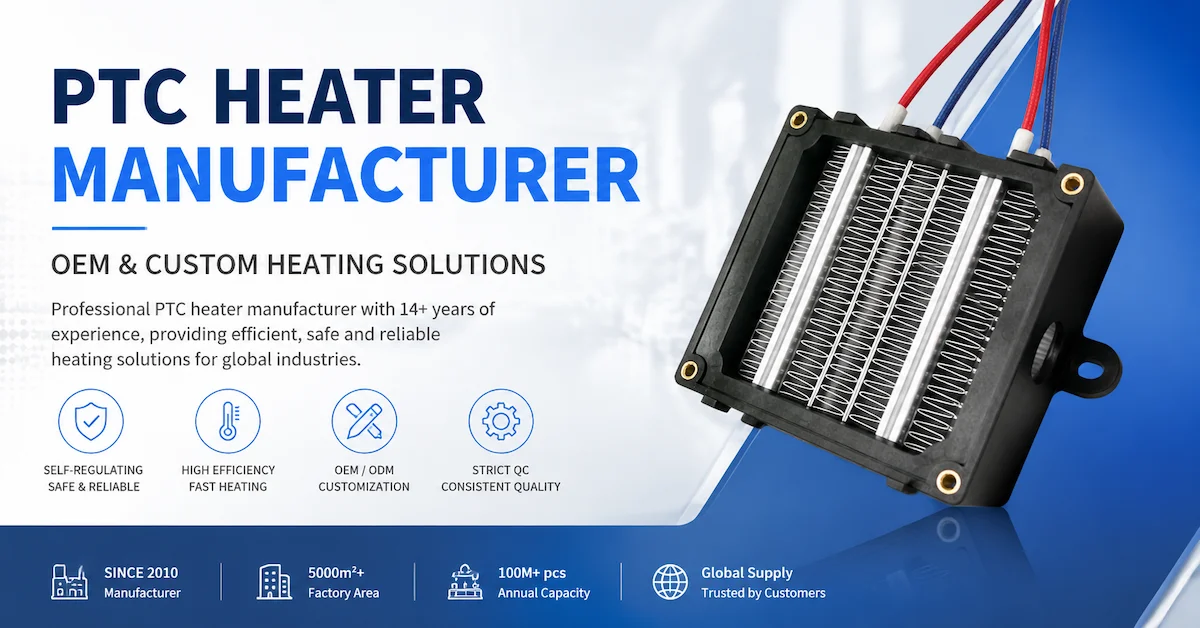
Choosing the right PTC Heater Manufacturer requires more than comparing voltage, wattage and unit price. For an OEM project, buyers should evaluate the manufacturer's PTC ceramic expertise, application engineering, customization capability, sample validation, quality control, production consistency and ability to support the technical requirements of the finished product.
A suitable supplier should be able to answer a practical engineering question:
Can this heater be designed, tested and repeatedly manufactured to perform correctly inside your actual product?
That distinction matters. A heater that performs well on an open test bench may behave differently inside an enclosure, under forced airflow, against a metal surface, in a humid environment or when heating liquid.
For purchasing managers, R&D engineers and thermal engineers, this guide explains what to verify before selecting a PTC heater supplier, which specifications should be included in an RFQ, how to compare manufacturing capabilities and what should be tested before approving mass production.
What Makes a Reliable PTC Heater Manufacturer?
A reliable PTC heater manufacturer should combine PTC material knowledge, thermal engineering, mechanical design, electrical integration, testing and repeatable production.
Buyers should therefore evaluate more than a factory's product catalog.
A strong supplier should be able to:
- understand the intended heating application;
- recommend an appropriate heater structure;
- evaluate voltage, power and target temperature;
- consider Curie temperature and thermal conditions;
- select suitable insulation and heat-transfer materials;
- customize dimensions, wiring and connectors;
- produce engineering samples;
- define measurable test criteria;
- control critical characteristics during production;
- support repeat orders with consistent specifications.
Related: https://www.ptcntcsensor.com/solution/heater
This is particularly important when developing a custom heater rather than purchasing a standard catalog component.
Who Should Work Directly With a PTC Heater Manufacturer?
Direct manufacturer cooperation is most valuable for companies developing products that require a heater to fit specific electrical, thermal or mechanical conditions.
Typical buyers include:
- HVAC equipment manufacturers;
- electrical cabinet and automation equipment manufacturers;
- EV and automotive thermal-management suppliers;
- household appliance manufacturers;
- hair-care and personal-care equipment manufacturers;
- medical and laboratory equipment developers;
- drying and ventilation equipment manufacturers;
- liquid-heating equipment manufacturers;
- battery and new-energy equipment developers;
- OEM and ODM product-development teams.
A standard heater may be sufficient when the voltage, dimensions, heating performance and installation method already match an existing product.
A custom PTC Heater Manufacturer becomes more important when the project involves non-standard dimensions, temperature, voltage, wattage, airflow, mounting, insulation, wires, connectors, environmental conditions or qualification requirements.
Related products: https://www.ptcntcsensor.com/products/ptc-heater
Start With the Application, Not the Heater Catalog
One of the most common sourcing mistakes is asking:
“Do you have a 24V 200W PTC heater?”
before explaining what the heater must actually do.
Voltage and power are important, but they do not describe the complete thermal system.
A more useful RFQ explains:
- what must be heated;
- starting temperature;
- desired final temperature;
- acceptable warm-up time;
- ambient temperature range;
- available installation space;
- airflow or liquid flow;
- mounting method;
- electrical supply;
- operating cycle;
- environmental conditions.
The manufacturer can then evaluate whether the requested wattage and heater structure are appropriate.
PTC Heater RFQ Checklist
| Requirement | Information to Provide | Why It Matters |
|---|---|---|
| Application | What the heater is used in | Defines the engineering context |
| Voltage | AC/DC and operating range | Determines electrical configuration |
| Heating target | Air, surface, liquid or enclosure | Determines heater architecture |
| Temperature | Starting and target temperature | Guides thermal selection |
| Power | Required or estimated wattage | Influences warm-up performance |
| Dimensions | Maximum L × W × H | Determines physical integration |
| Airflow | Flow conditions if applicable | Changes heat dissipation |
| Ambient range | Minimum/maximum temperature | Changes thermal load |
| Mounting | Screw, clamp, press fit or custom | Affects heat transfer |
| Insulation | Electrical isolation requirement | Important for safety |
| Wiring | Wire length, gauge and terminal | Affects system integration |
| Connector | Type or customer drawing | Simplifies assembly |
| Environment | Humidity, vibration, liquid, dust | Influences construction |
| Quantity | Sample and annual volume | Supports production planning |
| Target market | Country and final equipment | Helps identify compliance needs |
Sending this information to every supplier also makes quotations easier to compare because manufacturers are working from the same assumptions.
How Does PTC Heating Technology Affect Supplier Selection?
A PTC heater uses a positive temperature coefficient ceramic whose resistance increases significantly as the ceramic temperature rises toward its designed transition region.
As resistance increases, electrical current and heat generation are reduced. This creates the characteristic self-regulating behavior associated with PTC heating technology.
However, self-regulating does not mean that every PTC heater automatically reaches the same temperature in every application.
Actual heater performance depends on factors such as:
- PTC ceramic characteristics;
- Curie temperature;
- voltage;
- ceramic geometry;
- heat-transfer structure;
- airflow;
- contact pressure;
- heat sinking;
- ambient temperature;
- thermal load;
- enclosure design.
This is why a manufacturer should evaluate the heater as part of the customer's thermal system instead of choosing a ceramic element only from a nominal temperature value.
Technical reference: https://www.ptcntcsensor.com/solution/heating-element
Which Type of PTC Heater Do You Need?
A manufacturer that supports multiple heater structures can usually evaluate an application more objectively than one limited to a single assembly.
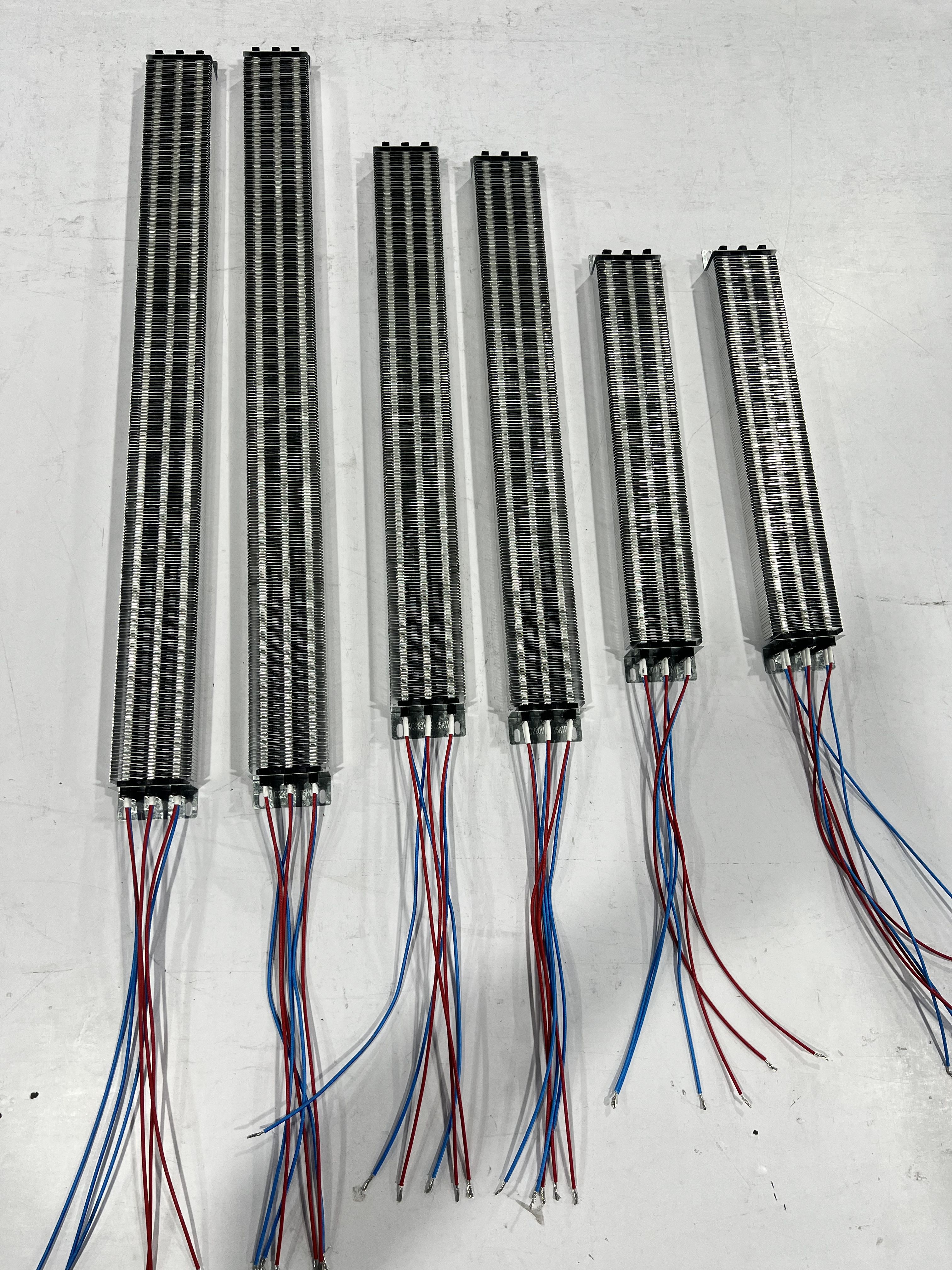
PTC Air Heater
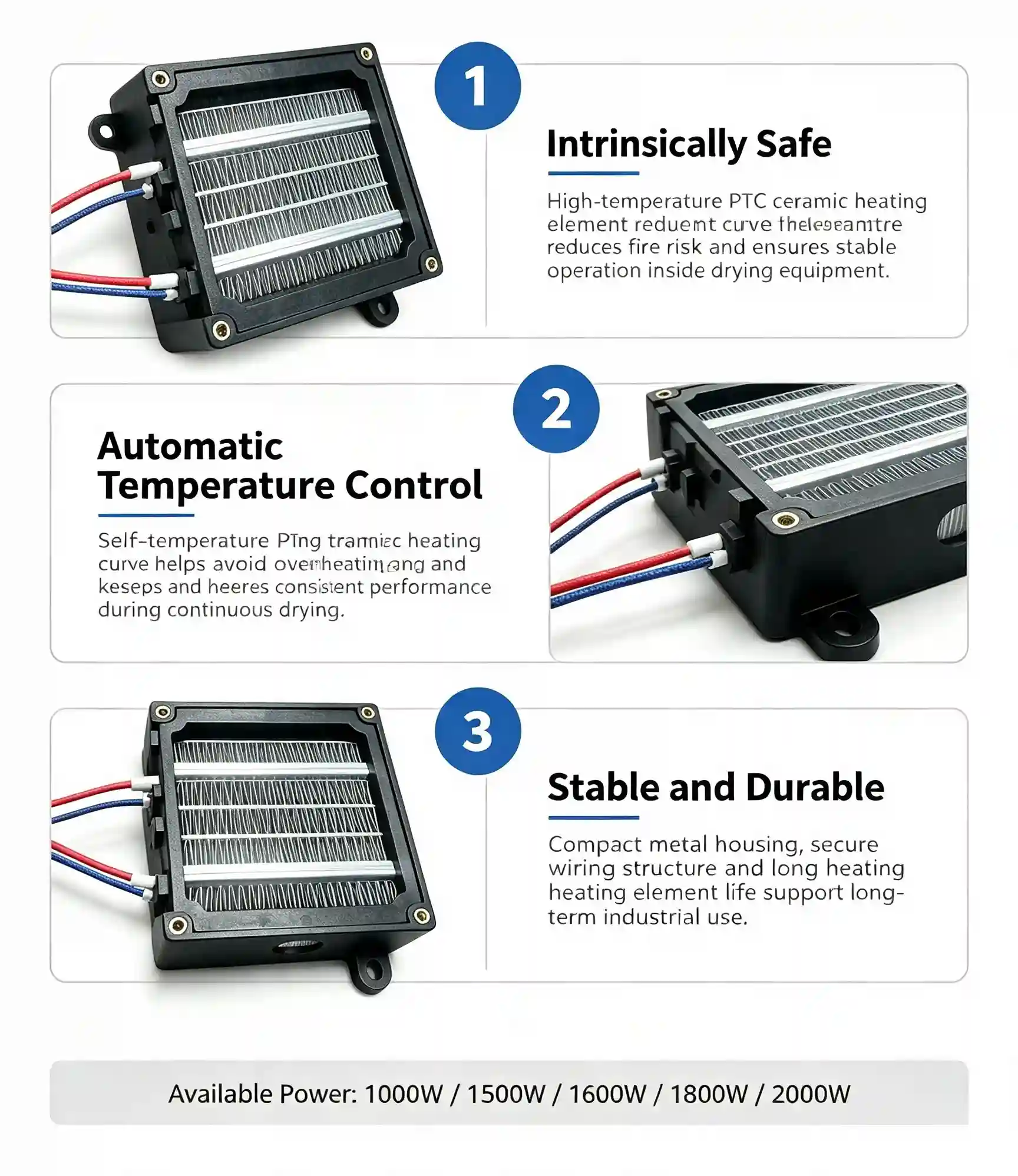
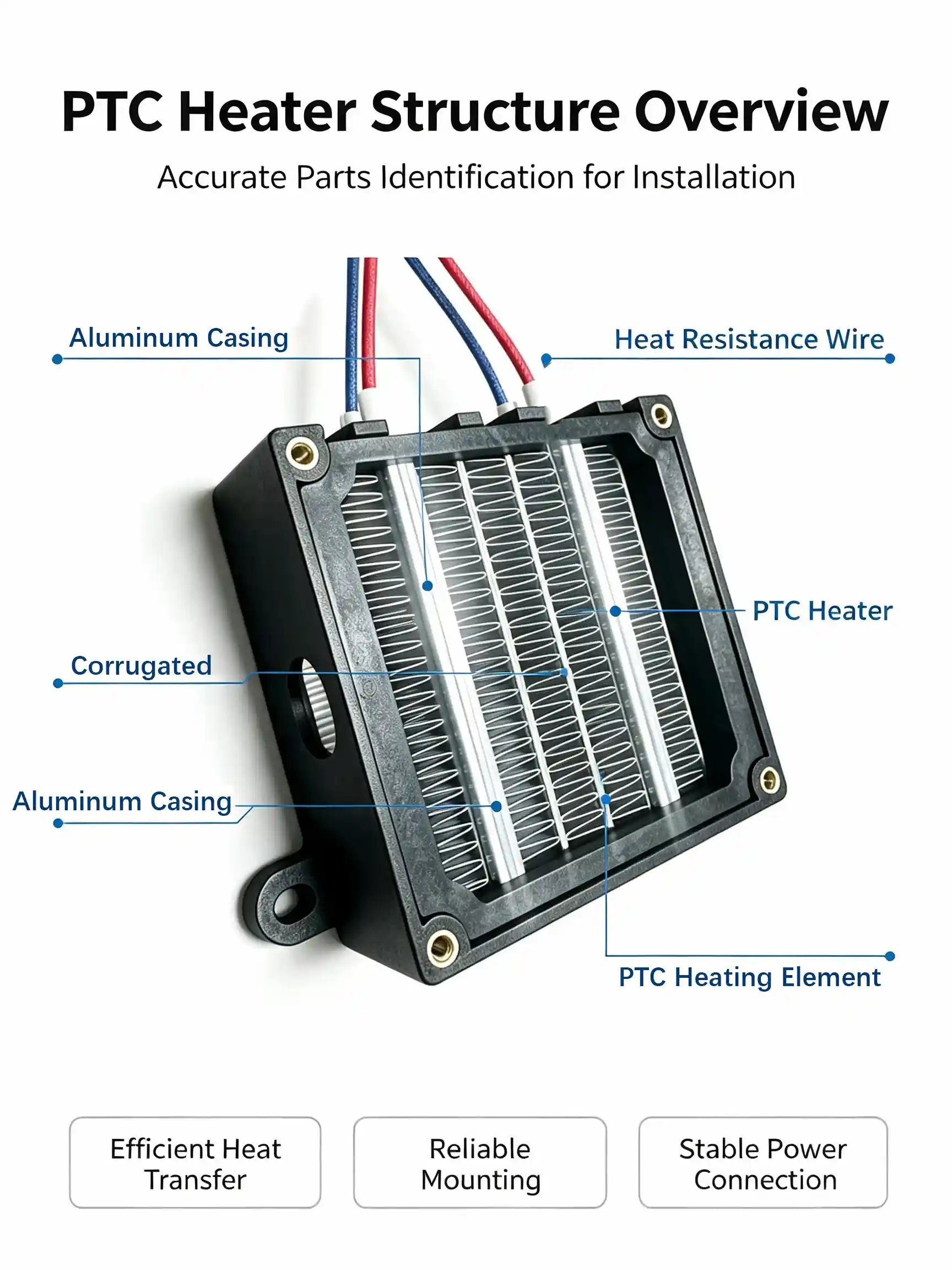
PTC air heaters combine ceramic heating elements with heat-transfer structures such as aluminum fins.
Product reference: https://www.ptcntcsensor.com/products/ptc-heater
They are suitable for applications including:
- HVAC auxiliary heating;
- dryers;
- ventilation equipment;
- industrial warm-air systems;
- cabinets;
- small heating appliances.
Airflow is a critical design variable.
The same heater may stabilize at different temperatures and power levels when airflow changes.
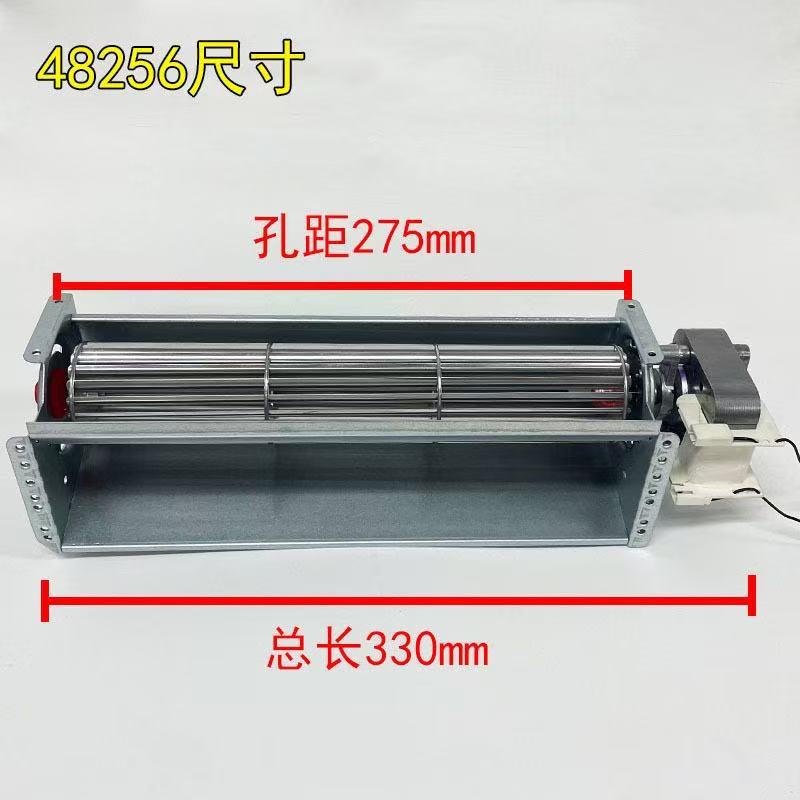
PTC Heater With Fan
Integrating a fan or cross-flow blower can create a more complete heating module.
Related solution: https://www.ptcntcsensor.com/products/ptc-heater
This may be useful when the OEM wants to simplify assembly and obtain a defined airflow path.
The buyer should evaluate:
- heater output;
- airflow;
- fan voltage;
- fan life;
- noise;
- pressure resistance;
- blocked-airflow behavior;
- module dimensions.
Aluminum-Shell PTC Heater
An aluminum housing can provide mechanical protection, heat transfer and convenient mounting.
Product page: https://www.ptcntcsensor.com/product/aluminum-shell-ptc-heater-12v-24v
This construction can be useful for:
- contact heating;
- cabinets;
- appliances;
- compact equipment;
- freeze protection;
- moisture-control applications.
Tianrui currently lists aluminum-shell heater configurations with customizable temperature, voltage and shape requirements, including a published product range of 3.7V–480V and 30–290°C for one product family.
Insulated-Film PTC Heater
Product reference: https://www.ptcntcsensor.com/products/ptc-heater-with-insulated-film
An insulated PTC heater combines the ceramic heating element with an electrically insulating and thermally conductive layer.
This construction may be appropriate when electrical isolation and compact integration are important.
Liquid PTC Heater
Liquid heating introduces additional engineering questions:
- sealing;
- corrosion resistance;
- insulation;
- liquid compatibility;
- immersion depth;
- dry-heating conditions;
- heat-transfer efficiency.
A heater originally developed for air heating should not automatically be assumed suitable for direct liquid heating.
Automotive and EV PTC Heater
EV solution: https://www.ptcntcsensor.com/products/ptc-heater-for-vehicle
Automotive applications can add requirements involving:
- low-temperature operation;
- vibration;
- thermal cycling;
- packaging;
- vehicle electrical architecture;
- durability;
- battery or cabin thermal management.
Which Technical Specifications Should a Manufacturer Confirm?
A quotation should ultimately become a technical specification.
At minimum, discuss the following parameters.
Rated Voltage
Confirm:
- AC or DC;
- nominal voltage;
- allowable operating range.
Heating Power
Do not evaluate wattage alone.
Curie Temperature
Curie temperature is a material parameter, not the final operating temperature.
Heater Dimensions
Specify maximum allowable size constraints.
Electrical Insulation
Define insulation resistance and dielectric requirements if needed.
Wire, Terminal and Connector
Confirm:
- wire material;
- wire gauge;
- temperature rating;
- connector type.
Why Does PTC Ceramic Manufacturing Capability Matter?
Technical reference: https://www.ptcntcsensor.com/solution/heating-element
The ceramic element determines much of the heater's electrical and thermal behavior.
A manufacturer with deeper understanding of ceramic materials and processing may be better positioned to troubleshoot performance issues.
What Should You Verify During Sample Development?
Product reference: https://www.ptcntcsensor.com/products/ptc-heater
Sampling should answer a defined engineering question, not just “does it heat”.
How Should You Evaluate Quality Control?
Quality control should connect specification → production → inspection → repeatability.
Manufacturer vs. Simple Product Supplier: What Is the Difference?
A manufacturer provides engineering-level support, while a distributor mainly provides catalog matching.
What Are the Most Common PTC Heater Sourcing Mistakes?
- comparing only price
- ignoring system conditions
- misunderstanding Curie temperature
- unrealistic testing
- ignoring safety design
What Determines the Cost of a Custom PTC Heater?
Cost depends on structure, ceramic, voltage, tooling, testing and volume.
What About MOQ and Lead Time?
Must be confirmed per project, not assumed.
How Should a Custom PTC Heater Project Move From RFQ to Mass Production?
Follow structured steps: RFQ → design → sample → validation → approval → mass production.
How to Compare PTC Heater Manufacturers Before Placing an Order
Use engineering-based evaluation, not price-only comparison.
Why Consider Tianrui for Custom PTC Heater Projects?
Dongguan Tianrui Electronics Co., Ltd. provides PTC thermistors, heating elements and customized PTC heater solutions.
Company overview: https://www.ptcntcsensor.com/about-us
What Should You Send to Tianrui for a PTC Heater RFQ?
Provide full application + electrical + mechanical + environmental requirements.
FAQ About Choosing a PTC Heater Manufacturer
(unchanged)
Conclusion
Selecting a PTC Heater Manufacturer should be treated as an engineering and supply-chain decision rather than a simple price comparison.
Start here: https://www.ptcntcsensor.com/solution/heater