How Should OEM Buyers Choose a PTC Heater Supplier?
A reliable PTC Heater Supplier should do more than quote a voltage, wattage and unit price. For an OEM project, the supplier should understand the heating application, confirm critical electrical and thermal parameters, support sample validation, define quality controls and demonstrate that the approved design can be supplied consistently during repeat production.
For purchasing managers and engineers, the supplier decision should therefore answer five questions:
- Can the supplier understand the actual heating requirement?
- Can it recommend or customize the appropriate PTC heater structure?
- Can the sample be tested against measurable acceptance criteria?
- Can production remain consistent with the approved sample?
- Are price, tooling, lead time and change-control conditions clear before mass production?
These questions are more useful than simply asking which supplier offers the lowest price.
What Should You Compare Between PTC Heater Suppliers?
Before contacting suppliers, build a common evaluation framework. Every candidate should receive the same technical information and be compared against the same criteria.
| Evaluation Area | What to Check | Evidence to Request |
|---|---|---|
| Application support | Does the supplier understand what must be heated? | Technical proposal |
| PTC expertise | Can it explain resistance, temperature and Curie behavior? | Specification or engineering explanation |
| Product structure | Does it offer a suitable heater architecture? | Drawing or recommended model |
| Customization | Can voltage, size, wiring and structure be adjusted? | Custom drawing |
| Sample process | Are sample targets clearly defined? | Sample specification |
| Testing | Are measurable parameters recorded? | Test data |
| Quality control | Which characteristics are inspected? | QC criteria |
| Production | Can the approved design be reproduced? | Production/process information |
| Commercial terms | Are tooling, sample and unit costs clear? | Detailed quotation |
| Supply continuity | Are lead time and repeat-order terms clear? | Production plan |
A supplier does not need to be strongest in every category. The weighting should depend on the technical and commercial risk of your finished equipment.
Define Your Application Before Requesting a Quote
A common sourcing mistake is sending only a message such as:
“Need 220V 1000W PTC heater. Please quote.”
That is usually not enough information for meaningful supplier comparison.
Two heaters labeled 220V and 1000W may use different ceramic configurations, heat-transfer structures, dimensions, airflow assumptions and insulation designs.
Before requesting a quotation, define the application first.
Electrical Requirements
Provide:
- AC or DC supply
- nominal voltage
- allowable voltage range
- estimated or required power
- wiring requirements
- terminal or connector requirements
Thermal Requirements
Explain:
- what must be heated
- starting temperature
- target temperature
- acceptable warm-up time
- continuous or intermittent operation
- expected heat loss
Mechanical Requirements
Provide:
- available installation dimensions
- mounting method
- heater orientation
- clearance restrictions
- drawing or installation sketch
Operating Environment
Include relevant conditions such as:
- minimum and maximum ambient temperature
- airflow
- humidity
- vibration
- liquid exposure
- dust
- enclosed installation
The more clearly these conditions are defined, the easier it becomes to compare quotations on an equal technical basis.
Which PTC Heater Structure Should a Supplier Recommend?
A capable supplier should not automatically recommend the same heater for every project.
Tianrui's current PTC heater product range includes multiple heater structures, including forced-air and application-specific assemblies.
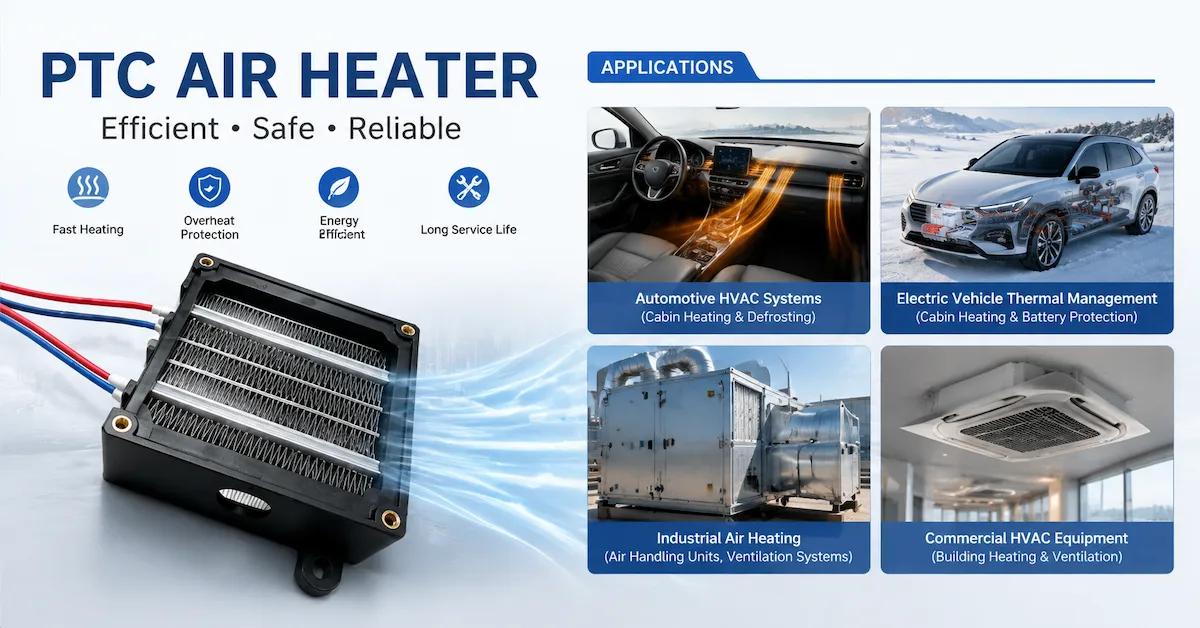
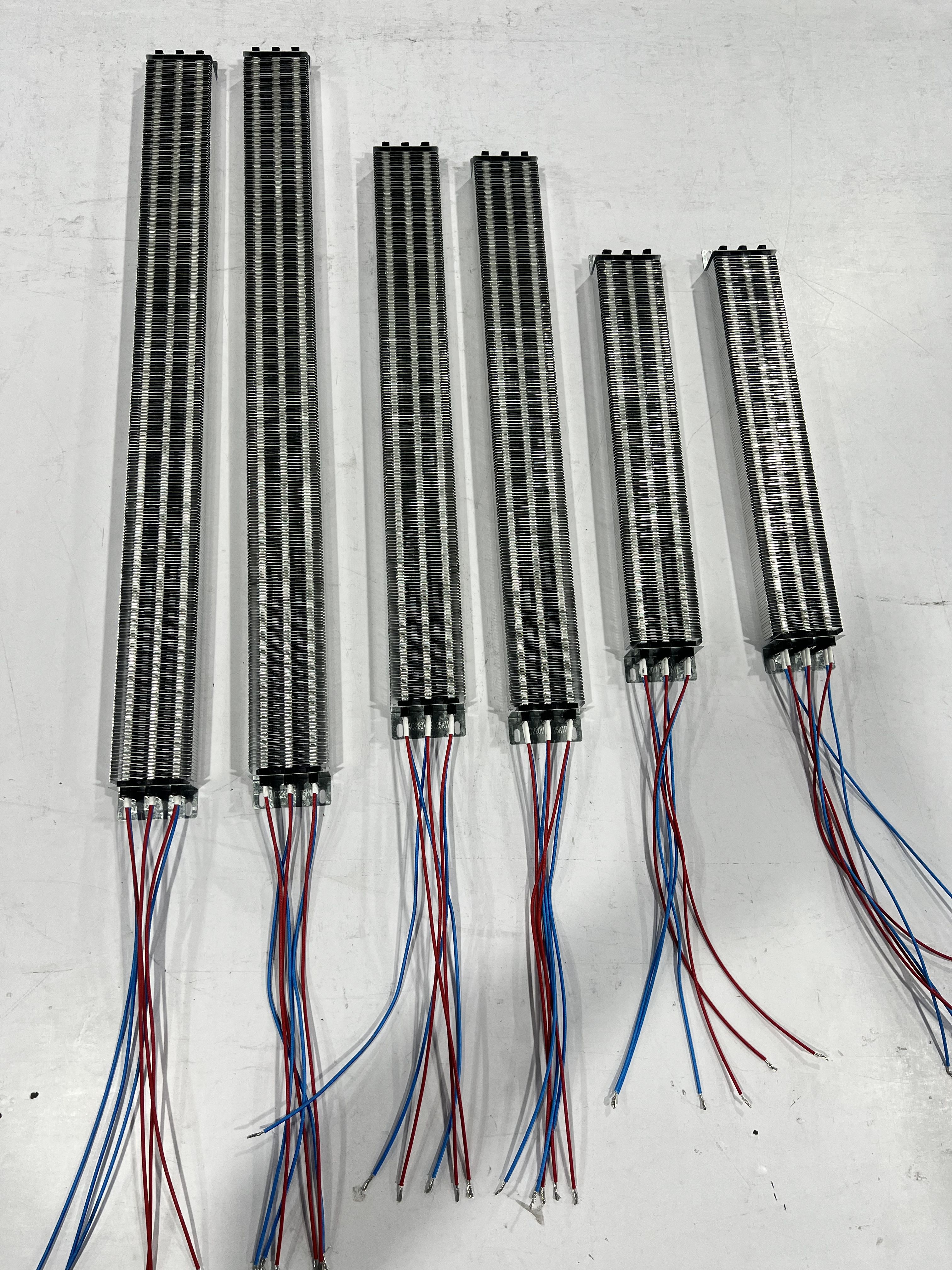
PTC Air Heater
PTC air heaters use ceramic heating elements combined with heat-transfer structures such as aluminum fins.
They can be used in applications involving:
- drying equipment
- HVAC
- ventilation
- cabinets
- warm-air systems
- industrial heating
For air heating, airflow is part of the thermal design. Changes in air velocity and inlet temperature can change the heater's stabilized operating condition.
For projects involving forced-air heating, buyers can review Tianrui's PTC heater range when preparing an RFQ.
PTC Heater With Fan
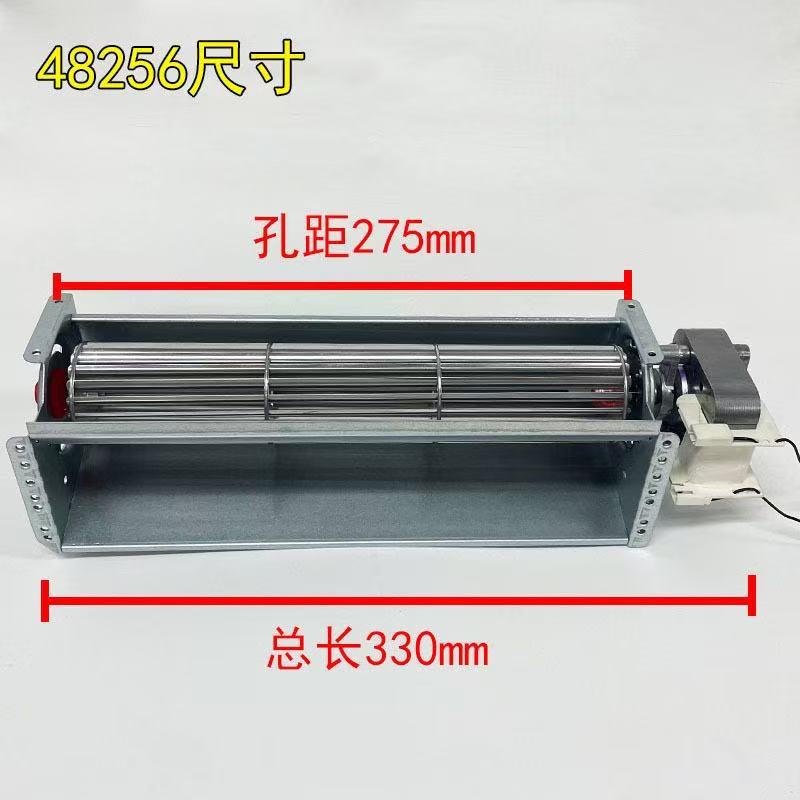
A heater can also be integrated with a fan or blower to create a more complete heating module.
In this case, evaluate:
- heater power
- airflow
- fan voltage
- module dimensions
- noise requirements
- airflow path
- mounting method
A higher heater wattage does not automatically produce a better system if airflow and heat transfer are poorly matched.
Aluminum-Shell PTC Heater
An aluminum housing can provide mechanical support, heat transfer and mounting features.
This structure may suit:
- industrial cabinets
- HVAC equipment
- compact appliances
- surface heating
- moisture or freeze protection
Tianrui currently lists aluminum-shell PTC heater products with OEM/ODM options and multiple application directions.
Insulated PTC Heater
Where electrical isolation and compact integration matter, the heater can incorporate an insulating layer.
Tianrui also maintains a PTC heater with insulation film solution for customized applications.
Automotive and EV Heating
Vehicle applications may add requirements involving:
- low ambient temperatures
- vibration
- thermal cycling
- restricted installation space
- battery or cabin thermal management
For these projects, heater selection should be based on the vehicle system rather than simply adapting a general-purpose heater. Tianrui currently publishes electric-vehicle PTC heater products for cabin and battery thermal-management applications.
Which Technical Parameters Should a PTC Heater Supplier Confirm?
A useful quotation should eventually become a controlled technical specification.
Voltage
Confirm whether the system uses AC or DC and define the real operating voltage range.
The supplier should understand the electrical architecture rather than assuming that the nominal voltage is the only requirement.
Heating Power
Power should be evaluated in the context of:
- required warm-up time
- heat loss
- airflow
- ambient temperature
- heated mass
- installation structure
For PTC heating, stabilized electrical behavior is influenced by thermal conditions, so nominal wattage alone does not describe the complete application.
Curie Temperature
PTC ceramic heating systems use material characteristics that cause resistance to increase strongly as temperature rises through the designed transition region.
Tianrui's technical information describes PTC heating materials based on barium-titanate ceramic systems and explains that composition and processing can be used to adjust Curie characteristics. Its published material discussion gives a typical adjustable Curie range of approximately 60°C–250°C for the described ceramic system.
However, Curie temperature should not be treated as identical to the final heater surface, air or equipment temperature.
The actual stabilized condition also depends on:
- heat dissipation
- airflow
- mounting
- heater geometry
- thermal contact
- ambient temperature
This distinction is important when comparing technical proposals from different suppliers.
Dimensions
Specify maximum:
- length
- width
- height
- mounting position
- connector clearance
A smaller heater is not automatically better. Reducing dimensions can change power density and heat-transfer behavior.
Insulation
Depending on the final equipment, discuss:
- insulation structure
- insulation resistance
- dielectric requirements
- material temperature capability
The final acceptance requirements should be determined from the complete product and its applicable safety requirements.
Wire and Connector
Confirm:
- conductor size
- wire temperature rating
- lead length
- terminal
- connector
- strain relief
These details can significantly influence OEM assembly efficiency and field reliability.
Why Does Supplier Knowledge of PTC Ceramic Matter?
The ceramic element is the electrical and thermal core of a PTC heater.
Tianrui's published PTC heating element technical information describes barium-titanate-based ceramic material, high-temperature sintering and several electrode approaches, and explains that substrate, doping and process conditions influence characteristics such as response and stability.
When qualifying a PTC Heater Supplier, buyers can ask:
- How are ceramic electrical characteristics checked?
- How are elements selected or matched for multi-element assemblies?
- Which heater characteristics are tested before assembly?
- Which parameters are checked on the completed heater?
- How are deviations handled during production?
These questions help distinguish real technical support from generic product-sales language.
How Should You Evaluate a PTC Heater Sample?
A sample should not be approved simply because it becomes hot.
The sample should answer whether the proposed design performs correctly under conditions representative of the final equipment.
Build an Acceptance Table Before Testing
| Test Item | Purpose |
| Dimensions | Confirm mechanical fit |
| Cold resistance | Confirm baseline electrical characteristics |
| Current | Evaluate electrical load |
| Power | Measure operating behavior |
| Warm-up time | Check heating response |
| Temperature | Verify target thermal condition |
| Temperature distribution | Check uniformity |
| Insulation resistance | Evaluate electrical isolation |
| Dielectric test | Verify required electrical strength |
| Continuous operation | Check stability |
| Thermal cycling | Evaluate repeated heating/cooling |
| Wire and terminal | Verify connection reliability |
Not every project requires every test.
The test plan should reflect the risk of the final application.
Test the Heater in Realistic Conditions
Where possible, reproduce:
- actual supply voltage
- actual airflow
- expected ambient temperature
- mounting pressure
- heat sink or enclosure
- operating duration
An open-air bench test may not reproduce how the heater behaves inside the finished equipment.
Does PTC Self-Regulation Remove the Need for Product Safety Testing?
No.
PTC technology can provide self-regulating electrical behavior, but the finished equipment still has to be evaluated according to its own design and applicable requirements.
IEC documentation for household appliance testing explicitly discusses measurement involving equipment with PTC heating elements, demonstrating that PTC components remain part of overall appliance testing rather than replacing it.
The IEC 60738-1 standard also establishes terminology, inspection procedures and test methods for positive step-function temperature-coefficient thermistors used in component qualification and quality assessment.
For OEM buyers, the practical lesson is simple:
Do not ask only whether a heater is “safe.” Define what the finished product needs to demonstrate and identify which supplier data supports that validation.
What Quality-Control Questions Should You Ask a Supplier?
Instead of asking:
“Do you have good QC?”
ask questions that produce measurable answers.
Incoming Materials
Ask which incoming characteristics are controlled for:
- ceramic components
- aluminum structures
- insulation
- wires
- terminals
- connectors
Production Process
Ask whether the supplier controls:
- heater assembly
- ceramic placement
- electrical connections
- insulation
- critical dimensions
Finished Heater
Typical inspection areas may include:
- resistance
- current
- power
- dimensions
- wiring
- insulation
- appearance
The important issue is not the number of inspections.
It is whether the supplier can define:
parameter → test condition → acceptance limit → inspection record.
That chain creates a much stronger basis for production consistency.
How Should You Compare PTC Heater Prices?
Do not compare only the unit-price column.
A useful custom-heater quotation should separate major commercial assumptions.
Ask Suppliers to Clarify
- unit price
- quotation quantity
- prototype cost
- tooling cost
- custom wiring or connector cost
- special testing cost
- packaging assumptions
- shipping terms where applicable
For a custom project, two apparently similar quotations can represent very different engineering scopes.
A lower unit price may not create a lower total project cost if it leads to repeated samples, tooling changes, assembly problems or qualification delays.
What Determines MOQ and Lead Time?
There is no single MOQ or lead time that applies to every PTC heater.
Standard catalog products, modified products and newly developed custom assemblies have different supply paths.
For a custom project, separate:
Development Time
Technical evaluation
→ drawing
→ tooling
→ prototype
Validation Time
Sample testing
→ customer feedback
→ design revision
→ approval
Production Lead Time
Material preparation
→ manufacturing
→ inspection
→ packing
Tianrui's public pages reviewed for this article do not state one universal MOQ or production lead time for every PTC heater design. These values should therefore be confirmed for the individual RFQ rather than assumed.
How Important Is Supply Continuity?
The first sample is only the beginning of a B2B supplier relationship.
For repeat production, purchasing teams should consider:
- production capacity
- material consistency
- change control
- replacement of discontinued materials
- batch traceability
- repeat-order specifications
- handling of nonconforming parts
The approved sample should become a controlled reference rather than a one-time demonstration.
What Documentation Should Buyers Request?
Required documents depend on the final product and destination market.
For applicable electrical and electronic equipment placed on the EU market, the RoHS framework restricts specified hazardous substances. The current EU legal framework remains based on Directive 2011/65/EU and its amendments.
This does not mean every heater automatically carries the same compliance requirement.
The correct workflow is:
- identify the final equipment;
- identify the destination market;
- determine applicable product requirements;
- define which material, test or supplier documents are needed.
This avoids collecting certificates that do not actually support the finished product.
Manufacturer, Distributor or Solution Supplier: Which Should You Choose?
Different supplier models can be useful for different projects.
| Supplier Type | Best Fit | Main Limitation |
| Distributor | Standard parts, small quantities | Limited custom engineering |
| Trading supplier | Broad sourcing requirements | May depend on upstream factories |
| Direct manufacturer | Custom and repeat production | May have project-specific MOQ/tooling |
| Engineering solution supplier | Complex OEM integration | Requires detailed technical communication |
For standard parts, a distributor may be efficient.
For a heater that requires custom dimensions, thermal design, wiring, tooling, testing or repeated engineering changes, closer cooperation with the manufacturing source generally gives the buyer greater process visibility.
What Are the Most Common PTC Heater Supplier Selection Mistakes?
Choosing by Price Before Technical Alignment
If suppliers are quoting different assumptions, their prices cannot be compared meaningfully.
Technical requirements should be aligned first.
Treating Nominal Wattage as the Complete Specification
Heating performance depends on the complete thermal environment.
Assuming Curie Temperature Equals Final Operating Temperature
The final thermal equilibrium depends on both heat generation and heat loss.
Approving a Sample Without Measurable Criteria
“Works well” is not a production specification.
Ignoring Wires and Connectors
A heater can perform correctly while an unsuitable connection creates assembly or reliability problems.
Asking for Generic Certificates
Documentation should relate to the actual final product, market and compliance requirement.
Ignoring Repeat-Order Change Control
A good first batch does not guarantee future consistency unless important materials and specifications remain controlled.
Why Consider Tianrui as a PTC Heater Supplier?
Dongguan Tianrui Electronics Co., Ltd. states that it was founded in 2010 and operates an approximately 5,000 m² facility with automated production equipment and dedicated testing instruments. Its About page reports annual PTC-component output of nearly 100 million pieces.
Tianrui's website currently covers PTC thermistors, PTC heating elements and customized PTC heater solutions.
For custom projects, its PTC Heater Customized Solution page describes support around tailored heater development, while its PTC Heating Element page states that projects can begin with drawings or ideas and can include structure, shape and material selection, mold development, inspection and technical advice.
Buyers can also review Tianrui's company background before supplier qualification and use the contact page to submit a project requirement.
These company facts are useful starting evidence, but a supplier should still be qualified using the actual drawing, sample data, QC requirements and commercial terms of the buyer's project.
What Should You Send in a PTC Heater RFQ?
A complete RFQ can shorten technical discussions and reduce quotation differences.
Send:
- end application
- AC or DC voltage
- target heating performance
- target temperature
- starting and ambient temperature
- installation dimensions
- drawing or sketch
- airflow or heating medium
- mounting method
- insulation requirement
- wire and connector requirements
- operating cycle
- environmental conditions
- sample quantity
- expected annual quantity
- target market
- special testing requirements
If wattage or Curie temperature is not yet known, provide the application conditions instead of selecting an arbitrary value.
A technically capable PTC Heater Supplier should help convert those operating requirements into a preliminary heater direction.
FAQ About PTC Heater Suppliers
What should I look for in a PTC Heater Supplier?
Look for application understanding, PTC technical knowledge, customization capability, sample validation, measurable QC, clear quotation terms and reliable repeat-production support. For custom OEM projects, engineering communication is usually as important as unit price.
Can a PTC Heater Supplier customize voltage and dimensions?
Customization may include voltage, heater dimensions, ceramic configuration, aluminum structure, insulation, wires, terminals and connectors, subject to technical feasibility. Tianrui currently publishes customized PTC heater and heating-element services for non-standard projects.
What information should I send before asking for a quotation?
Provide the application, voltage, heating target, temperature, available dimensions, ambient conditions, airflow or heating medium, mounting, wiring, estimated quantity and required tests. A drawing or installation sketch improves technical evaluation.
How should I compare quotations from different PTC heater suppliers?
Make sure all suppliers are quoting the same electrical, thermal, mechanical and commercial requirements. Compare unit price together with tooling, samples, testing, customization scope, MOQ assumptions and lead time.
How do I verify PTC heater quality before mass production?
Define measurable sample criteria such as dimensions, resistance, current, power, warm-up time, operating temperature, insulation and application-specific reliability requirements. Test the heater as close as practical to real operating conditions.
Is the cheapest PTC Heater Supplier always the best choice?
Not necessarily. Lower initial component cost can be offset by additional sampling, design changes, qualification delays, inconsistent batches or assembly problems. Compare total engineering and supply risk rather than unit price alone.
Does a self-regulating PTC heater still require system-level protection?
Possibly. PTC self-regulation is a component characteristic; the final equipment still needs to satisfy its own electrical and safety requirements. Protection architecture should be determined at system level.
What affects the MOQ of a custom PTC heater?
MOQ can depend on whether the product is standard or custom, tooling, materials, manufacturing setup and commercial quantity. Because these conditions differ between projects, buyers should confirm MOQ after the supplier reviews the specification.
Conclusion
Choosing a PTC Heater Supplier is ultimately a decision about technical fit, validation and long-term supply reliability.
A useful supplier comparison should follow this sequence:
application requirements → technical proposal → drawing → quotation → prototype → measurable testing → approved sample → QC plan → mass production.
For standard products, price and availability may dominate the decision. For custom OEM heating systems, engineering capability, product consistency and change control become increasingly important.
Before requesting a quotation, prepare your application, voltage, target temperature, available space, operating environment, drawings and expected volume. This gives every supplier the same technical baseline and makes quotations easier to evaluate.
For non-standard projects, buyers can review Tianrui's custom PTC heater solutions or contact Tianrui with drawings and operating requirements for technical evaluation.