What Is a PTC Heating Element Manufacturer?
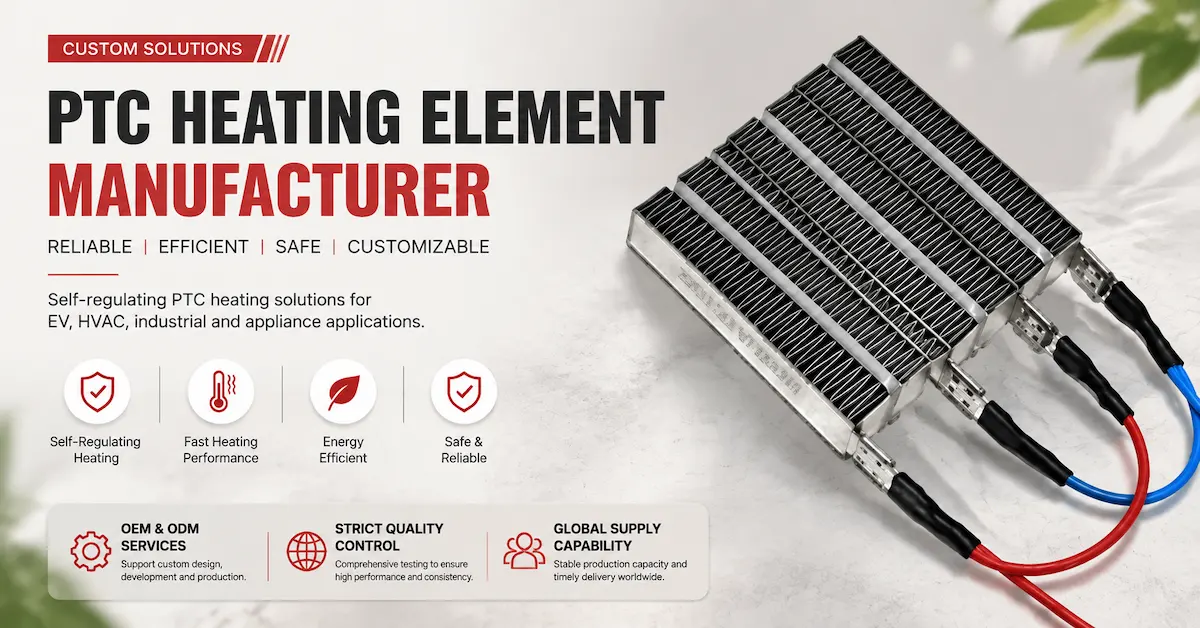
A PTC Heating Element Manufacturer specializes in designing and producing heating components based on Positive Temperature Coefficient technology.
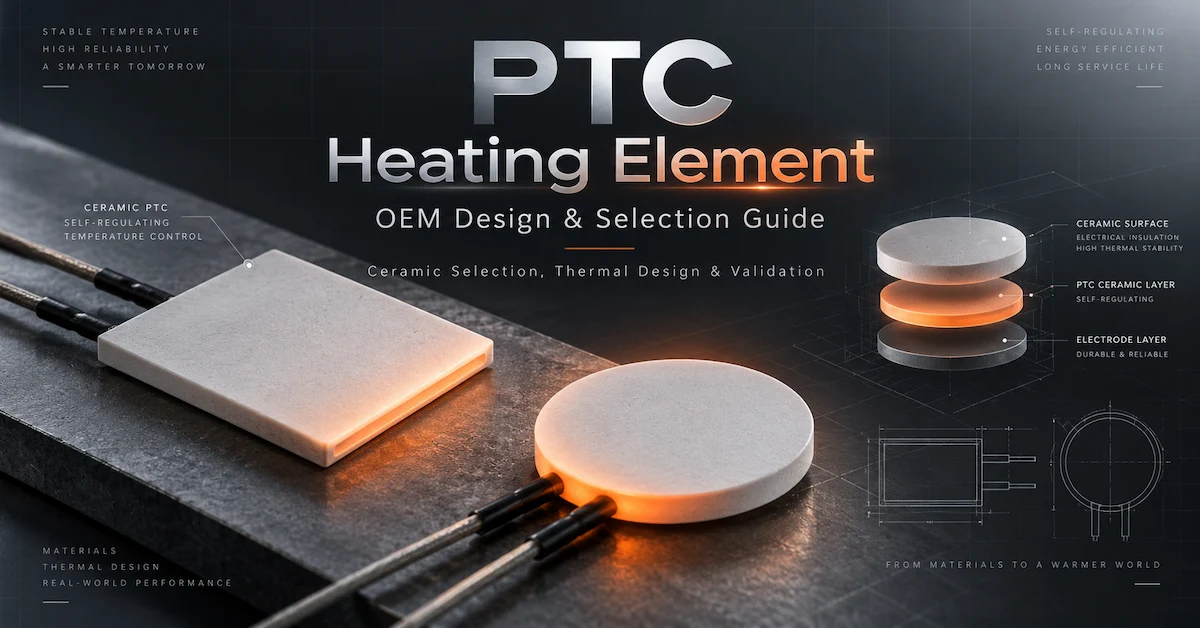
PTC heating elements use ceramic materials with self-regulating temperature characteristics. When the temperature increases, the electrical resistance of the PTC material rises, reducing current flow and helping maintain a controlled heating condition.
Compared with traditional heating elements, PTC technology provides several advantages:
- self-regulating heating performance;
- improved safety;
- fast thermal response;
- compact structure;
- stable temperature control;
- flexible OEM customization.
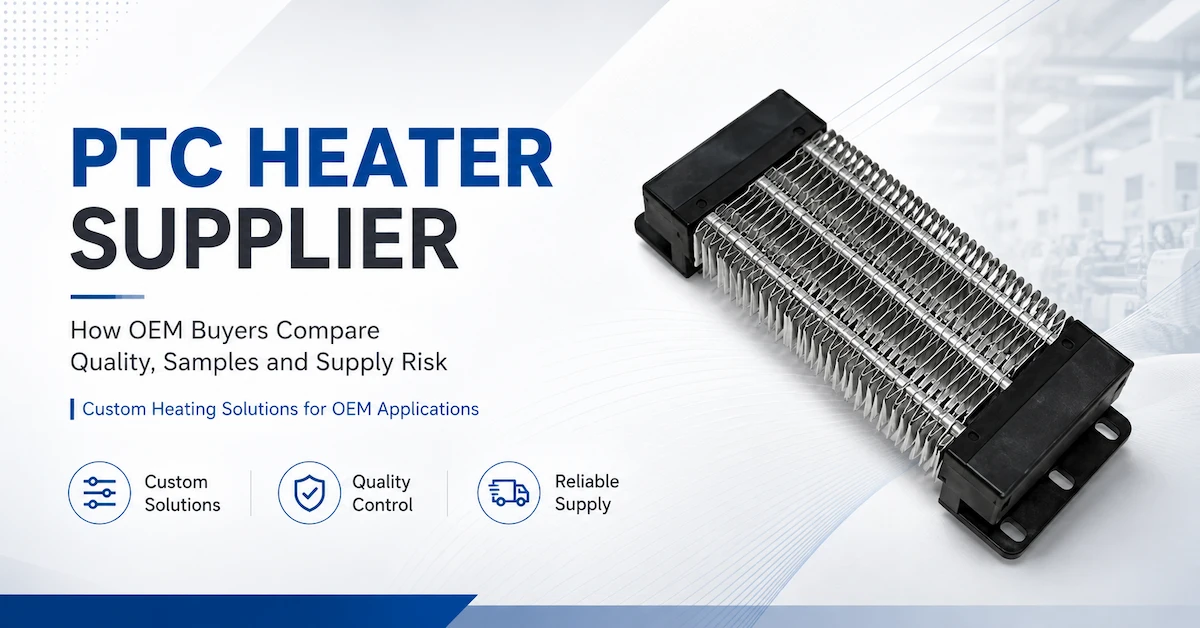
For manufacturers purchasing heating components, selecting the right supplier is not only about finding a product with a suitable wattage.
A qualified PTC Heating Element Supplier should understand:
- application requirements;
- voltage and power conditions;
- thermal performance;
- mechanical structure;
- production consistency;
- testing requirements;
- long-term supply capability.
A professional manufacturer should be able to support the complete process:
Application evaluation → Prototype development → Testing → Production → Quality control → Mass delivery
Why Do OEM Buyers Work Directly With a PTC Heating Element Factory?
Many companies initially search for standard heating components.However, real-world products often require customized solutions.
Direct cooperation with a PTC Heating Element Factory provides several advantages.
Better Engineering Communication
A manufacturer can evaluate whether the heating element matches:
- required heating power;
- installation space;
- airflow conditions;
- operating environment;
- temperature requirements.
This reduces development risks before mass production.
Flexible Customization
Different industries require different heating structures.
OEM customization may include:
- heating element size;
- voltage;
- power output;
- aluminum heat sink structure;
- cable length;
- connector type;
- mounting design.
Stable Production Control
Working directly with a factory allows buyers to better understand:
- production processes;
- inspection methods;
- delivery capability;
- batch consistency.
For long-term projects, manufacturing capability is often more important than a single quotation.
What Applications Use PTC Heating Elements?
PTC heating elements are widely used where safe and controlled heating is required.
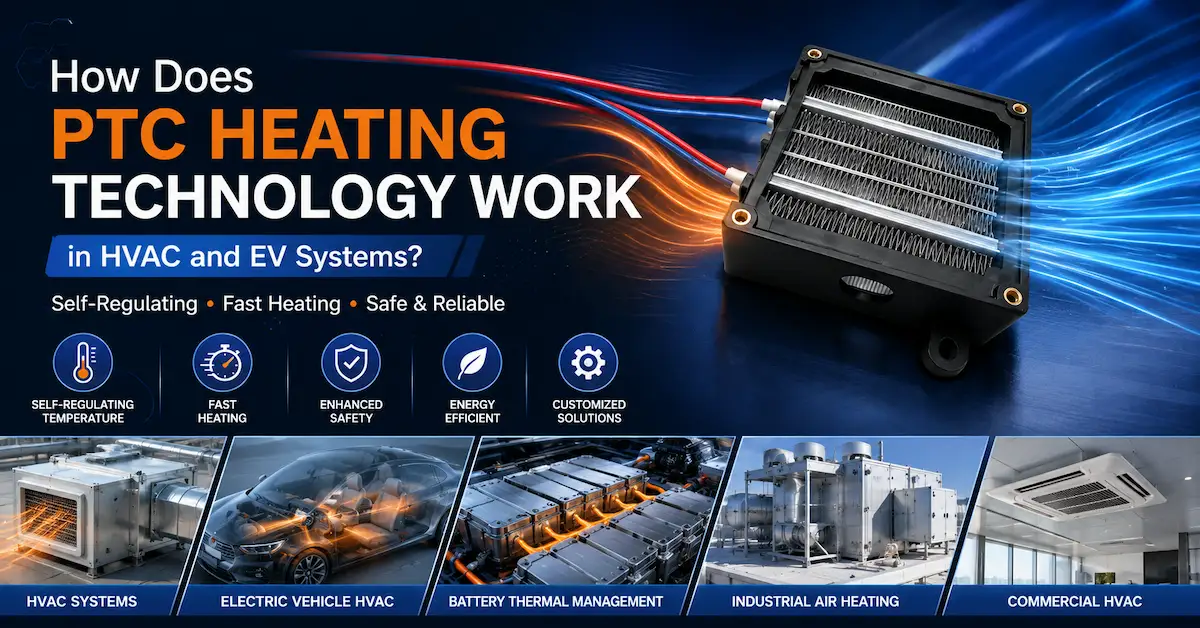
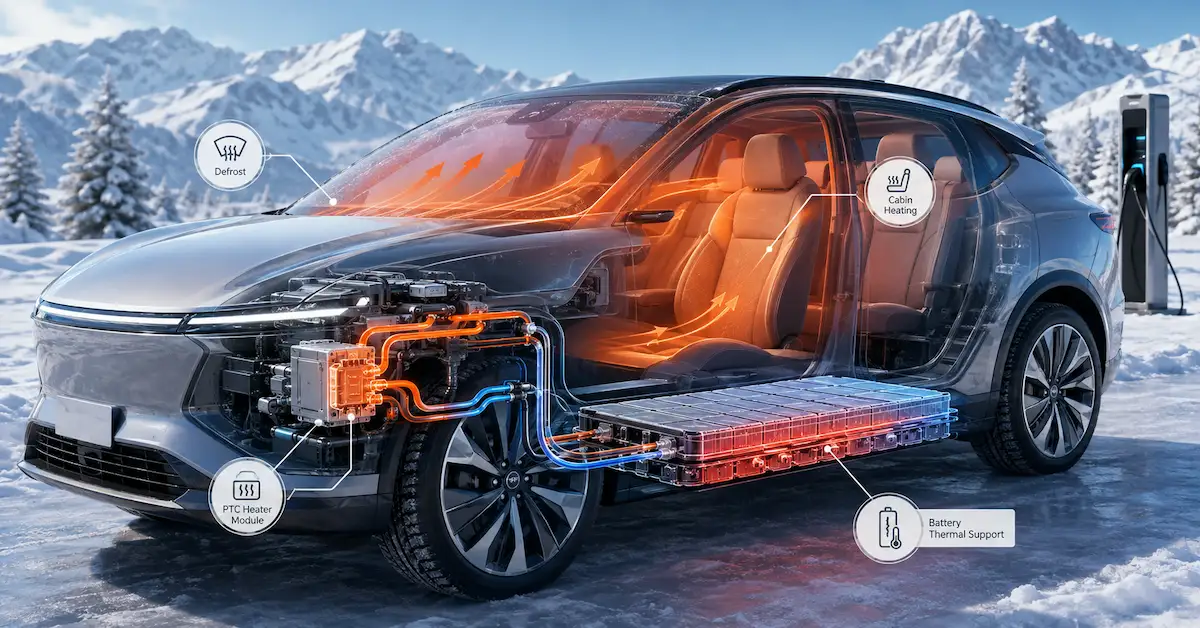
Electric Vehicle Thermal Management
Electric vehicles require efficient heating solutions because battery systems and passenger cabins need independent thermal management.
PTC heating elements are commonly used in:
- EV cabin heaters;
- battery thermal management;
- electric HVAC systems;
- windshield defrost systems.
EV applications usually require:
- compact design;
- high reliability;
- vibration resistance;
- efficient heat transfer;
- stable operation.
A suitable PTC solution needs to match the vehicle's electrical system and thermal requirements.
HVAC Heating Systems
HVAC equipment is one of the major application areas for PTC heating technology.
Typical applications include:
- air heating;
- auxiliary heating;
- ventilation systems;
- heat pump systems.
PTC heating elements help HVAC systems achieve:
- stable heating output;
- safer operation;
- compact installation;
- efficient temperature management.
Industrial Equipment
Industrial equipment often requires heating components that can operate continuously under demanding conditions.
Applications include:
- control cabinets;
- automation equipment;
- industrial air heaters;
- electronic equipment.
These applications may require:
- customized dimensions;
- higher durability;
- special mounting structures;
- specific temperature ranges.
Home Appliances
PTC heating technology is also used in household products requiring compact and controlled heating.
Examples include:
- air dryers;
- small heating devices;
- electronic appliances;
- temperature-control equipment.
How Does a PTC Heating Element Work?
The working principle of a PTC heating element is based on the relationship between temperature and electrical resistance.
The process can be summarized as:
Electrical energy → Heat generation → Temperature increase → Resistance increase → Current reduction → Self-regulated heating
When voltage is applied:
- Current passes through the PTC ceramic element.
- The element generates heat.
- Temperature rises.
- Resistance increases.
- Heating output naturally stabilizes.
This self-regulating characteristic helps reduce overheating risks compared with conventional heating methods.
However, actual heating performance depends on:
- ceramic material;
- element structure;
- heat transfer design;
- airflow;
- installation environment.
What Types of PTC Heating Elements Can Manufacturers Provide?
A professional PTC Heating Element Manufacturer may provide different product structures according to application requirements.
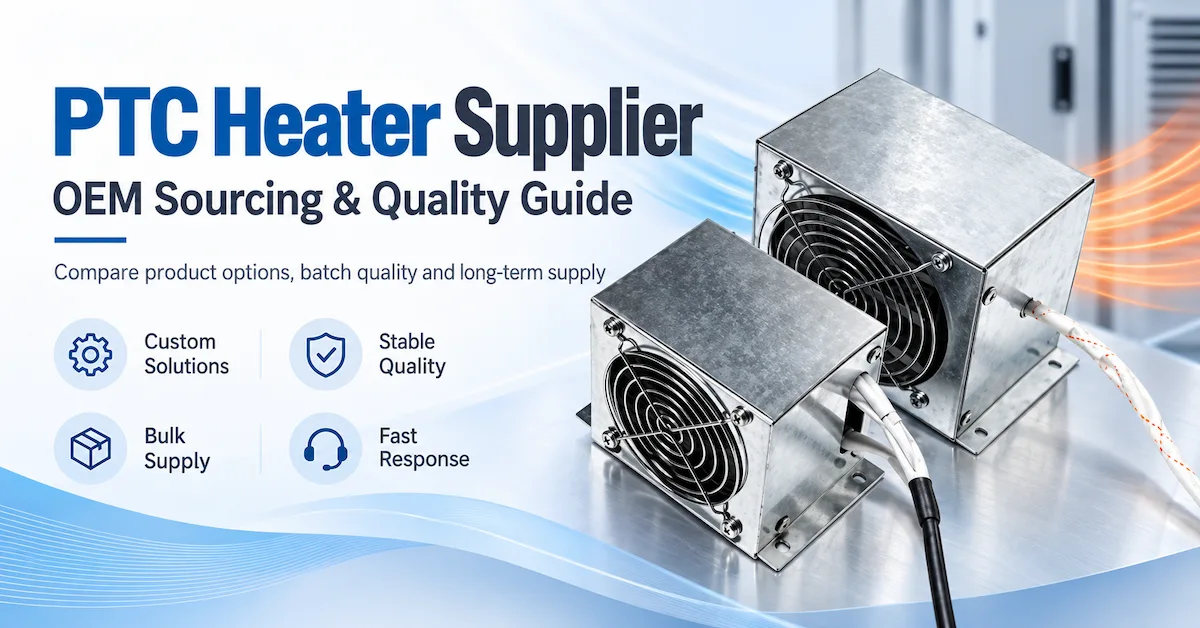
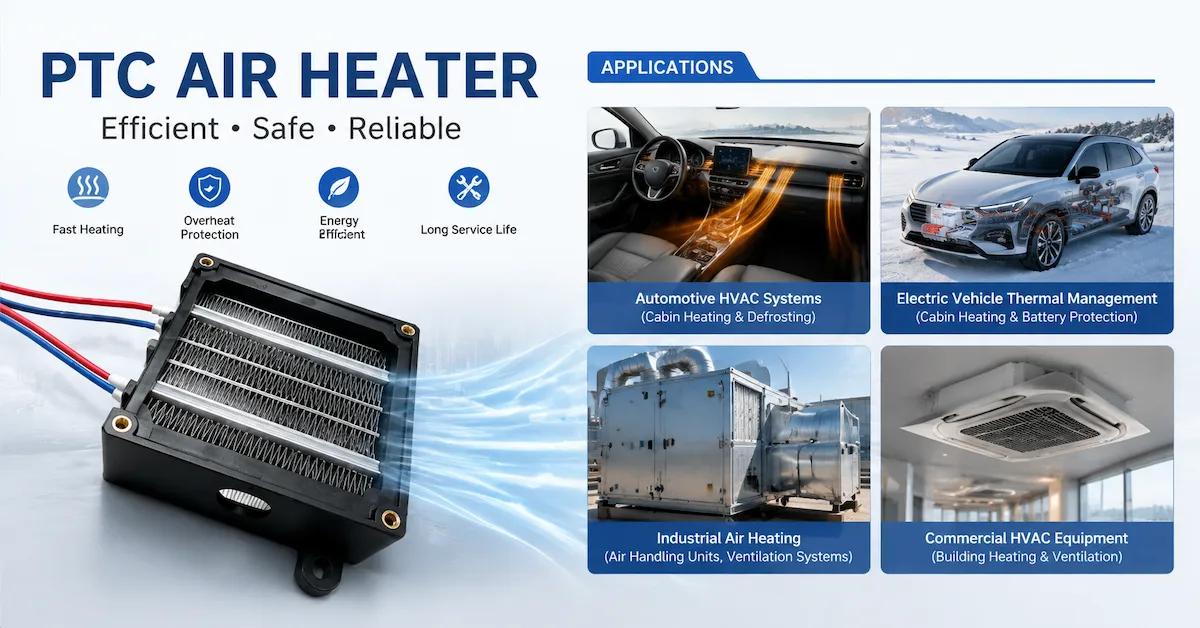
PTC Air Heater
PTC air heaters combine PTC ceramic heating elements with heat-transfer structures to warm passing air.
They are commonly used in:
- EV HVAC systems;
- industrial ventilation;
- air heating equipment.
Tianrui provides customized PTC air heater solutions for applications requiring reliable heating performance, compact design and OEM development support.
PTC Ceramic Heating Element
The PTC ceramic element is the core heating component.
Its performance depends on:
- resistance characteristics;
- Curie temperature;
- ceramic composition;
- production consistency.
A stable ceramic process is important because small variations can influence heating performance.
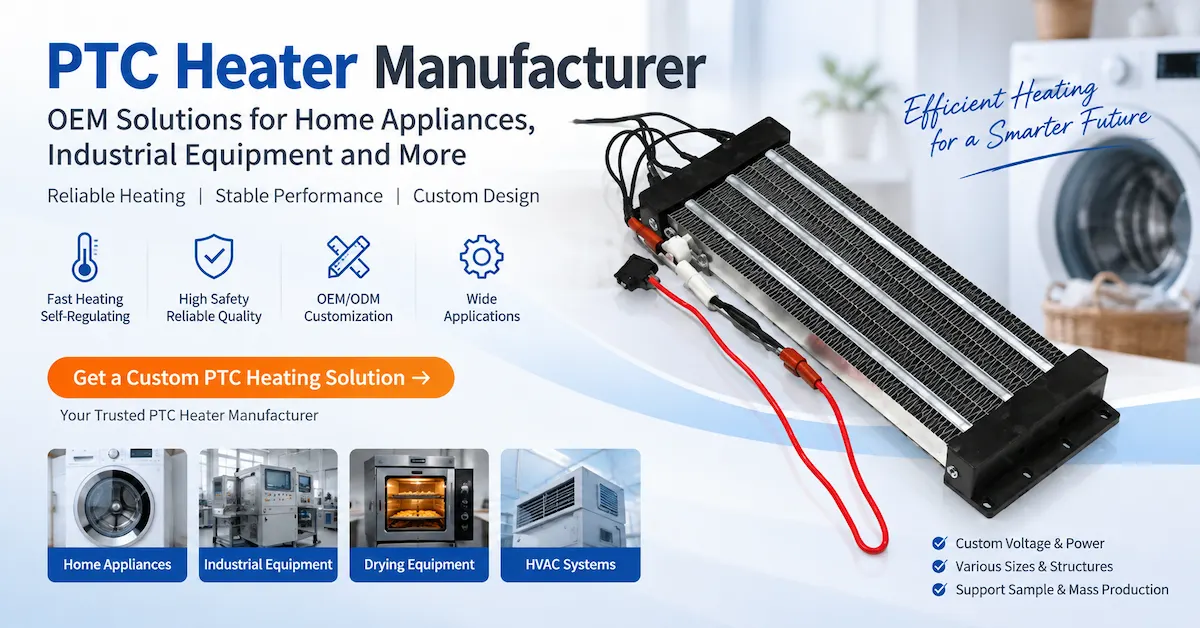
Customized PTC Heating Module
For OEM customers, a complete heating module may integrate:
- PTC ceramic elements;
- aluminum heat sinks;
- cables;
- connectors;
- brackets;
- protective structures.
This approach allows the heating solution to fit the final product design.
What Specifications Should You Confirm Before Ordering?
Before selecting a PTC Heating Element Manufacturer China, buyers should define the technical requirements clearly.
| Specification | Importance |
|---|---|
| Voltage | Matches power system |
| Power | Determines heating capacity |
| Temperature Range | Ensures application compatibility |
| Size | Fits installation space |
| Heat Transfer Structure | Influences efficiency |
| Resistance Characteristics | Affects control performance |
| Cable Requirement | Ensures integration |
| Connector Type | Matches electrical system |
| Protection Level | Supports environmental conditions |
Voltage Requirement
Voltage affects:
- electrical compatibility;
- heating output;
- system safety.
A heating element must be designed according to the actual application voltage.
Power Requirement
The required heating power depends on:
- heating area;
- heat loss;
- airflow;
- target temperature;
- operating environment.
Higher power does not always mean better performance. The correct design depends on the complete thermal system.
Size and Installation
OEM projects often have strict space limitations.
Manufacturers may need to customize:
- element dimensions;
- fin structure;
- mounting position;
- connector location.
What Materials Are Used in PTC Heating Elements?
A PTC heating element is not only a ceramic heating component.A complete heating solution usually combines several materials and structural parts to achieve stable heat generation, electrical safety and mechanical reliability.
Common materials include:
- PTC ceramic material;
- conductive electrodes;
- aluminum heat sinks;
- insulation materials;
- cables and connectors;
- protective housings.
Each material influences the final heating performance.
PTC Ceramic Material
The PTC ceramic element is the core part that provides the self-regulating heating characteristic.
Its material characteristics determine:
- resistance-temperature behavior;
- heating stability;
- maximum operating temperature;
- response speed;
- production consistency.
A professional PTC Heating Element Manufacturer needs strict control over ceramic material preparation because small variations can affect the electrical characteristics of different production batches.
Aluminum Heat Transfer Structure
Many PTC air heaters use aluminum components to improve thermal transfer.
Aluminum structures provide:
- high thermal conductivity;
- lightweight design;
- efficient heat dissipation;
- corrosion resistance.
The design of the aluminum heat sink affects:
- airflow heating efficiency;
- temperature distribution;
- overall heating performance.
For EV and HVAC applications, the heat transfer structure is especially important because the heating element must deliver sufficient heat while maintaining compact dimensions.
Insulation Materials
Insulation materials protect electrical components and improve operational safety.
The selection depends on:
- working voltage;
- temperature requirements;
- environmental conditions;
- application standards.
Poor insulation design may lead to:
- electrical safety risks;
- reduced reliability;
- premature component failure.
Cable and Connector Materials
For OEM heating projects, cable and connector selection should match the complete system.
Important factors include:
- current capacity;
- temperature resistance;
- flexibility;
- installation method;
- vibration environment.
Automotive applications usually require stronger consideration of:
- vibration;
- temperature changes;
- long-term durability.
How Is a PTC Heating Element Manufactured?
A reliable PTC Heating Element Factory should control the complete manufacturing process from ceramic production to final inspection.
A typical manufacturing process includes:
Material Preparation → Ceramic Forming → Sintering → Electrode Processing → Assembly → Performance Testing → Final Inspection
Material Preparation
The manufacturing process starts with preparation of PTC ceramic materials.
The formulation and processing control influence:
- resistance characteristics;
- Curie temperature;
- heating stability;
- product consistency.
Stable material control is the foundation of reliable PTC performance.
Ceramic Forming and Sintering
After material preparation, the ceramic material is formed into the required shape.
The sintering process creates the final ceramic structure.
This stage affects:
- mechanical strength;
- electrical performance;
- thermal characteristics.
Incorrect sintering conditions may cause:
- unstable resistance;
- inconsistent heating output;
- reduced service life.
Electrode Processing
Electrodes provide electrical connection to the ceramic heating element.
The quality of electrode processing influences:
- conductivity;
- connection reliability;
- long-term stability.
Heating Module Assembly
Depending on the product design, assembly may include:
- PTC ceramic elements;
- aluminum heat sinks;
- insulation layers;
- cables;
- terminals;
- connectors;
- brackets.
For customized OEM projects, assembly capability is important because the final heating module often needs to fit the customer's equipment structure.
Performance Testing
Before shipment, professional manufacturers should perform testing according to customer requirements.
Common tests include:
| Test Item | Purpose |
|---|---|
| Resistance Testing | Verify electrical characteristics |
| Power Testing | Confirm heating output |
| Temperature Rise Testing | Evaluate thermal performance |
| Insulation Testing | Ensure electrical safety |
| Aging Testing | Verify long-term stability |
| Appearance Inspection | Confirm manufacturing quality |
| Batch Testing | Maintain consistency |
How Does Quality Control Affect PTC Heating Element Reliability?
For heating components, consistency is critical.
A heating element that performs well during sampling must also maintain the same performance during mass production.
A reliable PTC Heating Element Supplier should control:
- incoming materials;
- production processes;
- electrical testing;
- thermal performance;
- final inspection.
Quality control helps reduce risks such as:
- unstable heating output;
- temperature deviation;
- premature failure;
- production problems.
For OEM customers, stable batch performance is often more valuable than the lowest initial purchase price.
How Can You Customize a PTC Heating Element for OEM Projects?
A Custom PTC Heating Element should be developed based on the customer's complete application requirements.
Common customization options include:
Electrical Customization
Manufacturers can customize:
- operating voltage;
- heating power;
- resistance characteristics;
- temperature performance.
Structural Customization
Possible adjustments include:
- element dimensions;
- aluminum heat sink design;
- mounting structure;
- housing design.
Cable and Connector Customization
OEM projects may require:
- customized cable length;
- special connector types;
- terminal configurations;
- wiring methods.
Application-Based Customization
Different industries have different requirements.
EV Applications
Priorities may include:
- compact size;
- high reliability;
- vibration resistance;
- efficient thermal management.
HVAC Applications
Priorities may include:
- stable airflow heating;
- continuous operation;
- efficient heat transfer.
Industrial Applications
Priorities may include:
- durability;
- environmental resistance;
- customized installation.
How to Choose a PTC Heating Element Manufacturer China?
When evaluating a PTC Heating Element Manufacturer China, buyers should consider technical capability rather than only product price.
| Evaluation Factor | Questions to Ask |
|---|---|
| Manufacturing Capability | Can the factory produce your required structure? |
| Engineering Support | Can they assist with design selection? |
| Customization | Can they modify size and specifications? |
| Testing Capability | What performance tests are available? |
| Production Capacity | Can they support long-term orders? |
| Quality System | How is batch consistency controlled? |
| Communication | Can technical issues be solved quickly? |
A suitable manufacturer should understand your application, not only provide a standard quotation.
What Factors Affect PTC Heating Element Cost?
The cost of a PTC heating element depends on multiple factors.
| Cost Factor | Influence |
|---|---|
| Heating Power | Higher output may require more material |
| Size | Larger structures increase material usage |
| Materials | Ceramic and heat sink design affect cost |
| Customization | Special designs require engineering work |
| Connector | Custom wiring affects assembly cost |
| Testing Requirements | Additional validation affects cost |
| Quantity | Production volume affects unit price |
For OEM buyers, the lowest unit price may not always represent the lowest total cost.
A reliable heating element can help reduce:
- product returns;
- maintenance costs;
- production issues;
- customer complaints.
The better purchasing goal is:
Performance + Reliability + Cost Efficiency
What Information Should You Provide for a PTC Heating Element RFQ?
To receive an accurate quotation from a PTC Heating Element Supplier, provide:
| Information | Details |
|---|---|
| Application | EV, HVAC,industrial equipment |
| Voltage | Required operating voltage |
| Power | Required heating output |
| Temperature Range | Working conditions |
| Dimensions | Installation limitations |
| Airflow | For air heater applications |
| Cable | Length and specification |
| Connector | Required type |
| Quantity | Sample and production volume |
| Drawing | Recommended |
| Existing Sample | Helpful for replacement projects |
Providing detailed information allows the manufacturer to recommend the correct heating structure.
Why Choose Tianrui as Your PTC Heating Element Manufacturer?
Tianrui focuses on PTC and NTC thermal components and provides temperature-control and heating solutions for different industries.
For customers looking for a PTC Heating Element Manufacturer, Tianrui supports:
- customized PTC heating solutions;
- OEM and ODM cooperation;
- application evaluation;
- prototype development;
- production support;
- quality testing.
Tianrui's PTC heating solutions cover applications including:
- EV thermal management;
- HVAC heating;
- industrial equipment;
- electronic products.
Customers can explore:
For OEM development, customers can provide:
- product drawings;
- electrical requirements;
- installation information;
- target production quantity.
Tianrui's engineering team can evaluate the suitable heating structure based on the application requirements.
FAQ About PTC Heating Element Manufacturer
What is a PTC Heating Element Manufacturer?
A PTC Heating Element Manufacturer produces heating components using positive temperature coefficient materials and provides solutions for controlled heating applications.
How does a PTC heating element work?
A PTC heating element generates heat through electrical resistance. As temperature rises, resistance increases and helps regulate current flow automatically.
What industries use PTC heating elements?
PTC heating elements are used in EV systems, HVAC equipment, industrial machines, appliances and electronic heating applications.
What is the difference between PTC heaters and traditional heating elements?
Traditional heating elements usually require additional control systems, while PTC heaters have self-regulating temperature characteristics.
Can PTC heating elements be customized?
Yes. Manufacturers can customize voltage, power, dimensions, heat sink structures, cables, connectors and mounting designs.
How do I choose a PTC Heating Element Supplier?
Evaluate manufacturing capability, customization ability, testing methods, quality control and long-term supply reliability.
What applications use PTC air heaters?
PTC air heaters are widely used in EV HVAC systems, ventilation equipment and industrial air heating applications.
What information is needed for a PTC heater quotation?
Provide application, voltage, power, size, temperature requirements, connector information and expected order quantity.
How long does PTC heating element production take?
Production time depends on customization requirements, testing needs and order volume.
Why choose a manufacturer instead of a trading company?
Direct manufacturer cooperation provides better control over engineering communication, product customization and production consistency.
Conclusion
Choosing the right PTC Heating Element Manufacturer requires evaluating more than heating output and price.
A reliable manufacturer should provide:
- stable PTC ceramic technology;
- consistent manufacturing processes;
- customization capability;
- complete testing procedures;
- OEM support;
- long-term supply reliability.
For companies developing EV systems, HVAC equipment, industrial machines or heating products, selecting the right supplier can reduce development risks and improve product performance.
Tianrui provides customized PTC heating solutions, supporting customers from application evaluation and prototype development to mass production.
For your next heating project, prepare:
- voltage requirements;
- heating power;
- installation dimensions;
- operating environment;
- connector requirements;
- production quantity.
Then work with a manufacturer that can provide both technical support and reliable production capability.
Request your OEM heating solution: