Dongguan Tianrui Electronics Co., Ltd.
Dongguan Tianrui Electronics Co., Ltd. logo
The Unsung Protector: How Epoxy-Coated Thermistors Deliver Reliability in Harsh Environments

The Unsung Protector: How Epoxy-Coated Thermistors Deliver Reliability in Harsh Environments

PTC Heater
Oct 18, 2025Posted by Dongguan Tianrui Electronics Co., Ltd.

In the world of electronics, some components work silently in the background, facing harsh conditions while ensuring everything else functions properly. Among these unsung heroes are epoxy-coated thermistors – the rugged, reliable solution for temperature sensing where ordinary components would fail.

What Are Epoxy-Coated Thermistors?

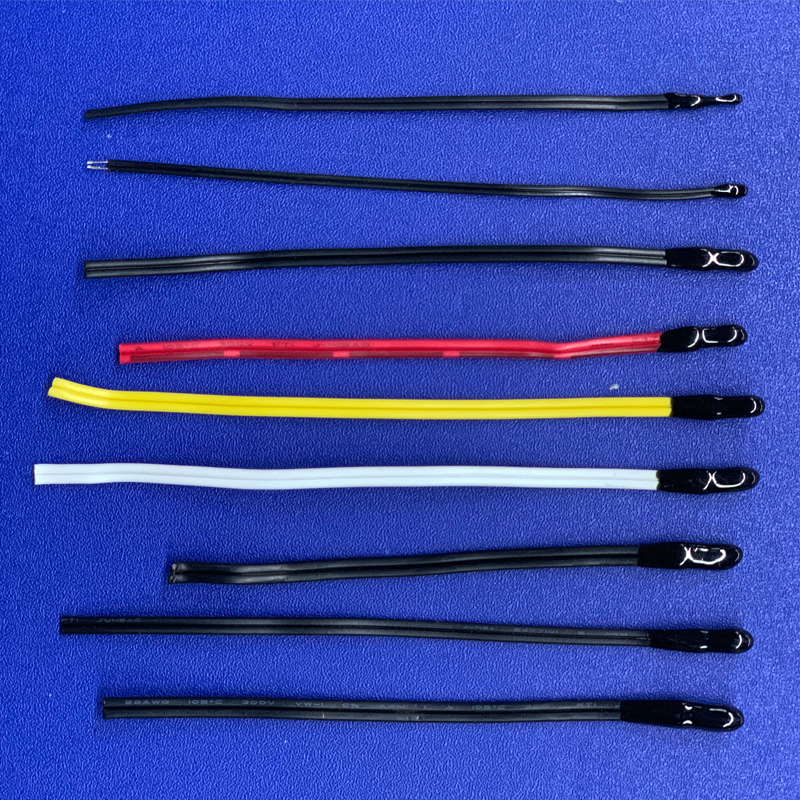
At their core, epoxy-coated thermistors are standard Negative Temperature Coefficient (NTC) or Positive Temperature Coefficient (PTC) thermistors encapsulated in a protective epoxy resin coating. This simple addition transforms a delicate temperature sensor into a durable, versatile component ready for real-world applications.

The epoxy coating serves as both a physical protector and an environmental shield, creating a barrier against:

  • Moisture and humidity

  • Chemical vapors and liquids

  • Mechanical stress and vibration

  • Contaminants and dust

Key Advantages That Make Them Indispensable

1. Superior Environmental Protection
Unlike bare thermistors or glass-encapsulated versions, epoxy-coated thermistors excel in humid or wet environments. The epoxy forms a waterproof seal that prevents moisture from affecting the sensor's accuracy or causing failure.

2. Enhanced Mechanical Durability
The epoxy coating adds structural integrity, making these thermistors resistant to vibration, physical impact, and mechanical stress that would damage unprotected components.

3. Chemical Resistance
From industrial cleaning solutions to automotive fluids, epoxy coatings provide excellent resistance to many chemicals that would corrode standard sensors.

4. Cost-Effective Reliability
While offering significant protection, epoxy-coated thermistors remain affordable – providing industrial-grade durability at consumer-friendly prices.

Where You'll Find Them Working Hard

Medical Devices

  • Patient monitoring equipment

  • Portable diagnostic devices

  • Disposable medical sensors
    The epoxy coating ensures reliability during repeated sterilization and protects against bodily fluids.

Automotive Applications

  • Battery temperature monitoring in EVs

  • Climate control systems

  • Engine management sensors
    They withstand temperature extremes, vibration, and exposure to automotive fluids.

Consumer Electronics

  • Smartphone battery temperature monitoring

  • HVAC system controllers

  • Home appliance temperature control
    The coating protects against humidity and condensation in everyday environments.

Industrial Controls

  • Process temperature monitoring

  • Motor protection

  • Power supply units
    They resist chemical exposure and mechanical stress in factory settings.

Outdoor & Marine Equipment

  • Weather stations

  • Marine sensors

  • Outdoor monitoring systems
    The waterproof nature makes them ideal for exposed applications.

Choosing the Right Epoxy-Coated Thermistor

When selecting an epoxy-coated thermistor, consider:

Temperature Range: Most operate from -55°C to +150°C, with specialized versions for extreme temperatures.

Response Time: The epoxy coating slightly increases thermal response time compared to bare elements – ensure this meets your application requirements.

Accuracy and Stability: Look for components with tight tolerance and long-term stability specifications.

Lead Configuration: Available in axial leads, radial leads, or surface mount versions to match your assembly needs.

Installation Best Practices

  1. Avoid Mechanical Stress: Don't bend leads close to the epoxy body

  2. Mind the Temperature: Keep soldering temperatures within specified limits

  3. Proper Sealing: Ensure complete environmental protection in your assembly

  4. Thermal Coupling: Maximize thermal contact for accurate readings

When to Choose Epoxy Over Other Options

While glass-encapsulated thermistors offer higher temperature capability and hermetically sealed versions provide ultimate protection, epoxy-coated thermistors hit the sweet spot for most applications requiring:

  • Good moisture resistance

  • Mechanical durability

  • Cost-effective protection

  • Moderate temperature requirements

Conclusion: Reliability Where It Counts

Epoxy-coated thermistors represent the perfect balance of performance, protection, and affordability. They bring laboratory-grade temperature sensing into the real world – surviving the challenges of moisture, chemicals, and physical stress that would defeat ordinary sensors.

Whether you're designing a medical device that must withstand sterilization, an automotive system facing vibration and fluids, or consumer electronics exposed to humid environments, epoxy-coated thermistors provide the reliable temperature monitoring your application demands.

Their simple elegance – a proven sensing technology wrapped in a protective shell – demonstrates how sometimes the most effective solutions are also the most straightforward.
Featured Blogs

The Complete Guide to PTC Fan Heaters for Industrial Cabinet Protection

The Complete Guide to PTC Fan Heaters for Industrial Cabinet Protection

Industrial automation relies on sensitive electronics housed within control cabinets, but these enclosures face a constant threat: temperature fluctuations. Condensation in humid conditions, freezing in cold climates, and component stress from temperature swings can lead to malfunctions, downtime, and costly repairs. To solve this, engineers are increasingly turning to integrated PTC Fan Heaters – a robust, intelligent solution designed for reliability. Available in key power ratings like 150W, 300W, 400W, and 600W, these units are the guardians of critical electrical systems.

Read More
The Smart Way to Heat Liquids: A Guide to PTC Immersion Heating Rods

The Smart Way to Heat Liquids: A Guide to PTC Immersion Heating Rods

When your application requires precise and reliable heating of a liquid—whether it's water in a tank, oil in a reservoir, or a chemical in a process bath—the heating element you choose is critical. Enter the Immersion Water Heater Element with PTC (Positive Temperature Coefficient) technology. This isn't your standard heating coil; it's an intelligent, self-regulating solution that offers superior safety and efficiency. Let's dive into what makes these tubular heating rods a game-changer for liquid temperature control.

Read More
High-Power PTC Heaters: The Future of Efficient, Self-Regulating Industrial Heating

High-Power PTC Heaters: The Future of Efficient, Self-Regulating Industrial Heating

When it comes to industrial heating, efficiency, safety, and reliability are not just benefits—they are necessities. Enter the High-Power PTC (Positive Temperature Coefficient) Heater, a game-changing technology that is redefining thermal management in demanding environments. Unlike traditional resistive heaters that require external controls to prevent overheating, PTC heaters are inherently smart. Their core ceramic material possesses a unique property: electrical resistance increases dramatically at a specific Curie temperature. This simple physical principle translates into powerful real-world advantages.

Read More
The 220VAC 300W PTC Aluminum Heating Plate: The Smart, Safe Heart of Modern Appliances

The 220VAC 300W PTC Aluminum Heating Plate: The Smart, Safe Heart of Modern Appliances

In the world of heating elements, efficiency, safety, and longevity are paramount. While traditional resistance wire heaters have served us for decades, a newer technology has emerged as the superior choice for countless applications: the PTC (Positive Temperature Coefficient) heating element. Specifically, the 220VAC 300W PTC Aluminum Heating Plate represents a perfect blend of intelligent design and robust performance. Let's explore why this component is revolutionizing appliance design.

Read More
Efficient and Safe Heating Solutions: In-depth Understanding of the 1200W/1800W 220V Cross-Flow Fan PTC Heater

Efficient and Safe Heating Solutions: In-depth Understanding of the 1200W/1800W 220V Cross-Flow Fan PTC Heater

In applications requiring rapid, stable, and safe air heating, such as fresh air systems, air curtains, drying equipment, or duct heating, selecting the right heating component is crucial. Heater modules combining PTC ceramic heating technology with high-efficiency cross-flow fans are becoming a popular choice in modern HVAC and industrial applications. Today, we'll analyze this high-performance 1200W/1800W 220V cross-flow fan PTC heater in detail.

Read More
Ceramic PTC Heaters: The Smart Choice for Modern Heating

Ceramic PTC Heaters: The Smart Choice for Modern Heating

When it comes to efficient, safe, and compact heating solutions, ceramic PTC (Positive Temperature Coefficient) heaters are revolutionizing the industry. Unlike traditional heaters that rely on constant power and external controls, PTC heaters offer a built-in “brain” that makes them remarkably efficient and reliable.

Read More
Compact PTC Heaters: Your Efficient & Safe Solution for Instant Warmth

Compact PTC Heaters: Your Efficient & Safe Solution for Instant Warmth

Feeling a chill in your home office, bathroom, or a small living space? Traditional heaters often feel bulky, inefficient, or even unsafe. Enter the compact PTC heater – a modern marvel of heating technology that's changing how we stay warm.

Read More
PTC Heating Film: The Smart, Efficient Future of Warmth

PTC Heating Film: The Smart, Efficient Future of Warmth

Tired of cold floors, inefficient heaters, and high energy bills? Modern heating technology offers a superior solution: Positive Temperature Coefficient (PTC) Heating Film. This innovative material is revolutionizing how we deliver warmth in homes, offices, and industrial settings. But what exactly is it, and why is it gaining so much popularity?

Read More