Custom PTC solutions from prototype to mass production.

Small Component, Massive Impact: Unveiling the 3 Core Advantages of NTC Thermistors

Small Component, Massive Impact: Unveiling the 3 Core Advantages of NTC Thermistors

PTC Heater
Oct 21, 2025•Posted by Dongguan Tianrui Electronics Co., Ltd.

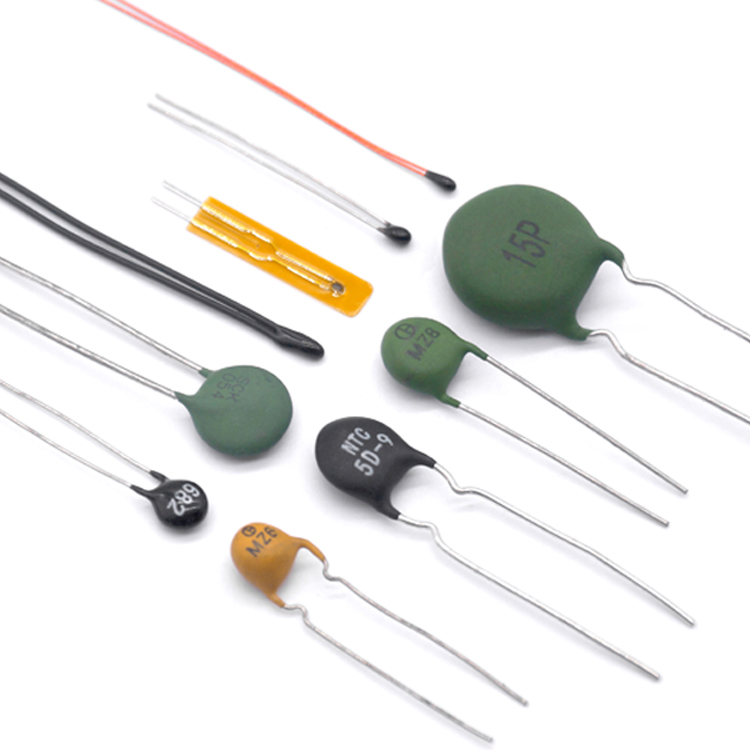
In the intricate world of electronics, some of the most critical components are often the smallest and most unassuming. The NTC (Negative Temperature Coefficient) thermistor is a perfect example. While it may look like a simple resistor, this tiny semiconductor device holds immense power to enhance the performance, safety, and cost-effectiveness of your designs.

Let's unveil the three core advantages that make NTC thermistors an engineer's secret weapon.

Advantage 1: High Sensitivity and Fast Response

Unlike other temperature sensors like RTDs or thermocouples, NTC thermistors exhibit a large change in resistance for a small change in temperature. This high sensitivity is their superpower.

  • What it means: A slight temperature shift results in a significant and easily measurable change in resistance. This allows circuits to detect even minor thermal fluctuations with high precision.

  • Why it matters: This makes NTCs ideal for applications requiring fine temperature control and rapid feedback, such as:

    • Battery Temperature Monitoring in portable devices to prevent overheating.

    • Thermal Protection for motors and power converters.

    • Medical Thermometers where accuracy and speed are critical.

Advantage 2: Inrush Current Limiting – The Guardian of Your Circuit

One of the most classic and valuable applications of an NTC thermistor is protecting components from the destructive surge of current that occurs at power-up, known as inrush current.

  • How it works: At room temperature, the NTC has a high resistance. When placed in series with the power supply, this high resistance effectively "chokes" the initial inrush of current, protecting sensitive components like capacitors and rectifiers.

  • The Magic: As current passes through the NTC, it heats up due to its own power dissipation. Following its negative temperature characteristic, its resistance drops dramatically, allowing normal operating current to flow with minimal loss. It acts as a self-adjusting, solid-state soft-start circuit.

  • Why it matters: This provides a robust, reliable, and component-saving solution for power supplies, motor drives, and lighting systems, often replacing more complex and bulky solutions.

Advantage 3: Outstanding Cost-Effectiveness and Versatility

In mass production, every cent counts. The NTC thermistor delivers exceptional value without compromising on performance.

  • Cost-Effective: NTCs are inexpensive to manufacture, making them one of the most economical solutions for temperature sensing and inrush current limiting on the market.

  • Small Form Factor: Their compact size allows them to be integrated into increasingly miniaturized PCBs and embedded directly into assemblies like motor windings or battery packs.

  • Versatile: They are available in a vast range of resistances, tolerances, and packaging styles (e.g., epoxy-coated, glass-encapsulated, surface mount), making them suitable for everything from benign consumer environments to harsh automotive or industrial applications.

Conclusion

The NTC thermistor is a testament to the idea that great things come in small packages. Its trio of core advantages—high sensitivity, robust inrush current protection, and unmatched cost-effectiveness—solidifies its role as an indispensable component in the modern circuit designer's toolkit. By leveraging these strengths, you can create designs that are not only smarter and safer but also more competitive. Never underestimate the power of this small component to make a massive impact.
Featured Blogs

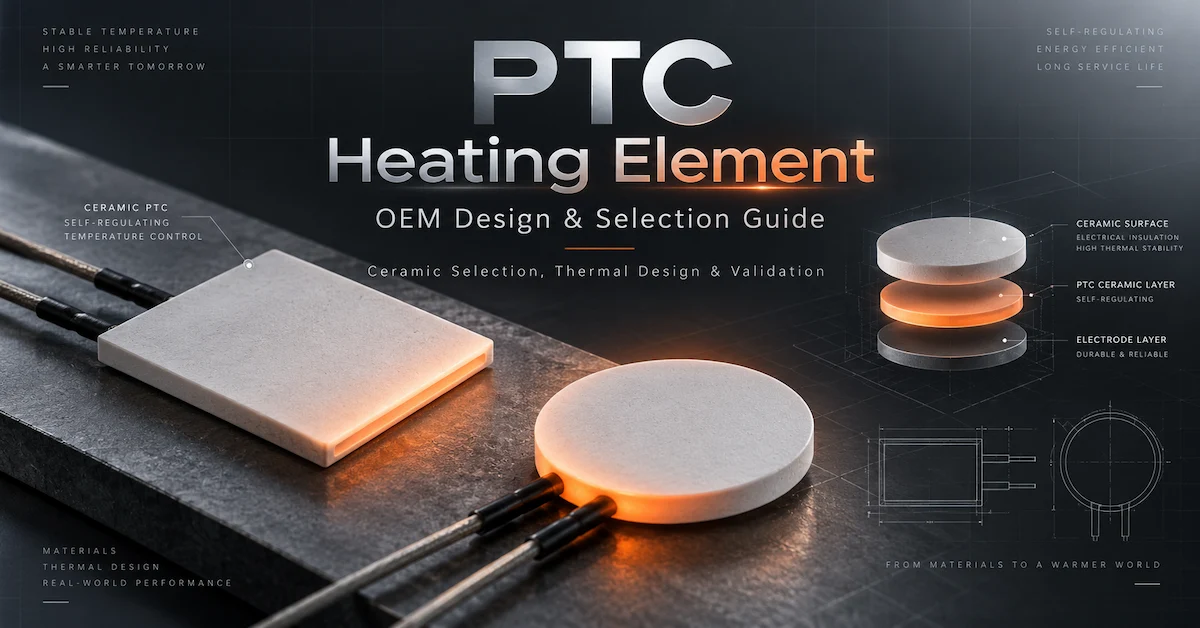
PTC Heating Element for OEM Equipment: Ceramic Selection, Thermal Design, and Validation Guide

PTC Heating Element for OEM Equipment: Ceramic Selection, Thermal Design, and Validation Guide

Selecting the right PTC Heating Element requires more than matching a voltage or Curie temperature: ceramic geometry, electrical behavior, thermal contact, and operating conditions determine the result inside an OEM product. This engineering-focused guide explains how to choose PTC ceramic elements for appliance, HVAC, and industrial designs, evaluate Tianrui product options, validate prototypes, and prepare an actionable custom-heating RFQ.

Read More
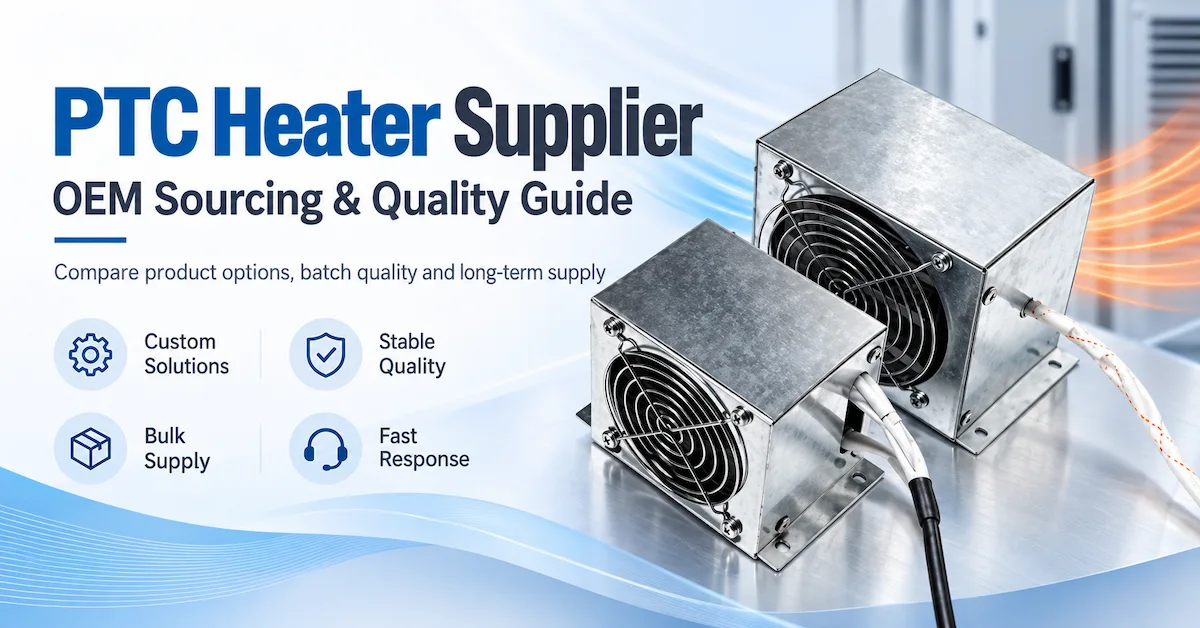
PTC Heater Supplier for OEM Production: How to Compare Quotations, Batch Quality, and Long-Term Supply

PTC Heater Supplier for OEM Production: How to Compare Quotations, Batch Quality, and Long-Term Supply

Choosing the right PTC Heater Supplier is essential for OEM manufacturers that need consistent heating performance, competitive procurement costs, and dependable repeat deliveries. This comprehensive sourcing guide explains how to compare PTC heater suppliers, evaluate product configurations, negotiate quotations, verify batch quality, manage supply risks, and establish reliable OEM/ODM purchasing relationships for household appliances, HVAC systems, industrial equipment, and electric vehicle applications.

Read More
PTC Heater Manufacturer for OEM Equipment: Engineering Validation, Quality Control, and Sourcing Guide

PTC Heater Manufacturer for OEM Equipment: Engineering Validation, Quality Control, and Sourcing Guide

Choosing a reliable PTC Heater Manufacturer requires more than comparing heating power, unit price, and catalog specifications. This comprehensive OEM sourcing guide explains how to evaluate PTC heater designs, calculate application requirements, validate thermal performance, assess manufacturing quality, and prepare technical RFQs for household appliances, industrial equipment, HVAC systems, and electric vehicle applications.

Read More
PTC Heating Element Manufacturer: OEM Guide for Custom Heating Solutions

PTC Heating Element Manufacturer: OEM Guide for Custom Heating Solutions

Choosing the right PTC Heating Element Manufacturer is essential for stable heating performance, safety and long-term supply reliability. This guide explains PTC heating element structures, applications, customization options, manufacturing processes and key factors OEM buyers should evaluate before selecting a supplier.

Read More
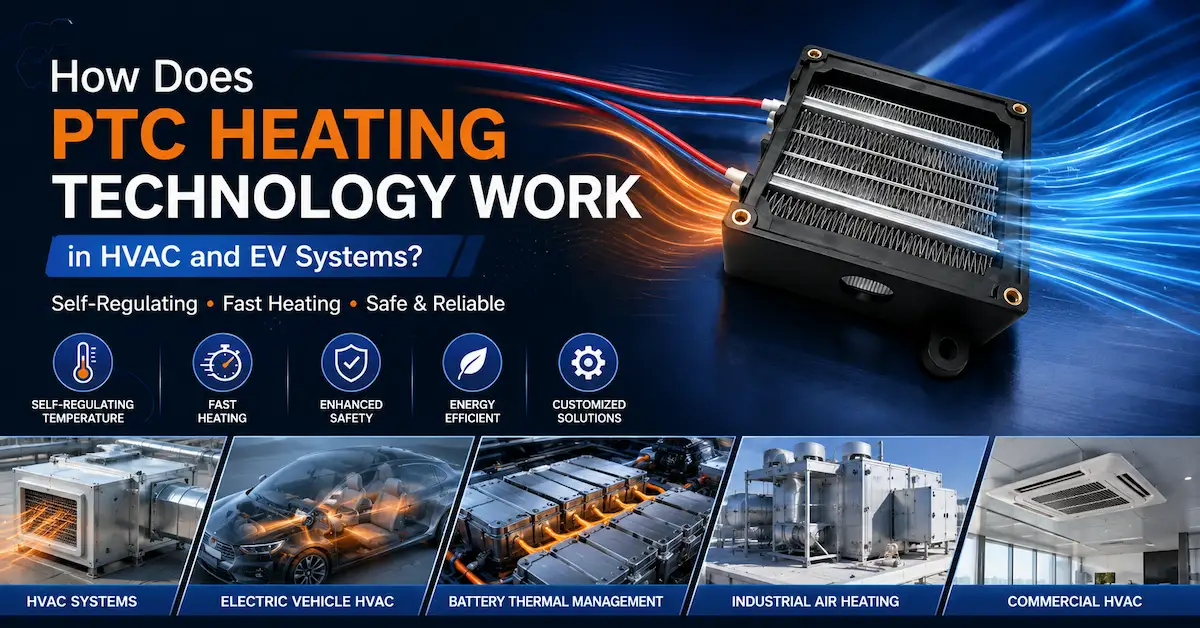
How Does PTC Heating Technology Work in HVAC and EV Systems?

How Does PTC Heating Technology Work in HVAC and EV Systems?

PTC Heating Technology provides self-regulating electric heating for HVAC, electric vehicles, industrial equipment and thermal management systems. This guide explains the ceramic heating principle, key advantages, heater types, application differences and selection factors that OEM engineers and buyers should evaluate before choosing a PTC heating solution.

Read More
PTC Heater for HVAC System: Working Principle, Applications and Selection Guide

PTC Heater for HVAC System: Working Principle, Applications and Selection Guide

PTC heaters for HVAC systems provide efficient and reliable heating solutions for automotive, industrial and commercial applications. This guide explains how PTC heaters work, their advantages, applications and how to select a suitable supplier for customized HVAC heating requirements.

Read More
PTC Heater for Electric Vehicle: How to Choose the Right EV Heating Solution

PTC Heater for Electric Vehicle: How to Choose the Right EV Heating Solution

PTC heaters for electric vehicles provide efficient cabin heating and battery thermal management solutions in cold environments. This guide explains how EV manufacturers can select suitable PTC heaters based on heating performance, safety, energy efficiency, customization and supplier capability.

Read More
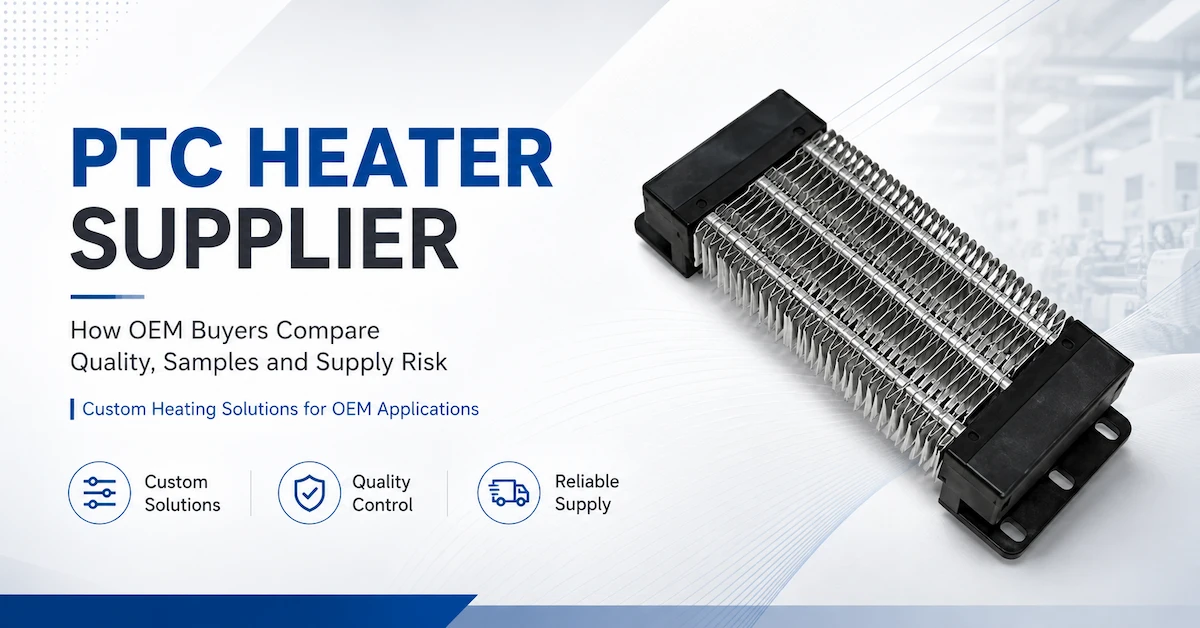
PTC Heater Supplier Guide: How OEM Buyers Compare Quality, Samples and Supply Risk

PTC Heater Supplier Guide: How OEM Buyers Compare Quality, Samples and Supply Risk

Choosing a PTC Heater Supplier involves more than comparing wattage and unit price. This guide helps OEM buyers evaluate technical support, customization, sample testing, quality control, quotations, lead time and long-term supply reliability before approving a heating partner.

Read More