Dongguan Tianrui Electronics Co., Ltd.
Dongguan Tianrui Electronics Co., Ltd. logo
Silicon PTC Thermistors: The Linear Alternative to Ceramic Types

Silicon PTC Thermistors: The Linear Alternative to Ceramic Types

PTC Heater
Sep 22, 2025Posted by Dongguan Tianrui Electronics Co., Ltd.

When engineers think of PTC thermistors, the image that most often comes to mind is the ceramic type, known for its sharp, dramatic resistance switch at the Curie point. But there's another player in the PTC arena that offers a completely different set of characteristics: the silicon PTC thermistor. Understanding the difference between these two is key to selecting the perfect component for sensing, not just protection.

The Classic: Ceramic PTC Thermistors

First, let's recall the behavior of traditional ceramic PTCs (often made from barium titanate):

  • Highly Non-Linear: Their resistance is relatively flat and low until they hit a specific Curie point, at which point it increases exponentially.

  • Application: This sharp "switch" makes them ideal for protection (resettable fuses, inrush current limiters) and heating (self-regulating heaters).

  • Drawback for Sensing: Their extreme non-linearity makes them virtually useless for measuring temperature over a wide range.

The Linear Alternative: Silicon PTC Thermistors

Silicon PTCs, as the name implies, are manufactured using silicon semiconductor processes. Their behavior is fundamentally different:

  • Linear Response: The key advantage. Their resistance has a linear (or nearly linear) positive increase with temperature. This is a stark contrast to the abrupt switch of ceramic types.

  • Precision: They offer a very predictable and repeatable resistance-temperature relationship, making them excellent for accurate temperature measurement.

  • Limited Temperature Range: They typically operate over a more limited range than ceramic PTCs, usually between -50°C to +150°C, which is suitable for most electronic applications.

Head-to-Head Comparison

Feature Silicon PTC Thermistor Ceramic PTC Thermistor
R-T Curve Linear Highly Non-Linear (Sharp Switch)
Primary Use Temperature Sensing & Measurement Circuit Protection, Heating
Accuracy High (Good for measurement) Low (Not suitable for measurement)
Response Speed Fast Slower
Temp Range Moderate (~-50°C to +150°C) Wide (can be very high)
Cost Generally Higher Very Low Cost

Why Choose a Silicon PTC? The Applications

You would select a silicon PTC thermistor when your goal is accurate, linear temperature measurement or compensation. Their predictability simplifies circuit design compared to the complex linearization required for NTCs.

Common applications include:

  • Temperature Sensing in ICs: Often integrated directly onto microchips and other semiconductors to monitor die temperature and prevent overheating.

  • Battery Temperature Monitoring: Critical in battery management systems (BMS) for smartphones, laptops, and EVs to ensure safe charging and discharging.

  • Temperature Compensation: Used to stabilize the bias points of transistors and other components that drift with temperature.

  • Digital Thermometers: Where a linear response is easier to convert into an accurate digital readout.

Why You Might Still Choose a Ceramic PTC

If you need to protect a circuit from overcurrent, limit inrush current, or create a self-regulating heater, the ceramic PTC's sharp non-linearity is exactly what you want. Its "switch-like" behavior is a feature, not a bug, in these contexts.

Conclusion

Silicon and ceramic PTC thermistors are not competitors; they are complementary components designed for vastly different missions. The choice is clear:

  • Use a ceramic PTC when you need a switch—for protection, inrush limiting, or heating.

  • Use a silicon PTC when you need a sensor—for precise, linear temperature measurement and monitoring.

By understanding the linear alternative that silicon provides, engineers can make more informed decisions, leveraging the right type of PTC to optimize performance, accuracy, and reliability in their specific application.
Featured Blogs

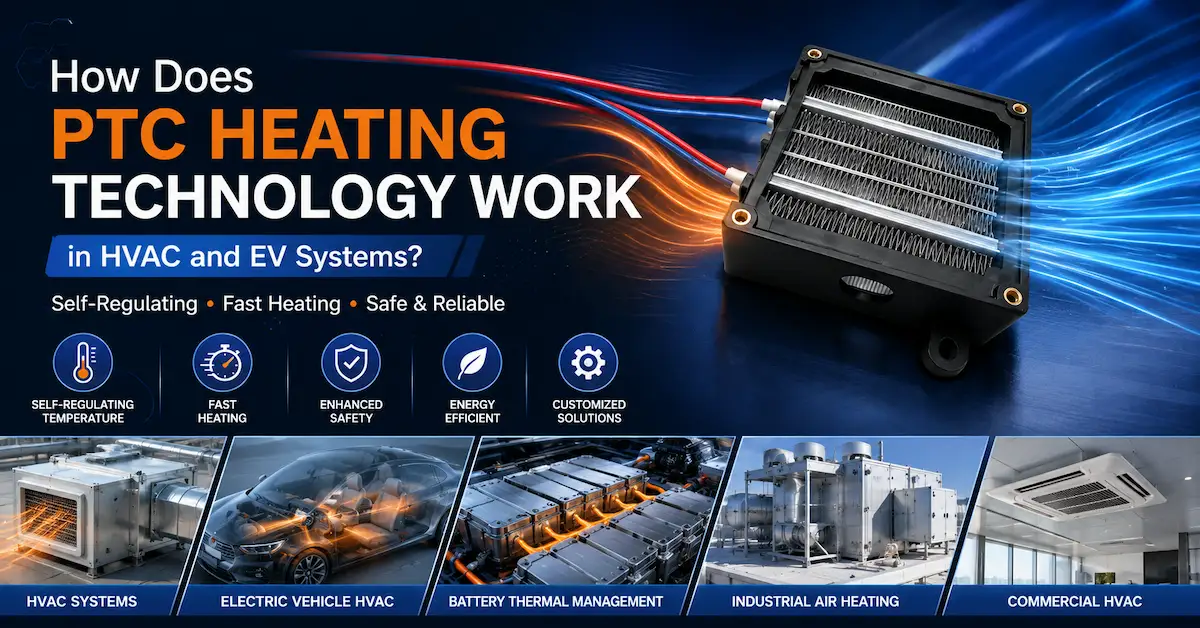
How Does PTC Heating Technology Work in HVAC and EV Systems?

How Does PTC Heating Technology Work in HVAC and EV Systems?

PTC Heating Technology provides self-regulating electric heating for HVAC, electric vehicles, industrial equipment and thermal management systems. This guide explains the ceramic heating principle, key advantages, heater types, application differences and selection factors that OEM engineers and buyers should evaluate before choosing a PTC heating solution.

Read More
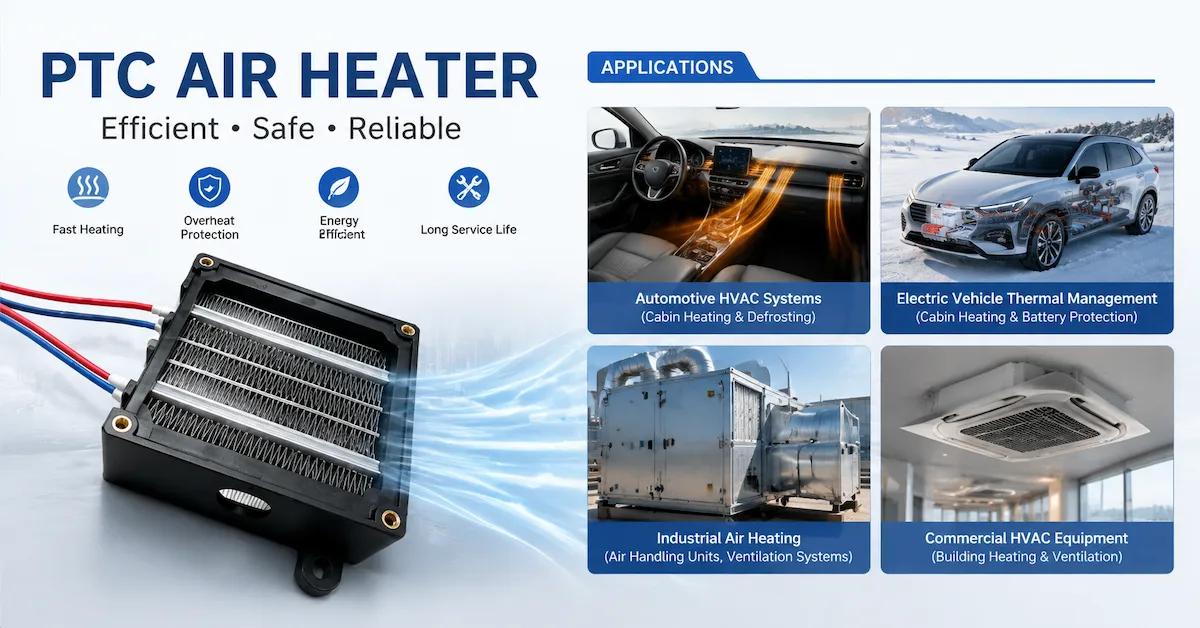
PTC Heater for HVAC System: Working Principle, Applications and Selection Guide

PTC Heater for HVAC System: Working Principle, Applications and Selection Guide

PTC heaters for HVAC systems provide efficient and reliable heating solutions for automotive, industrial and commercial applications. This guide explains how PTC heaters work, their advantages, applications and how to select a suitable supplier for customized HVAC heating requirements.

Read More
PTC Heater for Electric Vehicle: How to Choose the Right EV Heating Solution

PTC Heater for Electric Vehicle: How to Choose the Right EV Heating Solution

PTC heaters for electric vehicles provide efficient cabin heating and battery thermal management solutions in cold environments. This guide explains how EV manufacturers can select suitable PTC heaters based on heating performance, safety, energy efficiency, customization and supplier capability.

Read More
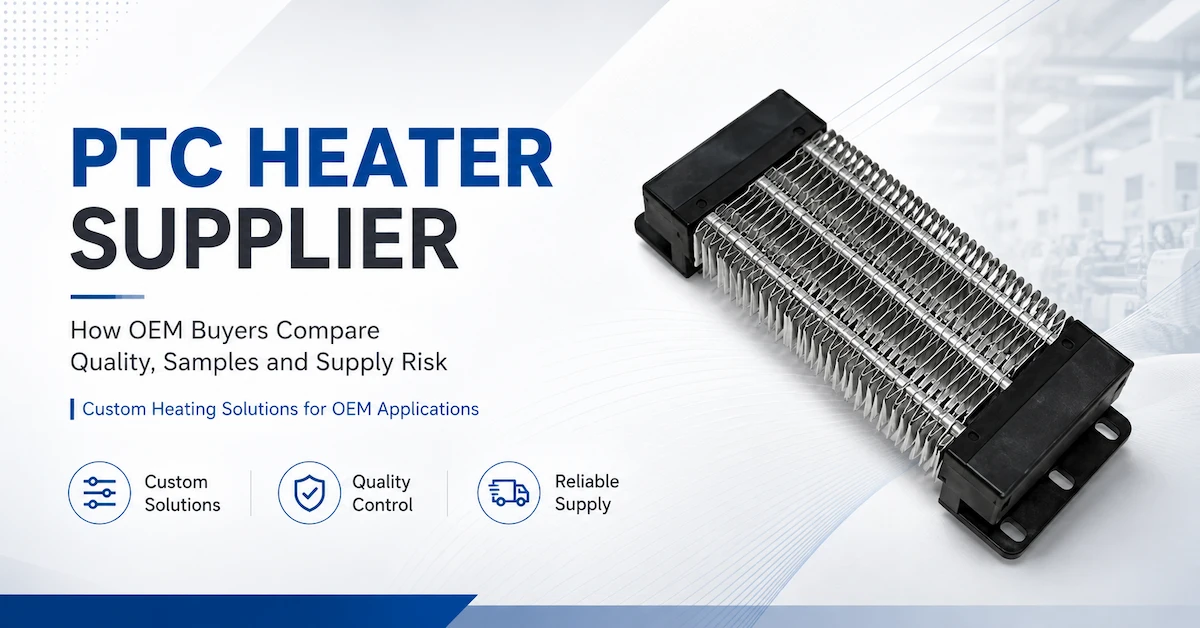
PTC Heater Supplier Guide: How OEM Buyers Compare Quality, Samples and Supply Risk

PTC Heater Supplier Guide: How OEM Buyers Compare Quality, Samples and Supply Risk

Choosing a PTC Heater Supplier involves more than comparing wattage and unit price. This guide helps OEM buyers evaluate technical support, customization, sample testing, quality control, quotations, lead time and long-term supply reliability before approving a heating partner.

Read More
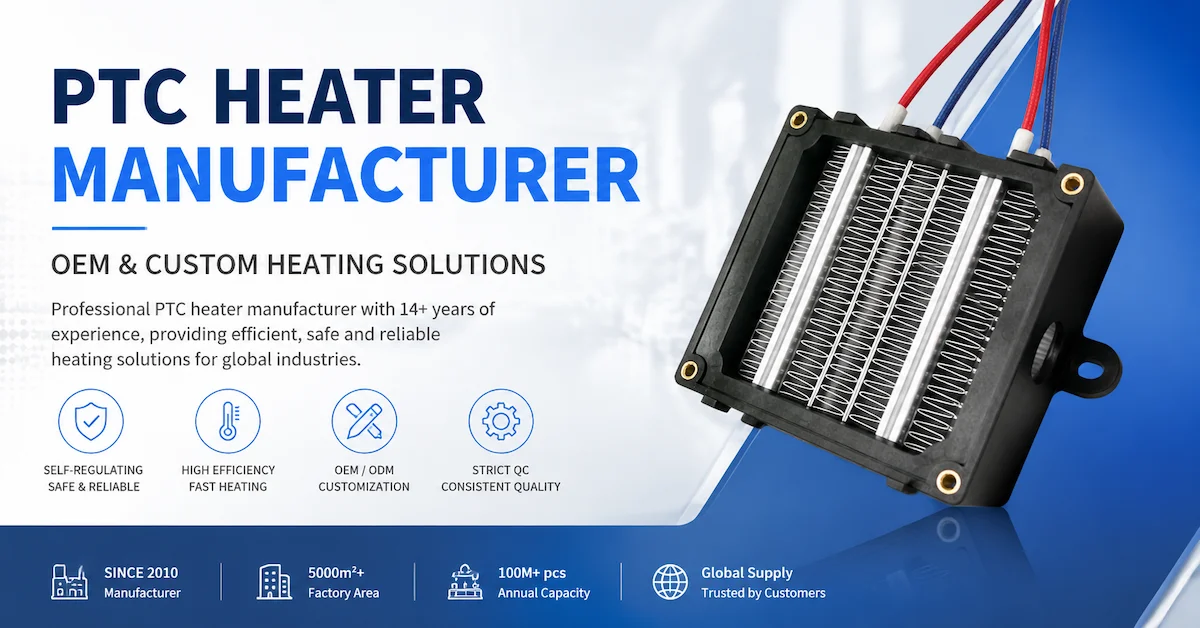
PTC Heater Manufacturer: How to Choose the Right OEM Partner

PTC Heater Manufacturer: How to Choose the Right OEM Partner

Choosing the right PTC heater manufacturer requires more than comparing price and wattage. This guide explains how OEM buyers can evaluate engineering capability, customization, sample testing, quality control, production consistency, cost, and RFQ requirements before selecting a long-term supplier.

Read More
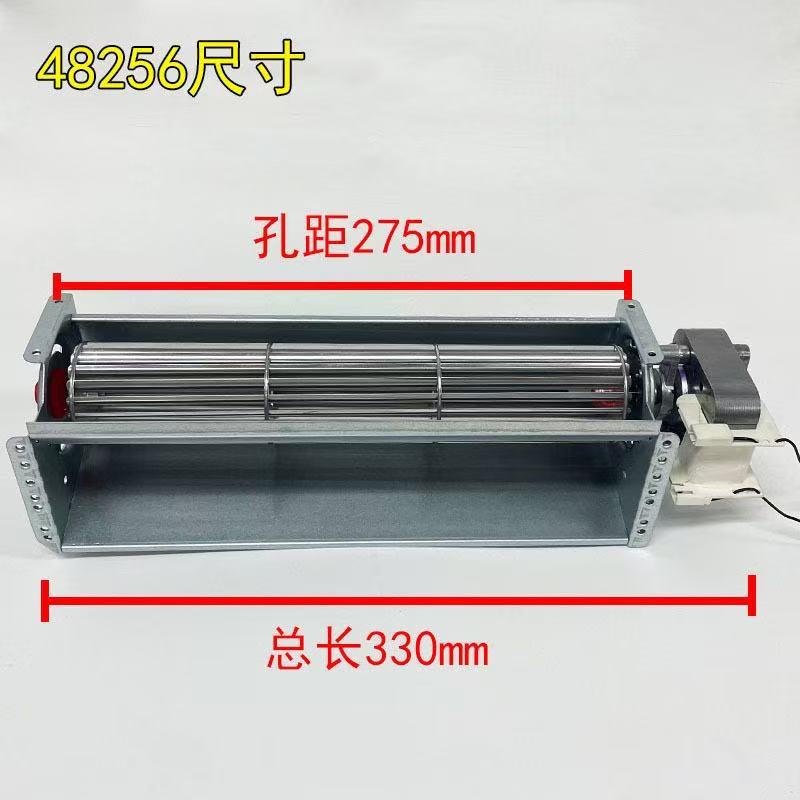
48256 Cross Flow Fan: The Ultimate Guide to Efficient, Low-Noise Airflow

48256 Cross Flow Fan: The Ultimate Guide to Efficient, Low-Noise Airflow

When it comes to moving air efficiently in tight spaces, few solutions match the performance of a cross flow fan (tangential fan). The 48256 model shown in the image is a prime example of this engineering marvel, designed to deliver consistent, low-noise airflow for a wide range of heating, ventilation, and industrial applications. Let’s break down what makes this fan such a versatile and reliable choice.

Read More
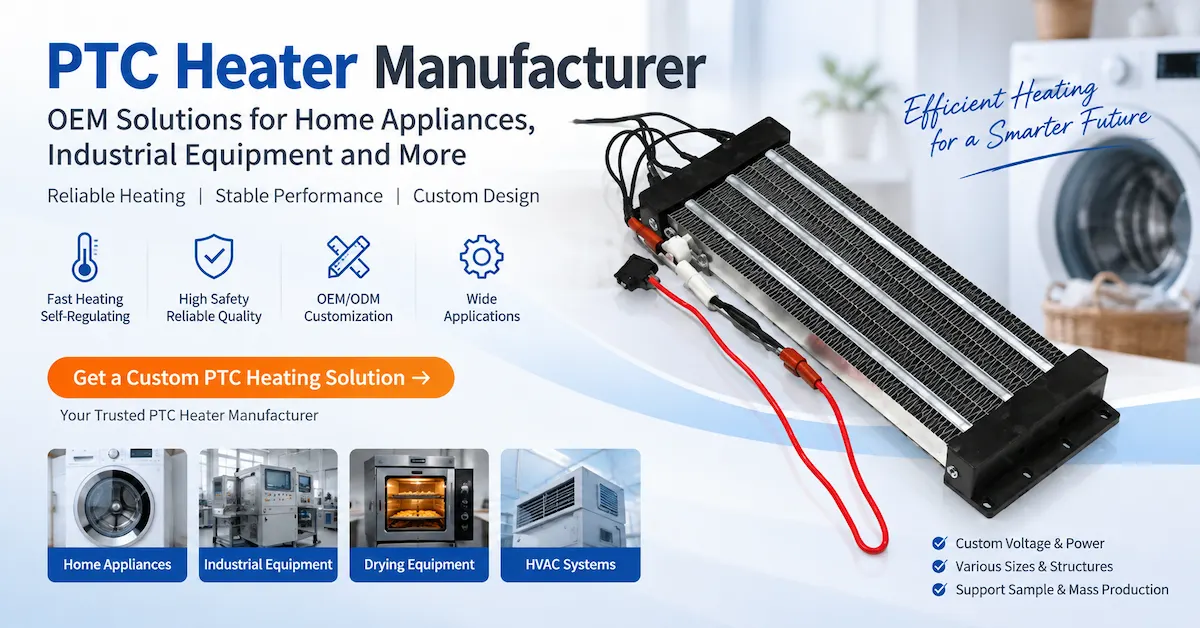
Why Our PTC Air Heaters Are the Smart, Safe Choice for Modern Air Heating

Why Our PTC Air Heaters Are the Smart, Safe Choice for Modern Air Heating

If you’ve ever dealt with unreliable heating elements, energy waste, or safety concerns in your air heating systems, it’s time to meet the solution: PTC (Positive Temperature Coefficient) air heaters. These compact, powerful modules are more than just heating components—they’re engineered to deliver consistent, safe, and efficient heat across countless applications, and our line of customizable models (as seen in the image) is built to exceed expectations.

Read More
The Complete Guide to PTC Fan Heaters for Industrial Cabinet Protection

The Complete Guide to PTC Fan Heaters for Industrial Cabinet Protection

Industrial automation relies on sensitive electronics housed within control cabinets, but these enclosures face a constant threat: temperature fluctuations. Condensation in humid conditions, freezing in cold climates, and component stress from temperature swings can lead to malfunctions, downtime, and costly repairs. To solve this, engineers are increasingly turning to integrated PTC Fan Heaters – a robust, intelligent solution designed for reliability. Available in key power ratings like 150W, 300W, 400W, and 600W, these units are the guardians of critical electrical systems.

Read More