Custom PTC solutions from prototype to mass production.

How to Test and Troubleshoot a PTC Thermistor with a Multimeter

How to Test and Troubleshoot a PTC Thermistor with a Multimeter

PTC Heater
Sep 22, 2025•Posted by Dongguan Tianrui Electronics Co., Ltd.

Suspect a faulty PTC thermistor in your circuit? Whether it's a resettable fuse that won't reset or a heater that isn't warming up, a standard digital multimeter (DMM) is the perfect tool for a quick and effective diagnosis. This guide will walk you through the simple steps to test and troubleshoot a PTC thermistor.

Safety First!

  • Disconnect Power: Always ensure the device is completely disconnected from any power source and that any capacitors are discharged before testing.

  • Isolate the Component: For the most accurate reading, desolder at least one leg of the PTC thermistor from the circuit board. Testing it in-circuit can give false readings due to parallel paths with other components.

What You'll Need:

  • A digital multimeter (DMM)

  • The suspect PTC thermistor

  • A heat source (e.g., a hairdryer, a hot air rework station on low, or a cup of hot water)

Step 1: The Room Temperature Resistance Test

This is the first and most basic check.

  1. Set your multimeter to the resistance (Ohms, Ω) mode. Choose an appropriate range, usually the auto-ranging or the 2kΩ range is a good start.

  2. Place the multimeter probes on the two terminals of the PTC thermistor. Polarity does not matter.

  3. Read the value.

What to Expect:

  • A good PTC should show a low resistance value. This can range from a few ohms to around 100 ohms, depending on its specific model and rating. Consult its datasheet for the exact typical value (R<sub>min</sub>).

  • Troubleshooting:

    • Infinite Resistance (OL): The PTC has failed open. It is blown and must be replaced. This is a common failure mode if it was subjected to a fault far beyond its maximum ratings.

    • Zero Resistance (0Ω): The PTC has failed short. This is very rare but indicates a catastrophic internal failure. It must be replaced.

Step 2: The Heat Test (The Functional Test)

This test confirms the component's core functionality: its ability to change resistance with temperature.

  1. Keep your multimeter probes attached, watching the resistance reading.

  2. Gently apply heat to the body of the PTC thermistor using your heat source. A hairdryer on a low setting works perfectly. Do not use a direct flame, as it can easily destroy the component.

  3. Observe the multimeter's reading closely.

What to Expect:

  • A good PTC will show a slow but steady increase in resistance as it warms up. If you heat it past its specific Curie or switching point, the resistance will increase dramatically, often jumping to hundreds of thousands of ohms (kΩ) or more, possibly causing the meter to read "OL".

  • Troubleshooting:

    • No Change in Resistance: If the resistance stays stubbornly low regardless of how much you heat it, the PTC is failed and stuck in its low-resistance state. It has lost its PTC characteristic and must be replaced.

    • Resistance Drops: This is highly unusual and indicates the component is actually an NTC thermistor, not a PTC.

Step 3: The Cool-Down Test (Checking the Reset)

A key feature of a PTC is that it self-resets.

  1. Remove the heat source.

  2. Continue to watch the multimeter reading.

What to Expect:

  • A good PTC will slowly cool down. As it does, its resistance will decrease steadily back to its original low value. This may take a minute or two.

  • Troubleshooting:

    • If the resistance stays high and does not decrease after the component has clearly cooled to room temperature, the PTC has failed in its tripped state and will not reset. It needs replacement.

Interpreting Your Results

Test Good PTC Bad PTC (Replace)
Cold Resistance Low Resistance (e.g., 10Ω - 100Ω) OL (Open) or 0Ω (Shorted)
Heat Applied Resistance Increases dramatically No change in resistance
Heat Removed Resistance Decreases to original value Resistance stays high (won't reset)

Conclusion

Testing a PTC thermistor is a straightforward process that can save you time and money in repairs. By systematically checking its resistance at room temperature, under heat, and after cooling, you can definitively determine if it's functioning correctly or if it's the cause of your circuit's malfunction. Remember, a working PTC should have a low cold resistance, a rapidly increasing hot resistance, and it must always reset itself after cooling down.
Featured Blogs

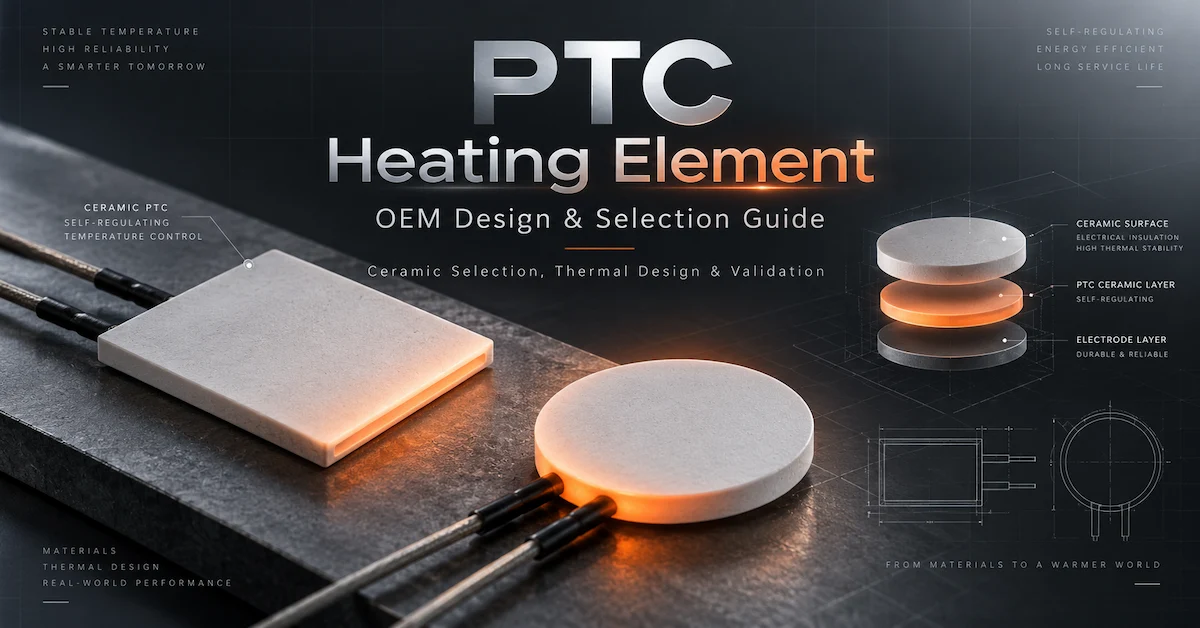
PTC Heating Element for OEM Equipment: Ceramic Selection, Thermal Design, and Validation Guide

PTC Heating Element for OEM Equipment: Ceramic Selection, Thermal Design, and Validation Guide

Selecting the right PTC Heating Element requires more than matching a voltage or Curie temperature: ceramic geometry, electrical behavior, thermal contact, and operating conditions determine the result inside an OEM product. This engineering-focused guide explains how to choose PTC ceramic elements for appliance, HVAC, and industrial designs, evaluate Tianrui product options, validate prototypes, and prepare an actionable custom-heating RFQ.

Read More
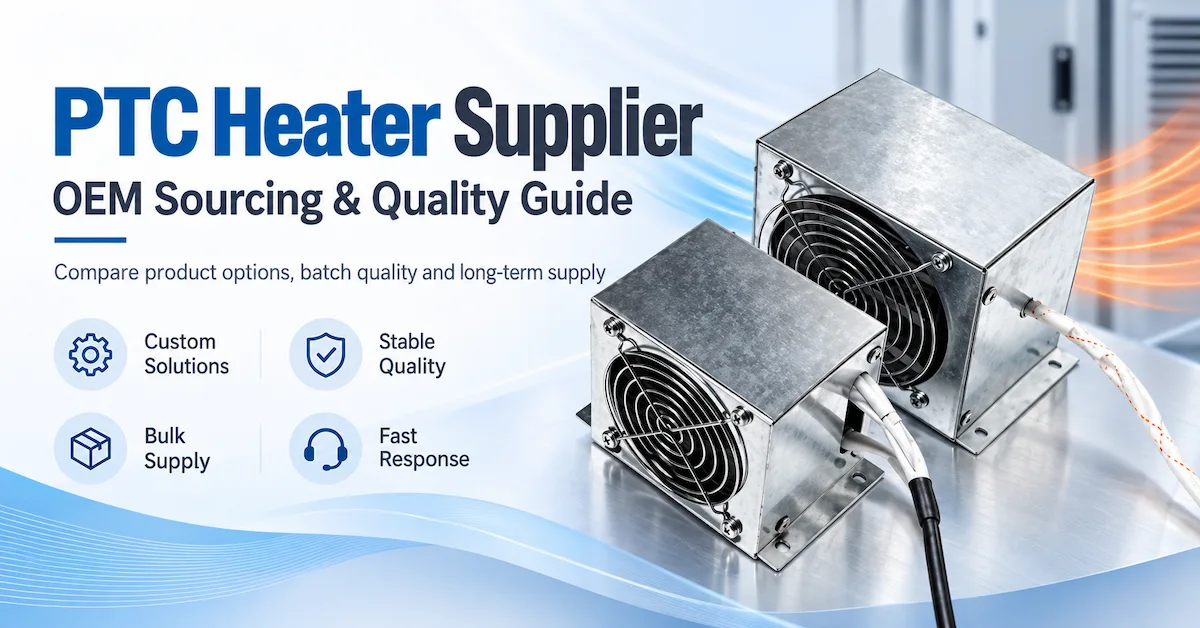
PTC Heater Supplier for OEM Production: How to Compare Quotations, Batch Quality, and Long-Term Supply

PTC Heater Supplier for OEM Production: How to Compare Quotations, Batch Quality, and Long-Term Supply

Choosing the right PTC Heater Supplier is essential for OEM manufacturers that need consistent heating performance, competitive procurement costs, and dependable repeat deliveries. This comprehensive sourcing guide explains how to compare PTC heater suppliers, evaluate product configurations, negotiate quotations, verify batch quality, manage supply risks, and establish reliable OEM/ODM purchasing relationships for household appliances, HVAC systems, industrial equipment, and electric vehicle applications.

Read More
PTC Heater Manufacturer for OEM Equipment: Engineering Validation, Quality Control, and Sourcing Guide

PTC Heater Manufacturer for OEM Equipment: Engineering Validation, Quality Control, and Sourcing Guide

Choosing a reliable PTC Heater Manufacturer requires more than comparing heating power, unit price, and catalog specifications. This comprehensive OEM sourcing guide explains how to evaluate PTC heater designs, calculate application requirements, validate thermal performance, assess manufacturing quality, and prepare technical RFQs for household appliances, industrial equipment, HVAC systems, and electric vehicle applications.

Read More
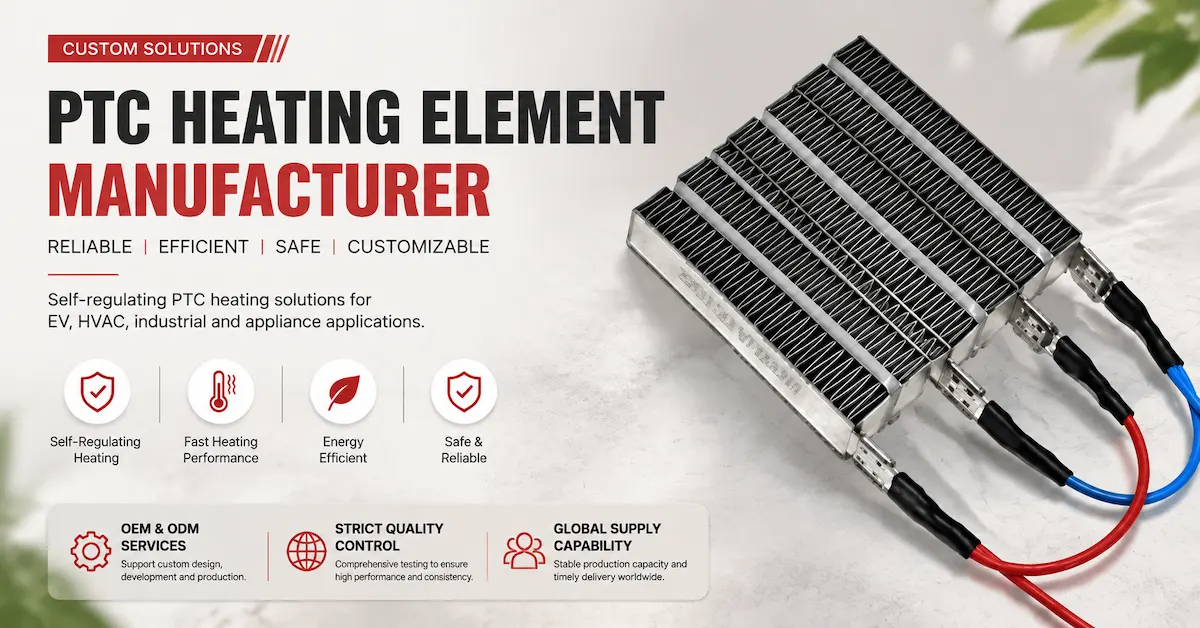
PTC Heating Element Manufacturer: OEM Guide for Custom Heating Solutions

PTC Heating Element Manufacturer: OEM Guide for Custom Heating Solutions

Choosing the right PTC Heating Element Manufacturer is essential for stable heating performance, safety and long-term supply reliability. This guide explains PTC heating element structures, applications, customization options, manufacturing processes and key factors OEM buyers should evaluate before selecting a supplier.

Read More
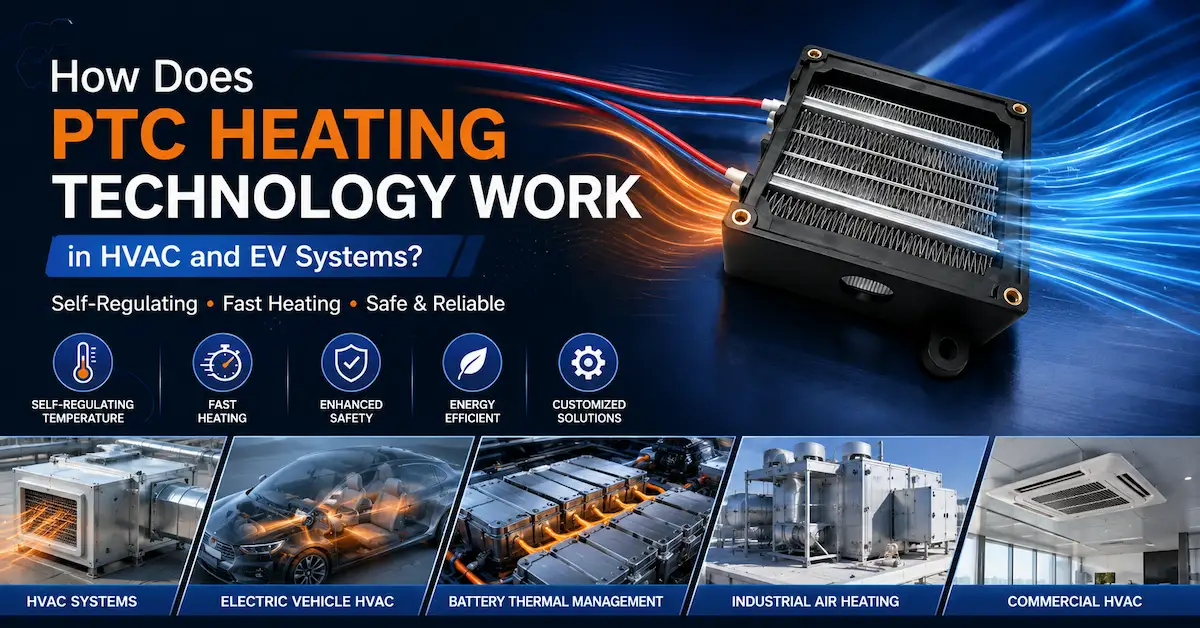
How Does PTC Heating Technology Work in HVAC and EV Systems?

How Does PTC Heating Technology Work in HVAC and EV Systems?

PTC Heating Technology provides self-regulating electric heating for HVAC, electric vehicles, industrial equipment and thermal management systems. This guide explains the ceramic heating principle, key advantages, heater types, application differences and selection factors that OEM engineers and buyers should evaluate before choosing a PTC heating solution.

Read More
PTC Heater for HVAC System: Working Principle, Applications and Selection Guide

PTC Heater for HVAC System: Working Principle, Applications and Selection Guide

PTC heaters for HVAC systems provide efficient and reliable heating solutions for automotive, industrial and commercial applications. This guide explains how PTC heaters work, their advantages, applications and how to select a suitable supplier for customized HVAC heating requirements.

Read More
PTC Heater for Electric Vehicle: How to Choose the Right EV Heating Solution

PTC Heater for Electric Vehicle: How to Choose the Right EV Heating Solution

PTC heaters for electric vehicles provide efficient cabin heating and battery thermal management solutions in cold environments. This guide explains how EV manufacturers can select suitable PTC heaters based on heating performance, safety, energy efficiency, customization and supplier capability.

Read More
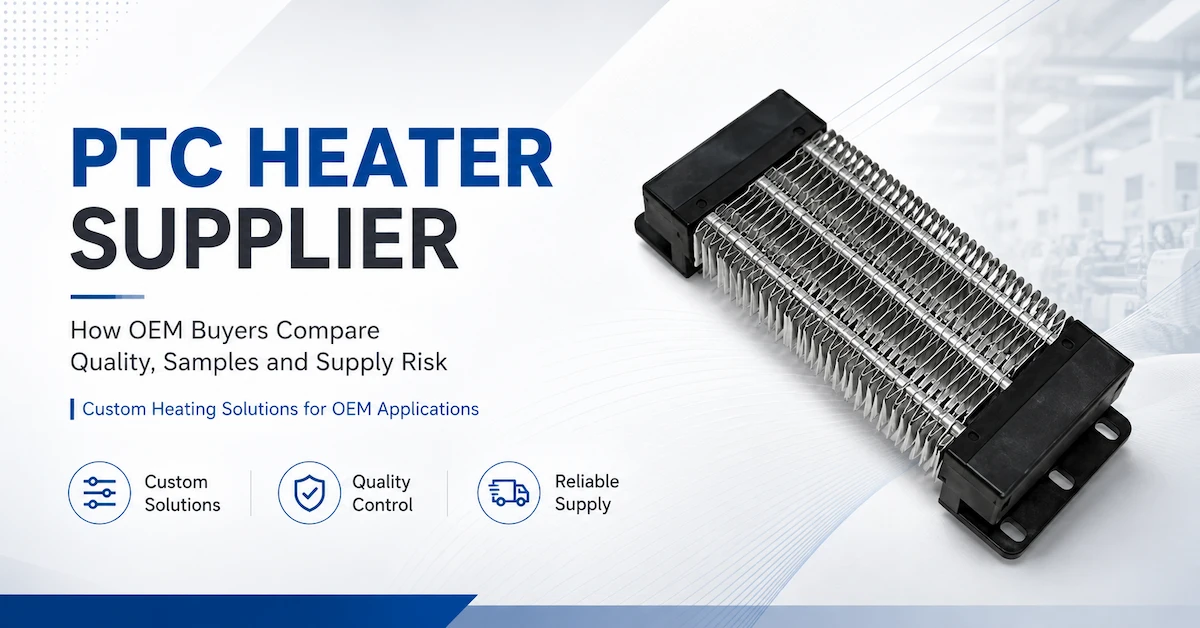
PTC Heater Supplier Guide: How OEM Buyers Compare Quality, Samples and Supply Risk

PTC Heater Supplier Guide: How OEM Buyers Compare Quality, Samples and Supply Risk

Choosing a PTC Heater Supplier involves more than comparing wattage and unit price. This guide helps OEM buyers evaluate technical support, customization, sample testing, quality control, quotations, lead time and long-term supply reliability before approving a heating partner.

Read More