Dongguan Tianrui Electronics Co., Ltd.
Dongguan Tianrui Electronics Co., Ltd. logo
Say Goodbye to Traditional Heating Wire! Why Are PTC Heaters Safer and More Energy-Efficient?

Say Goodbye to Traditional Heating Wire! Why Are PTC Heaters Safer and More Energy-Efficient?

PTC Heater
Sep 16, 2025Posted by Dongguan Tianrui Electronics Co., Ltd.

For decades, traditional resistance wires have been the go-to solution for generating heat in countless devices. However, they come with inherent risks: high surface temperatures, potential fire hazards, and significant energy waste. Enter the PTC (Positive Temperature Coefficient) heating element—a smarter, safer, and more efficient alternative that is rapidly transforming industries from consumer appliances to electric vehicles.

The Fundamental Difference: How They Work

Traditional Heating Wire:

Traditional elements, often made of alloys like Nichrome, have a linear resistance characteristic. This means their resistance remains relatively constant regardless of temperature. When powered, they will continuously draw the same high current and generate a consistent amount of heat. They have no built-in safety mechanism. Without an external thermostat or control circuit to cut power, they will overheat, potentially reaching red-hot temperatures and causing fires or damaging the product itself. This constant "on-off" cycling is also inefficient.

PTC Heating Element:

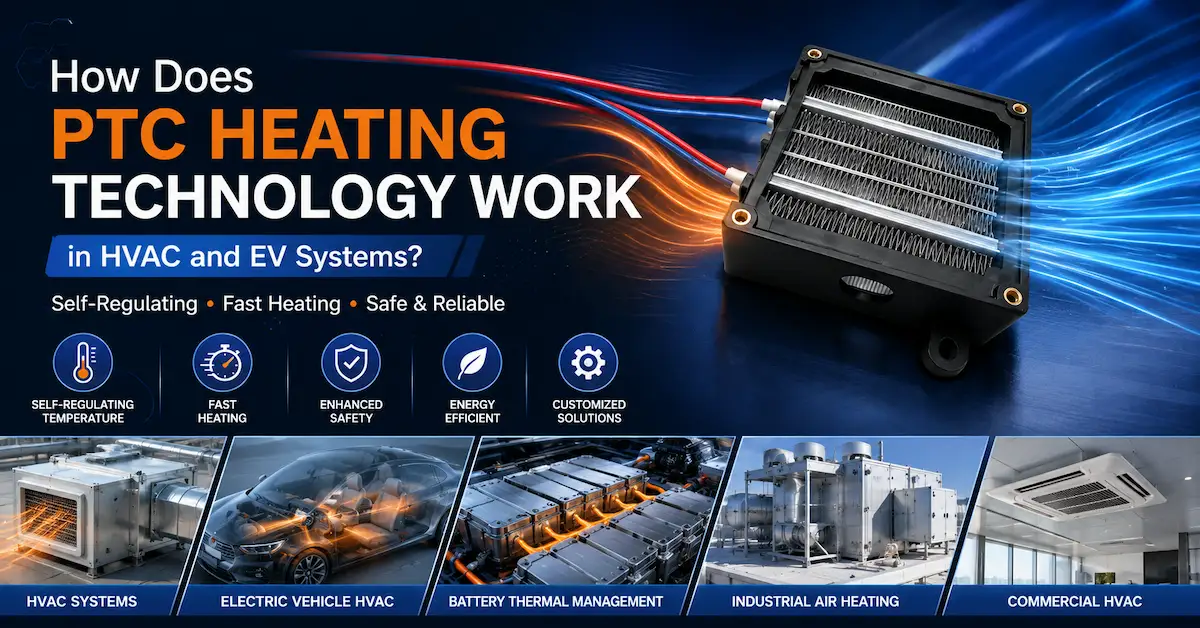
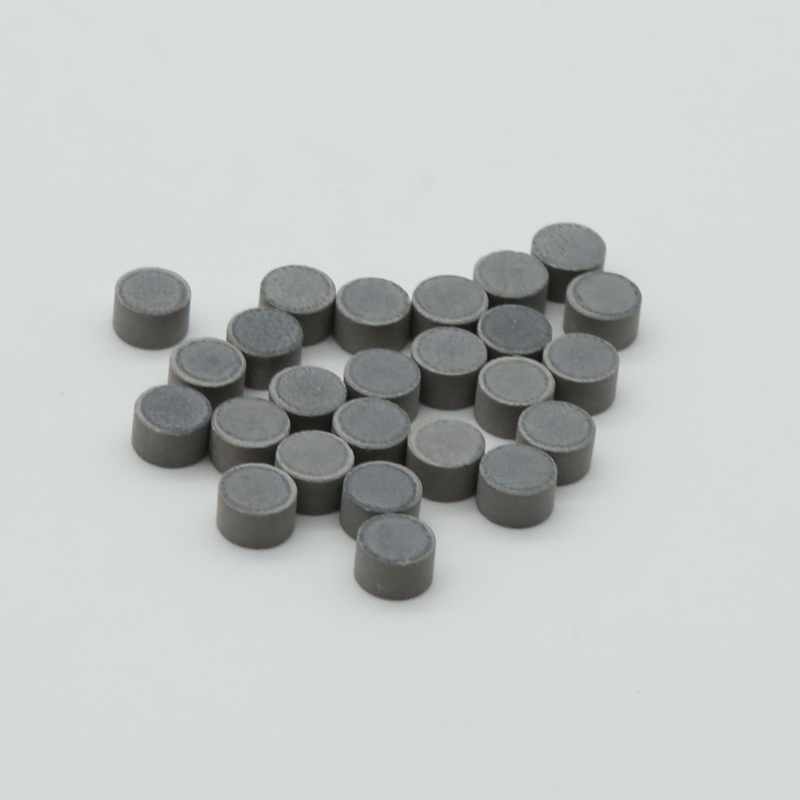
PTC ceramics are self-regulating. Their core magic lies in their positive temperature coefficient property: their resistance increases exponentially as their temperature rises.

Here’s the simple, brilliant cycle:

  1. Cold Start, High Power: At room temperature, the PTC element has low resistance. When voltage is applied, a high current flows, generating a powerful burst of heat very quickly.

  2. Self-Limiting, Constant Temperature: As the element heats up to its specific designed Curie point (e.g., 180°C, 250°C), its resistance sharply increases. This automatically reduces the current flow and, consequently, the heat output.

  3. Perfect Equilibrium: The element naturally stabilizes at its target temperature, maintaining it with minimal energy input. It only consumes the power needed to compensate for heat loss. If the ambient temperature changes (e.g., a fan blows on it), it automatically adjusts its power to maintain the set temperature.

The Winning Advantages: Safety and Efficiency

1. Unmatched Safety - "Never Overheats"

This is the most significant advantage. The PTC element is inherently safe by design.

  • Eliminates Fire Risk: It physically cannot overheat to the point of causing a fire. This makes it ideal for applications where dry-fire conditions are a risk (e.g., heaters, water heaters).

  • No External Controls Needed: It does not require complex thermostats, fuses, or temperature sensors to prevent runaway heating, simplifying design and improving reliability.

2. Superior Energy Efficiency - "Wastes Less Power"

PTC heaters are inherently efficient because they are self-regulating.

  • No Over-Cooling/Over-Heating Cycles: Traditional thermostats cycle full power on and off, leading to temperature swings and energy waste. A PTC element smoothly modulates its power, maintaining a precise temperature with far less energy.

  • Power Draw Matches Need: At its stable temperature, it only draws a small "maintenance" current, consuming significantly less electricity than a constantly cycling traditional heater.

3. Additional Key Benefits

  • Longer Lifespan: The absence of extreme temperature cycling and red-hot states reduces thermal stress and oxidation, dramatically extending the product's life.

  • Faster Heat-Up: They often reach their target temperature faster initially due to the high starting power.

Where You'll Find PTC Heaters Today

This technology is already inside the modern products we use every day:

  • Consumer Appliances: Hair dryers, clothing irons, space heaters, heated towel racks, coffee makers.

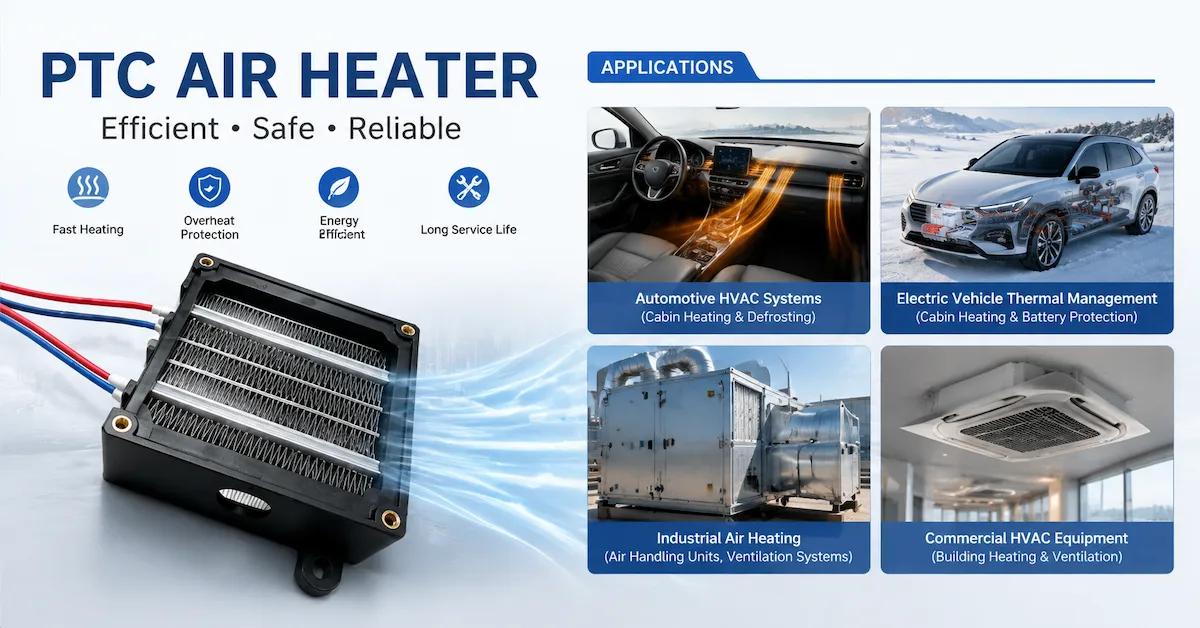
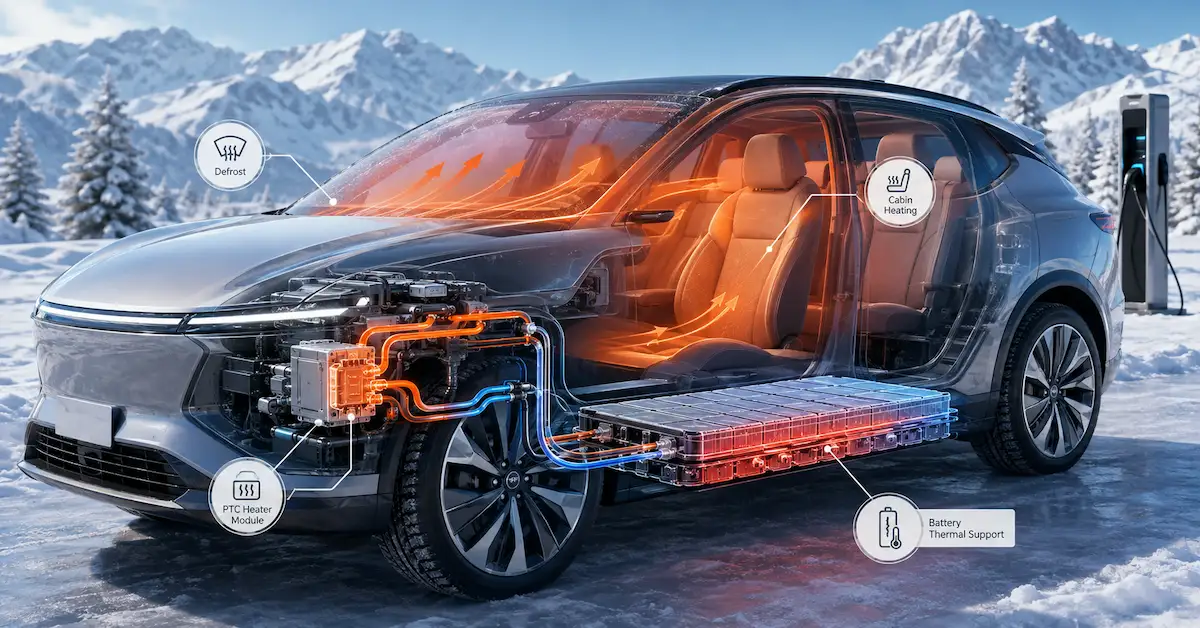
  • Automotive: Cabin heaters in Electric Vehicles (EVs), battery thermal management, seat heaters, steering wheel heaters, defrosters.

  • Industrial Equipment: Constant-temperature soldering stations, process heating, packaging machinery.

Conclusion: The Future is Self-Regulating

The move from traditional heating wire to PTC technology is a clear upgrade. It’s not just an incremental improvement; it’s a fundamental shift from a dumb, potentially dangerous component to an intelligent, safe, and energy-conscious solution.

For designers, it simplifies engineering. For consumers, it provides peace of mind and lower energy bills. For the planet, it contributes to reduced energy consumption. It’s time to truly say goodbye to the old ways and embrace the smarter heat of PTC.
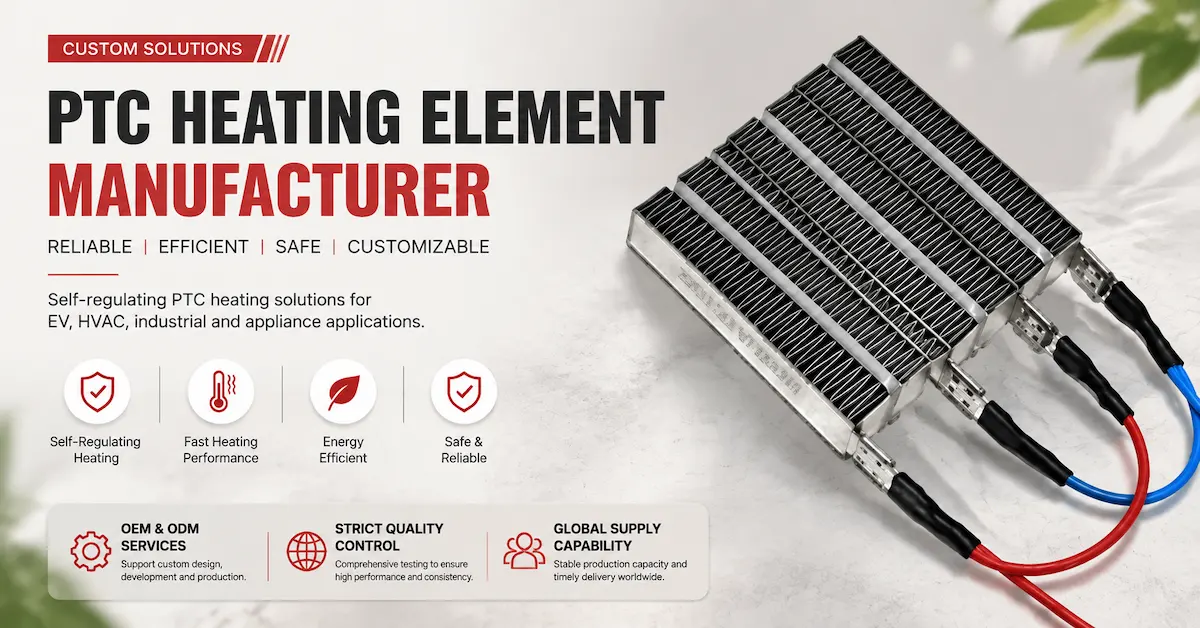
Featured Blogs

The Complete Guide to PTC Fan Heaters for Industrial Cabinet Protection

The Complete Guide to PTC Fan Heaters for Industrial Cabinet Protection

Industrial automation relies on sensitive electronics housed within control cabinets, but these enclosures face a constant threat: temperature fluctuations. Condensation in humid conditions, freezing in cold climates, and component stress from temperature swings can lead to malfunctions, downtime, and costly repairs. To solve this, engineers are increasingly turning to integrated PTC Fan Heaters – a robust, intelligent solution designed for reliability. Available in key power ratings like 150W, 300W, 400W, and 600W, these units are the guardians of critical electrical systems.

Read More
The Smart Way to Heat Liquids: A Guide to PTC Immersion Heating Rods

The Smart Way to Heat Liquids: A Guide to PTC Immersion Heating Rods

When your application requires precise and reliable heating of a liquid—whether it's water in a tank, oil in a reservoir, or a chemical in a process bath—the heating element you choose is critical. Enter the Immersion Water Heater Element with PTC (Positive Temperature Coefficient) technology. This isn't your standard heating coil; it's an intelligent, self-regulating solution that offers superior safety and efficiency. Let's dive into what makes these tubular heating rods a game-changer for liquid temperature control.

Read More
High-Power PTC Heaters: The Future of Efficient, Self-Regulating Industrial Heating

High-Power PTC Heaters: The Future of Efficient, Self-Regulating Industrial Heating

When it comes to industrial heating, efficiency, safety, and reliability are not just benefits—they are necessities. Enter the High-Power PTC (Positive Temperature Coefficient) Heater, a game-changing technology that is redefining thermal management in demanding environments. Unlike traditional resistive heaters that require external controls to prevent overheating, PTC heaters are inherently smart. Their core ceramic material possesses a unique property: electrical resistance increases dramatically at a specific Curie temperature. This simple physical principle translates into powerful real-world advantages.

Read More
The 220VAC 300W PTC Aluminum Heating Plate: The Smart, Safe Heart of Modern Appliances

The 220VAC 300W PTC Aluminum Heating Plate: The Smart, Safe Heart of Modern Appliances

In the world of heating elements, efficiency, safety, and longevity are paramount. While traditional resistance wire heaters have served us for decades, a newer technology has emerged as the superior choice for countless applications: the PTC (Positive Temperature Coefficient) heating element. Specifically, the 220VAC 300W PTC Aluminum Heating Plate represents a perfect blend of intelligent design and robust performance. Let's explore why this component is revolutionizing appliance design.

Read More
Efficient and Safe Heating Solutions: In-depth Understanding of the 1200W/1800W 220V Cross-Flow Fan PTC Heater

Efficient and Safe Heating Solutions: In-depth Understanding of the 1200W/1800W 220V Cross-Flow Fan PTC Heater

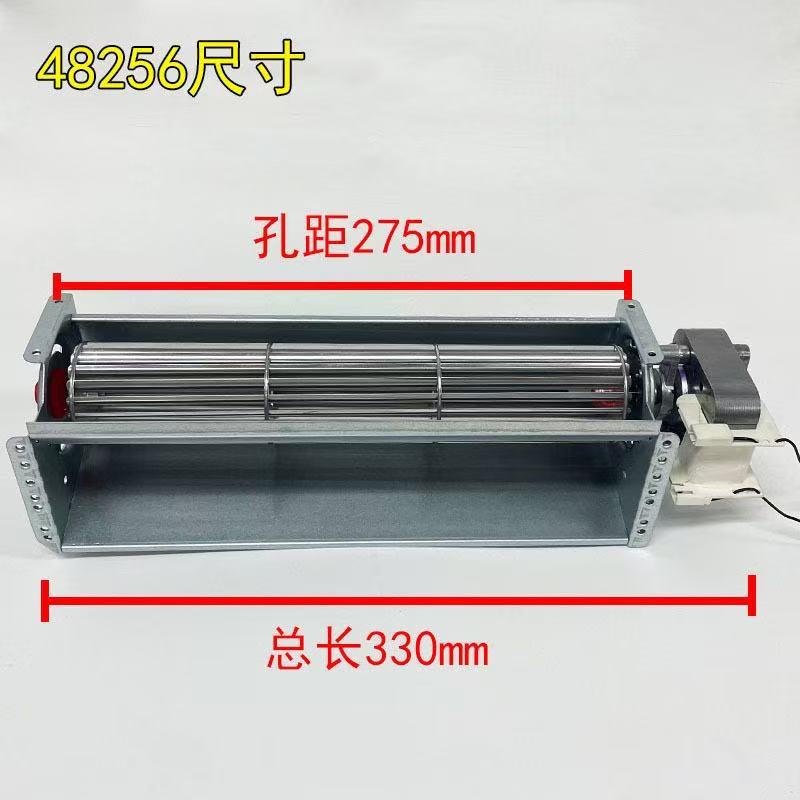
In applications requiring rapid, stable, and safe air heating, such as fresh air systems, air curtains, drying equipment, or duct heating, selecting the right heating component is crucial. Heater modules combining PTC ceramic heating technology with high-efficiency cross-flow fans are becoming a popular choice in modern HVAC and industrial applications. Today, we'll analyze this high-performance 1200W/1800W 220V cross-flow fan PTC heater in detail.

Read More
Ceramic PTC Heaters: The Smart Choice for Modern Heating

Ceramic PTC Heaters: The Smart Choice for Modern Heating

When it comes to efficient, safe, and compact heating solutions, ceramic PTC (Positive Temperature Coefficient) heaters are revolutionizing the industry. Unlike traditional heaters that rely on constant power and external controls, PTC heaters offer a built-in “brain” that makes them remarkably efficient and reliable.

Read More
Compact PTC Heaters: Your Efficient & Safe Solution for Instant Warmth

Compact PTC Heaters: Your Efficient & Safe Solution for Instant Warmth

Feeling a chill in your home office, bathroom, or a small living space? Traditional heaters often feel bulky, inefficient, or even unsafe. Enter the compact PTC heater – a modern marvel of heating technology that's changing how we stay warm.

Read More
PTC Heating Film: The Smart, Efficient Future of Warmth

PTC Heating Film: The Smart, Efficient Future of Warmth

Tired of cold floors, inefficient heaters, and high energy bills? Modern heating technology offers a superior solution: Positive Temperature Coefficient (PTC) Heating Film. This innovative material is revolutionizing how we deliver warmth in homes, offices, and industrial settings. But what exactly is it, and why is it gaining so much popularity?

Read More