Dongguan Tianrui Electronics Co., Ltd.
Dongguan Tianrui Electronics Co., Ltd. logo
5 Key Parameters to Help You Understand an NTC Temperature Sensor Datasheet

5 Key Parameters to Help You Understand an NTC Temperature Sensor Datasheet

PTC Heater
Oct 15, 2025Posted by Dongguan Tianrui Electronics Co., Ltd.

Staring at a datasheet for an NTC temperature sensor can be intimidating. Filled with graphs, tables, and technical jargon, it's easy to feel lost. However, understanding a few key parameters is all you need to unlock the sensor's capabilities and select the perfect one for your project.

Here are the 5 most critical parameters to look for in any NTC thermistor datasheet.

1. Rated Zero-Power Resistance (R₂₅)
This is the most fundamental parameter. It's the nominal resistance of the NTC thermistor at a specific reference temperature, almost always 25°C (77°F). This is the "baseline" value you'll see in part numbers, like a "10kΩ NTC."

  • Why it matters: This value is the starting point for all your circuit calculations. It determines the voltage output in your divider network and ensures you're using a sensor with the right order of resistance for your application.

2. Beta Value (β or B Value)
Since NTC thermistors are highly non-linear, the Beta Value provides a simplified model of their resistance-temperature (R-T) characteristic over a specific temperature range (e.g., 25°C to 85°C). It describes the slope of the resistance curve.

  • Why it matters: It allows you to estimate the resistance at other temperatures without a complex lookup table. A higher Beta value means the sensor is more sensitive (its resistance changes more drastically) over that temperature range.

3. Accuracy/Tolerance
This specifies how much the actual resistance of the NTC can deviate from its nominal value at a specific temperature (usually at R₂₅). It's typically expressed as a percentage (e.g., ±1%, ±5%) or directly in degrees Celsius (e.g., ±0.5°C).

  • Why it matters: This defines the sensor's precision. A ±1% sensor is more accurate and typically more expensive than a ±5% sensor. For applications requiring precise temperature control, a tight tolerance is critical.

4. Dissipation Constant (δ)
An NTC thermistor heats up when electrical current passes through it. The Dissipation Constant indicates how much power (in milliwatts) is required to raise the thermistor's temperature by 1°C above the ambient temperature.

  • Why it matters: This parameter is crucial for avoiding self-heating errors. In low-power or high-precision applications, you must ensure the excitation current is low enough that the power dissipated (I²R) doesn't cause the sensor to heat itself, leading to an inaccurate reading.

5. Thermal Time Constant (τ)
This measures how quickly the sensor can respond to a change in temperature. It is defined as the time required for the thermistor to change 63.2% of the total difference between its initial and final body temperature when subjected to a step change in temperature.

  • Why it matters: It tells you the sensor's speed. A small, bead-type thermistor may have a time constant of 1 second, making it ideal for measuring fast-changing air or liquid flows. A large, encapsulated probe might have a time constant of 10 seconds or more, suitable for monitoring slow-changing processes.

Conclusion
By mastering these five parameters—Rated Resistance (R₂₅), Beta Value (β), Accuracy, Dissipation Constant (δ), and Thermal Time Constant (τ)—you can move beyond guesswork. You'll be equipped to confidently read an NTC datasheet, compare different models, and select the ideal sensor that meets the precision, sensitivity, and speed requirements of your design.
Featured Blogs

The Complete Guide to PTC Fan Heaters for Industrial Cabinet Protection

The Complete Guide to PTC Fan Heaters for Industrial Cabinet Protection

Industrial automation relies on sensitive electronics housed within control cabinets, but these enclosures face a constant threat: temperature fluctuations. Condensation in humid conditions, freezing in cold climates, and component stress from temperature swings can lead to malfunctions, downtime, and costly repairs. To solve this, engineers are increasingly turning to integrated PTC Fan Heaters – a robust, intelligent solution designed for reliability. Available in key power ratings like 150W, 300W, 400W, and 600W, these units are the guardians of critical electrical systems.

Read More
The Smart Way to Heat Liquids: A Guide to PTC Immersion Heating Rods

The Smart Way to Heat Liquids: A Guide to PTC Immersion Heating Rods

When your application requires precise and reliable heating of a liquid—whether it's water in a tank, oil in a reservoir, or a chemical in a process bath—the heating element you choose is critical. Enter the Immersion Water Heater Element with PTC (Positive Temperature Coefficient) technology. This isn't your standard heating coil; it's an intelligent, self-regulating solution that offers superior safety and efficiency. Let's dive into what makes these tubular heating rods a game-changer for liquid temperature control.

Read More
High-Power PTC Heaters: The Future of Efficient, Self-Regulating Industrial Heating

High-Power PTC Heaters: The Future of Efficient, Self-Regulating Industrial Heating

When it comes to industrial heating, efficiency, safety, and reliability are not just benefits—they are necessities. Enter the High-Power PTC (Positive Temperature Coefficient) Heater, a game-changing technology that is redefining thermal management in demanding environments. Unlike traditional resistive heaters that require external controls to prevent overheating, PTC heaters are inherently smart. Their core ceramic material possesses a unique property: electrical resistance increases dramatically at a specific Curie temperature. This simple physical principle translates into powerful real-world advantages.

Read More
The 220VAC 300W PTC Aluminum Heating Plate: The Smart, Safe Heart of Modern Appliances

The 220VAC 300W PTC Aluminum Heating Plate: The Smart, Safe Heart of Modern Appliances

In the world of heating elements, efficiency, safety, and longevity are paramount. While traditional resistance wire heaters have served us for decades, a newer technology has emerged as the superior choice for countless applications: the PTC (Positive Temperature Coefficient) heating element. Specifically, the 220VAC 300W PTC Aluminum Heating Plate represents a perfect blend of intelligent design and robust performance. Let's explore why this component is revolutionizing appliance design.

Read More
Efficient and Safe Heating Solutions: In-depth Understanding of the 1200W/1800W 220V Cross-Flow Fan PTC Heater

Efficient and Safe Heating Solutions: In-depth Understanding of the 1200W/1800W 220V Cross-Flow Fan PTC Heater

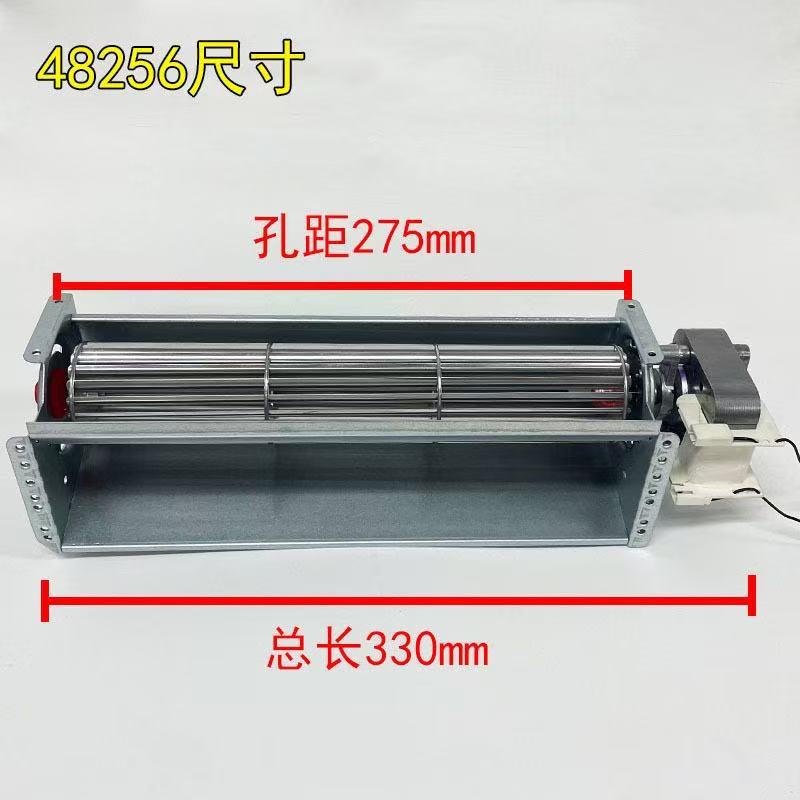
In applications requiring rapid, stable, and safe air heating, such as fresh air systems, air curtains, drying equipment, or duct heating, selecting the right heating component is crucial. Heater modules combining PTC ceramic heating technology with high-efficiency cross-flow fans are becoming a popular choice in modern HVAC and industrial applications. Today, we'll analyze this high-performance 1200W/1800W 220V cross-flow fan PTC heater in detail.

Read More
Ceramic PTC Heaters: The Smart Choice for Modern Heating

Ceramic PTC Heaters: The Smart Choice for Modern Heating

When it comes to efficient, safe, and compact heating solutions, ceramic PTC (Positive Temperature Coefficient) heaters are revolutionizing the industry. Unlike traditional heaters that rely on constant power and external controls, PTC heaters offer a built-in “brain” that makes them remarkably efficient and reliable.

Read More
Compact PTC Heaters: Your Efficient & Safe Solution for Instant Warmth

Compact PTC Heaters: Your Efficient & Safe Solution for Instant Warmth

Feeling a chill in your home office, bathroom, or a small living space? Traditional heaters often feel bulky, inefficient, or even unsafe. Enter the compact PTC heater – a modern marvel of heating technology that's changing how we stay warm.

Read More
PTC Heating Film: The Smart, Efficient Future of Warmth

PTC Heating Film: The Smart, Efficient Future of Warmth

Tired of cold floors, inefficient heaters, and high energy bills? Modern heating technology offers a superior solution: Positive Temperature Coefficient (PTC) Heating Film. This innovative material is revolutionizing how we deliver warmth in homes, offices, and industrial settings. But what exactly is it, and why is it gaining so much popularity?

Read More