Quick Answer: What Should Buyers Expect from an OEM Temperature Sensor Supplier?
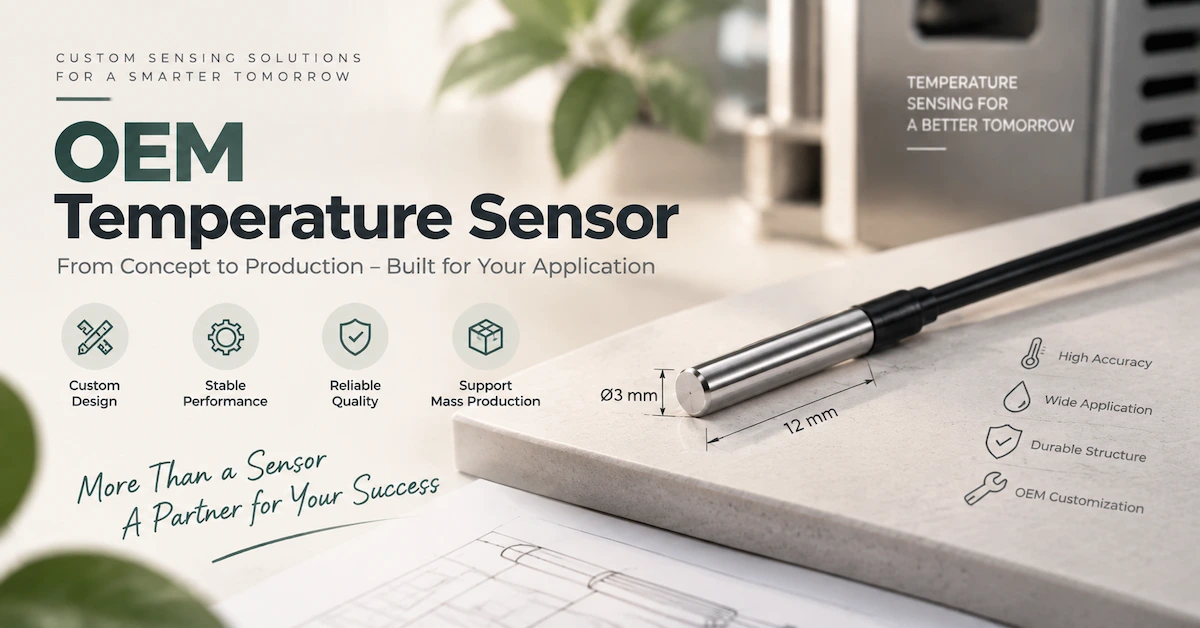
A reliable OEM Temperature Sensor supplier should provide more than a standard catalog product. The supplier should help convert equipment requirements into a complete sensor specification, including sensing technology, resistance characteristics, probe structure, cable, connector, environmental requirements and production standards.
OEM buyers should evaluate five key areas before approval:
- Electrical compatibility with the controller
- Mechanical compatibility with the equipment
- Environmental durability
- Customization capability
- Production consistency
The right OEM sensor solution is not simply a modified existing product. It should be a controlled design that can be tested, approved and reproduced during long-term manufacturing.
Why OEM Temperature Sensors Matter for Equipment Manufacturers
For many equipment manufacturers, temperature sensors are integrated directly into the control system. The sensor data influences heating, cooling, protection, monitoring or operational decisions.
A standard sensor may not always satisfy OEM requirements because equipment designs often involve:
- Limited installation space
- Special mounting structures
- Specific cable requirements
- Unique connectors
- Different temperature ranges
- Customized controller requirements
Industries that commonly require OEM temperature sensors include:
- Home appliances
- HVAC equipment
- Industrial machinery
- Automotive electronics
- Battery systems
- Medical equipment
- Consumer electronics
Tianrui provides NTC temperature sensor solutions designed for different OEM application requirements.
What Is an OEM Temperature Sensor?
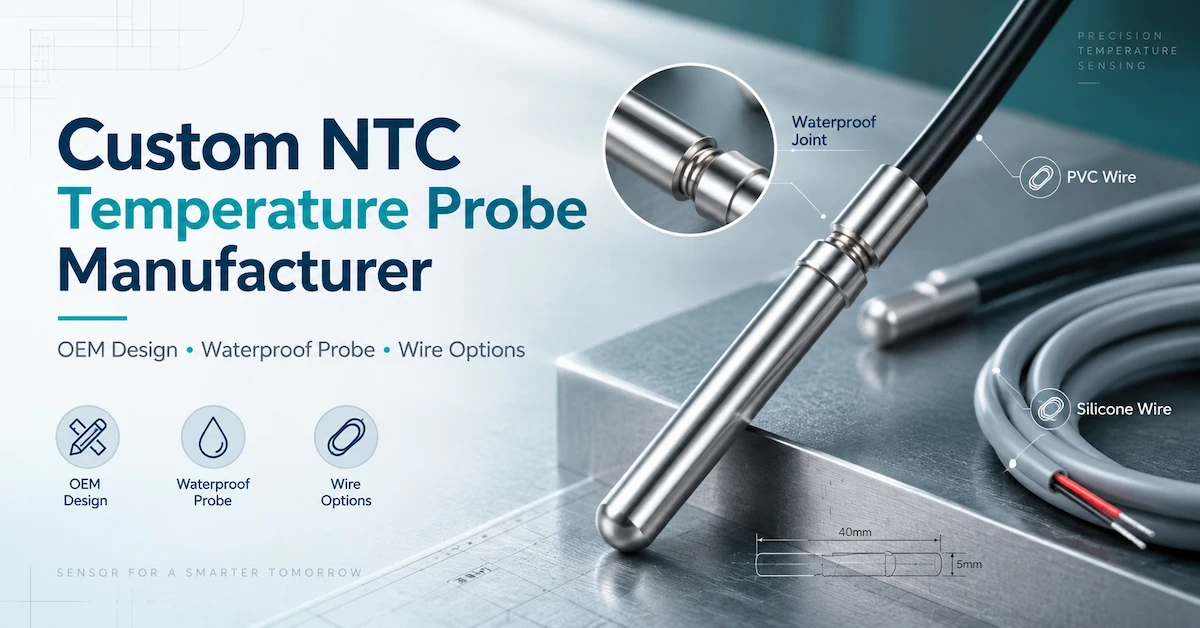
An OEM temperature sensor is a customized temperature sensing component developed according to a customer's equipment requirements.
Unlike a standard replacement sensor, an OEM sensor may involve customization in:
- Electrical parameters
- Probe dimensions
- Housing design
- Cable length
- Connector type
- Installation method
- Environmental protection
A complete OEM temperature sensor usually includes:
| Component | Purpose |
|---|---|
| Temperature sensing element | Detects temperature changes |
| Probe housing | Protects internal components |
| Cable assembly | Transfers signals |
| Connector | Connects with control system |
| Encapsulation | Protects sensing structure |
| Mounting structure | Enables equipment integration |
For NTC-based OEM projects, buyers need to understand the difference between a sensing element and a finished assembly.
Tianrui provides NTC thermistors as well as finished NTC temperature sensor assemblies.
Who Needs OEM Temperature Sensor Solutions?
Home Appliance Manufacturers
Appliance manufacturers often require sensors that combine:
- Compact size
- Stable performance
- Easy assembly
- Cost control
Typical applications include:
- Refrigerators
- Washing machines
- Coffee machines
- Water heaters
The sensor design must match the appliance structure and control system.
HVAC Equipment Manufacturers
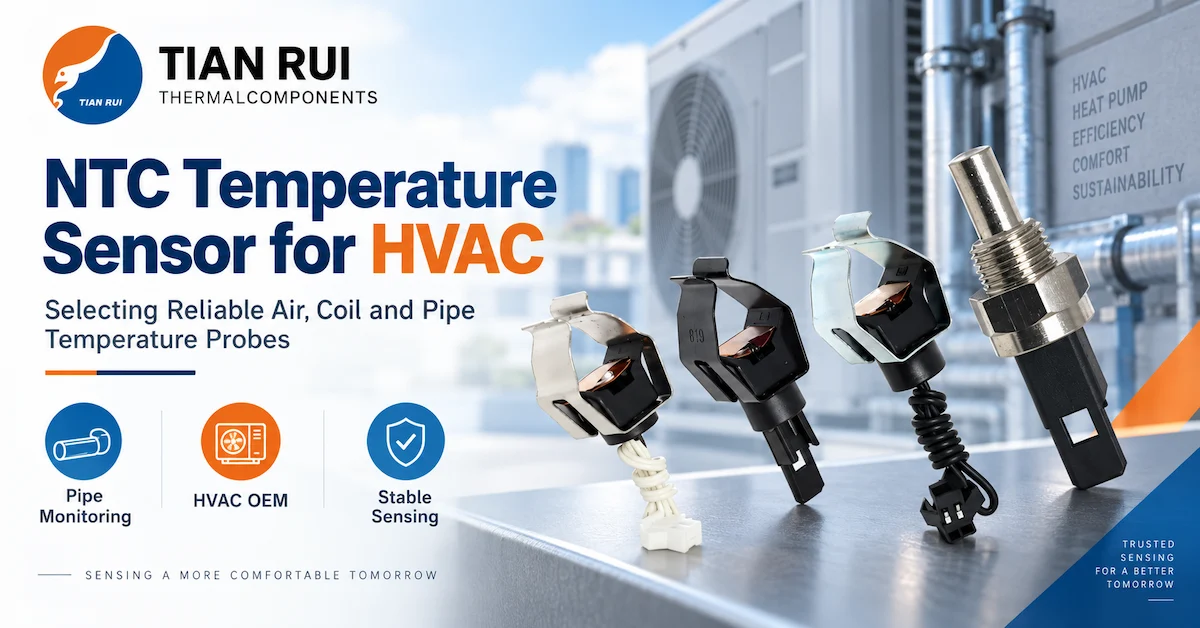
HVAC systems may require temperature sensors for:
- Air temperature monitoring
- Pipe temperature measurement
- Coil temperature detection
- Water temperature control
Different locations require different sensor structures.
A pipe sensor and an air sensor may use the same NTC technology but require different mechanical designs.
Industrial Equipment Manufacturers
Industrial OEM projects often require:
- Higher durability
- Customized dimensions
- Stable long-term supply
- Environmental resistance
Applications include:
- Manufacturing equipment
- Automation systems
- Fluid control equipment
- Processing machinery
Tianrui provides industrial temperature sensing applications.
How Should Buyers Define OEM Temperature Sensor Requirements?
A common mistake is requesting:
“Need a 10K temperature sensor.”
This information is usually insufficient for OEM development.
A complete requirement should include:
| Requirement | Information Needed |
|---|---|
| Application | Equipment and measurement purpose |
| Temperature range | Normal and maximum temperature |
| Sensor type | NTC or other sensing technology |
| Resistance | R25 value |
| B value | Temperature-resistance characteristics |
| Accuracy | Required tolerance |
| Probe structure | Diameter, length and mounting |
| Cable | Length and insulation requirement |
| Connector | Type and wiring |
| Environment | Moisture, vibration, chemicals or dust |
| Quantity | Prototype and production demand |
A detailed specification helps suppliers recommend a suitable solution instead of making assumptions.
Why Electrical Parameters Matter in OEM Sensor Development
R25 Value
R25 represents the nominal resistance of an NTC sensor at 25°C.
However, R25 alone does not define the complete sensor performance.
Two sensors may both be:
- 10K NTC sensors
but have different:
- B values
- Resistance-temperature curves
- Tolerances
This can result in different temperature readings.
B Value and R-T Curve
The B value describes the relationship between resistance and temperature.
For OEM applications, buyers should confirm:
- B value
- Reference temperature range
- R-T curve
- Controller compatibility
Tianrui explains these parameters in its NTC temperature sensor guide.
Accuracy Requirements
Sensor accuracy depends on more than resistance tolerance.
System performance can also be affected by:
- Controller circuit
- Installation position
- Thermal contact
- Calibration method
- Environmental conditions
OEM buyers should define accuracy requirements based on the final equipment performance.
How to Choose the Right OEM Temperature Sensor Structure?
The sensor structure should match the installation environment.
Stainless Steel Probe Sensors
Stainless steel probes are commonly selected when mechanical protection is important.
Advantages:
- Strong structure
- Corrosion resistance
- Suitable for industrial environments
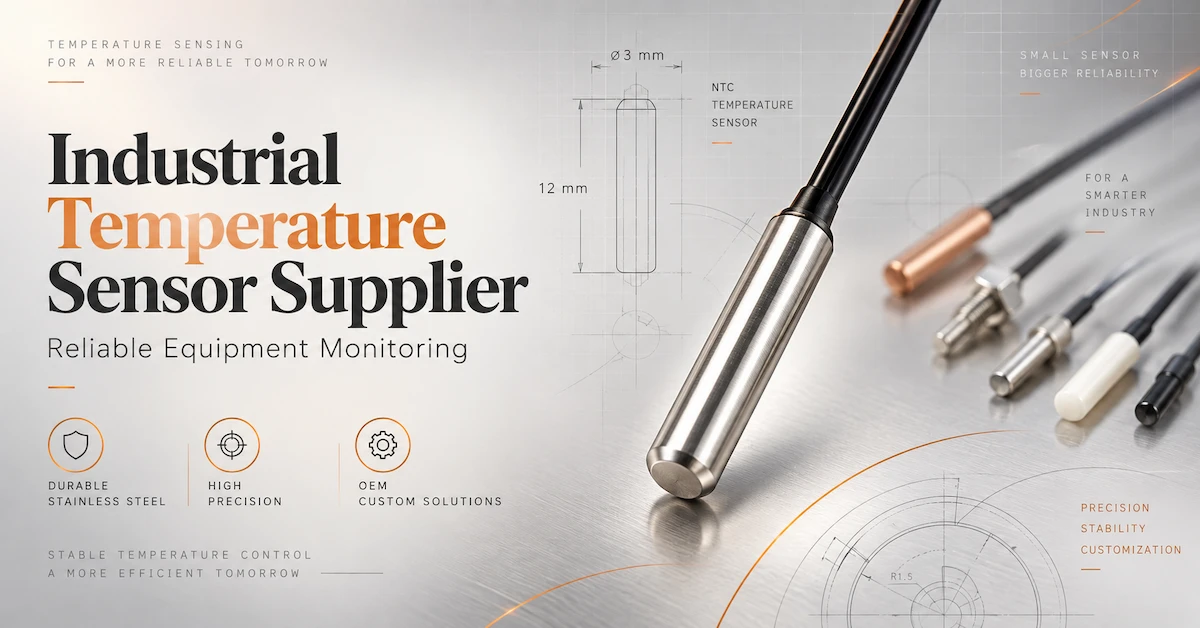
Tianrui provides metal shell NTC temperature sensors.
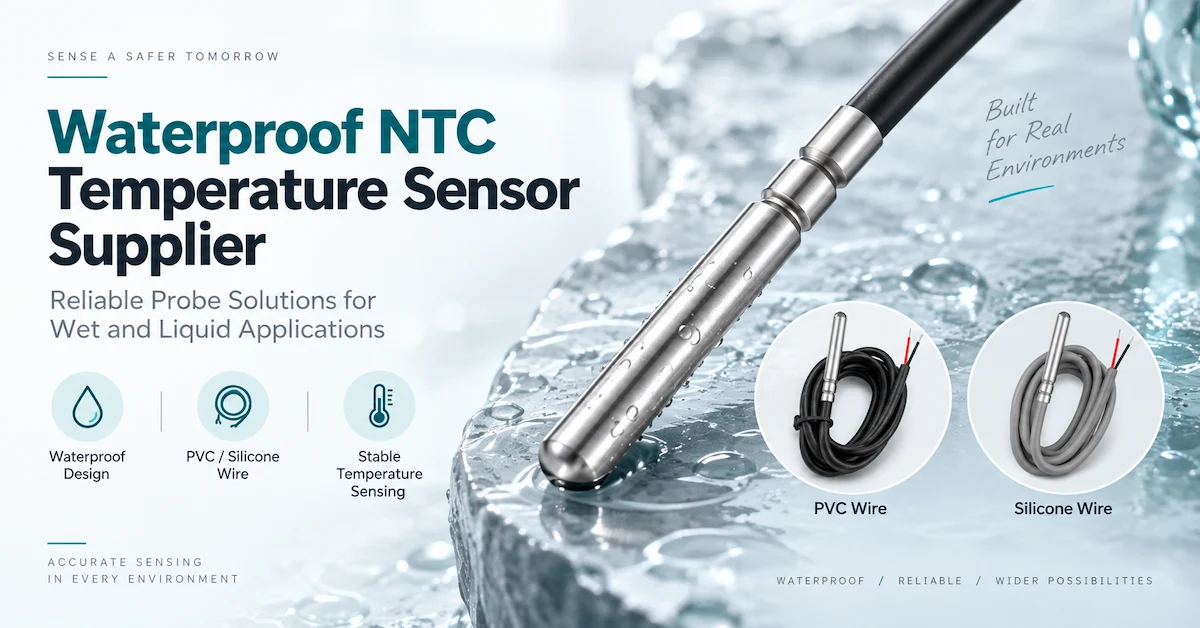
Waterproof Temperature Sensors
Waterproof sensors are used in applications involving:
- Moisture
- Condensation
- Water
- Liquid environments
Buyers should evaluate:
- Sealing method
- Cable protection
- Housing material
- Environmental testing
A waterproof label alone does not define complete performance.
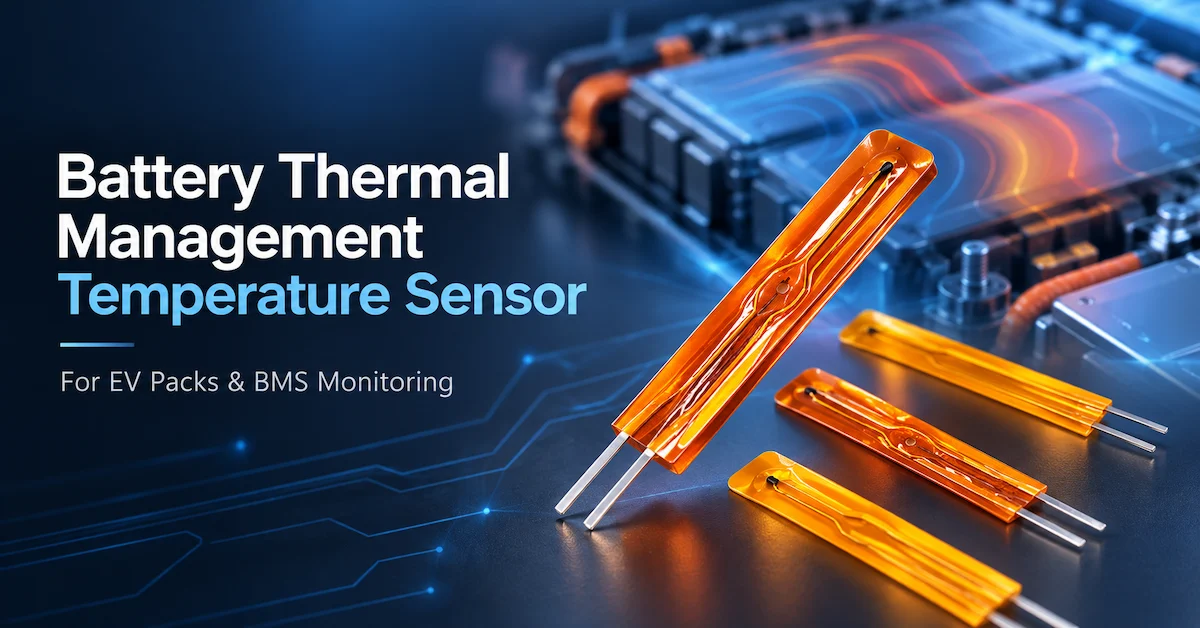
Thin Film Temperature Sensors
Thin film sensors are suitable when:
- Installation space is limited
- Low thermal mass is required
- Fast response is important
They are often considered for:
- Battery systems
- Electronics
- Compact equipment
OEM Temperature Sensor Comparison
| Sensor Type | Main Feature | Suitable Applications |
|---|---|---|
| NTC thermistor element | Flexible integration | Customer-designed assemblies |
| Stainless steel probe | Mechanical protection | Industrial equipment |
| Waterproof probe | Moisture protection | Water-related systems |
| Pipe clamp sensor | External measurement | HVAC systems |
| Thin film sensor | Small size | Battery and electronics |
The correct selection depends on the equipment requirements rather than the sensor category alone.
How Does OEM Temperature Sensor Customization Work?
A typical OEM development process includes:
Step 1: Requirement Analysis
The supplier reviews:
- Application
- Temperature range
- Installation location
- Electrical requirements
Step 2: Engineering Design
The sensor specification is defined:
- Resistance value
- B value
- Probe structure
- Cable
- Connector
Step 3: Prototype Development
Samples are produced according to the approved design.
Step 4: Customer Testing
The customer validates the sensor in the actual equipment.
Step 5: Production Approval
After confirmation, the specification becomes the production reference.
Tianrui supports OEM temperature sensor projects through custom temperature sensor solutions and provides project communication through the contact page.
How Should Buyers Evaluate an OEM Temperature Sensor Supplier?
Engineering Capability
A qualified supplier should support:
- Technical communication
- Drawing review
- Sample development
- Specification confirmation
- Customization discussion
Manufacturing Capability
Buyers should evaluate:
- Production process
- Material control
- Testing methods
- Quality consistency
Quality Control System
Important areas include:
| Quality Area | Evaluation Focus |
|---|---|
| Incoming materials | Component inspection |
| Assembly process | Production consistency |
| Electrical testing | Resistance verification |
| Final inspection | Finished sensor quality |
| Change management | Controlled modifications |
A good supplier should maintain consistency between approved samples and mass production.
What Are Common OEM Temperature Sensor Purchasing Mistakes?
Only Comparing Price
A lower price may create additional costs through:
- More samples
- Redesign
- Calibration work
- Production delays
Ignoring Installation Conditions
A sensor that works in one environment may fail in another because of:
- Different thermal contact
- Moisture exposure
- Mechanical stress
Approving Samples Without Documentation
A sample approval should include:
- Drawing
- Specification
- Test result
- Revision record
This prevents confusion during repeat orders.
How Should OEM Samples Be Validated Before Mass Production?
A complete sample evaluation should include:
Electrical Testing
Verify:
- Resistance
- Temperature response
- R-T characteristics
Mechanical Testing
Check:
- Dimensions
- Mounting
- Cable
- Connector
Application Testing
Evaluate:
- Installed performance
- Stability
- Long-term reliability
The purpose of validation is not only to confirm that the sample works, but also to ensure that production can reproduce the same result.
Frequently Asked Questions
What is an OEM temperature sensor?
An OEM temperature sensor is a customized sensor designed according to a customer's equipment requirements, including electrical and mechanical specifications.
Can OEM temperature sensors use custom cables and connectors?
Yes. OEM customization can include cable length, insulation, connector type and wiring requirements.
How do I choose an OEM temperature sensor supplier?
Evaluate technical capability, customization support, production quality, testing methods and long-term supply stability.
Are all NTC temperature sensors interchangeable?
No. Different sensors may have different resistance curves, B values, structures and installation requirements.
What information should I provide for an OEM sensor quotation?
Provide application details, temperature range, electrical requirements, dimensions, cable information and quantity.
Can OEM sensors be customized for industrial equipment?
Yes. Industrial applications often require customized probe structures, materials and installation methods.
What is the difference between a thermistor and an OEM probe?
A thermistor is the sensing element, while an OEM probe is a complete sensor assembly designed for installation.
How long does OEM sensor development take?
Development time depends on customization level, testing requirements, sample approval and production preparation.
Why is sample testing important?
Sample testing confirms electrical compatibility, mechanical fit and performance before mass production.
How can I request an OEM temperature sensor solution?
Prepare your application requirements and contact the supplier for technical evaluation and customization discussion.
Conclusion
Selecting an OEM Temperature Sensor requires more than choosing a standard sensor from a catalog. Successful OEM projects depend on matching electrical characteristics, mechanical design, environmental requirements and production capability.
A reliable OEM supplier should help customers transform equipment requirements into a stable temperature sensing solution that can be tested, approved and reproduced during mass production.
Explore Tianrui’s OEM temperature sensor solutions and contact Tianrui for customized sensor development and application support.