신뢰할 수 있는 PTC 서미스터 제조업체를 어떻게 선택해야 합니까?
신뢰할 수 있는 PTC 서미스터 제조업체는 표준 구성 요소 이상을 제공해야 합니다. OEM 구매자의 경우 적합한 공급업체는 대량 생산용 부품을 공급하기 전에 세라믹 재료 특성, 저항 온도 동작, 응용 분야 요구 사항, 제조 일관성 및 품질 검증을 이해해야 합니다.
PTC 서미스터는 전기 및 전자 시스템의 보호 부품으로 사용되는 경우가 많습니다. 성능은 과전류 보호, 과열 보호, 모터 안전, 배터리 시스템 및 기타 온도에 민감한 애플리케이션에 직접적인 영향을 미칩니다.
제조업체를 선택할 때 구매자는 다음을 평가해야 합니다.
- 세라믹 소재 성능
- 저항 일관성;
- 퀴리 온도 조절
- 맞춤화 기능
- 생산 과정;
- 검사 방법;
- 애플리케이션 지원
- 장기적인 공급 안정성.
최고의 공급업체는 단순히 가장 낮은 부품 가격을 제공하는 회사가 아닙니다. 고객의 최종 애플리케이션에서 안정적인 전기적 특성과 예측 가능한 성능을 제공할 수 있는 제조업체입니다.
PTC 서미스터 제조업체는 어떤 일을 하나요?
PTC 서미스터 제조업체는 반도체 세라믹 재료를 기반으로 하는 정온도 계수 서미스터를 개발 및 생산합니다.
기존 저항기와 달리 PTC 서미스터는 온도에 따라 크게 변화하는 저항 특성을 가지고 있습니다.
설계된 전환점 근처에서 온도가 증가하면 저항이 급격히 증가합니다. 이러한 특성을 통해 PTC 서미스터를 다음 용도로 사용할 수 있습니다.
- 과전류 보호;
- 과부하 보호;
- 과열 방지;
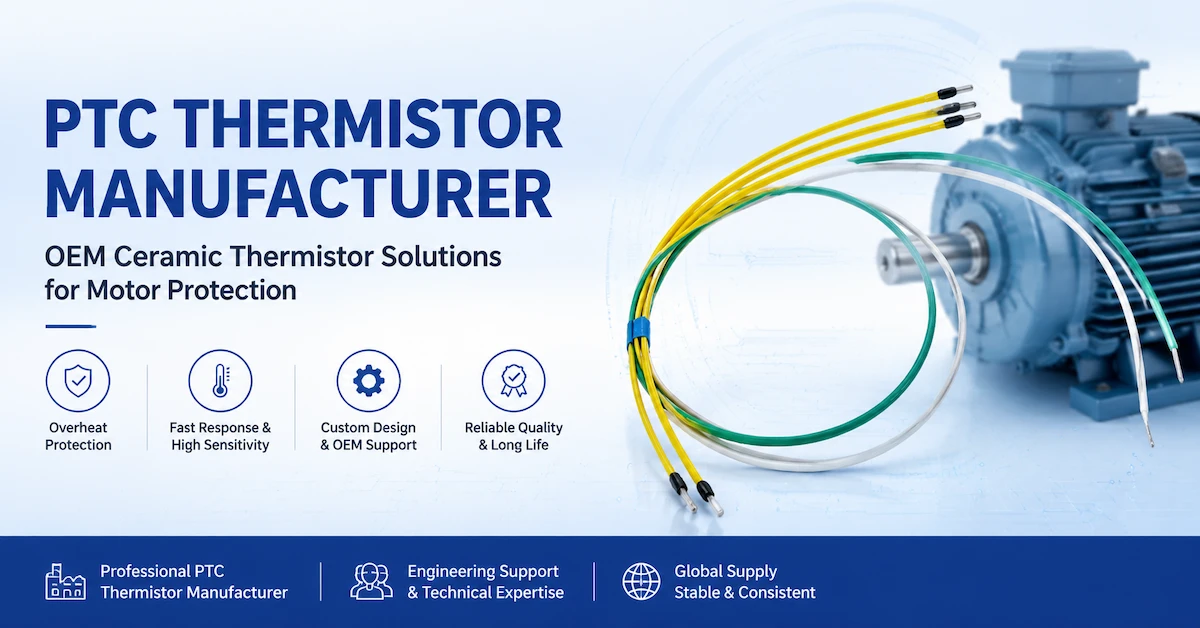
- 모터 보호;
- 온도 감지
- 회로 보호.
전문 제조업체는 세라믹 부품을 생산할 뿐만 아니라 다음 사이의 관계를 제어할 책임도 있습니다.
- 재료 공식
- 세라믹 가공
- 전극 구조;
- 저항값;
- 전환 온도;
- 신뢰성 성능.
OEM 애플리케이션의 경우 이 관계는 단순히 공칭 저항 값을 가진 부품을 구매하는 것보다 더 중요합니다.
PTC 서미스터 제조업체가 필요한 사람은 누구인가요?
제조업체와의 직접적인 협력은 안정적인 열 및 전기 보호가 필요한 제품을 개발하는 회사에 중요합니다.
일반적인 구매자는 다음과 같습니다.
모터 제조업체
PTC 서미스터는 일반적으로 모터 보호 애플리케이션에 사용됩니다.
다음으로 인한 과도한 온도 상승을 감지하는 데 도움이 될 수 있습니다.
- 과부하
- 회전이 차단되었습니다.
- 비정상적인 작동 조건;
- 냉각이 부족합니다.
모터 제조업체는 일반적으로 다음에 관심을 둡니다.
- 온도 전환;
- 응답 특성
- 크기 제한;
- 장기적 안정성.
전원 공급 장치 및 전자 제품 제조업체
전자 기기는 비정상적인 전류 조건으로부터 보호해야 할 수도 있습니다.
응용 프로그램에는 다음이 포함됩니다.
- 전원 공급 장치;
- 변압기;
- 충전기;
- 제어 시스템
- 전자 모듈.
중요 요구사항은 다음과 같습니다.
- 저항 정확도
- 전압 성능;
- 응답 행동;
- 안정적인 배치 성능.
자동차 전자 회사
자동차 애플리케이션에는 종종 다음 환경에서 작동할 수 있는 구성요소가 필요합니다.
- 진동;
- 온도 순환;
- 제한된 설치 공간;
- 긴 운영 기간.
PTC 서미스터는 다음 용도로 사용할 수 있습니다.
- 모터;
- 배터리 시스템;
- 전자 제어 시스템
- 열 보호 회로.
기기 OEM 제조업체
가정용 및 상업용 가전제품은 다음 용도로 PTC 서미스터를 사용할 수 있습니다.
- 가열 제어;
- 모터 보호;
- 안전 기능
- 온도 모니터링.
예는 다음과 같습니다:
- 에어컨
- 냉장고;
- 세탁기
- 건조기
- 소형 가전제품.
산업 장비 제조업체
산업 장비에는 다음을 위해 안정적인 보호 구성요소가 필요한 경우가 많습니다.
- 자동화 시스템
- 펌프;
- 모터;
- 제어 캐비닛;
- 전기 장비.
제조업체를 선택하기 전에 구매자가 평가해야 할 기술적 요소는 무엇입니까?
자격을 갖춘 공급업체는 제품 카탈로그만 제공하는 것이 아니라 구매자가 기술 요구사항을 평가할 수 있도록 도와야 합니다.
가장 중요한 요소는 다음과 같습니다.
| 매개변수 | 중요한 이유 |
|---|---|
| 25°C에서의 저항 | 초기 전기적 특성 결정 |
| 퀴리 온도 | 전환 동작 정의 |
| 저항-온도 곡선 | 열 반응 표시 |
| 최대 전압 | 전기 적용 범위 결정 |
| 작동 전류 | 보호 성능에 영향 |
| 스위칭 특성 | 응답 시간에 영향 |
| 크기 | 기계적 통합 결정 |
| 공차 | 일관성에 영향 |
| 신뢰성 데이터 | 장기 사용 지원 |
애플리케이션마다 이러한 특성의 다양한 조합이 필요합니다.
모터 보호용으로 설계된 PTC 서미스터는 회로 보호나 온도 제어에 사용되는 것과 다른 전기적 동작을 요구할 수 있습니다.
PTC 서미스터 기술은 어떻게 작동하나요?
PTC 서미스터는 정온도 계수 특성을 기반으로 합니다.
기본 작동 원리는 다음과 같습니다.
- 상온에서는 저항이 상대적으로 낮게 유지됩니다.
- 전류는 구성요소를 통해 정상적으로 흐릅니다.
- 전이 영역을 향해 온도가 상승하면 저항이 급격히 증가합니다.
- 저항이 증가하면 전류 흐름이 감소합니다.
- 구성요소는 보호 응답을 제공합니다.
이러한 자체 제어 특성 덕분에 PTC 서미스터는 자동 보호가 필요한 응용 분야에 유용합니다.
그러나 실제 성능은 다음에 따라 달라집니다.
- 도자기 구성;
- 도핑 물질
- 소결 공정;
- 전극 기술
- 기하학;
- 작동 조건.
따라서 재료 및 공정 지식을 갖춘 공급업체를 선택하는 것이 중요합니다.
PTC 서미스터 제조에서 세라믹 재료가 중요한 이유는 무엇입니까?
세라믹 소재는 PTC 서미스터 성능의 핵심입니다.
대부분의 PTC 서미스터는 티탄산바륨(BaTiO₃) 기반 세라믹 시스템을 기반으로 합니다. Tianrui는 PTC 세라믹 가열 재료 및 관련 처리 기술에 대한 정보를 제공합니다.
최종 전기 특성은 다음 요소에 의해 영향을 받을 수 있습니다.
- 세라믹 제제
- 도펀트 선택;
- 입자 특성
- 형성 과정;
- 소결 조건
- 전극 구조.
보다 강력한 자재 관리 능력을 갖춘 제조업체는 다음을 더 잘 관리할 수 있습니다.
- 저항 범위;
- 전환 온도;
- 안정성;
- 생산 배치 간 일관성.
Tianrui의 기술 정보에서는 티탄산 바륨 시스템을 기반으로 한 PTC 세라믹 소재에 대해 설명하고 공식화 및 가공이 PTC 특성에 영향을 미친다는 점을 설명합니다. 이 회사는 또한 기술 역량의 일부로 PTC 재료 준비, 세라믹 처리 및 전기 성능 제어를 제시합니다.
OEM 구매자의 경우 이는 공급업체가 완성된 부품을 조립하는 방법뿐만 아니라 중요한 결정이 최종 성능에 어떤 영향을 미치는지 이해해야 함을 의미합니다.
어떤 제조 공정이 PTC 서미스터 품질에 영향을 미치나요?
전문 PTC 서미스터 생산 공정에는 일반적으로 여러 제어 단계가 포함됩니다.
자료 준비
세라믹 제제는 필요한 전기적 특성에 따라 준비되어야 합니다.
중요한 요소는 다음과 같습니다:
- 분말 구성;
- 첨가제;
- 혼합 균일성;
- 자료적 일관성.
성형 과정
세라믹 재료는 필요한 구성 요소 구조로 성형됩니다.
성형 과정은 다음에 영향을 미칩니다.
- 크기;
- 밀도;
- 기계적 강도.
소결
고온 소결을 통해 전기적 동작을 결정하는 세라믹 구조가 만들어집니다.
소결 조건에 영향을 미치는 항목:
- 저항;
- 온도 특성
- 안정성.
전극 처리
전극은 전기 연결을 제공합니다.
중요한 요소는 다음과 같습니다:
- 전극재료
- 접착력;
- 전기 저항;
- 내구성.
테스트 및 정렬
부품 제조 후에는 전기 검사가 필요합니다.
일반적인 점검 사항은 다음과 같습니다.
- 저항;
- 전환 특성
- 크기;
- 외모;
- 신뢰성 성능.
각 단계를 이해하는 제조업체는 성능 변화 문제를 더 잘 해결할 수 있습니다.
PTC 서미스터를 사용하는 애플리케이션은 무엇입니까?
신뢰할 수 있는 PTC 서미스터 제조업체는 구성요소 사양뿐만 아니라 실제 애플리케이션 환경도 이해해야 합니다.
동일한 PTC 서미스터라도 다음에 따라 다르게 작동할 수 있습니다.
- 작동 온도;
- 전기 부하;
- 설치 방법;
- 열 방출 조건
- 보호 요구사항.
일반적인 적용 분야는 다음과 같습니다:
모터 보호 애플리케이션
모터 보호는 PTC 서미스터의 가장 일반적인 용도 중 하나입니다.
비정상적인 상황에서는 다음과 같은 이유로 모터 온도가 상승할 수 있습니다.
- 오버로드;
- 자주 시작;
- 기계적 막힘
- 환기 부족;
- 과도한 전류.
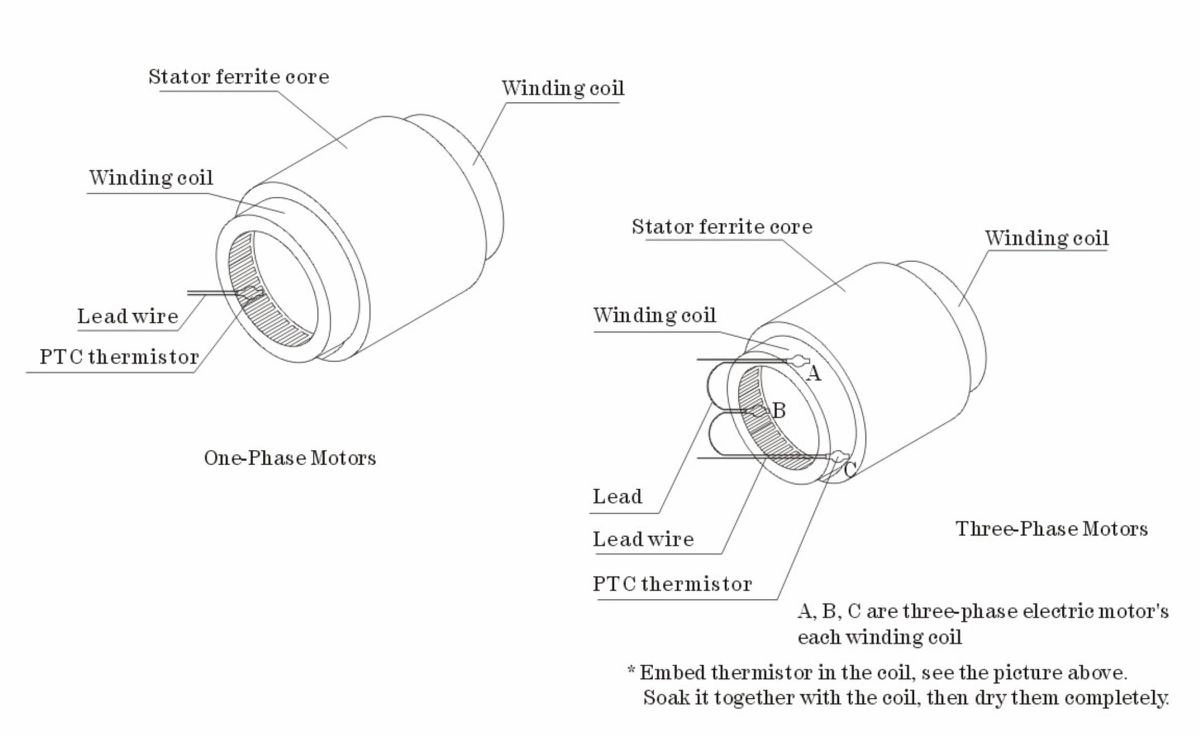
모터 권선 내부 또는 근처에 설치된 PTC 서미스터는 온도 변화를 모니터링하고 온도가 정의된 임계값에 도달하면 보호 신호를 제공할 수 있습니다.
중요한 선택 요소는 다음과 같습니다.
- 전환 온도;
- 센서 크기;
- 응답 특성
- 운영 환경
- 설치 방법.
일반적인 애플리케이션은 다음과 같습니다.
- 산업용 모터
- 펌프;
- 압축기;
- 팬 여러분,
- 자동화 장비.
배터리 및 신에너지 애플리케이션
과도한 온도는 다음에 영향을 미칠 수 있으므로 배터리 시스템에는 안정적인 온도 보호가 필요합니다.
- 안전;
- 효율성
- 서비스 수명;
- 시스템 안정성.
PTC 서미스터는 다음 용도로 사용할 수 있습니다.
- 배터리 팩;
- 충전 시스템
- 에너지 저장 장비
- 전원 관리 모듈
이러한 애플리케이션의 경우 구매자는 다음을 고려해야 합니다.
- 작동 온도 범위;
- 응답 일관성;
- 단열 요구사항
- 진동 저항;
- 장기적 안정성.
전력전자 보호 애플리케이션
PTC 서미스터는 전자 보호 회로에도 사용할 수 있습니다.
응용 프로그램에는 다음이 포함됩니다.
- 어댑터;
- 충전기;
- 변압기;
- 전원 모듈
- 제어판.
이러한 애플리케이션에서 공급업체는 고객이 다음을 평가하도록 도와야 합니다.
- 저항값;
- 최대 전압;
- 현재 유지;
- 여행 행동;
- 복구 특성.
가전제품 애플리케이션
많은 가전제품에는 작고 안정적인 열 보호 기능이 필요합니다.
예는 다음과 같습니다:
- 냉장고;
- 에어컨
- 세탁기
- 건조기
- 주방 가전
PTC 서미스터는 다음을 지원할 수 있습니다.
- 모터 보호;
- 온도 모니터링
- 안전 보호.
기기 OEM 고객의 경우 수백만 개의 장치가 동일한 구성 요소 디자인을 사용할 수 있으므로 생산 배치 간의 일관성이 특히 중요합니다.
산업 장비 애플리케이션
산업 환경에서는 지속적인 작동에도 안정적인 성능을 발휘하는 구성요소가 필요한 경우가 많습니다.
PTC 서미스터는 다음 용도로 사용할 수 있습니다.
- 자동화 시스템
- 전기 캐비닛;
- 산업용 모터
- 제어 장비;
- 제조 기계
공급업체는 다음 사항을 이해해야 합니다.
- 운영 주기;
- 주변 조건
- 신뢰성 기대;
- 유지관리 요구사항.
구매자는 OEM 프로젝트를 위해 PTC 서미스터를 어떻게 맞춤 설정할 수 있나요?
전문 PTC 서미스터 제조업체는 고객의 전기적, 기계적 요구사항에 따른 맞춤화를 지원해야 합니다.
맞춤설정에는 다음이 포함될 수 있습니다.
- 저항값;
- 전환 온도;
- 크기;
- 와이어 길이;
- 단말기 유형
- 포장;
- 조립 방법;
- 허용 요건.
A typical OEM development process includes:
Step 1: Application Requirement Review
The supplier should understand:
- product application;
- operating temperature;
- electrical conditions;
- installation limitations;
- expected quantity.
Step 2: Technical Evaluation
The manufacturer evaluates:
- suitable ceramic characteristics;
- resistance range;
- switching temperature;
- component structure;
- production feasibility.
Step 3: Sample Development
The supplier prepares samples according to:
- drawings;
- specifications;
- electrical requirements;
- customer testing conditions.
Step 4: Sample Validation
The customer evaluates:
- resistance;
- temperature response;
- protection behavior;
- mechanical fit;
- reliability.
Step 5: Mass Production Approval
After approval, the supplier establishes:
- production specifications;
- inspection standards;
- quality requirements;
- repeat-order control.
Tianrui's published customization information describes support from customer requirements, drawings or initial ideas through structure selection, material selection, drawings, tooling development, inspection and technical consultation.
How Should You Evaluate PTC Thermistor Quality Control?
Quality control is one of the most important differences between a component supplier and a reliable manufacturing partner.
A professional manufacturer should control quality throughout the production process. Tianrui's manufacturing background and production capability can be reviewed on its company manufacturing page.
Incoming Material Inspection
Potential control items include:
- ceramic raw materials;
- electrode materials;
- packaging materials;
- wires and accessories.
Material consistency directly affects final electrical performance.
Manufacturing Process Control
Important process controls may include:
- forming accuracy;
- sintering conditions;
- electrode processing;
- assembly consistency.
Small variations in ceramic processing can influence resistance and temperature characteristics.
Electrical Performance Testing
Typical inspections include:
| Test Item | Purpose |
|---|---|
| Resistance measurement | Verify electrical characteristics |
| Temperature response test | Confirm switching behavior |
| Voltage test | Verify application suitability |
| Current test | Check protection performance |
| Reliability test | Evaluate long-term stability |
| Dimension inspection | Confirm mechanical compatibility |
Batch Consistency Control
For OEM buyers, one successful sample is not enough.
A qualified supplier should ensure that:
- mass production matches approved samples;
- specifications remain controlled;
- deviations are identified;
- production records are maintained.
This is especially important for automotive, industrial and appliance applications.
PTC Thermistor Manufacturer vs Trading Supplier: Which Is Better?
Different supplier models have different advantages.
| Factor | Direct Manufacturer | Trading Supplier |
|---|---|---|
| Material knowledge | Stronger | Limited |
| Customization | Higher capability | Depends on factory |
| Technical support | Direct engineering communication | Usually indirect |
| Production control | Direct visibility | Depends on supplier |
| Cost structure | More transparent | May include additional margins |
| Problem solving | Faster technical feedback | Requires coordination |
For standard components, a trading supplier may meet basic purchasing needs.
For custom PTC thermistors requiring specific resistance characteristics, testing requirements or long-term production support, working directly with a manufacturer usually provides better technical control.
What Factors Affect PTC Thermistor Cost?
PTC thermistor pricing depends on multiple factors rather than only component size.
Important cost factors include:
Material Requirements
Different ceramic formulations and electrical characteristics may affect manufacturing complexity.
Electrical Specifications
Factors include:
- resistance value;
- switching temperature;
- tolerance;
- voltage requirements.
Component Design
Custom dimensions, wires, terminals or packaging can increase development requirements.
Testing Requirements
Additional validation or reliability testing may influence cost.
Order Quantity
Large production volumes usually improve manufacturing efficiency.
Tooling and Development
Customized structures may require:
- tooling;
- prototypes;
- engineering evaluation.
When comparing quotations, buyers should review:
- unit price;
- sample cost;
- tooling cost;
- testing cost;
- packaging;
- production quantity assumptions.
The lowest quotation is not always the lowest total project cost.
What Documentation Should Buyers Request From a PTC Thermistor Manufacturer?
Documentation requirements depend on the final product and market.
Buyers may need:
- product specifications;
- electrical test data;
- reliability information;
- material information;
- quality records;
- compliance documents where applicable.
For products entering regulated markets, the required documentation should be determined according to the final equipment and applicable regulations.
For example, electrical and electronic products sold in the European Union may need to consider RoHS requirements regarding restricted substances.
The correct approach is:
- identify the final product;
- identify the target market;
- confirm applicable requirements;
- request relevant supplier documentation.
How Should You Prepare a PTC Thermistor RFQ?
A complete RFQ helps suppliers provide more accurate technical feedback.
Recommended information includes:
| Information | Details |
|---|---|
| Application | Motor, battery, appliance, electronics, etc. |
| Resistance | Required resistance value |
| Switching temperature | Target temperature |
| Voltage | Operating voltage |
| Current | Operating condition |
| Size | Mechanical limitation |
| Installation | Mounting method |
| Environment | Temperature, humidity, vibration |
| Quantity | Sample and annual demand |
| Testing | Required validation |
If some parameters are unknown, provide the application requirements instead.
An experienced PTC Thermistor Manufacturer should help convert application requirements into a suitable component specification.
FAQ About PTC Thermistor Manufacturers
What is a PTC thermistor manufacturer?
A PTC thermistor manufacturer produces positive temperature coefficient ceramic components used for temperature sensing and electrical protection applications. Manufacturers control ceramic materials, processing, electrical characteristics and quality testing.
How does a PTC thermistor work?
A PTC thermistor increases resistance as temperature rises near its transition point. This characteristic allows it to limit current or provide temperature-related protection.
What materials are used in PTC thermistors?
Most PTC thermistors use barium titanate (BaTiO₃)-based ceramic materials. Material formulation and processing influence resistance characteristics and switching temperature.
Can PTC thermistors be customized?
Yes. Depending on technical requirements, manufacturers can customize resistance values, switching temperature, dimensions, wires, terminals and packaging.
What parameters should I check before purchasing a PTC thermistor?
Important parameters include resistance value, switching temperature, voltage capability, current characteristics, dimensions, tolerance and application environment.
What applications use PTC thermistors?
PTC thermistors are commonly used in motor protection, battery systems, power electronics, appliances, industrial equipment and temperature-control applications.
How do I choose between a PTC thermistor supplier and manufacturer?
For standard products, suppliers may be sufficient. For customized components, direct cooperation with a manufacturer usually provides stronger technical support and production control.
How are PTC thermistors tested?
Testing may include resistance measurement, temperature response testing, voltage testing, current testing, dimensional inspection and reliability evaluation.
What affects PTC thermistor pricing?
Cost depends on ceramic material requirements, electrical specifications, customization, testing, tooling, quantity and production complexity.
What information should I provide for a PTC thermistor quotation?
Provide application details, electrical requirements, temperature conditions, dimensions, quantity, drawings if available and any required testing standards.
Conclusion
Selecting a PTC Thermistor Manufacturer is not only a purchasing decision but also a technical reliability decision.
A suitable supplier should provide:
- stable ceramic material control;
- consistent electrical performance;
- customization capability;
- professional testing;
- reliable quality control;
- long-term production support.
For OEM projects, the best supplier is the one that can understand the application requirement, convert it into a controlled specification and consistently reproduce qualified components during mass production.
Before starting cooperation, buyers should evaluate:
technical capability → sample validation → quality control → production consistency → supply reliability
rather than choosing only based on initial price.
For customized PTC thermistor projects, buyers can review Tianrui's PTC thermistor solutions or submit requirements through contact Tianrui.