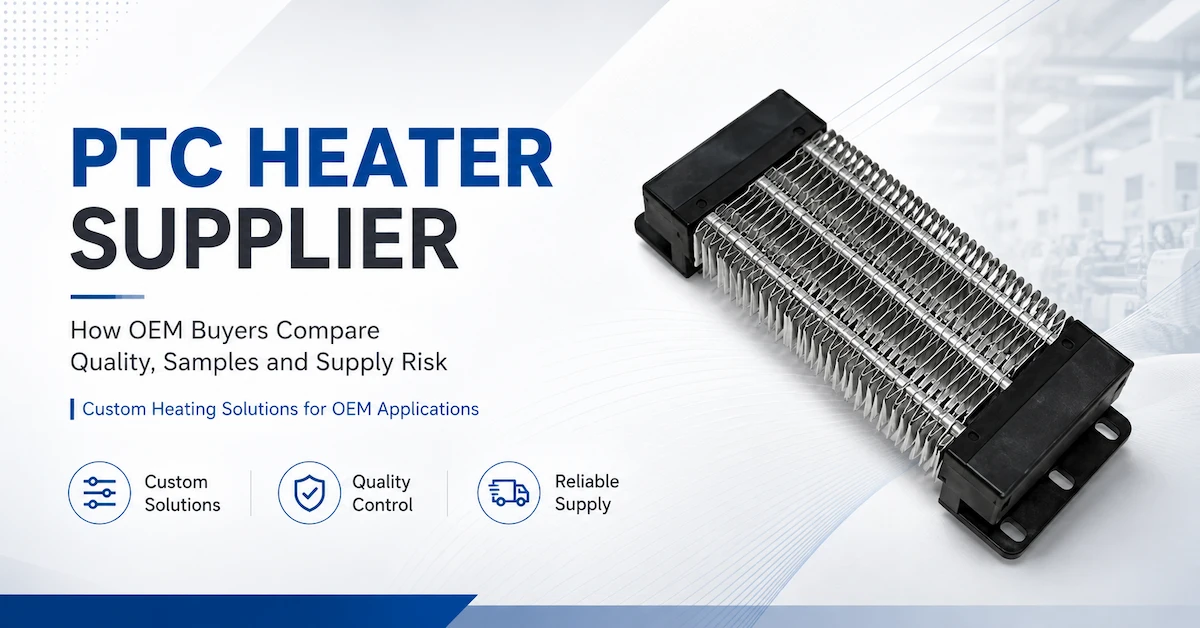
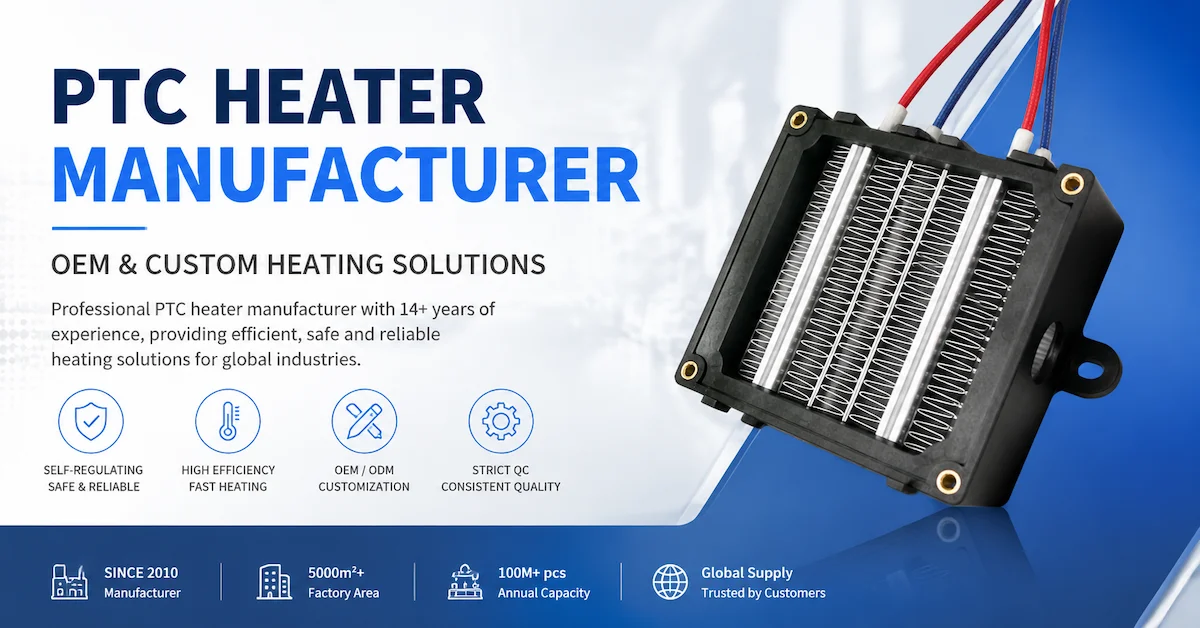
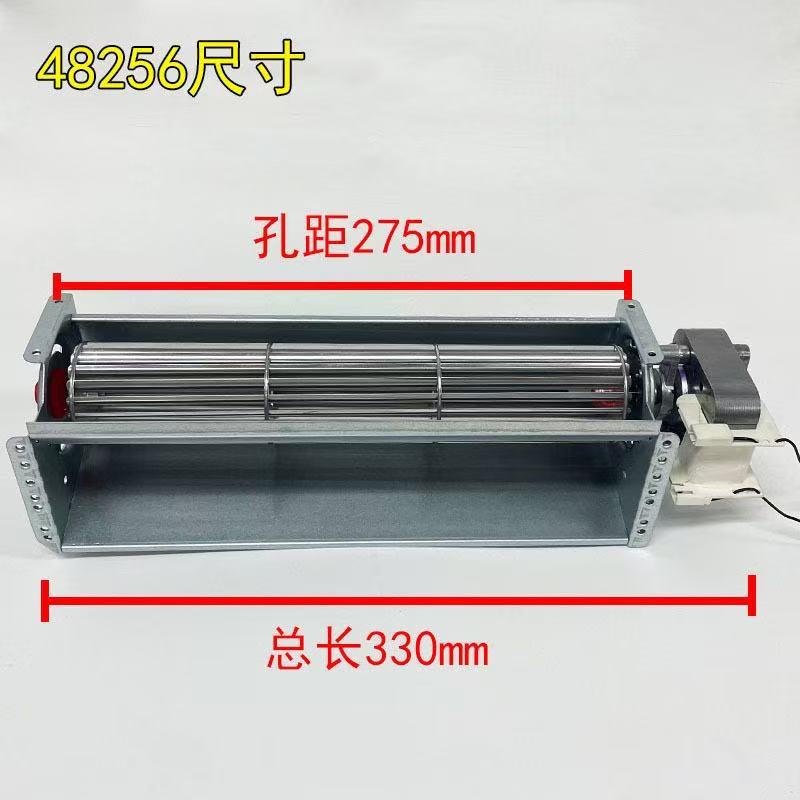
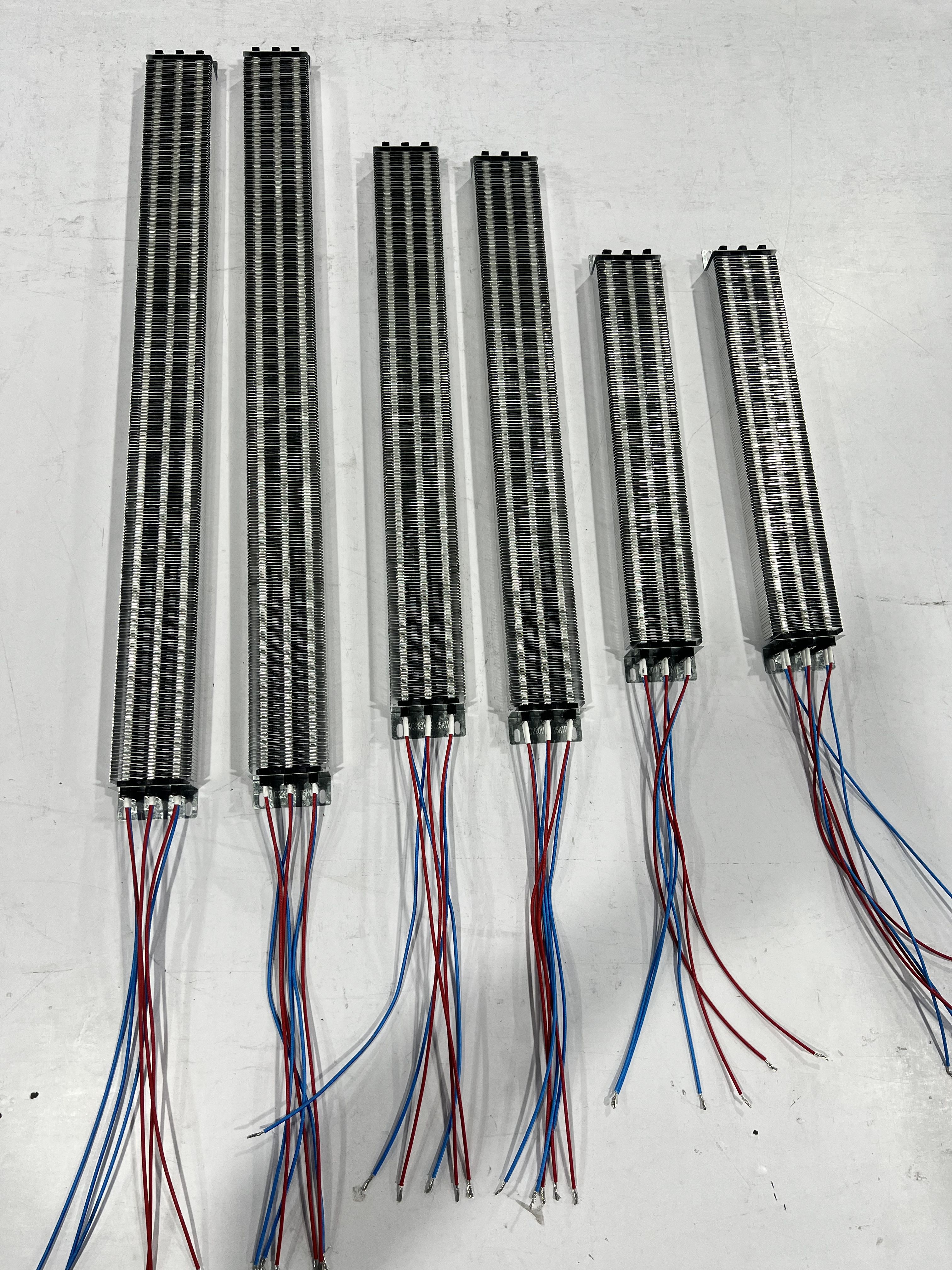
Quality control directly affects heater reliability.
A professional manufacturer should perform inspections throughout production.
Typical tests include:
Quality Test
Purpose
Electrical Testing
Verify voltage and resistance
Heating Performance Test
Confirm thermal output
Temperature Testing
Check control characteristics
Insulation Test
Ensure electrical safety
Reliability Testing
Evaluate service life
Appearance Inspection
Confirm product quality
Why Choose Tianrui as Your PTC Heater Supplier?
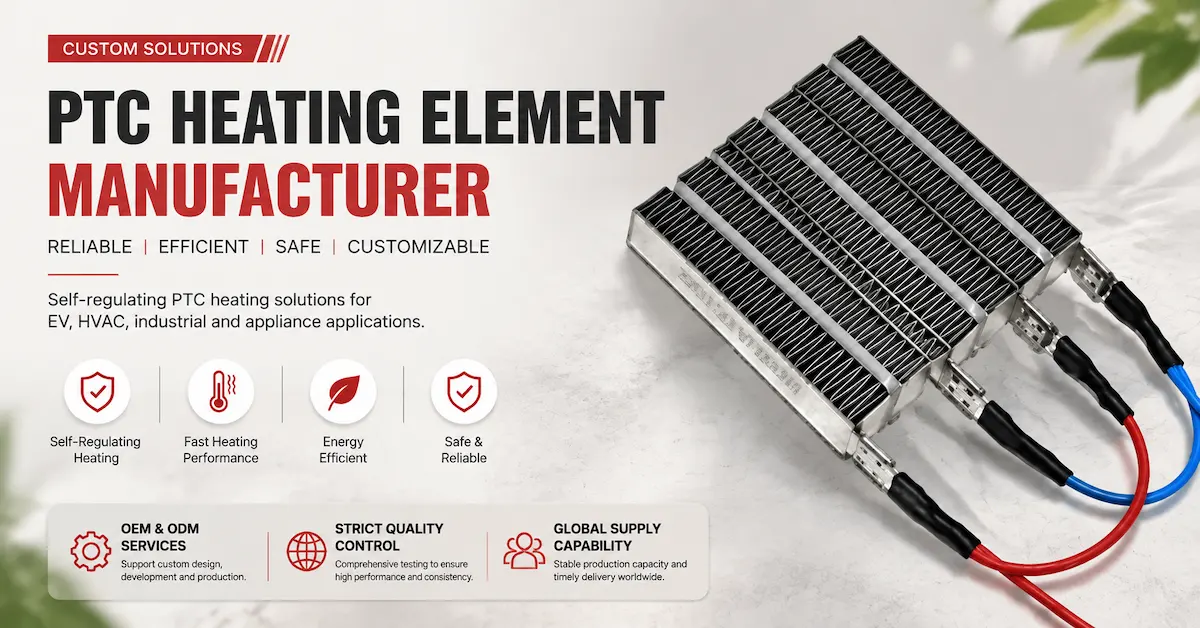
Tianrui Electronics provides PTC heating solutions for HVAC, automotive and industrial applications.
The company focuses on:
PTC heating components;
NTC/PTC temperature-sensitive products;
customized thermal solutions.
Tianrui supports customers with:
product selection;
application analysis;
customized design;
technical communication;
production support.
For HVAC projects requiring customized heating solutions, customers can contact the Tianrui engineering team through the contact page.
What Are the Future Trends of PTC Heaters in HVAC Systems?
The demand for efficient electric heating solutions continues to grow.
Important trends include:
Growth of Electric Vehicle HVAC
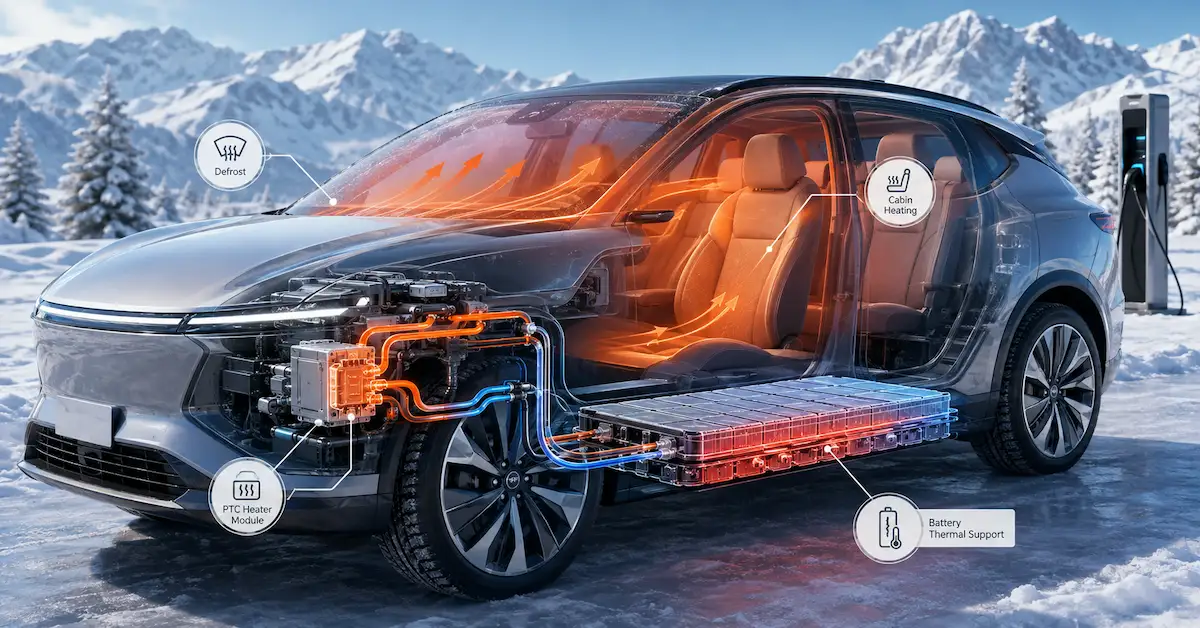
As electric vehicles become more common, efficient HVAC heating solutions are increasingly important.
PTC heaters support:
cabin comfort;
winter operation;
thermal management.
Intelligent Thermal Management
Modern HVAC systems are moving toward smarter control.
Future systems may integrate:
temperature sensors;
electronic control systems;
energy optimization strategies.
Compact and Customized Heating Solutions
Manufacturers increasingly require:
smaller designs;
higher efficiency;
application-specific structures.
This creates more demand for customized PTC heater suppliers.
FAQ About PTC Heater for HVAC System
What is a PTC heater used for in HVAC systems?
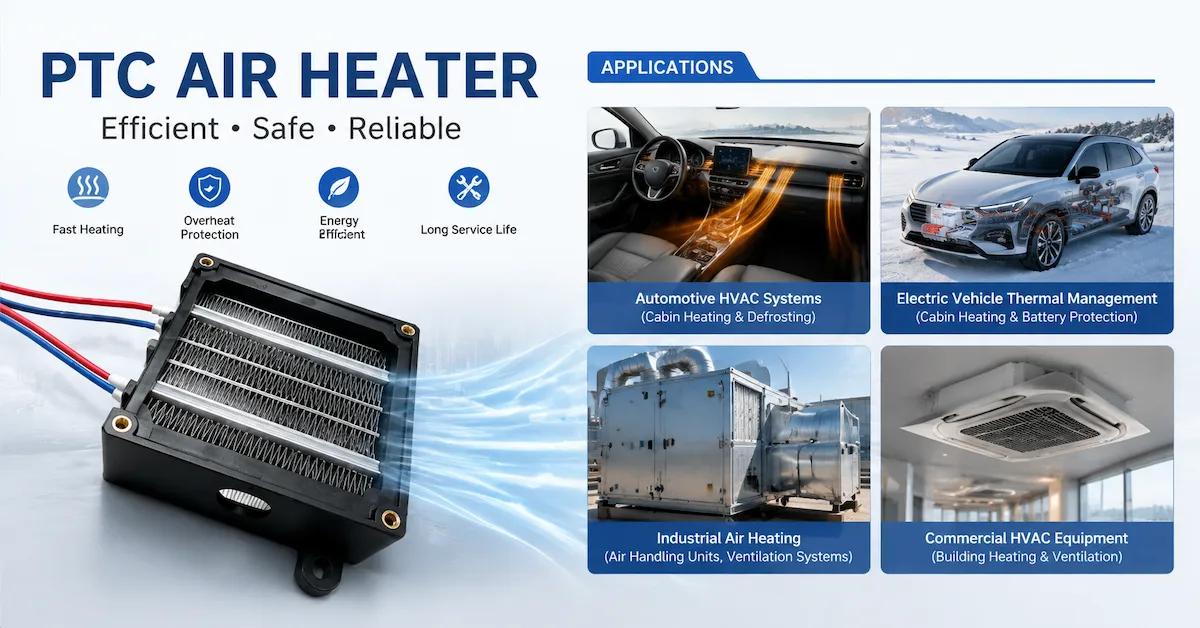
A PTC heater provides electric heating for HVAC applications, including vehicle cabin heating, industrial air heating and commercial heating equipment.
How does a PTC heater work in an HVAC system?
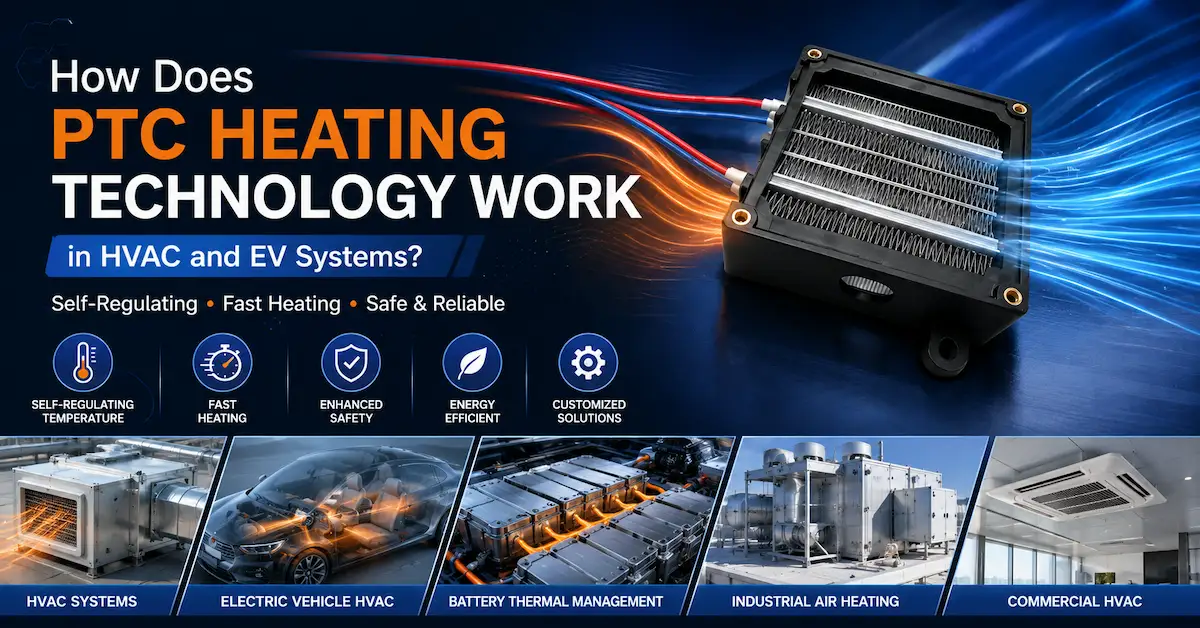
A PTC heater uses ceramic heating elements that generate heat when powered. As temperature increases, resistance rises automatically to regulate heating output.
Why are PTC heaters suitable for HVAC applications?
PTC heaters provide fast heating, self-regulating temperature control, compact design and reliable operation.
What industries use PTC heaters for HVAC systems?
Applications include automotive HVAC, electric vehicles, industrial equipment, commercial heating systems and ventilation equipment.
Can PTC heaters be customized for HVAC systems?
Yes. Suppliers can customize voltage, power, dimensions, wiring, connectors and structures according to customer requirements.
What is the difference between a PTC air heater and a PTC liquid heater?
A PTC air heater directly heats airflow, while a PTC liquid heater transfers heat through coolant or thermal fluids.
How do I choose a PTC heater supplier?
Evaluate technical capability, customization ability, manufacturing experience, testing methods and production consistency.
Are PTC heaters safe for HVAC systems?
PTC heaters provide self-regulating temperature characteristics, but proper system design and electrical protection are still required.
What information should I provide when requesting a quotation?
Provide application type, voltage, power requirement, installation conditions, quantity and technical specifications.
Conclusion
Choosing the right PTC Heater for HVAC System requires evaluating heating performance, safety, customization capability and supplier reliability.
A suitable HVAC heating supplier should provide:
stable PTC ceramic technology;
consistent manufacturing quality;
customized design support;
reliable testing;
long-term technical cooperation.
For automotive, industrial and commercial HVAC applications, PTC heaters provide an efficient electric heating solution with fast response and stable temperature control.
Tianrui provides customized PTC heating solutions according to customer application requirements, supporting HVAC manufacturers and system developers with reliable thermal components.