TL;DR: Choosing a reliable Self Regulating Heater Supplier requires verifying actual heating performance, electrical safety, customization capability, and production consistency—not simply comparing prices or nominal wattage. OEM buyers should request startup-current data, temperature measurements under defined loads, quality-control records, and clear production specifications. A qualified manufacturer should support sample validation, controlled customization, and long-term supply planning.
For overseas OEM brands, industrial equipment manufacturers, and procurement managers, selecting a Self Regulating Heater Supplier is an important technical and commercial decision.
Self-regulating PTC heaters are widely used in household appliances, industrial cabinets, drying equipment, auxiliary heating systems, and specialized electronic products.
Their ceramic heating elements exhibit temperature-dependent resistance, which can reduce electrical power as the ceramic temperature rises.
However, two products with the same voltage and nominal wattage may perform differently because of variations in ceramic formulation, insulation, housing construction, and thermal operating conditions.
A heater that works correctly during laboratory testing may produce different temperatures when installed inside a finished appliance.
Likewise, a competitive quotation does not guarantee stable production quality, suitable documentation, or reliable delivery.
The best Self Regulating Heater Manufacturer is the one that can demonstrate technical compatibility, provide verifiable quality evidence, and maintain the approved configuration throughout OEM production.
This guide explains how procurement teams can evaluate potential suppliers, compare PTC heater configurations, validate engineering samples, and reduce long-term sourcing risks.
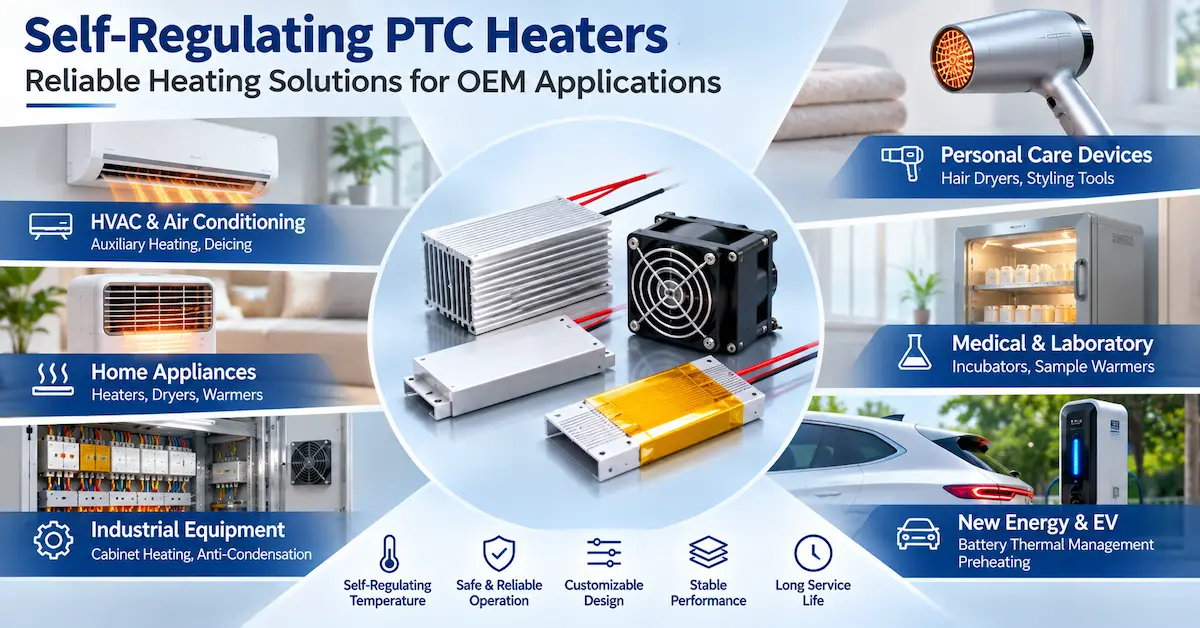
1. How Should OEM Buyers Compare Self Regulating Heater Suppliers?
A supplier comparison should begin with technical qualification rather than unit price.
Before requesting final quotations, buyers should establish the equipment's electrical, thermal, mechanical, and quality requirements.
The same evaluation criteria should then be applied to every candidate supplier.
Self Regulating Heater Supplier Comparison
| Evaluation Criteria | Basic Supplier Information | Stronger OEM Qualification Evidence |
|---|---|---|
| Electrical performance | Nominal voltage and power | Startup current, stabilized power, operating limits |
| Temperature regulation | Advertised temperature range | Measured temperature under defined conditions |
| Insulation and safety | General safety claims | Relevant product-specific verification |
| OEM customization | Custom designs available | Drawing review, feasibility assessment, prototypes |
| Quality control | Factory inspection claims | Defined inspection criteria and relevant records |
| Manufacturing consistency | Production capacity claims | Controlled specifications and lot verification |
| Commercial support | Unit quotation | MOQ, tooling, lead time, delivery conditions |
| Supply continuity | General delivery commitment | Change notification and repeat-order arrangements |
Key purchasing principle:
A supplier should not be approved merely because its catalog specifications appear similar to those of an already qualified component.
The buyer must establish whether the proposed product meets the actual equipment requirements.
Key Takeaways
-
Request evidence supporting self-regulating temperature claims.
-
Verify electrical behavior during startup and stabilized operation.
-
Confirm the intended thermal load and installation conditions.
-
Evaluate insulation, wiring, and abnormal-operation risks.
-
Review OEM customization and sample-development capabilities.
-
Establish production inspection and change-control requirements.
-
Compare total installed cost instead of purchase price alone.
2. What Is a Self Regulating PTC Heater?
A self-regulating PTC heater uses positive temperature coefficient ceramic elements to generate heat through electrical resistance.
PTC ceramic materials are designed so that resistance increases significantly when the ceramic approaches a particular temperature region.
At a fixed applied voltage, higher electrical resistance generally reduces current and heating power.
The simplified electrical relationship is:
P = V² / R
Where:
-
P = electrical power.
-
V = applied voltage.
-
R = instantaneous electrical resistance.
Because resistance changes with ceramic temperature, the power consumed by a PTC heating element is not necessarily constant.
How does self-regulation work?
The basic process follows these stages:
-
Electrical power is applied to the heating element.
-
The ceramic generates heat.
-
Heat transfers into the housing, surrounding air, or heated object.
-
Ceramic temperature increases.
-
Electrical resistance changes as the ceramic approaches its transition region.
-
Electrical power adjusts according to the resulting resistance and applied voltage.
The final thermal condition depends on the balance between electrical heating and heat removed from the element.
Does self-regulating mean constant temperature?
Not exactly.
A ceramic heating element may exhibit self-regulating behavior without maintaining a precise temperature at the external heating surface.
The actual temperature depends on several factors:
-
Ceramic resistance-temperature characteristics.
-
Operating voltage.
-
Housing material.
-
Thermal insulation.
-
Airflow.
-
Contact with heated objects.
-
Ambient temperature.
-
Installation geometry.
Therefore, the ceramic temperature and the finished equipment's operating temperature should not be treated as identical.
Can a PTC heater operate without a thermostat?
Some applications use PTC heating elements without active temperature control.
However, applications requiring precise temperature regulation or independent over-temperature protection may still need a thermostat, sensor, controller, or thermal cutoff.
A supplier's self-regulation claim does not replace equipment-level safety verification.
3. How Can Buyers Verify Self-Regulating Temperature Claims?
One of the most important supplier qualification tasks is checking how temperature specifications are measured.
A manufacturer may advertise a heater as operating at a particular temperature without explaining whether that value describes the ceramic, housing, air outlet, or heated object.
These measurements can differ substantially.
Temperature measurements to distinguish
Ceramic temperature:
The temperature of the PTC heating material.
Housing temperature:
The temperature of the external metal or insulated structure.
Target-surface temperature:
The temperature of the object or surface receiving heat.
Air temperature:
The temperature of the airflow surrounding or passing through a heater assembly.
For OEM equipment, the target-object or operating-medium temperature is often more important than ceramic temperature alone.
Recommended verification procedure
A useful supplier test should identify:
-
Product model and revision.
-
Applied voltage.
-
Ambient temperature.
-
Installation and mounting arrangement.
-
Thermal load or airflow conditions.
-
Temperature measurement positions.
-
Electrical current and power.
-
Test duration.
-
Stabilization criteria.
-
Acceptance limits.
These details allow the OEM to reproduce the test and compare alternative suppliers fairly.
Example of a meaningful purchasing specification
Instead of requiring:
"PTC heater with constant temperature."
The buyer should define a measurable requirement such as:
"Under the approved supply voltage and thermal load, the target surface must remain within the specified temperature range after the agreed stabilization period."
The actual acceptable range should be determined by the equipment's engineering requirements.
Procurement recommendation:
Reject unsupported claims that a heater will maintain an exact temperature under all operating conditions.
4. Why Are Startup Current and Stabilized Power Important?
PTC ceramic resistance changes with temperature.
As a result, electrical current at startup may differ significantly from current after the heater reaches its stabilized operating condition.
This affects power supplies, switching devices, connectors, wiring, and protective components.
Startup current
Startup-current data help engineers evaluate whether the heater is compatible with the equipment's electrical system.
A nominal power rating does not necessarily represent the maximum electrical loading.
Stabilized power
Stabilized power describes the electrical input under a defined operating condition after the heater approaches thermal equilibrium.
It is relevant to continuous heating performance and energy-consumption estimates.
Electrical Performance Checklist
| Parameter | Why OEM Buyers Need It |
|---|---|
| Cold resistance | Understand initial electrical characteristics |
| Startup current | Evaluate power-supply and switching requirements |
| Stabilized current | Determine continuous loading |
| Stabilized power | Evaluate actual operating consumption |
| Voltage tolerance | Confirm compatibility with supply variation |
| Temperature response | Understand heating performance |
| Repeated-start behavior | Assess intended operating duty |
For example, Tianrui publishes a 220V 30W PTC Heater Plate.
Its nominal rating provides preliminary selection information, but the actual startup-current profile and stabilized power should be confirmed for the intended installation.
5. What Happens When Airflow or Thermal Load Changes?
Self-regulating heater performance must be evaluated under realistic operating conditions.
A heater may respond differently when airflow decreases, a fan stops, or a cold object contacts its heating surface.
Reduced airflow
When airflow decreases, heat removal from a finned or fan-assisted heater may decline.
The ceramic temperature may increase, causing its resistance to rise and electrical power to decrease.
However, neighboring materials may still become excessively hot.
Fan failure
A fan-integrated heating system should be evaluated for relevant fan-failure conditions.
Important measurements may include heater-body temperature, wiring temperature, electrical power, and protective-device response.
Increased contact load
When a cold object is placed against a contact heater, it may remove additional heat.
This changes the ceramic temperature and electrical operating point.
The heating system must be evaluated for its ability to recover to the required operating condition.
Abnormal-Operation Test Matrix
| Test Condition | Main Measurement | Purpose |
|---|---|---|
| Normal operation | Current, power, temperature | Establish baseline performance |
| Restricted airflow | Heater and adjacent component temperatures | Assess reduced cooling |
| Fan failure | Temperature and protective response | Evaluate abnormal operation |
| Additional thermal load | Temperature recovery | Verify application performance |
| Maximum supply voltage | Electrical and thermal behavior | Evaluate supply limits |
| Low-temperature startup | Initial current and warm-up response | Assess cold-start compatibility |
| Repeated switching | Electrical and mechanical consistency | Evaluate operating duty |
Testing should reflect the equipment's actual risk profile.
A standalone ceramic heating element and a complete fan-assisted heater may require different verification procedures.
6. Which Self-Regulating PTC Heater Types Are Suitable for OEM Applications?
Different equipment requires different heating structures.
Buyers should select a heater according to how heat must be transferred into the final product.
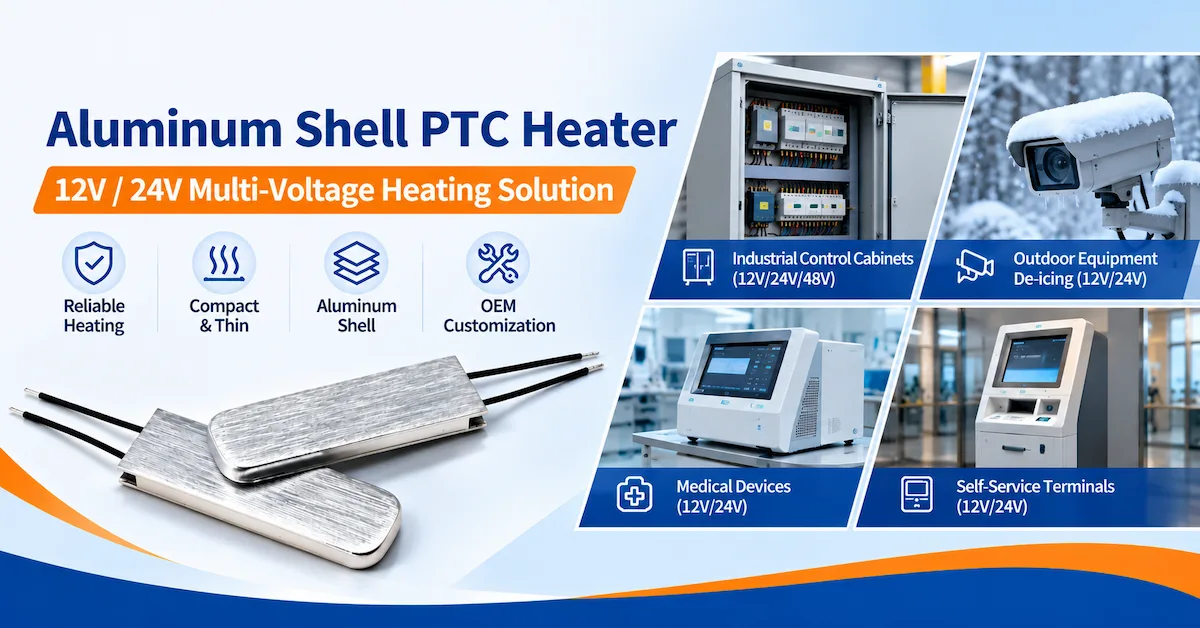
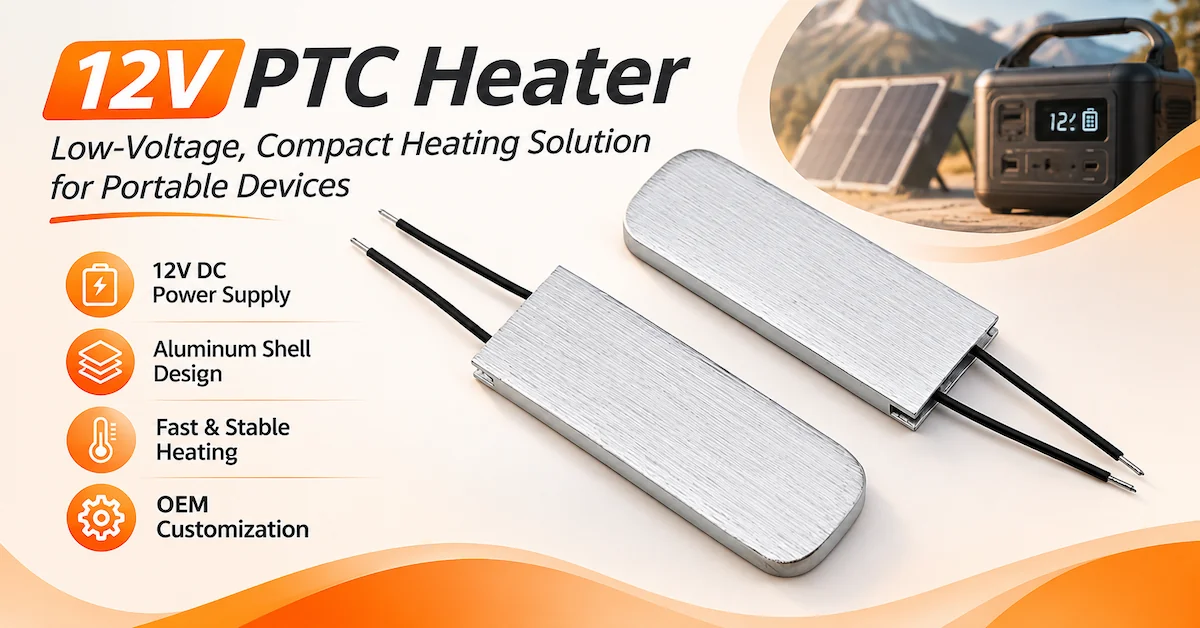
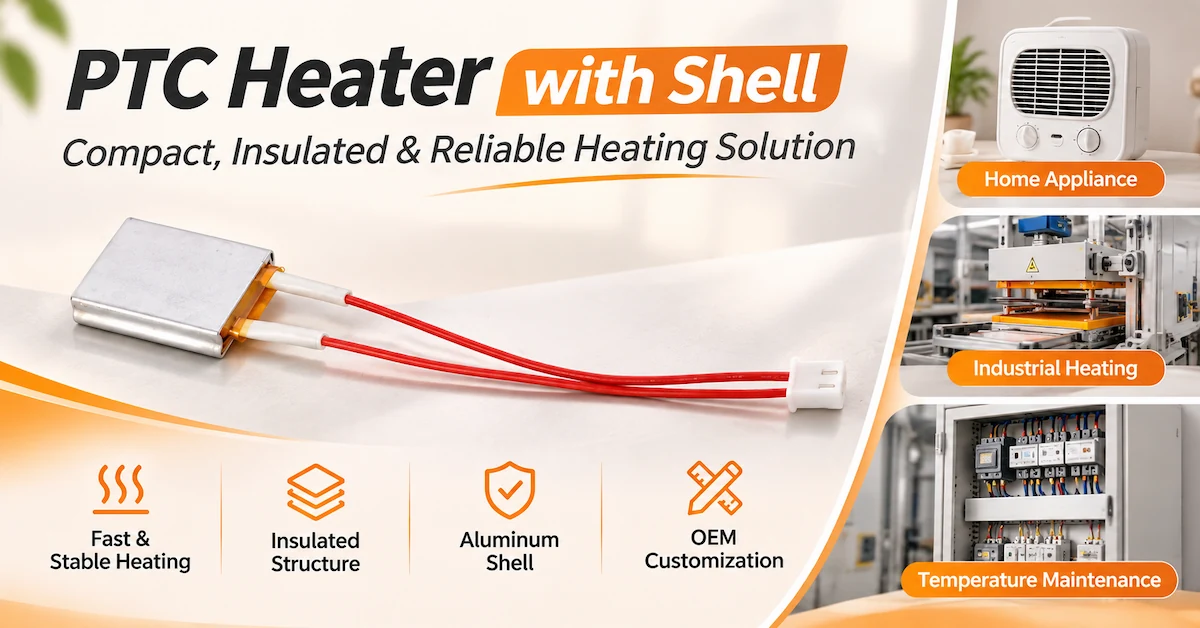
Aluminum-shell PTC heater
An aluminum-shell heater combines ceramic PTC elements with a metal housing and an insulation structure.
This construction can support compact contact-heating and localized thermal applications.
Tianrui provides an Aluminum Shell PTC Heater for equipment manufacturers evaluating this type of construction.
Insulated PTC heater
Insulated heaters incorporate materials designed to provide electrical separation between relevant components.
The actual insulation performance depends on the product construction.
The PTC Heater with Insulated Film is a relevant example.
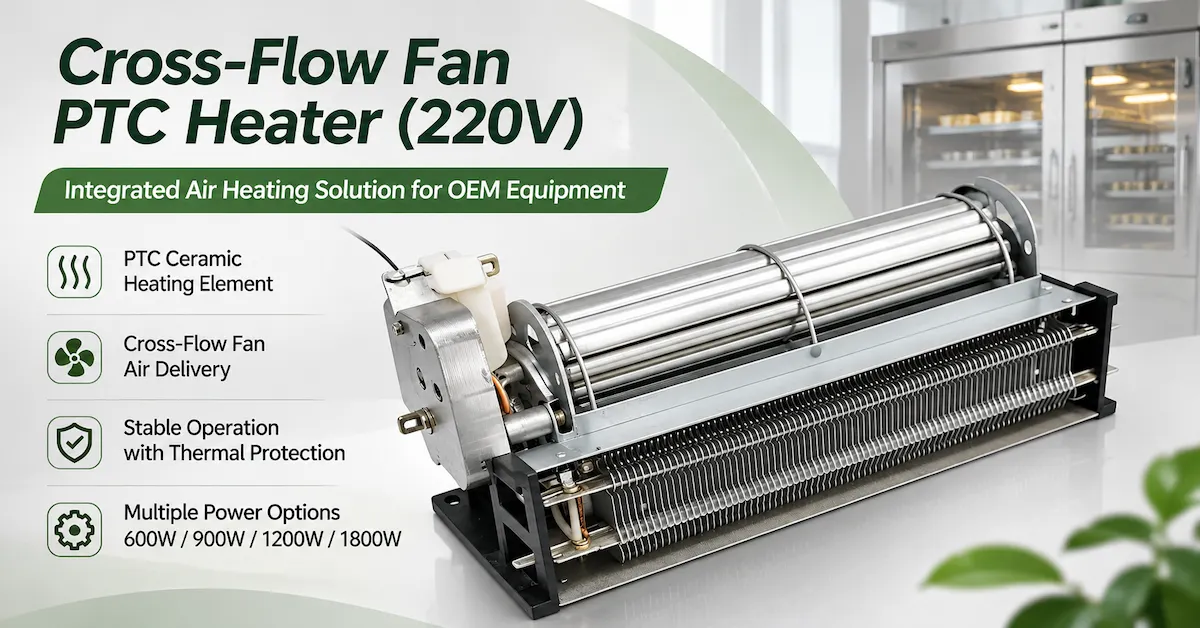
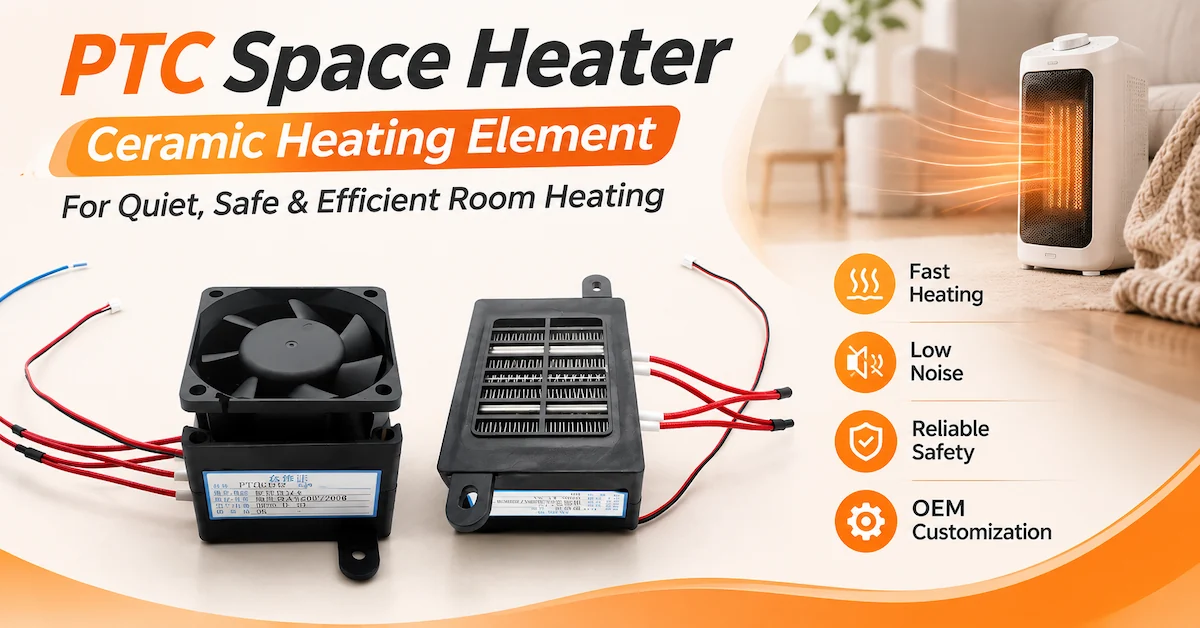
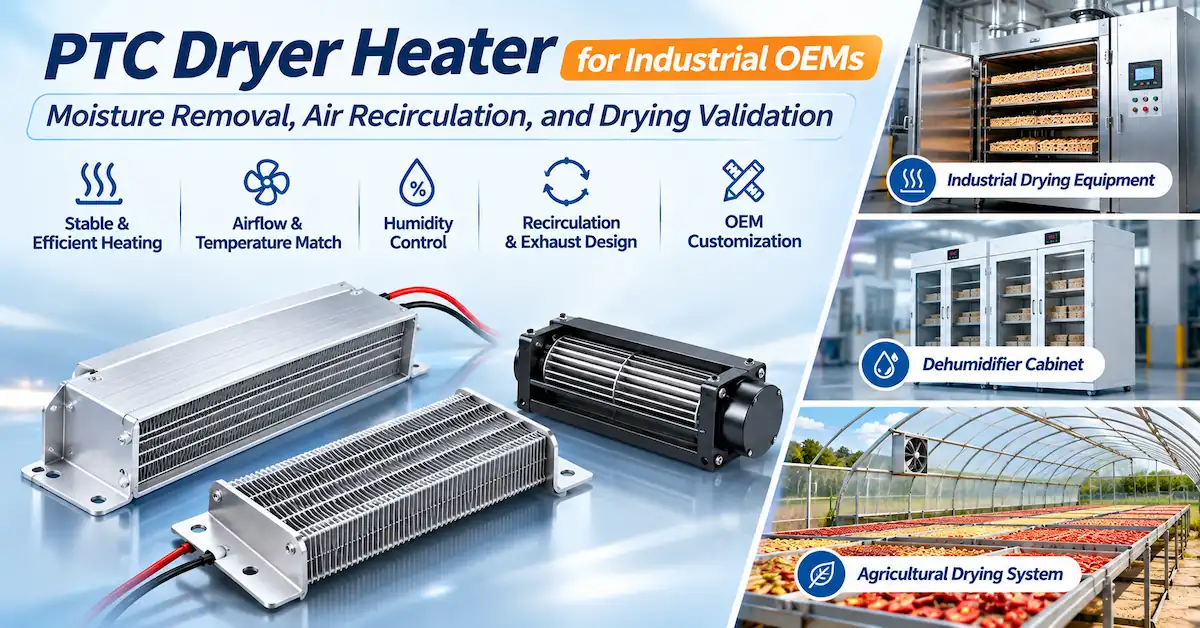
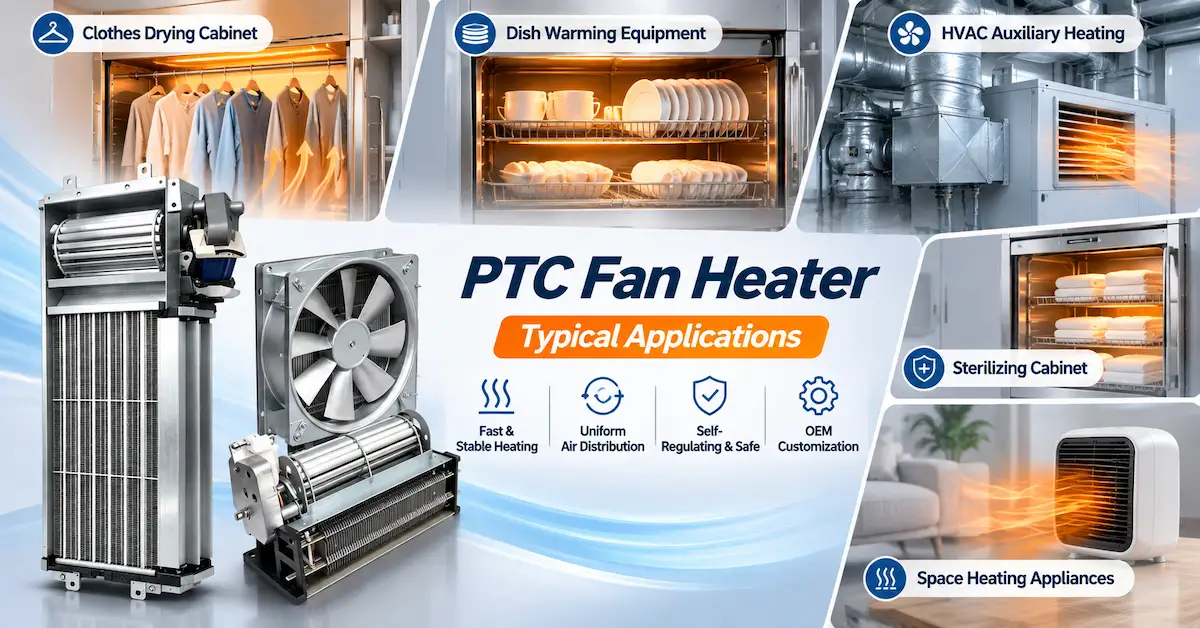
Fan-assisted PTC heater
Fan-integrated heaters combine heating elements with forced airflow.
They can be useful in drying equipment, warming systems, and compact air-heating applications.
Tianrui's 200W Mini PTC Air Heater with Fan demonstrates this configuration.
Ceramic PTC heating element
A ceramic element may suit OEM manufacturers developing their own heating structures.
This option requires appropriate electrical contacts, insulation, mounting, and thermal validation.
Heater Configuration Comparison
| Product Type | Main Application | Key Selection Requirement |
|---|---|---|
| Ceramic PTC element | Custom heating structures | R–T behavior and integration |
| Aluminum-shell heater | Contact or localized heating | Housing temperature and mounting |
| Insulated PTC heater | Compact insulated assemblies | Electrical isolation |
| Finned heater | Air heating | Airflow and heat transfer |
| Fan-integrated heater | Warm-air equipment | Fan and heater compatibility |
| Customized assembly | Specialized OEM equipment | Complete application requirements |
The most suitable configuration should be selected through engineering evaluation rather than product naming alone.
7. How Can OEM Buyers Evaluate Tianrui PTC Heater Models?
Dongguan Tianrui Electronics publishes several PTC heater configurations for OEM applications.
The MZ12 insulated heater series provides a useful example of different electrical and dimensional options.
MZ12 PTC Insulated Heater Model Comparison
| Model | Rated Voltage | Listed Power | Listed Maximum Surge Current | Dimensions |
|---|---|---|---|---|
| MZ12-04A1 | 220V | 400W | 3.7A | 48 × 44 × 15 mm |
| MZ12-06A1 | 220V | 600W | 5.5A | 73 × 44 × 15 mm |
| MZ12-08A1 | 220V | 800W | 7.3A | 97 × 44 × 15 mm |
| MZ12-12A1 | 220V | 1200W | 10.9A | 147 × 44 × 15 mm |
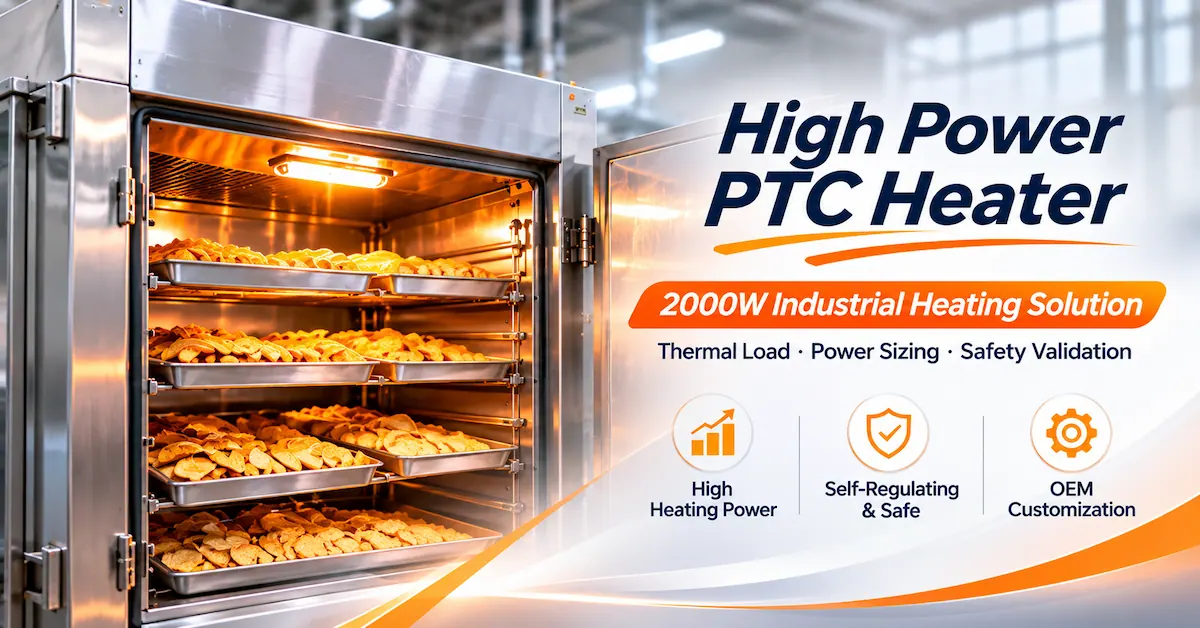
| MZ12-20A1 | 220V | 2000W | 18.2A | 300 × 44 × 15 mm |
These are manufacturer-published figures for the MZ12 PTC Insulated Heater series.
The exact specification, test conditions, product availability, and operating requirements should be confirmed before purchasing.
What should buyers learn from the comparison?
Higher nominal power may require greater installation space and place greater demands on the electrical system.
A model's maximum listed surge current is particularly relevant to startup electrical design.
The appropriate heater should satisfy both the thermal load and the available mechanical envelope.
Buyers should not substitute one model for another based on power alone.
8. What Customization Capabilities Should a Self Regulating Heater Manufacturer Provide?
OEM customization is especially important when standard heaters cannot satisfy a product's electrical or mechanical requirements.
A Custom Self Regulating Heater may require changes to voltage, housing, wiring, insulation, dimensions, or the heat-transfer structure.
Electrical customization
Buyers may request particular voltage ranges, resistance characteristics, startup behavior, or connection arrangements.
These characteristics are interconnected and must be reviewed together.
Thermal customization
Relevant requirements include the target temperature, heating time, allowable temperature limits, thermal load, and heat-transfer method.
The supplier should distinguish ceramic-level performance from final equipment performance.
Mechanical customization
Potential requirements include:
-
Housing dimensions.
-
Mounting brackets.
-
Installation-hole positions.
-
Connector orientation.
-
Cable length.
-
Insulation structure.
-
Contact surfaces.
-
Heat-transfer fins.
OEM Customization Checklist
| Requirement | Information to Submit |
|---|---|
| Voltage | Nominal supply and operating range |
| Heating performance | Target temperature and thermal load |
| Dimensions | Installation envelope and drawings |
| Mounting | Fixing points and contact requirements |
| Wiring | Cable type, length, connector |
| Insulation | Electrical isolation requirements |
| Environment | Ambient temperature, humidity, vibration |
| Quantity | Sample requirements and production forecast |
Tianrui describes custom PTC heater development, structural design, material selection, drawing support, and mold development.
Buyers can review its Custom PTC Heater Solutions.
Actual customization feasibility, MOQ, and lead time require project-specific confirmation.
9. How Should Buyers Audit Manufacturing Quality Control?
Quality-control claims should be supported by relevant inspection methods and documentation.
A general statement that every heater is inspected does not explain which characteristics are controlled.
Incoming material control
Depending on the heater, relevant components may include:
-
PTC ceramic elements.
-
Electrodes.
-
Aluminum housings.
-
Electrical insulation.
-
Lead wires.
-
Terminals.
-
Connectors.
-
Fans and mounting components.
Important incoming characteristics should be defined according to the product design.
Process control
Assembly processes should control critical factors such as ceramic positioning, electrical connections, insulation placement, mounting accuracy, and housing dimensions.
For custom products, production should follow the approved drawing and technical specification.
Final inspection
Relevant inspection may include electrical resistance, startup characteristics, insulation, dimensions, and functional heating behavior.
A useful quality record should connect:
Measurement → Test Conditions → Acceptance Criteria
For example, stabilized electrical power should be measured under defined supply, ambient, installation, and thermal-load conditions.
This allows results from different samples or production lots to be compared meaningfully.
Production consistency
For repeat orders, OEM buyers should discuss:
-
Critical inspection characteristics.
-
Sampling arrangements.
-
Lot identification.
-
Nonconformance handling.
-
Corrective-action procedures.
-
Product revision control.
-
Component-change notification.
Tianrui describes its manufacturing and inspection capabilities on its About Us page.
Project-specific inspection records and quality procedures should be confirmed with the manufacturer.
10. What Certifications and Technical Standards Should Buyers Verify?
Certification requirements depend on the finished equipment, target market, and intended use.
A manufacturer's reference to an international standard does not automatically establish that a specific heater is certified to that standard.
Relevant technical references
IEC 60738-1
Provides general specifications and test methods for directly heated PTC thermistors.
IEC 60068-2-14
Addresses environmental testing involving changes in temperature.
IEC 60335-1
Covers general safety requirements for household and similar electrical appliances.
Additional particular standards or market-specific requirements may apply.
Compliance Documentation Checklist
| Requirement | Evidence to Request |
|---|---|
| Electrical characteristics | Product datasheet and relevant test information |
| Insulation | Product-specific verification |
| Environmental suitability | Appropriate qualification data |
| Material compliance | Relevant declarations or test reports |
| Quality management | Applicable management-system evidence |
| Finished-equipment approval | Documentation required by the target market |
An ISO 9001 quality management certificate, for example, concerns the management system rather than certifying that every heater complies with all applicable product safety requirements.
Buyers should verify the issuing organization, certification scope, validity, and relevance.
11. What Are the Biggest Risks When Sourcing PTC Heaters Overseas?
International heater sourcing involves technical, commercial, and operational risks.
The most effective procurement strategy identifies these risks before committing to volume production.
Risk 1: Incomplete specifications
A quotation containing only voltage and wattage may omit essential thermal and electrical information.
Mitigation:
Use a controlled technical specification.
Risk 2: Unsupported temperature claims
Advertised temperature figures may lack clear test conditions.
Mitigation:
Request measurements under defined loads.
Risk 3: Electrical incompatibility
Startup current or operating behavior may differ from the assumptions used during equipment design.
Mitigation:
Verify actual electrical characteristics.
Risk 4: Inadequate safety evidence
Self-regulating behavior does not guarantee complete equipment safety.
Mitigation:
Define relevant insulation and abnormal-operation tests.
Risk 5: Uncontrolled substitutions
Changes to ceramics, wiring, connectors, or insulation may affect the approved product.
Mitigation:
Establish change-notification requirements.
Risk 6: Unclear delivery commitments
Production scheduling may depend on tooling, material availability, and sample approval.
Mitigation:
Define development and production milestones separately.
Risk 7: Inconsistent repeat orders
A successful prototype may not represent later manufacturing batches.
Mitigation:
Agree on production inspection and lot-acceptance criteria.
Risk 8: Supplier dependence
Relying on a single source can increase exposure to manufacturing or material disruptions.
Mitigation:
Evaluate inventory planning and qualified alternatives when necessary.
The goal is not to remove every possible uncertainty, but to control the risks that could materially affect production.
12. How Should OEM Buyers Calculate Total Procurement Cost?
A lower purchased component price does not always produce a lower finished-equipment cost.
The procurement calculation should include integration, inspection, development, and relevant supply risks.
Total installed cost
A simplified formula is:
Installed Unit Cost = Purchase Price + Additional Components + Installation Labor + Inspection Cost
One-time tooling and development costs should be evaluated separately or amortized across an appropriate production quantity.
Illustrative cost example
Consider two hypothetical heater configurations.
| Cost Component | Standard Heater | Customized Heater |
|---|---|---|
| Purchased component | $14.00 | $15.50 |
| Integration labor and components | $2.40 | $0.80 |
| Inspection | $0.60 | $0.40 |
| Recurring unit cost | $17.00 | $16.70 |
| One-time custom development | $0 | $1,200 |
The custom configuration has a modeled recurring saving of:
$17.00 − $16.70 = $0.30 per unit
The simplified break-even quantity is:
$1,200 ÷ $0.30 = 4,000 units
Under these assumptions, the customized heater becomes less expensive after the planned production quantity exceeds 4,000 units.
These values are hypothetical examples, not Tianrui quotations or verified supplier costs.
Real calculations should also consider qualification, shipping, tooling changes, inventory, and expected production lifecycle.
Why total cost matters
An unsuitable heater can create additional costs through engineering changes, assembly rework, excessive inspection, production delays, or product failures.
The most economical supplier is therefore the one offering an acceptable combination of technical fit, recurring cost, qualification expense, and supply reliability.
13. How Can OEM Buyers Qualify a Supplier in Five Steps?
A structured purchasing workflow helps engineering and procurement teams make consistent decisions.
Step 1: Define the application
Identify the equipment type, required heating function, operating environment, and applicable electrical conditions.
Step 2: Verify technical specifications
Request information covering voltage, startup current, stabilized power, temperature behavior, dimensions, and insulation.
Step 3: Evaluate engineering samples
Test candidate heaters in representative equipment under agreed conditions.
Confirm that the required performance and safety criteria are satisfied.
Step 4: Review manufacturing controls
Assess inspection procedures, approved specifications, product changes, and relevant traceability arrangements.
Step 5: Approve commercial terms
Compare total cost, tooling, MOQ, production lead time, documentation, and delivery responsibilities.
Supplier Qualification Summary
| Stage | Main Question | Required Result |
|---|---|---|
| Application review | Is the heating architecture suitable? | Defined technical requirements |
| Technical review | Can performance be verified? | Datasheet and relevant evidence |
| Sample validation | Does the heater work in the actual equipment? | Approved test results |
| Quality review | Can production remain consistent? | Agreed quality controls |
| Purchasing approval | Are the commercial conditions acceptable? | Approved sourcing agreement |
Supplier approval should follow technical qualification, not precede it.
14. Why Consider Tianrui Electronics for OEM Self-Regulating Heaters?
Dongguan Tianrui Electronics Co., Ltd. is a China-based manufacturer of PTC thermistors, heating elements, and customized thermal components.
According to its company profile, Tianrui was established in 2010 and operates a manufacturing facility of approximately 5,000 m².
The company also reports substantial annual PTC component production.
These figures are manufacturer-published background information and should not be interpreted as guaranteed capacity for every heater model.
Product capabilities
Tianrui's published product range includes:
-
Ceramic PTC heating elements.
-
Aluminum-shell heaters.
-
Insulated PTC heaters.
-
PTC air-heating assemblies.
-
Fan-integrated heating products.
-
Customized heating solutions.
This range allows OEM customers to evaluate different heating architectures according to their equipment requirements.
Engineering and customization
Tianrui describes support for customer requirement reviews, structural customization, material selection, drawings, mold development, and product inspection.
These capabilities are relevant to buyers requiring nonstandard dimensions or application-specific heating assemblies.
Application industries
The company's public website identifies applications in household appliances, industrial equipment, auxiliary heating, and other thermal systems.
Specific product suitability still requires engineering confirmation.
For more information, visit About Tianrui Electronics.
15. OEM Example: Qualifying a Self-Regulating Heater for a Warming Cabinet
The following example demonstrates how an OEM purchasing team can apply a structured supplier qualification process.
This is an illustrative scenario, not a verified Tianrui customer case.
An equipment manufacturer is developing a compact warming cabinet.
The product requires controlled heating, a suitable electrical supply, limited installation dimensions, and reliable repeat production.
Three potential suppliers provide quotations for PTC heating assemblies.
However, their documentation differs.
Initial supplier comparison
Supplier A provides nominal voltage, rated power, and dimensions.
Supplier B provides similar information plus electrical and thermal measurements.
Supplier C proposes a customized assembly with modified mounting and wiring.
The purchasing team cannot compare them fairly using the quotations alone.
Qualification process
First, engineering defines the equipment's required heating performance and operating limits.
Second, each supplier is asked to provide comparable electrical and thermal information.
Third, representative samples are installed in the intended equipment.
Fourth, the OEM evaluates temperature behavior, electrical compatibility, and relevant abnormal conditions.
Fifth, the team reviews production controls and calculates total integration cost.
Purchasing decision
The approved supplier should be the one whose product satisfies the technical requirements and whose manufacturing and commercial arrangements support the production program.
The lowest quoted price is not necessarily the best choice.
Similarly, customization should be selected only when it solves a measurable integration or performance problem.
16. Self Regulating Heater Supplier RFQ Checklist
A complete Request for Quotation helps the manufacturer evaluate technical feasibility and prepare an appropriate offer.
OEM RFQ Requirements
| Category | Information to Provide |
|---|---|
| Equipment application | Appliance, industrial cabinet, dryer, or other equipment |
| Heating objective | Warm-up, temperature maintenance, air or contact heating |
| Heater type | Ceramic, aluminum-shell, insulated, or fan-assisted |
| Electrical supply | AC/DC, nominal voltage, allowable range |
| Thermal requirements | Target temperature, heating time, thermal load |
| Operating environment | Ambient temperature, airflow, humidity |
| Dimensions | Available installation space and drawings |
| Mounting | Fixing points and mechanical constraints |
| Wiring | Cable length, material, connectors |
| Insulation | Electrical isolation requirements |
| Control system | Temperature sensor, thermostat, protective devices |
| Testing | Required electrical and thermal verification |
| Quality documentation | Inspection criteria and revision requirements |
| Sample quantity | Engineering evaluation requirements |
| Production quantity | Initial order and annual forecast |
| Commercial terms | Tooling, MOQ, lead time, packaging |
Example OEM Inquiry
Subject: Custom Self Regulating PTC Heater – OEM Supplier Evaluation
We are developing an electrical heating product and are evaluating manufacturers for long-term OEM cooperation.
Our project requires a self-regulating PTC heater with defined electrical performance, suitable thermal behavior, and reliable mechanical integration.
We can provide equipment drawings, operating voltage, target heating requirements, environmental conditions, and estimated production quantities.
Please advise which standard products may be suitable and whether customization is possible.
We would also like to discuss sample evaluation, electrical and thermal testing, quality-control documentation, tooling requirements, MOQ, and production lead time.
To submit a project inquiry, Contact Tianrui Electronics.
17. Frequently Asked Questions About Self Regulating Heater Suppliers
1. What is a Self Regulating Heater Supplier?
A Self Regulating Heater Supplier provides heating products designed to adjust electrical heating behavior as temperature changes.
Ceramic PTC heaters use temperature-dependent resistance to influence heating power.
OEM buyers should verify the actual product characteristics and suitability for their intended equipment.
2. How do I choose a reliable Self Regulating Heater Manufacturer?
Evaluate the supplier's technical specifications, product testing, customization support, manufacturing controls, and commercial terms.
Request relevant evidence and qualify samples under the intended operating conditions.
The decision should not depend on price or promotional claims alone.
3. Can a self-regulating PTC heater operate without a thermostat?
Some applications may operate using PTC self-regulating characteristics without active temperature control.
However, precise temperature requirements or equipment safety may require additional sensing and protection.
The final control design should follow the application's requirements.
4. How can I verify self-regulating temperature performance?
Request measurements of temperature, current, and electrical power under defined conditions.
Confirm the measurement location, voltage, ambient temperature, thermal load, and test duration.
Compare the results with the agreed acceptance criteria.
5. Can Tianrui manufacture a Custom Self Regulating Heater?
Tianrui describes support for customized heater structures, materials, drawings, and mold development.
Potential modifications may include dimensions, electrical characteristics, housing, insulation, and wiring.
Feasibility and commercial conditions should be confirmed for the specific project.
6. What quality-control documents should OEM buyers request?
Useful documents may include product specifications, approved drawings, inspection requirements, sample test reports, and change-control procedures.
For repeat purchasing, traceability and lot-identification arrangements may also be relevant.
7. Does a PTC heater require safety certification?
The requirements depend on the heater, finished equipment, intended application, and destination market.
Self-regulation does not automatically establish electrical safety.
Buyers should determine applicable requirements and request relevant product-specific evidence.
8. What determines MOQ and lead time?
MOQ and lead time depend on product configuration, customization, materials, tooling, testing, and production quantity.
Standard products may have different commercial conditions from new customized assemblies.
Request project-specific confirmation.
9. How should I compare standard and custom PTC heaters?
Compare technical performance, electrical compatibility, mounting, insulation, sample qualification, and total installed cost.
A customized design may reduce integration work, but its development and tooling costs must also be considered.
10. What information is needed for an accurate OEM quotation?
Provide the application, voltage, heating requirements, dimensions, operating environment, wiring, sample needs, and estimated order volume.
Engineering drawings and thermal requirements help the supplier assess suitable configurations.
Conclusion
Choosing a reliable Self Regulating Heater Supplier requires more than comparing nominal power, product appearance, and unit price.
For overseas OEM brands and procurement managers, the most important factors are measurable heating performance, electrical compatibility, appropriate safety verification, manufacturing consistency, and reliable commercial support.
Before approving a supplier, buyers should confirm that the proposed heater meets the intended operating conditions and that its performance can be reproduced during production.
A qualified Self Regulating Heater Manufacturer should provide relevant technical information, support sample validation, and communicate clearly about customization and manufacturing requirements.
For applications requiring unusual dimensions, electrical characteristics, or installation features, a Custom Self Regulating Heater may offer valuable integration benefits when properly designed and tested.
Dongguan Tianrui Electronics Co., Ltd. provides PTC ceramic heating elements, aluminum-shell heaters, insulated heater assemblies, fan-assisted heating products, and customized heating solutions for OEM equipment.
Looking for a self-regulating heater supplier for your next OEM project?
Explore Tianrui's PTC Heater Products, review its Custom PTC Heating Solutions, or Contact Tianrui Electronics for technical consultation and quotation.
Prepare your equipment drawings, operating voltage, target heating performance, installation requirements, and estimated purchase quantity.
Email:
Phone:
+86 135 3277 2961
A clear technical specification and evidence-based supplier qualification process provide the foundation for consistent heater performance, controlled manufacturing quality, and long-term OEM cooperation.