describe
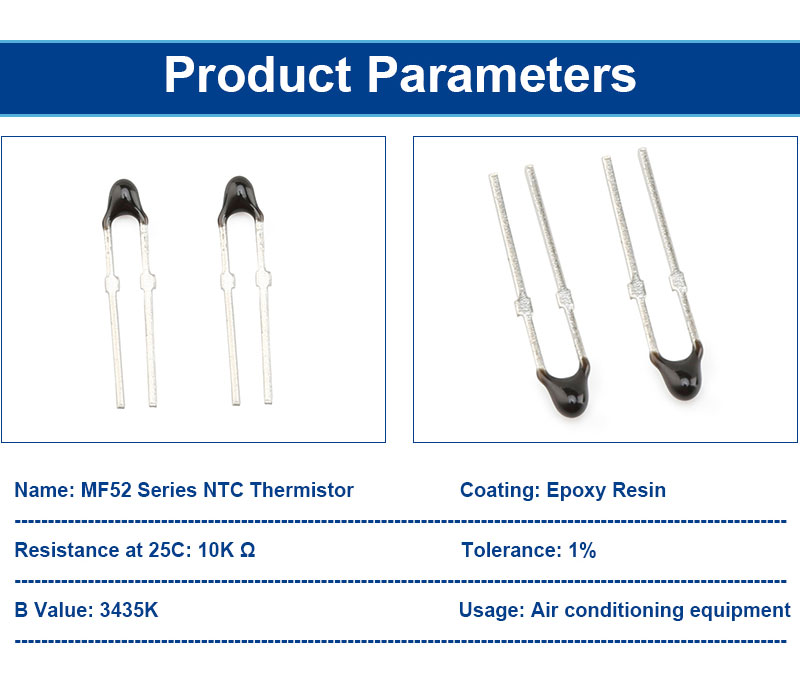
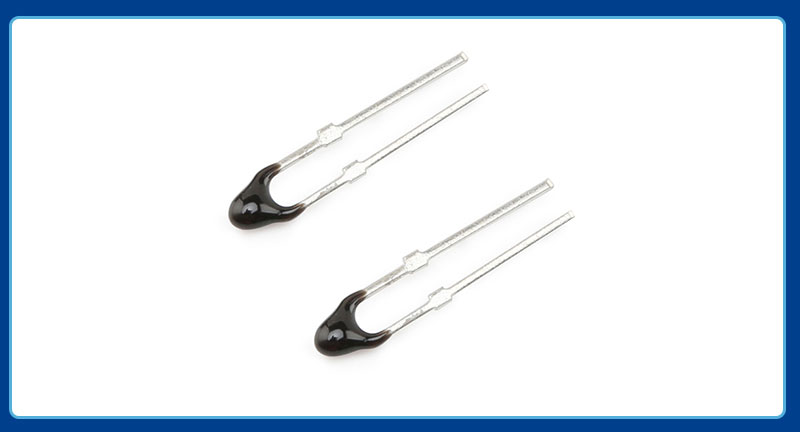
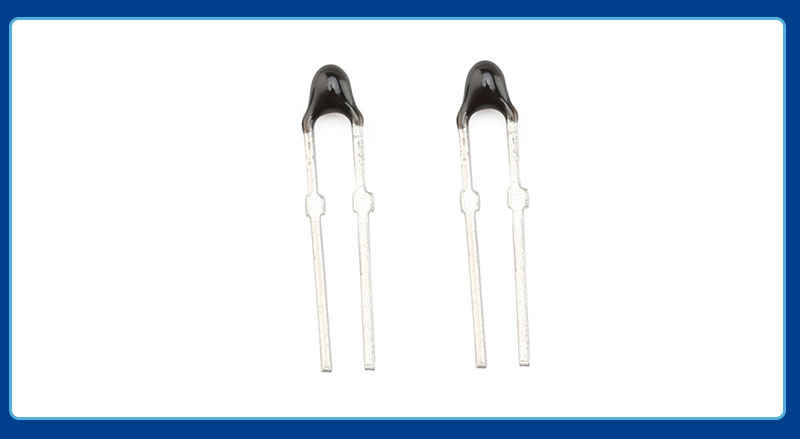
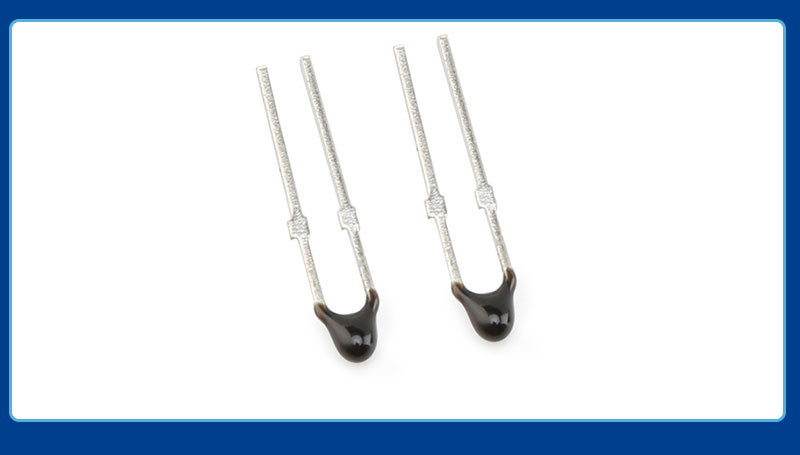
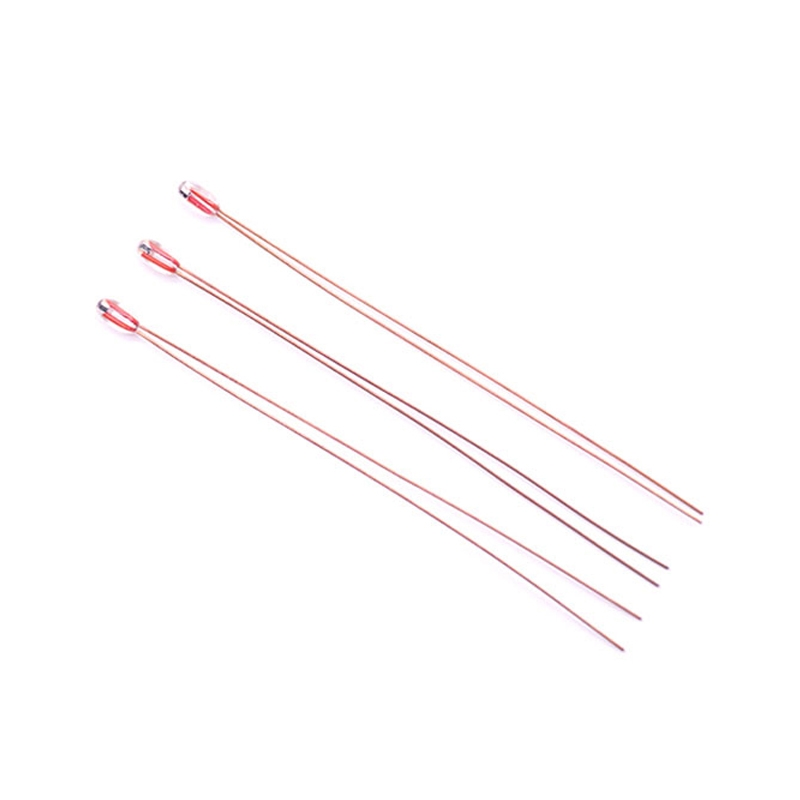
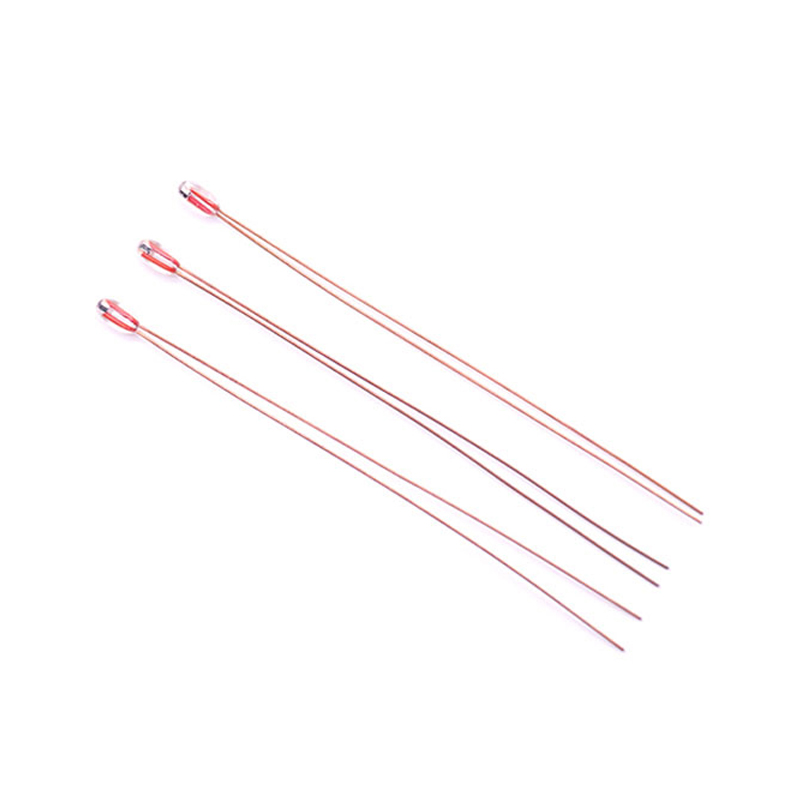
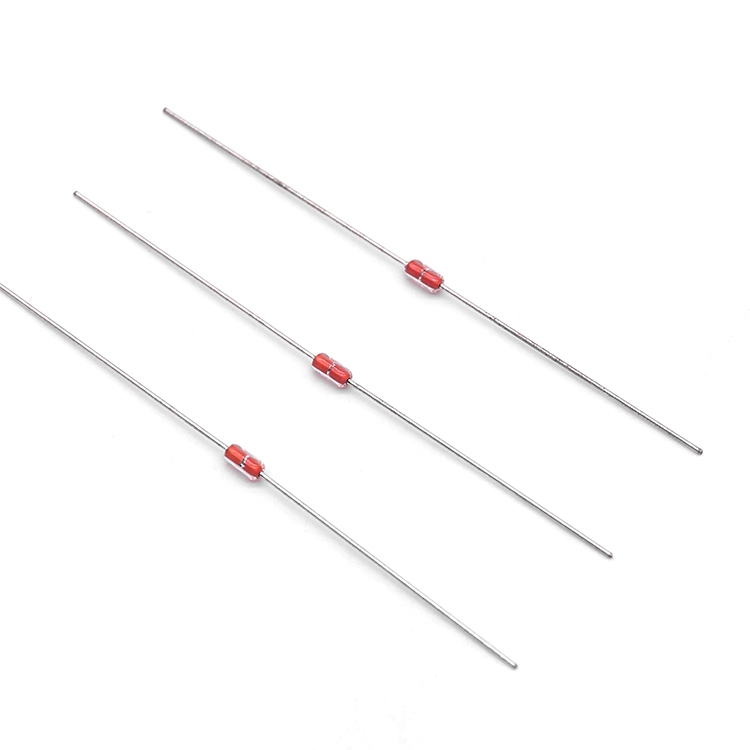
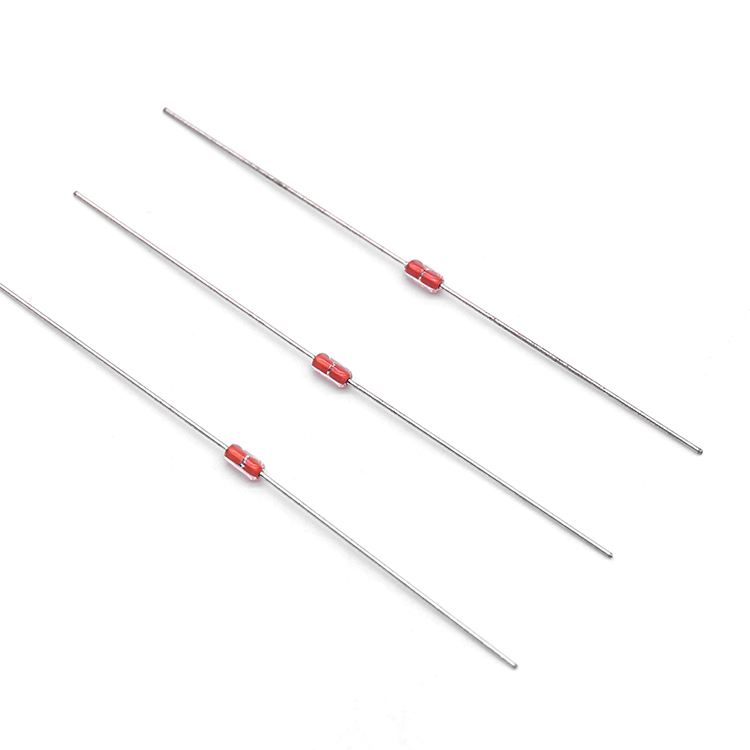
The MF52F is an epoxy-encapsulated bead-type NTC (negative temperature coefficient) thermistor. It is one of the most widely used, cost-effective temperature sensing and compensation components in electronic circuits. Its core is a ceramic thermistor chip sintered from metal oxides such as manganese, cobalt, and nickel. The die is encapsulated in a durable epoxy resin, providing excellent insulation and environmental protection.
In summary, the MF52 epoxy resin NTC thermistor is a basic temperature sensing component characterized by high cost-effectiveness, high reliability, and wide applicability. It is a classic and reliable choice for temperature management in various consumer electronics and industrial products.
Specification
MF52F Epoxy Coating NTC Thermistor
Resistance range: 5K to 100KΩ
Resistance tolerance: 1% 2% 3% 5% 10%
B value: 3100K to 4500K
Coating: Epoxy resin
Operating Temperature: - 40 ~+ 125 ℃
Highlight features
1. High Sensitivity and High Precision: As an NTC thermistor, it is highly sensitive to temperature changes, with its resistance decreasing significantly as temperature increases, making it capable of detecting even small temperature changes. While its accuracy and consistency are generally slightly lower than that of the thin-film MF55, it is still available in a variety of accuracy levels (such as ±1%, ±3%, and ±5%) through sorting, meeting the needs of most general scenarios.
2. Excellent cost-effectiveness: With mature manufacturing technology, large output and extremely competitive price, it is the preferred temperature sensor solution in terms of cost-effectiveness.
3. Good stability and reliability: Epoxy resin encapsulation not only protects the internal brittle ceramic chip from damage by mechanical stress, vibration and impact, but also effectively resists erosion by moisture, dust and most chemical gases, ensuring long-term working stability in complex environments.
4. Fast thermal response speed: Due to the small package size and small thermal mass, it responds quickly to changes in ambient temperature and has a small time constant.
5. Wide selection of resistance and B values: The MF52 series offers a variety of room-temperature resistance values (e.g., 10kΩ, 50kΩ, 100kΩ at 25°C) and B values (e.g., 3435K, 3950K, 4100K), allowing engineers to flexibly select the best temperature sensor based on different measurement ranges and control requirements.
6. Easy to install and use: Its axial lead structure is very suitable for fixing on the circuit board through through-hole mounting (THT), which is easy to install and has firm welding.
Main Applications
-
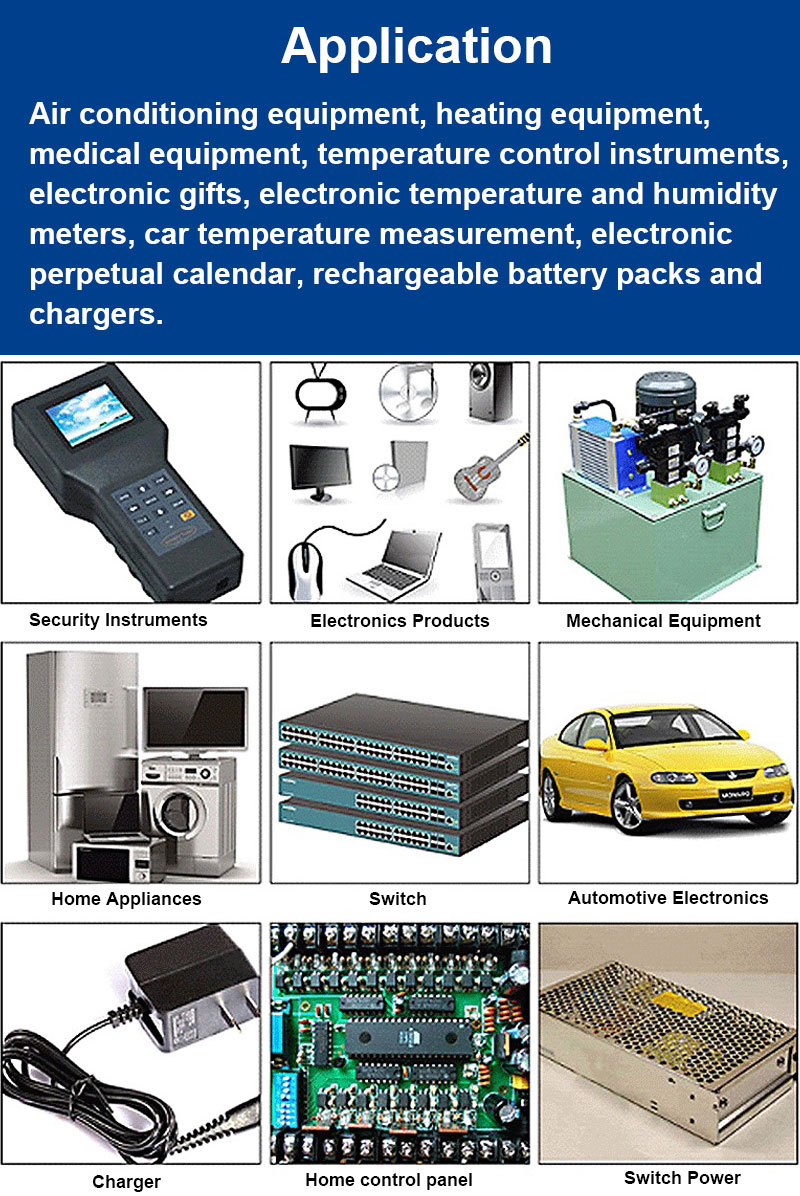
Temperature measurement and control : Temperature monitoring in household appliances (such as air conditioners, rice cookers, water heaters, refrigerators), battery pack temperature monitoring, automotive electronics, office equipment, etc.
-
Temperature compensation : used to compensate other temperature-sensitive components in the circuit, such as crystal oscillators, amplifier circuits, etc., to ensure their operating point stability.
-
Surge suppression : In the power supply circuit, the characteristics of high resistance in cold state and low resistance in hot state are utilized to effectively suppress the surge current during startup.