Dongguan Tianrui Electronics Co., Ltd.
Dongguan Tianrui Electronics Co., Ltd. logo
NTC Thermistors: Why Does Their "Resistance" Weaken with Heat?

NTC Thermistors: Why Does Their "Resistance" Weaken with Heat?

PTC Heater
Oct 21, 2025Posted by Dongguan Tianrui Electronics Co., Ltd.

Have you ever wondered how your smartphone knows when to stop charging to avoid overheating, or how a thermostat gauges the room temperature so effectively? Often, at the heart of these temperature-sensing applications, is a tiny, ingenious component called an NTC Thermistor.

The name gives a big clue: NTC stands for Negative Temperature Coefficient. This is a scientific way of saying, "As temperature goes up, electrical resistance goes down." But why? It seems to defy the basic logic of most conductors, like copper wire, where resistance increases with heat.

Let's break down the science without the complex jargon.

The Atomic Dance Inside an NTC Thermistor

An NTC thermistor is typically made from semiconductor materials, such as metal oxides like manganese, nickel, or cobalt. These materials are key to its unique behavior.

  1. At Low Temperatures: Imagine the atoms in the semiconductor material are relatively still. There are very few free electrons available to carry an electrical current. The electrons are tightly bound. This creates a high resistance, acting like a narrow gate that only allows a small "crowd" of electrons to pass through.

  2. As Temperature Increases: Heat energy agitates the material. The atoms start vibrating more, and most importantly, this energy knocks more and more electrons loose from their atomic bonds. These freed electrons become charge carriers.

  3. The "Weakening Resistance": With a vast number of free electrons now available, it becomes much easier for an electric current to flow through the material. This is equivalent to the resistance "weakening" or decreasing. The narrow gate has been flung wide open, allowing a large crowd of electrons to pass through easily.

In essence, heat doesn't just make the thermistor physically hot; it energizes its internal structure, liberating a workforce of electrons that dramatically improves its conductivity.

Why is This "Weakening" So Useful?

This predictable and sensitive relationship between temperature and resistance is precisely what makes NTC thermistors so valuable. We can easily measure the resistance of the thermistor and, with a simple calculation, determine the exact temperature of its environment. This principle is used for:

  • Temperature Measurement: In digital thermometers, automotive engine sensors, and HVAC systems.

  • Inrush Current Limiting: Protecting power supplies by having a high resistance when cold, which softens the initial current surge when a device is turned on. As it heats up from the current, its resistance drops, allowing normal operation.

  • Overheating Protection: Safely shutting down batteries in phones and laptops, or motors in appliances, before they get dangerously hot.

So, the next time you charge your device or adjust your thermostat, remember the tiny, powerful NTC thermistor inside—the component that masterfully weakens its own resistance to keep our modern world running safely and efficiently.
Featured Blogs

PTC Heater for HVAC System: Working Principle, Applications and Selection Guide

PTC Heater for HVAC System: Working Principle, Applications and Selection Guide

PTC heaters for HVAC systems provide efficient and reliable heating solutions for automotive, industrial and commercial applications. This guide explains how PTC heaters work, their advantages, applications and how to select a suitable supplier for customized HVAC heating requirements.

Read More
PTC Heater for Electric Vehicle: How to Choose the Right EV Heating Solution

PTC Heater for Electric Vehicle: How to Choose the Right EV Heating Solution

PTC heaters for electric vehicles provide efficient cabin heating and battery thermal management solutions in cold environments. This guide explains how EV manufacturers can select suitable PTC heaters based on heating performance, safety, energy efficiency, customization and supplier capability.

Read More
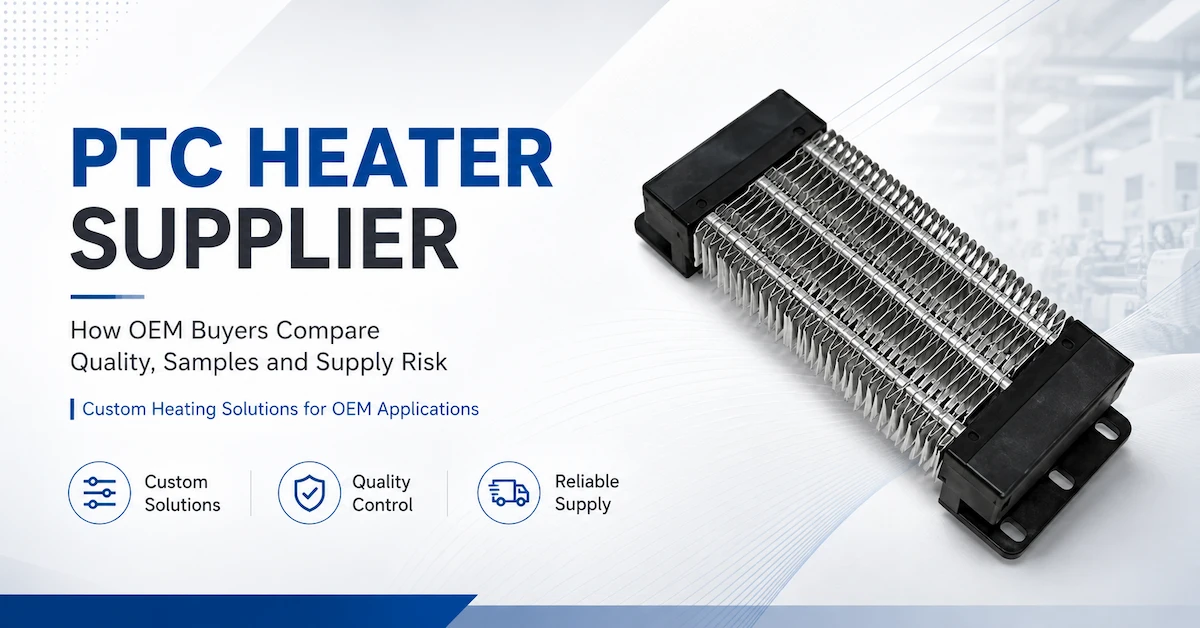
PTC Heater Supplier Guide: How OEM Buyers Compare Quality, Samples and Supply Risk

PTC Heater Supplier Guide: How OEM Buyers Compare Quality, Samples and Supply Risk

Choosing a PTC Heater Supplier involves more than comparing wattage and unit price. This guide helps OEM buyers evaluate technical support, customization, sample testing, quality control, quotations, lead time and long-term supply reliability before approving a heating partner.

Read More
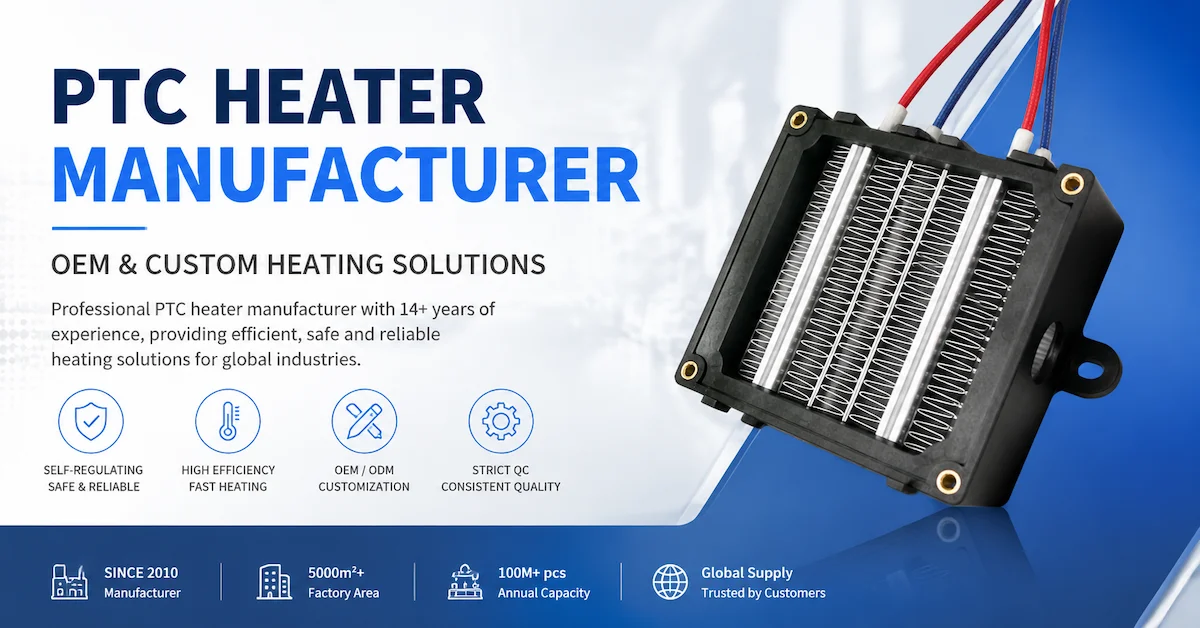
PTC Heater Manufacturer: How to Choose the Right OEM Partner

PTC Heater Manufacturer: How to Choose the Right OEM Partner

Choosing the right PTC heater manufacturer requires more than comparing price and wattage. This guide explains how OEM buyers can evaluate engineering capability, customization, sample testing, quality control, production consistency, cost, and RFQ requirements before selecting a long-term supplier.

Read More
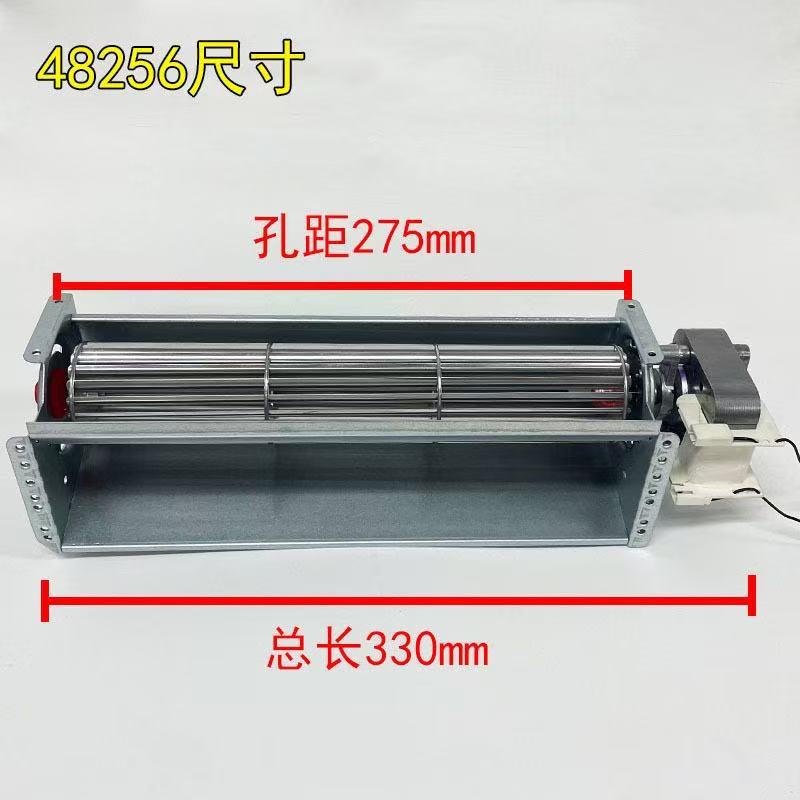
48256 Cross Flow Fan: The Ultimate Guide to Efficient, Low-Noise Airflow

48256 Cross Flow Fan: The Ultimate Guide to Efficient, Low-Noise Airflow

When it comes to moving air efficiently in tight spaces, few solutions match the performance of a cross flow fan (tangential fan). The 48256 model shown in the image is a prime example of this engineering marvel, designed to deliver consistent, low-noise airflow for a wide range of heating, ventilation, and industrial applications. Let’s break down what makes this fan such a versatile and reliable choice.

Read More
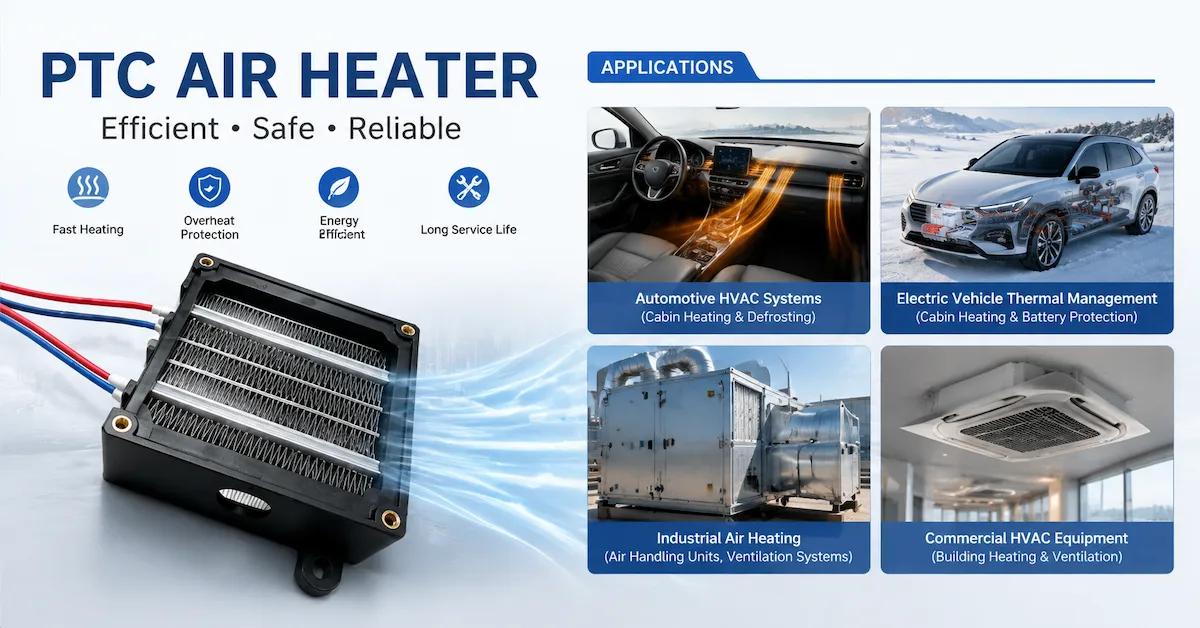
Why Our PTC Air Heaters Are the Smart, Safe Choice for Modern Air Heating

Why Our PTC Air Heaters Are the Smart, Safe Choice for Modern Air Heating

If you’ve ever dealt with unreliable heating elements, energy waste, or safety concerns in your air heating systems, it’s time to meet the solution: PTC (Positive Temperature Coefficient) air heaters. These compact, powerful modules are more than just heating components—they’re engineered to deliver consistent, safe, and efficient heat across countless applications, and our line of customizable models (as seen in the image) is built to exceed expectations.

Read More
The Complete Guide to PTC Fan Heaters for Industrial Cabinet Protection

The Complete Guide to PTC Fan Heaters for Industrial Cabinet Protection

Industrial automation relies on sensitive electronics housed within control cabinets, but these enclosures face a constant threat: temperature fluctuations. Condensation in humid conditions, freezing in cold climates, and component stress from temperature swings can lead to malfunctions, downtime, and costly repairs. To solve this, engineers are increasingly turning to integrated PTC Fan Heaters – a robust, intelligent solution designed for reliability. Available in key power ratings like 150W, 300W, 400W, and 600W, these units are the guardians of critical electrical systems.

Read More
The Smart Way to Heat Liquids: A Guide to PTC Immersion Heating Rods

The Smart Way to Heat Liquids: A Guide to PTC Immersion Heating Rods

When your application requires precise and reliable heating of a liquid—whether it's water in a tank, oil in a reservoir, or a chemical in a process bath—the heating element you choose is critical. Enter the Immersion Water Heater Element with PTC (Positive Temperature Coefficient) technology. This isn't your standard heating coil; it's an intelligent, self-regulating solution that offers superior safety and efficiency. Let's dive into what makes these tubular heating rods a game-changer for liquid temperature control.

Read More