What Is an NTC Temperature Sensor Manufacturer?
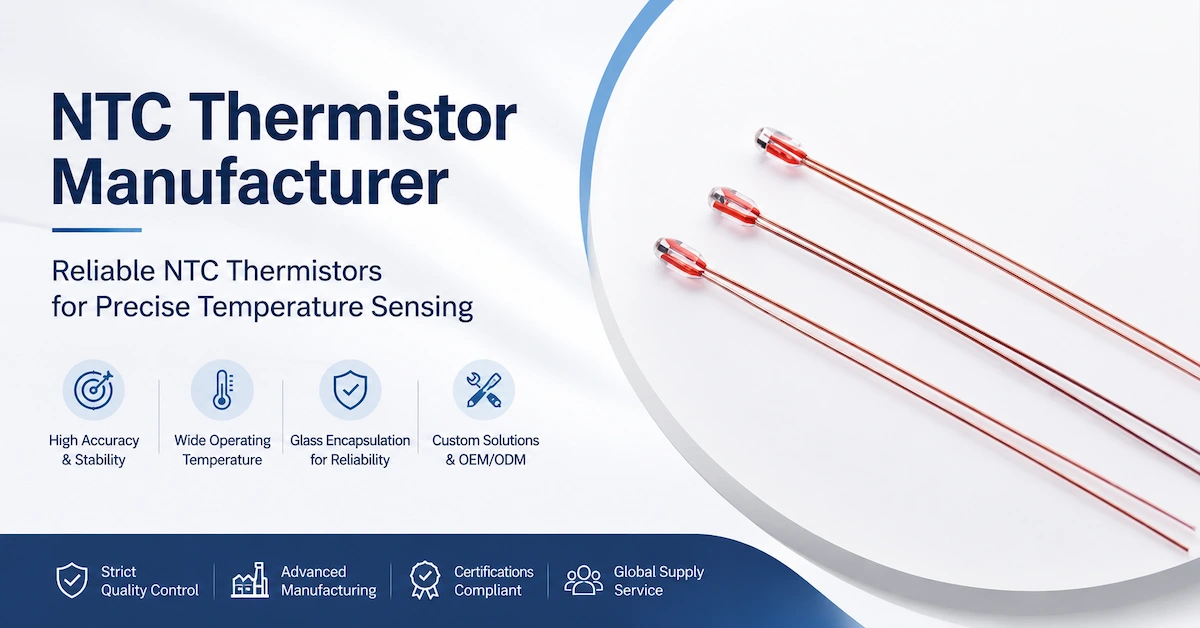
An NTC Temperature Sensor Manufacturer develops and produces temperature-sensing components based on Negative Temperature Coefficient thermistors.
Unlike a general distributor that mainly resells standard components, a manufacturer should be able to control the relationship between:
NTC material → resistance characteristics → sensor construction → assembly → testing → finished sensor performance
An NTC thermistor has a resistance that decreases as temperature increases. This predictable relationship allows an electronic control system to determine temperature by measuring resistance.
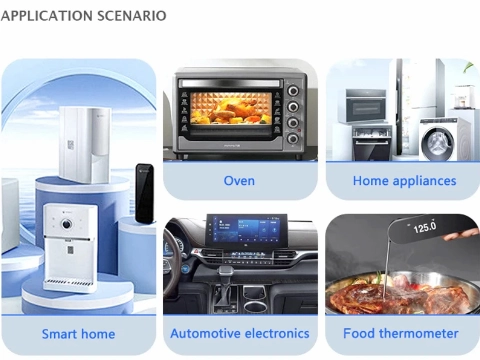
NTC temperature sensors are commonly used in:
- refrigerators and freezers;
- HVAC equipment;
- air conditioners;
- household appliances;
- automotive systems;
- electric vehicles;
- water heaters;
- industrial equipment;
- temperature-control systems.
For OEM buyers, the most important question is therefore not simply “Can this supplier provide an NTC sensor?”
The more useful question is:
“Can this manufacturer consistently produce an NTC sensor that matches my electrical, thermal, mechanical and production requirements?”
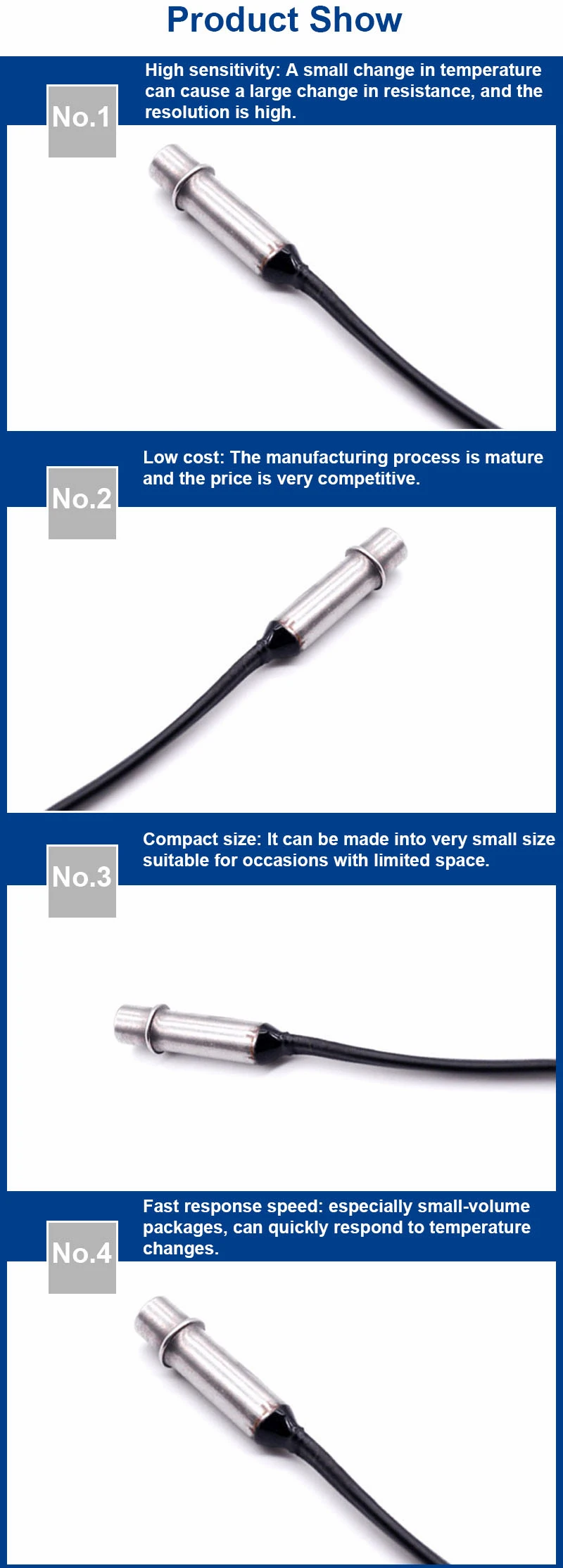
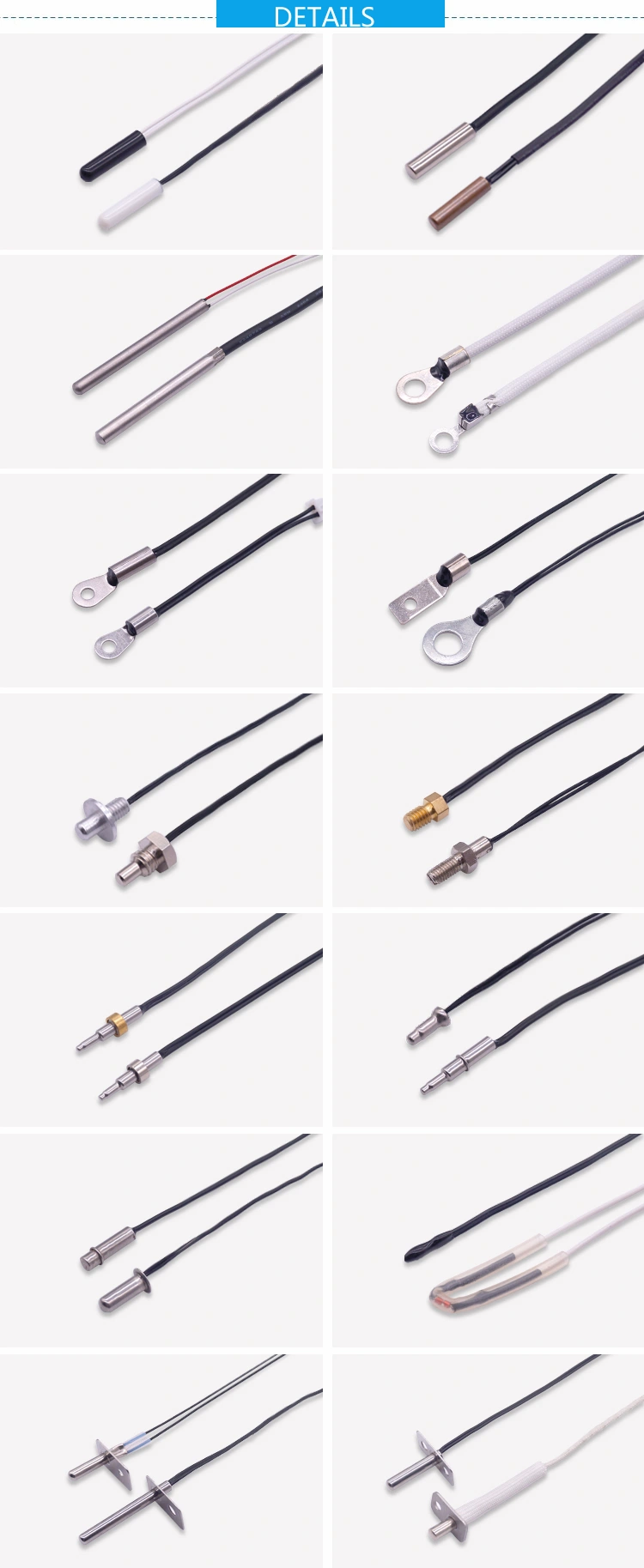
Tianrui's current NTC portfolio includes NTC thermistors and assembled temperature sensors for different applications.Its product range includes stainless-steel, plastic-shell, glass-encapsulated, thin-film and other NTC configurations.
Who Should Buy Directly From an NTC Temperature Sensor Manufacturer?
Working directly with a manufacturer is particularly useful when the sensor is part of a finished product rather than a one-time replacement component.
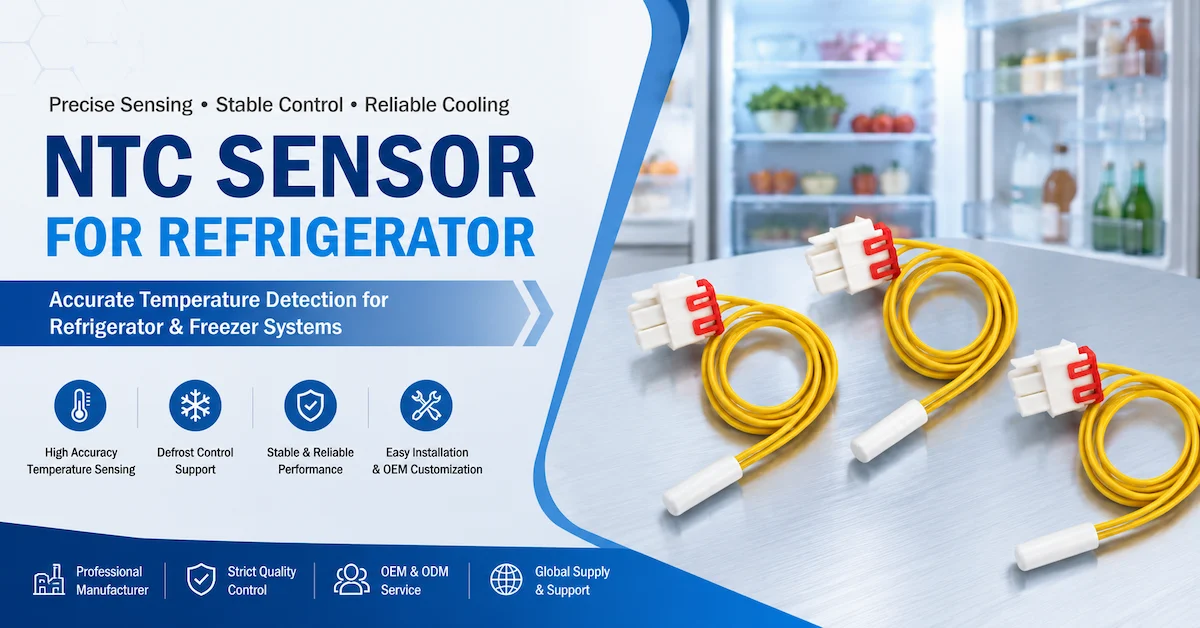
Refrigerator and Freezer Manufacturers
Typical requirements include:
- compartment temperature sensing;
- evaporator temperature measurement;
- defrost control;
- customized probe structures;
- cable and connector configurations.
HVAC Manufacturers
HVAC equipment may require NTC sensors for:
- air temperature;
- coil temperature;
- refrigerant-related temperature monitoring;
- heat-pump systems;
- compressor or system protection.
Home Appliance Manufacturers
NTC sensors are used in appliances such as:
- air conditioners;
- washing machines;
- dryers;
- ovens;
- refrigerators;
- water heaters.
Automotive and EV Manufacturers
Temperature sensing can be required for:
- battery thermal management;
- HVAC;
- motor-related systems;
- coolant monitoring;
- electronic control systems.
Industrial Equipment Manufacturers
Industrial applications may require sensors with:
- higher temperature resistance;
- stronger mechanical protection;
- longer cables;
- customized connectors;
- waterproof or sealed construction.
For these customers, direct manufacturer cooperation can simplify specification confirmation, sampling and production consistency.
When Should You Choose a Manufacturer Instead of a Distributor?
A distributor may be suitable when you need a small quantity of an existing standard component.
A manufacturer becomes more valuable when you need:
| Requirement | Manufacturer Advantage |
|---|---|
| Custom resistance | Can develop specified R-T characteristics |
| Custom B value | Better control of thermistor characteristics |
| Custom probe | Supports mechanical development |
| Custom cable | Can match installation requirements |
| Custom connector | Simplifies system integration |
| Large production volume | Better production planning |
| Quality consistency | Process-level quality control |
| OEM development | Supports sample-to-production transition |
If the sensor must fit a specific control board, housing or appliance assembly, supplier capability becomes more important than catalog size.
What Types of NTC Temperature Sensors Can Manufacturers Provide?
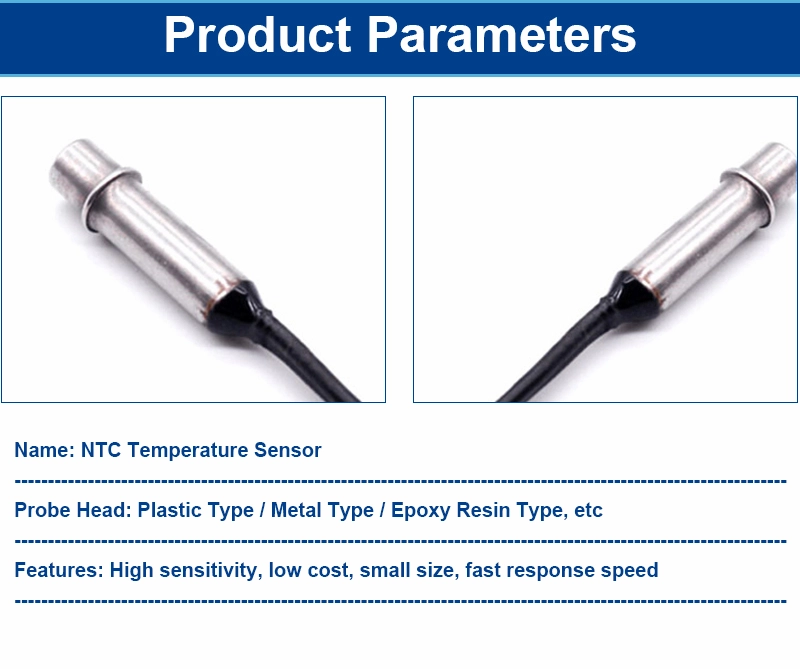
NTC temperature sensors can be produced in different structures according to the measurement environment.
Bead NTC Sensors
Small bead NTC thermistors are suitable when space is limited.
Typical applications include:
- electronic equipment;
- compact appliances;
- air sensing;
- embedded temperature measurement.
Their small thermal mass can support fast response when the mechanical design allows good thermal contact.
Glass-Encapsulated NTC Sensors
Glass encapsulation can provide protection for applications requiring greater temperature resistance or environmental stability.
Tianrui's NTC product portfolio includes glass-encapsulated NTC thermistors, including high-temperature configurations.
Plastic-Shell NTC Sensors
Plastic housings are useful when customers require:
- electrical insulation;
- lightweight construction;
- molded structures;
- application-specific mounting.
They are commonly found in appliances and temperature-control equipment.
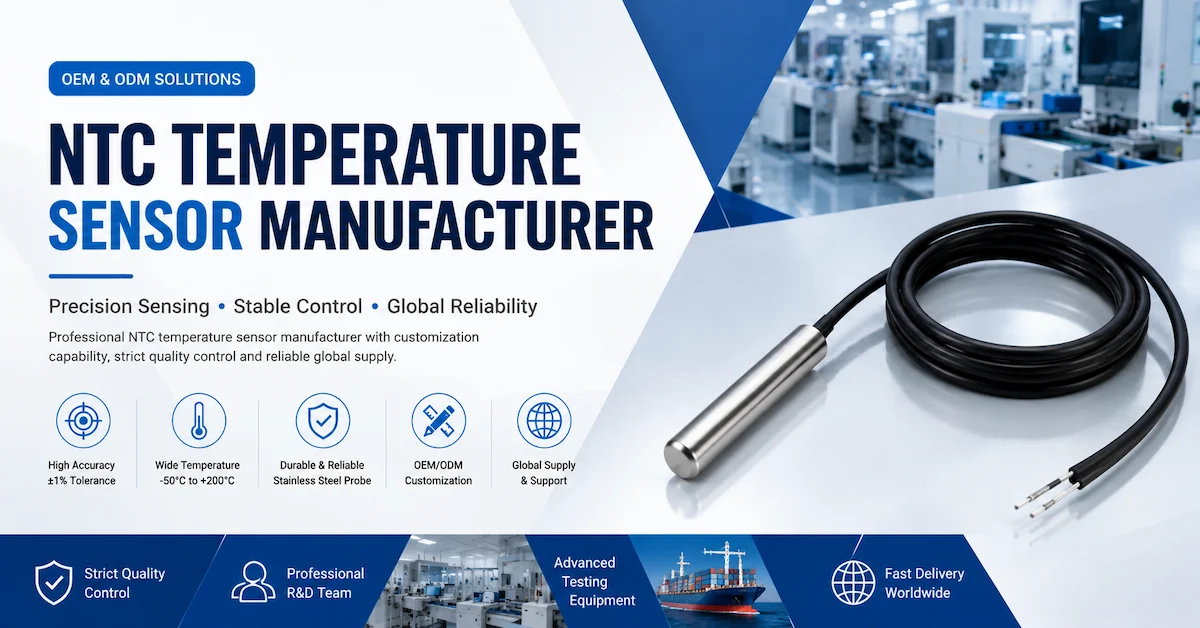
Stainless-Steel NTC Temperature Sensors
Stainless-steel probes provide greater mechanical protection and are suitable for applications where the sensor may encounter:
- moisture;
- vibration;
- mechanical contact;
- higher environmental demands.
Tianrui lists stainless-steel NTC temperature sensors for industrial and appliance applications.
Thin-Film NTC Thermistors
Thin-film designs can provide compact temperature sensing and are suitable for applications requiring specific dimensions or response characteristics.
The appropriate structure depends on the actual application rather than on one universally “best” sensor.
What Specifications Should You Confirm With an NTC Temperature Sensor Manufacturer?
A professional OEM quotation should define both electrical and mechanical specifications.
| Parameter | What Buyers Should Confirm |
|---|---|
| R25 | Nominal resistance at reference temperature |
| B Value | Resistance-temperature characteristic |
| Resistance Tolerance | Allowed resistance deviation |
| Temperature Range | Required operating range |
| Accuracy | Required temperature measurement accuracy |
| Response Time | Required thermal response |
| Probe Size | Diameter and length |
| Housing | Plastic, stainless steel, glass, etc. |
| Cable | Length, material and insulation |
| Connector | Type and specification |
| Mounting | Clip, probe, threaded, embedded, etc. |
| Protection | Waterproofing or encapsulation requirements |
Tianrui's published NTC guidance also identifies R25, B value, accuracy/tolerance, dissipation characteristics and thermal time constant as important parameters for evaluating an NTC temperature sensor.
Why Are R25 and B Value Important?
Two NTC sensors can both be called 10K NTC but still provide different temperature readings if their B values are different.
R25 defines the nominal resistance at the reference temperature.
The B value describes how resistance changes over a specified temperature range.
Therefore, an OEM buyer should avoid specifying only:
“10K NTC sensor”
A better specification is:
R25 + resistance tolerance + B value + temperature range + mechanical configuration
This reduces the risk of receiving a sensor that physically fits but does not match the controller.
How Does Temperature Range Affect Sensor Selection?
A refrigerator, HVAC system and industrial heating device may operate over very different temperature ranges.
For example:
- refrigerator sensors may need reliable low-temperature performance;
- HVAC sensors may operate across both heating and cooling conditions;
- industrial sensors may require higher-temperature resistance.
The sensor should therefore be evaluated according to its actual operating environment.
Temperature range can affect:
- material selection;
- encapsulation;
- wire insulation;
- probe housing;
- resistance-temperature behavior.
What Materials Are Used in NTC Temperature Sensors?
An assembled NTC sensor typically contains more than the thermistor itself.
Possible components include:
- NTC ceramic element;
- metal electrodes;
- lead wires;
- insulating material;
- epoxy;
- glass;
- plastic housing;
- stainless-steel probe;
- connector;
- sealing materials.
The material combination should reflect the application.
NTC Ceramic Element
The thermistor material determines the fundamental resistance-temperature characteristics.
Epoxy Encapsulation
Epoxy can protect the sensing element and electrical connections.
Stainless Steel
Stainless steel can provide mechanical and environmental protection for probe-type sensors.
Cable Insulation
Cable selection should consider:
- temperature;
- flexibility;
- electrical insulation;
- chemical exposure;
- installation conditions.
This is one reason OEM buyers should specify the complete sensor assembly, rather than purchasing the bare NTC element alone.
How Is an NTC Temperature Sensor Manufactured?
Manufacturing quality depends on controlling both the thermistor element and the final sensor assembly.
A typical development and manufacturing flow can include:
Material preparation → Thermistor processing → Electrical characterization → Encapsulation → Assembly → Testing → Final inspection
The exact process varies according to sensor type.
Thermistor Material Processing
The ceramic material must achieve the intended electrical characteristics.
Manufacturing control affects:
- resistance;
- B value;
- temperature response;
- consistency.
Electrode and Connection Processing
Electrical connections must provide stable contact between the thermistor element and lead wires.
Encapsulation
The sensor can be protected using:
- epoxy;
- glass;
- plastic;
- metal structures.
The encapsulation method should match the temperature and environmental requirements.
Probe and Cable Assembly
For assembled temperature sensors, the manufacturer may need to control:
- probe dimensions;
- wire length;
- crimping;
- soldering;
- connector assembly;
- sealing.
Final Testing
Completed sensors should be tested against the agreed specifications before shipment.
What Quality Control Should an NTC Sensor Manufacturer Provide?
Quality control should begin with the raw material and continue through final inspection.
Recommended QC points include:
Resistance Testing
Confirm the resistance value at the specified reference temperature.
B-Value Verification
Verify the resistance-temperature relationship.
Temperature Response Testing
Check performance across the required operating range.
Insulation Testing
Evaluate electrical insulation according to the application requirement.
Mechanical Inspection
Confirm:
- probe diameter;
- probe length;
- cable length;
- connector dimensions;
- housing dimensions.
Environmental Testing
Depending on the application, testing may include:
- thermal cycling;
- humidity;
- vibration;
- water exposure;
- long-term operation.
The exact testing plan should be agreed according to the customer's product and market requirements.
How Do You Compare NTC Temperature Sensor Manufacturers?
Price should be only one part of supplier evaluation.
A practical comparison should look like this:
| Evaluation Factor | Basic Supplier | Experienced Manufacturer |
|---|---|---|
| Standard products | Usually available | Available |
| Custom resistance | May be limited | Supported |
| Custom probe | Limited | Supported |
| Cable/connector customization | Depends on sourcing | Integrated capability |
| Engineering communication | Often product-focused | Application-focused |
| Quality control | May rely on incoming inspection | Process + final QC |
| Sampling | Available | Development-oriented |
| Mass production | Depends on supply chain | Production planning |
| OEM support | Limited | More comprehensive |
| Long-term consistency | Depends on sourcing | Better process control |
The goal is not necessarily to find the largest factory.
The goal is to find a manufacturer whose capabilities match your product requirements.
What Are the Main Risks When Buying NTC Sensors?
Choosing Only by Resistance Value
A “10K NTC” label does not define the complete sensor.
The B value, tolerance and temperature curve also matter.
Ignoring Mechanical Compatibility
A sensor may meet the electrical specification but fail to fit the final product.
Check:
- probe size;
- mounting;
- cable;
- connector.
Skipping Samples
Moving directly from quotation to mass production creates unnecessary risk.
A sample should be tested in the actual product whenever possible.
Choosing the Lowest Unit Price
A cheaper sensor may create additional costs through:
- rework;
- calibration problems;
- field failures;
- inconsistent batches.
The correct procurement objective is total application cost, not simply the lowest component price.
How Does OEM Customization Work?
For a custom NTC temperature sensor, the development process should be clear.
Step 1: Application Requirement
The buyer provides:
- application;
- temperature range;
- R25;
- B value;
- installation position;
- expected quantity.
Step 2: Engineering Evaluation
The manufacturer evaluates:
- thermistor characteristics;
- housing;
- cable;
- connector;
- encapsulation.
Step 3: Prototype or Sample
Samples are produced for:
- electrical testing;
- temperature testing;
- installation verification.
Step 4: Customer Validation
The customer evaluates the sensor in the final equipment.
Step 5: Specification Confirmation
The approved:
- electrical parameters;
- mechanical dimensions;
- materials;
- cable;
- connector
become the production specification.
Step 6: Mass Production
Production follows the approved specification and quality-control requirements.
This process reduces the risk of discovering compatibility problems only after a large production order.
Why Choose Tianrui as Your NTC Temperature Sensor Manufacturer?
Dongguan Tianrui Electronics Co., Ltd. was founded in 2010 and focuses on PTC and NTC-related thermal components and temperature-sensing products. According to its official company information, Tianrui has a 5,000 m² facility, automated production equipment, dedicated testing instruments and an annual production volume of nearly 100 million pieces.
Its current NTC portfolio includes multiple thermistor and temperature-sensor structures, covering applications such as refrigerators, HVAC equipment, household appliances and industrial temperature sensing.
For OEM buyers, the relevant advantage is not simply production volume.
The more important capabilities are:
- NTC thermistor technology;
- different sensor structures;
- customized specifications;
- application-oriented product selection;
- dedicated testing equipment;
- production consistency;
- technical communication.
Tianrui's published company information also states that its products follow relevant international, national and industry standards.
For a new project, buyers can provide an existing sensor sample, drawing or electrical specification and discuss the required configuration with Tianrui.
What Should You Send an NTC Sensor Manufacturer for an RFQ?
For faster quotation and fewer specification revisions, provide the following:
| Information | Recommended Details |
|---|---|
| Application | Refrigerator, HVAC, automotive, industrial, etc. |
| R25 | Required resistance |
| B Value | Required B characteristic |
| Tolerance | Resistance/temperature tolerance |
| Temperature Range | Min. and max. temperature |
| Probe | Diameter, length and shape |
| Housing | ABS, stainless steel, glass, etc. |
| Cable | Length and insulation |
| Connector | Type or drawing |
| Mounting | Installation method |
| Quantity | Sample and annual volume |
| Drawing | Mechanical/electrical drawing if available |
| Existing Sample | Recommended for replacement projects |
If you are replacing an existing sensor, sending the old sensor + application information + controller requirements is often more useful than sending only the product name.
FAQ About NTC Temperature Sensor Manufacturer
What does an NTC Temperature Sensor Manufacturer do?
An NTC Temperature Sensor Manufacturer develops and produces NTC thermistors and assembled temperature sensors, including customized resistance characteristics, probes, cables, housings and connectors.
What is the difference between an NTC manufacturer and an NTC supplier?
A manufacturer controls product development and production, while a supplier may source products from one or more factories. For OEM projects, direct manufacturer cooperation can provide better control over customization and production consistency.
What industries use NTC temperature sensors?
NTC sensors are widely used in refrigerators, HVAC systems, household appliances, automotive equipment, electric vehicles, water heaters and industrial temperature-control equipment.
Can an NTC temperature sensor be customized?
Yes. Depending on technical requirements, customization can include R25, B value, tolerance, temperature range, probe dimensions, housing, cable, connector and mounting structure.
What R25 value should I choose for an NTC sensor?
The correct R25 depends on the control circuit and required resistance-temperature curve. It should be matched with the controller rather than selected only by popularity.
Why is the B value important?
The B value describes the resistance-temperature relationship of an NTC thermistor. A different B value can produce a different resistance at the same operating temperature.
How accurate are NTC temperature sensors?
Accuracy depends on resistance tolerance, B-value tolerance, sensor construction, calibration, controller accuracy, installation position and the operating temperature range.
Can NTC sensors be used in refrigerators?
Yes. NTC sensors are commonly used for refrigerator compartment temperature monitoring, freezer sensing, evaporator temperature measurement and defrost-related control.
Can a manufacturer develop a custom NTC sensor from my sample?
A capable manufacturer can evaluate an existing sensor sample and develop a matching or application-specific configuration, subject to technical feasibility and available information.
How do I choose the right NTC Temperature Sensor Manufacturer?
Evaluate NTC technology, material and manufacturing capability, testing, customization, sample support, production consistency, communication and long-term supply capability—not only unit price.
Conclusion
Choosing an NTC Temperature Sensor Manufacturer should be treated as an engineering and sourcing decision rather than a simple price comparison.
The right manufacturer should be able to connect:
NTC material → R25/B value → sensor structure → application → testing → production
For OEM buyers, the most important evaluation points are:
- electrical characteristics;
- temperature range;
- sensor accuracy;
- mechanical construction;
- environmental resistance;
- quality-control process;
- customization capability;
- sample validation;
- production consistency.
Tianrui's current NTC portfolio covers multiple thermistor and sensor configurations, while its official company information describes a 5,000 m² facility, automated production equipment, dedicated testing equipment and nearly 100 million pieces of annual production capacity.
If you are sourcing an NTC sensor for a refrigerator, HVAC system, automotive application or industrial product, the most effective next step is to provide the required R25, B value, temperature range, mechanical dimensions, cable and connector requirements.
For OEM development, you can review the NTC Temperature Sensor product range and contact Tianrui with your drawing, existing sensor or application requirements.