What Is an NTC Sensor for Refrigerator?
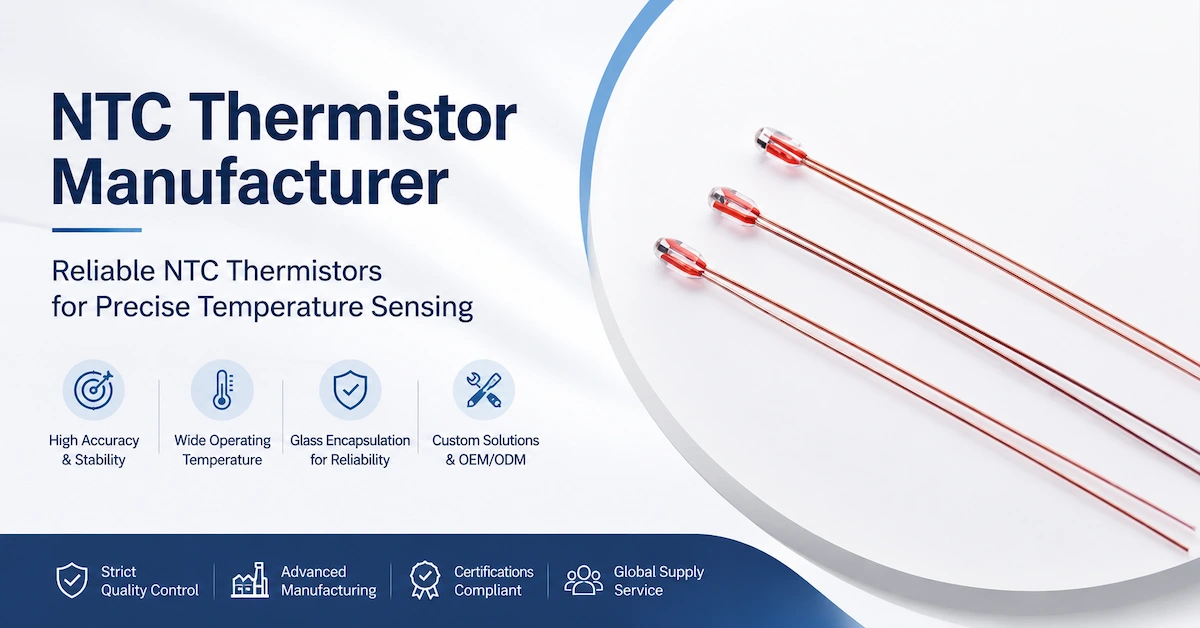
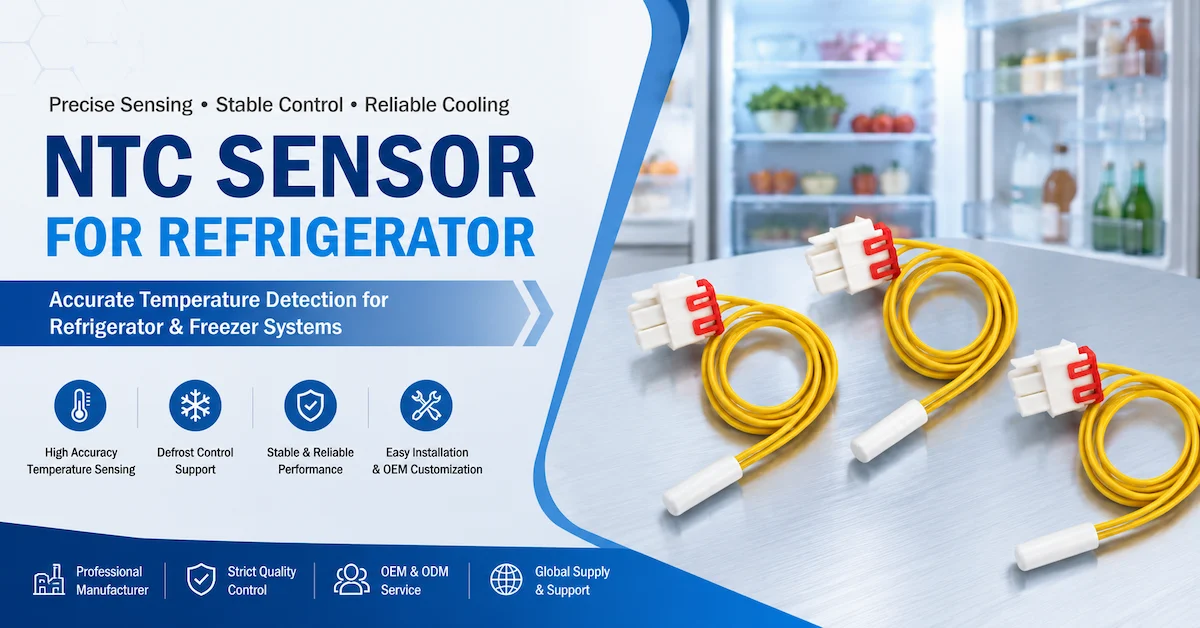
An NTC Sensor for Refrigerator is a temperature-sensing component that uses a Negative Temperature Coefficient thermistor to detect changes in temperature inside a refrigerator, freezer, evaporator area or related refrigeration system.
NTC means Negative Temperature Coefficient. As temperature increases, the electrical resistance of an NTC thermistor decreases. The refrigerator's control system can measure this resistance and convert it into a temperature value.
This makes an NTC temperature sensor useful for functions such as:
- refrigerator compartment temperature monitoring;
- freezer temperature monitoring;
- evaporator temperature measurement;
- defrost control;
- cooling cycle management;
- temperature alarm functions;
- compressor control;
- energy-management strategies.
For refrigerator manufacturers and refrigeration-equipment buyers, the sensor is not simply a small electronic component. Its resistance-temperature characteristics, response speed, housing, cable, connector and installation method all affect how reliably the finished appliance controls temperature.
Tianrui's NTC product range covers temperature-sensing thermistors for refrigerators, HVAC systems and other electronic applications. Its NTC category includes multiple thermistor constructions and configurations for different temperature-sensing requirements.
How Does an NTC Refrigerator Temperature Sensor Work?
The operating principle is based on the inverse relationship between temperature and resistance.
When the refrigerator temperature changes, the resistance of the NTC element changes accordingly. The control board measures that resistance and interprets it according to the sensor's resistance-temperature curve.
The basic process is:
Temperature changes → NTC resistance changes → Control circuit measures resistance → System determines temperature → Refrigerator adjusts operation
For example, when the refrigerator compartment becomes warmer, the NTC resistance decreases. The controller can recognize the corresponding temperature and use that information to manage cooling operation.
When the measured temperature reaches the required range, the control system can adjust the cooling cycle accordingly.
This is why the accuracy and consistency of the NTC sensor matter directly to refrigerator temperature control.
Where Is an NTC Sensor Installed in a Refrigerator?
The correct installation position depends on what temperature the system needs to measure.
Refrigerator Compartment
A sensor installed in the refrigerated compartment can monitor the air or local compartment temperature.
Typical requirements include:
- fast response;
- stable resistance characteristics;
- suitable cable length;
- compact housing;
- reliable mounting.
Freezer Compartment
Freezer applications require a sensor that remains reliable at low temperatures.
The sensor construction should be selected according to:
- minimum operating temperature;
- moisture exposure;
- condensation;
- ice formation;
- mounting method.
Evaporator
An evaporator sensor measures temperature near the evaporator surface or related airflow area.
This information can be used for:
- defrost management;
- evaporator temperature monitoring;
- cooling-cycle control.
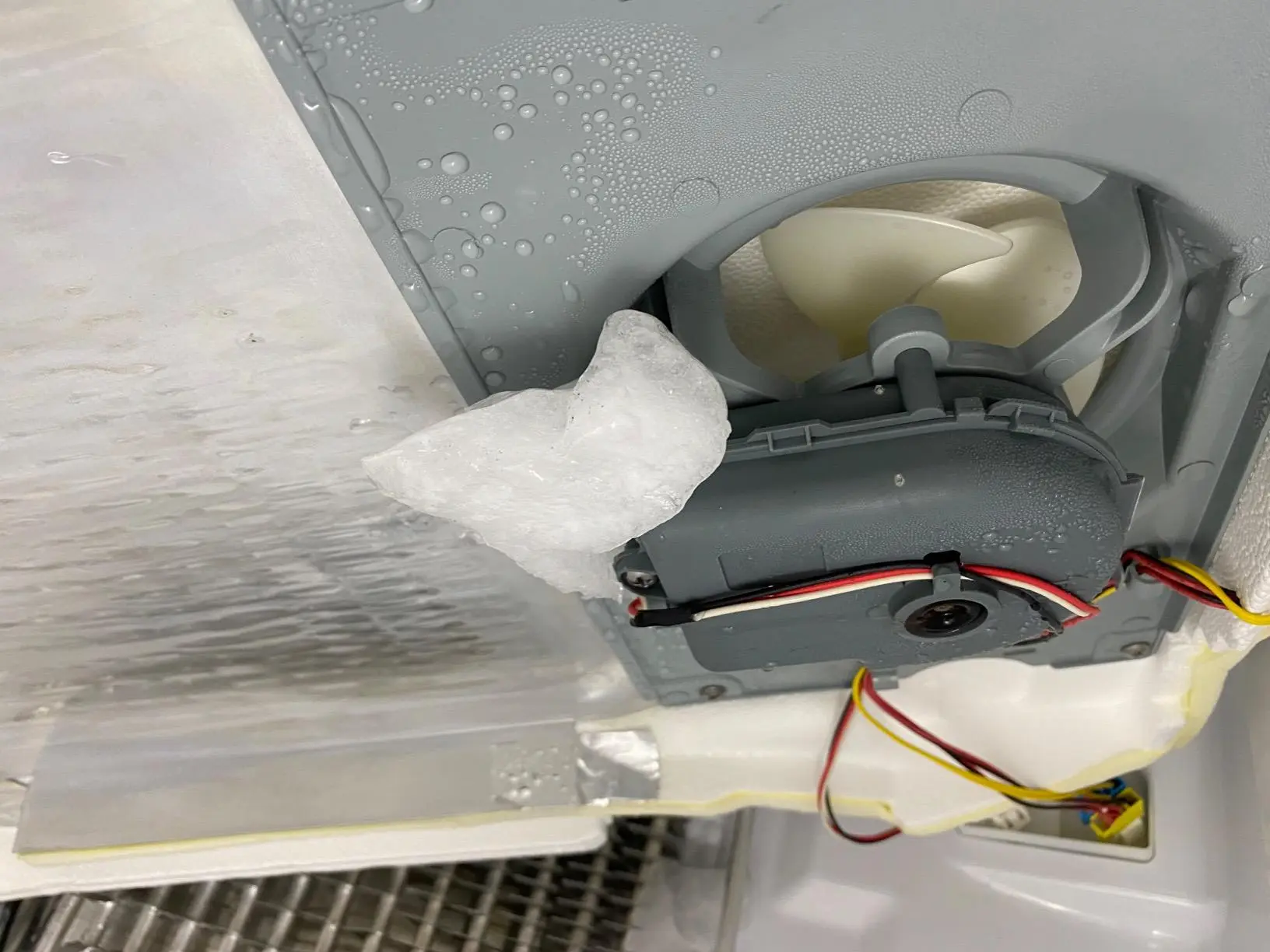
Defrost System
A refrigerator defrost temperature sensor can help the control system determine whether the evaporator has reached the required condition during a defrost cycle.
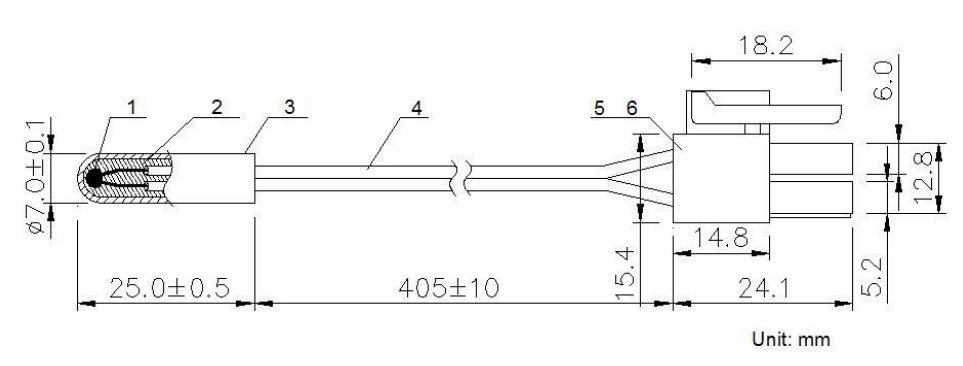
Tianrui currently offers refrigerator/freezer NTC temperature sensor products designed for defrost and temperature-sensing applications. One listed refrigerator sensor uses R0=13.251KΩ±2% and B25/50=3218±1%, with an ABS housing, epoxy coating, UL-rated lead wire and connector configuration.
What Are the Key Specifications of a Refrigerator NTC Sensor?
When comparing refrigerator NTC temperature sensors, buyers should avoid selecting a product based only on the nominal resistance.
The most important parameters include:
| Parameter | Why It Matters |
|---|---|
| R25 / Rated Resistance | Defines the nominal resistance at the reference temperature |
| B Value | Describes the resistance-temperature relationship |
| Resistance Tolerance | Influences temperature measurement accuracy |
| Operating Temperature | Must cover the refrigerator's actual range |
| Response Time | Determines how quickly the sensor detects changes |
| Housing Material | Affects durability and environmental resistance |
| Cable | Must match temperature, insulation and assembly requirements |
| Connector | Must fit the control-board interface |
| Probe Dimensions | Determines mechanical installation |
| Sealing | Important in condensation and humid environments |
Tianrui's published NTC datasheet guide identifies R25, B value, accuracy/tolerance, dissipation constant and thermal time constant as important parameters when evaluating an NTC sensor.
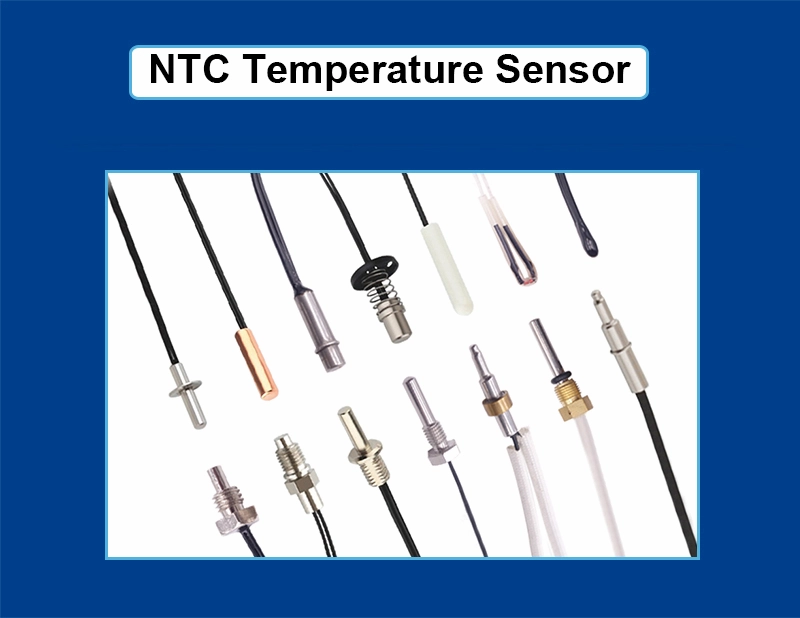
Why Does R25 Matter for Refrigerator Temperature Sensing?
R25 refers to the nominal resistance at 25°C.
Common NTC specifications may use values such as:
- 5KΩ;
- 10KΩ;
- 20KΩ;
- 50KΩ;
- 100KΩ.
But a higher or lower resistance value is not automatically better.
The correct R25 value must match the refrigerator control circuit.
If the sensor resistance does not correspond to the controller's expected R-T curve, the actual temperature reading can deviate from the intended value.
Therefore, OEM buyers should confirm:
R25 + tolerance + B value + temperature range
as a combined specification rather than evaluating one number independently.
What Is the B Value of an NTC Refrigerator Sensor?
The B value describes the resistance-temperature relationship of an NTC thermistor over a defined temperature range.
It is important because an NTC sensor does not have a simple linear resistance-temperature relationship.
Two sensors can both be described as “10K NTC” while having different B values and therefore different resistance values at other temperatures.
For refrigerator applications, this can affect:
- measured temperature;
- controller calibration;
- temperature stability;
- defrost control;
- sensor interchangeability.
For OEM production, the NTC sensor should therefore be matched to the control algorithm or existing sensor specification.
How Accurate Should a Refrigerator NTC Sensor Be?
The required accuracy depends on the application.
For a basic temperature-monitoring function, a standard resistance tolerance may be sufficient.
For systems requiring tighter temperature control, buyers may need:
- tighter resistance tolerance;
- controlled B-value tolerance;
- calibrated resistance-temperature characteristics;
- controlled production consistency.
The key point is that resistance tolerance is not the same as total temperature measurement accuracy.
Actual system accuracy can also be affected by:
- controller accuracy;
- wiring resistance;
- sensor position;
- thermal contact;
- airflow;
- condensation;
- calibration method.
Therefore, refrigerator manufacturers should evaluate the sensor together with the complete temperature-control system.
Why Does Sensor Response Time Matter in a Refrigerator?
Response time indicates how quickly a sensor responds to a change in its surrounding temperature.
A sensor with low thermal mass can respond quickly, while a larger or more heavily protected probe may respond more slowly.
The best choice depends on the measurement point.
For example:
Air temperature measurement
may prioritize fast response.
Surface or evaporator measurement
may require stable thermal contact and appropriate mechanical protection.
Tianrui's T-Type NTC sensor information describes compact bead construction as suitable for fast temperature response and confined installation areas, while its published specification includes a response-time measurement under defined liquid conditions.
This illustrates why response time should always be evaluated under the actual application conditions rather than treated as a universal number.
Which Housing Material Is Best for a Refrigerator NTC Sensor?
The housing should be selected according to the installation environment.
ABS Housing
ABS can be suitable where the sensor needs:
- lightweight construction;
- electrical insulation;
- compact molding;
- cost-effective production.
Tianrui's listed refrigerator NTC sensor uses a Φ7×25 ABS housing with epoxy coating.
Stainless Steel Housing
Stainless steel is useful where greater mechanical durability, moisture resistance or environmental protection is required.
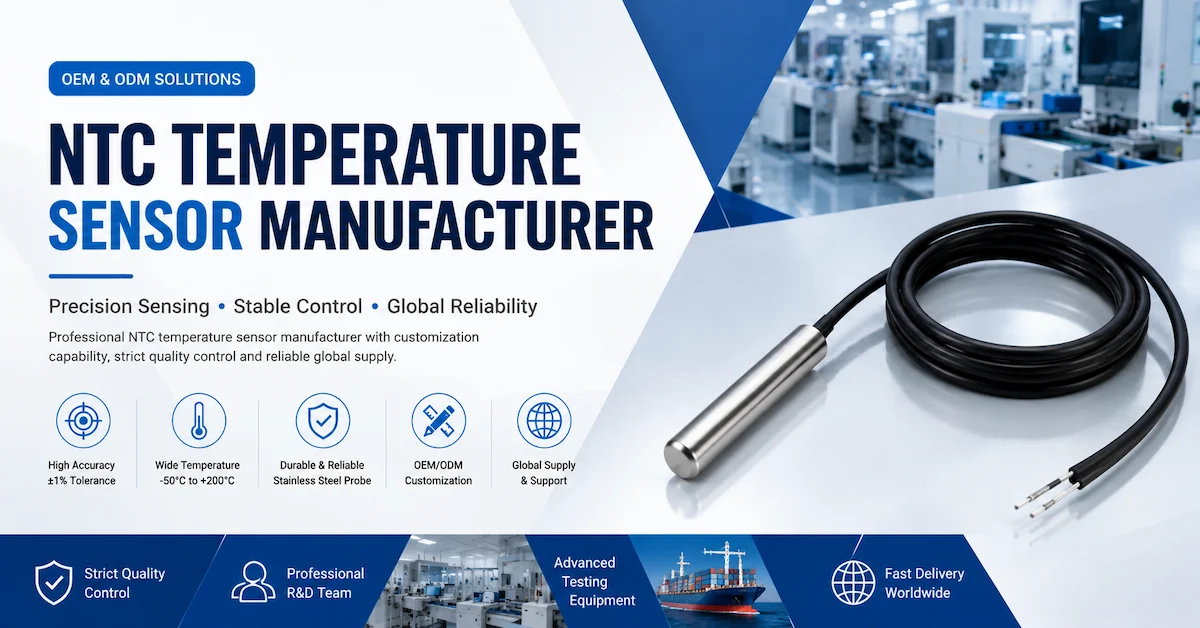
Tianrui offers stainless-steel probe NTC sensors with configurations used for temperature control in refrigerators, air conditioners and washing machines.One published model uses R25=50KΩ±1%, B25/50=3950K±1% and an operating range listed at -20°C to +150°C for the specified configuration.
The correct housing should therefore be selected according to the installation environment rather than according to material preference alone.
NTC Sensor for Refrigerator vs Other Temperature Sensors
NTC thermistors are not the only temperature-sensing technology available.
| Sensor Type | Main Characteristic | Refrigerator Suitability |
|---|---|---|
| NTC Thermistor | Resistance decreases as temperature rises | Excellent for many appliance applications |
| PTC Thermistor | Resistance increases with temperature | Better suited to specific sensing/protection functions |
| RTD | Stable and relatively linear resistance | Useful where higher precision is required |
| Thermocouple | Generates voltage related to temperature | Often unnecessary for typical refrigerator sensing |
NTC thermistors are particularly attractive for high-volume appliance applications because they can combine compact size, high sensitivity and cost-effective construction.
Tianrui's own temperature-sensor comparison also describes NTC thermistors as highly sensitive, fast responding and cost-effective for defined temperature ranges.
How Do Refrigerator NTC Sensors Support Defrost Control?
Defrost control is one of the most important application areas for refrigerator temperature sensing.
Ice accumulation on an evaporator can reduce heat-transfer performance and airflow.
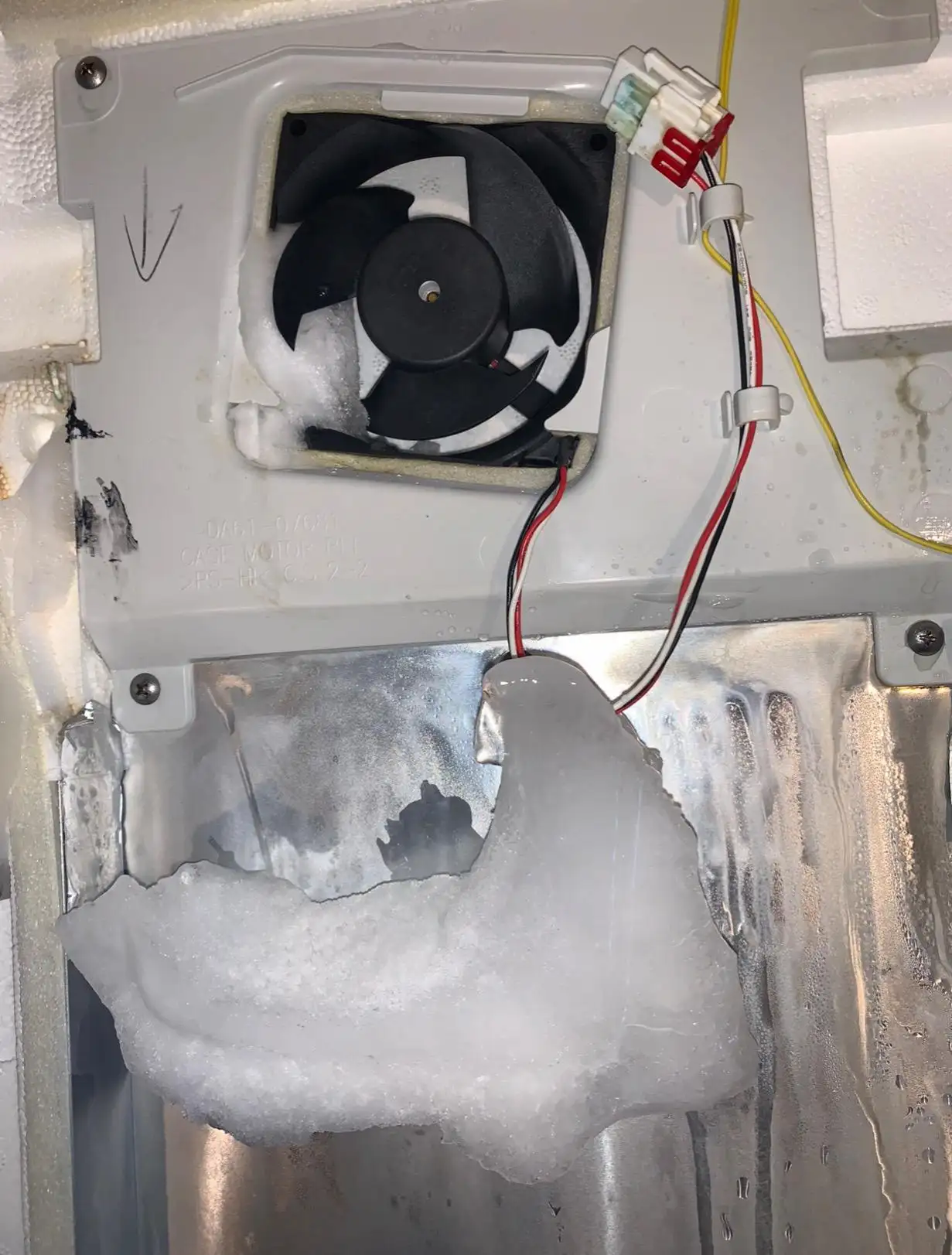
The control system therefore needs temperature information to determine when defrosting should occur and when the defrost cycle has reached the required condition.
A properly selected refrigerator NTC sensor can provide the temperature feedback needed by the controller.
The sensor's:
- response temperature;
- resistance curve;
- installation position;
- moisture protection;
- cable configuration
all influence the reliability of the sensing system.
This is why an NTC sensor should be evaluated as part of the defrost-control design rather than as an isolated replacement component.
What Causes Refrigerator NTC Sensors to Fail?
A temperature sensor may fail because of either electrical or environmental factors.
Common risks include:
Moisture Ingress
Refrigerators operate in environments where condensation and humidity can occur.
Poor sealing can lead to:
- resistance instability;
- insulation problems;
- corrosion;
- intermittent signals.
Cable Damage
Repeated assembly, vibration or bending can place stress on the cable and sensor connection.
Connector Problems
A sensor may have the correct electrical characteristics but still create problems if the connector is incompatible.
Incorrect Resistance Curve
Using a sensor with the wrong R25 or B value can result in incorrect temperature readings.
Poor Mechanical Positioning
Even an accurate sensor can produce an incorrect system reading if it is installed too far from the intended measurement point.
For OEM buyers, these risks should be addressed during specification and validation rather than after mass production.
What Should OEM Buyers Check Before Ordering Refrigerator NTC Sensors?
Before sending an RFQ to an NTC Sensor Supplier, provide as much application information as possible.
A useful RFQ should include:
| Requirement | Example Information |
|---|---|
| Application | Refrigerator / freezer / evaporator / defrost |
| R25 | Required nominal resistance |
| B Value | Required R-T characteristic |
| Tolerance | Resistance or temperature tolerance |
| Temperature Range | Minimum and maximum operating temperature |
| Probe | Diameter, length and shape |
| Housing | ABS, stainless steel or other |
| Cable | Length, insulation and temperature rating |
| Connector | Part number or drawing |
| Mounting | Clip, insertion, adhesive or custom structure |
| Quantity | Sample and annual production demand |
| Target Market | Required compliance or documentation |
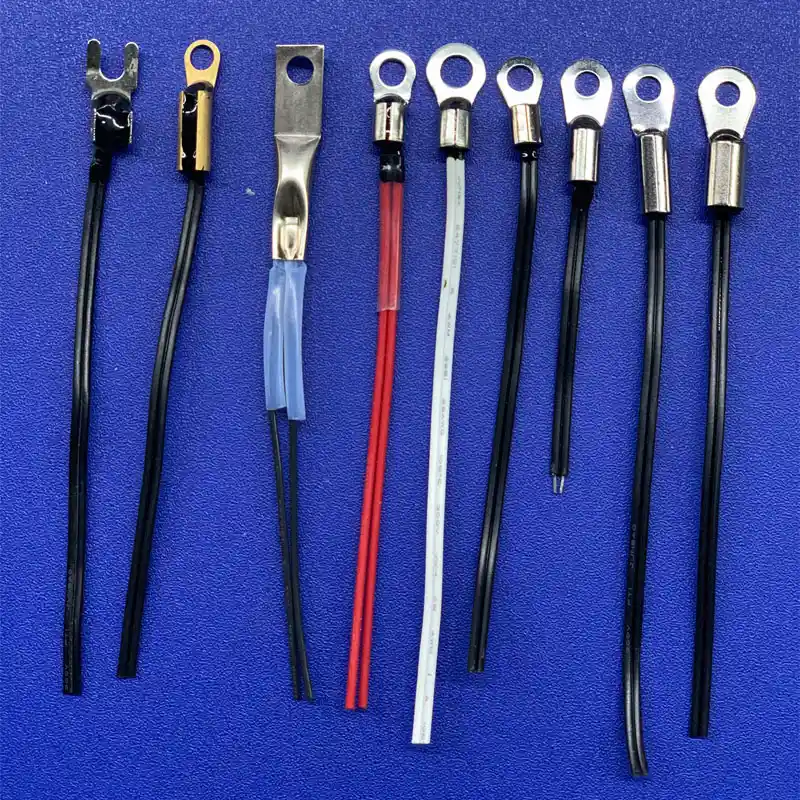
Providing a drawing or existing sensor sample is even better when replacing an existing component.
How Can a Refrigerator NTC Sensor Supplier Support OEM Customization?
For appliance manufacturers, the most useful supplier is not necessarily the one offering the largest catalog.
The better choice is a supplier capable of adapting the sensor to the finished appliance.
Customization may include:
- resistance value;
- B value;
- tolerance;
- probe size;
- housing;
- cable length;
- wire insulation;
- connector;
- mounting structure;
- encapsulation;
- packaging.
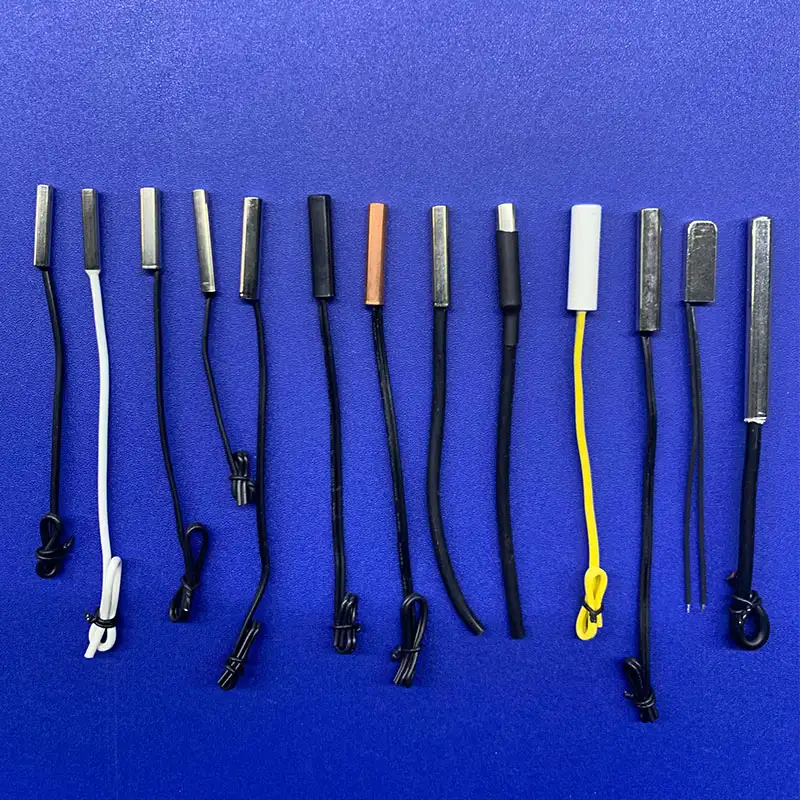
Tianrui's listed NTC products indicate that customization is available, and its refrigerator sensor product includes defined housing, coating, wire and connector specifications rather than only a bare thermistor element.
This is particularly important when a refrigerator manufacturer needs a sensor to fit an existing control board and mechanical assembly.
Tianrui supports customized refrigerator NTC sensor assemblies, including Refrigerator Defrost Temperature Sensor configurations with customized resistance characteristics, probe structures, wires and connectors.
What Quality Control Should Be Applied to Refrigerator NTC Sensors?
A professional refrigerator NTC temperature sensor supplier should control both electrical characteristics and mechanical construction.
Recommended inspection areas include:
Resistance Testing
Verify the resistance value at the specified reference temperature.
B-Value Verification
Confirm that the resistance-temperature characteristic remains within the agreed specification.
Temperature Response Testing
Evaluate sensor behavior across the required temperature range.
Insulation Testing
Check electrical insulation where required by the application.
Cable and Connector Inspection
Verify:
- wire specification;
- crimping;
- connector compatibility;
- terminal integrity.
Mechanical Inspection
Check:
- probe dimensions;
- housing dimensions;
- wire length;
- encapsulation;
- appearance.
Reliability Testing
Depending on the project, testing can include:
- thermal cycling;
- humidity exposure;
- vibration;
- long-term operation.
The exact testing plan should be based on the customer's product requirements rather than applying a generic checklist to every project.
How Should You Compare Refrigerator NTC Sensor Suppliers?
Price should not be the only supplier-selection criterion.
A practical supplier comparison should include:
| Evaluation Factor | Why It Matters |
|---|---|
| NTC Material Capability | Determines sensor characteristics |
| Customization | Helps match existing refrigerator designs |
| Electrical Testing | Controls R25 and B-value consistency |
| Mechanical Capability | Supports customized housings and mounting |
| Cable/Connector Capability | Reduces integration problems |
| Quality Control | Improves batch consistency |
| Sample Support | Reduces development risk |
| Production Capacity | Supports repeat orders |
| Technical Communication | Speeds up specification confirmation |
| After-Sales Support | Helps resolve production issues |
A supplier that can provide a complete technical proposal is generally more useful than one that only provides a unit price.
Why Choose Tianrui for Refrigerator NTC Sensor Projects?
Tianrui focuses on PTC and NTC thermistor products and provides temperature-sensing components for home appliances, HVAC and other electronic applications.
Its current product range includes NTC thermistors and temperature-sensor assemblies, while its published refrigerator sensor example demonstrates customization of the thermistor element, housing, coating, lead wire and connector.
For OEM buyers, this means the project can be discussed around the complete sensor assembly rather than only the internal NTC element.
When requesting a quotation, buyers can provide:
- existing sensor sample;
- drawing;
- R25/B-value requirements;
- temperature range;
- cable and connector requirements;
- expected quantity.
Tianrui can then evaluate the required sensor structure and specifications for the application.
For supplier qualification, buyers can review the Tianrui company profile and submit project requirements through the contact page.
What Is the Most Cost-Effective Refrigerator NTC Sensor?
The lowest unit price is not necessarily the lowest total cost.
For a refrigerator OEM, the real cost may include:
Sensor price + assembly cost + calibration + installation + failure risk + after-sales cost
A low-cost sensor with inconsistent resistance characteristics can create:
- temperature-control problems;
- unnecessary service calls;
- production rework;
- customer complaints.
A properly specified sensor can reduce these risks.
The goal should therefore be the lowest total cost that meets the required electrical, thermal and mechanical performance, rather than simply the lowest purchase price.
FAQ About NTC Sensor for Refrigerator
What is an NTC Sensor for Refrigerator used for?
It measures temperature inside refrigerator, freezer and related refrigeration areas and provides resistance-based temperature information to the control system.
How does a refrigerator NTC temperature sensor work?
Its resistance decreases as temperature increases. The refrigerator controller measures this resistance and converts it into a corresponding temperature value.
Where is an NTC sensor installed in a refrigerator?
It may be installed in the refrigerator compartment, freezer, evaporator area or defrost system depending on the temperature that needs to be measured.
What R25 value should a refrigerator NTC sensor use?
There is no universal R25 value. The correct resistance must match the refrigerator controller and its specified resistance-temperature curve.
What is the B value of an NTC sensor?
The B value describes the resistance-temperature relationship of the NTC thermistor over a defined temperature range.
Can an NTC sensor control refrigerator defrosting?
It can provide temperature feedback used by the refrigerator's control system for defrost-related functions, provided the sensor characteristics and installation are properly matched to the system.
What housing materials are available for refrigerator NTC sensors?
Depending on the application, configurations can include ABS housings, epoxy encapsulation and stainless-steel probe structures. Tianrui currently offers refrigerator and appliance NTC sensor configurations using these types of constructions.
Can refrigerator NTC sensors be customized?
Yes. Customization can include resistance, B value, tolerance, probe dimensions, housing, wire length, insulation, connector and mounting configuration.
How do I choose a refrigerator NTC sensor supplier?
Compare technical capability, customization, testing, mechanical integration, quality control, sample support and production consistency rather than comparing unit price alone.
What information should I send when requesting an NTC sensor quotation?
Provide the application, R25, B value, tolerance, operating temperature range, probe dimensions, housing, cable, connector, mounting requirements and expected quantity.
Conclusion
Choosing the right NTC Sensor for Refrigerator is fundamentally a system-matching task.
The correct sensor must match the refrigerator's:
- temperature range;
- R25 resistance;
- B value;
- tolerance;
- response requirement;
- installation location;
- housing;
- cable;
- connector;
- control circuit.
For refrigerator and freezer applications, the sensor may support compartment temperature monitoring, evaporator sensing and defrost-related temperature control. A well-designed sensor assembly also needs appropriate mechanical protection, electrical consistency and environmental resistance.
For OEM buyers, the most reliable procurement process is:
Application requirements → R25/B-value confirmation → Mechanical design → Sample → Testing → Approval → Mass production
Tianrui's current NTC product portfolio includes refrigerator temperature-sensing products and customizable sensor assemblies, with published specifications covering the thermistor element, housing, coating, lead wire and connector.
If you are developing a new refrigerator, freezer or refrigeration-control system, or replacing an existing NTC sensor, providing the existing sensor sample or technical specification is the fastest way to determine a suitable configuration.
Recommended product:
Refrigerator / Freezer NTC Temperature Sensor
Request an OEM quotation:
Contact Tianrui for NTC Sensor Solutions