Description
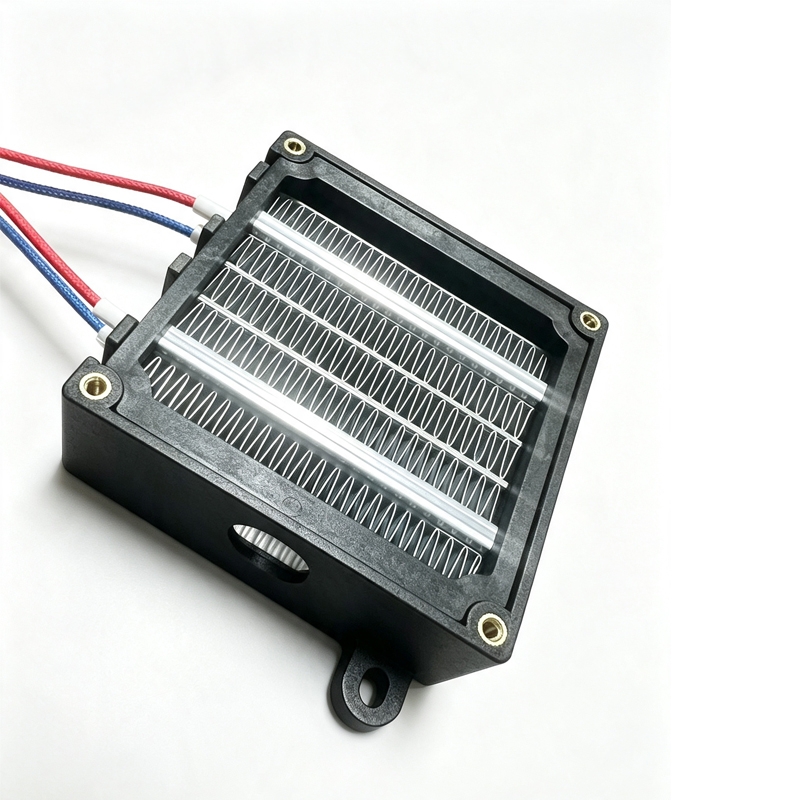
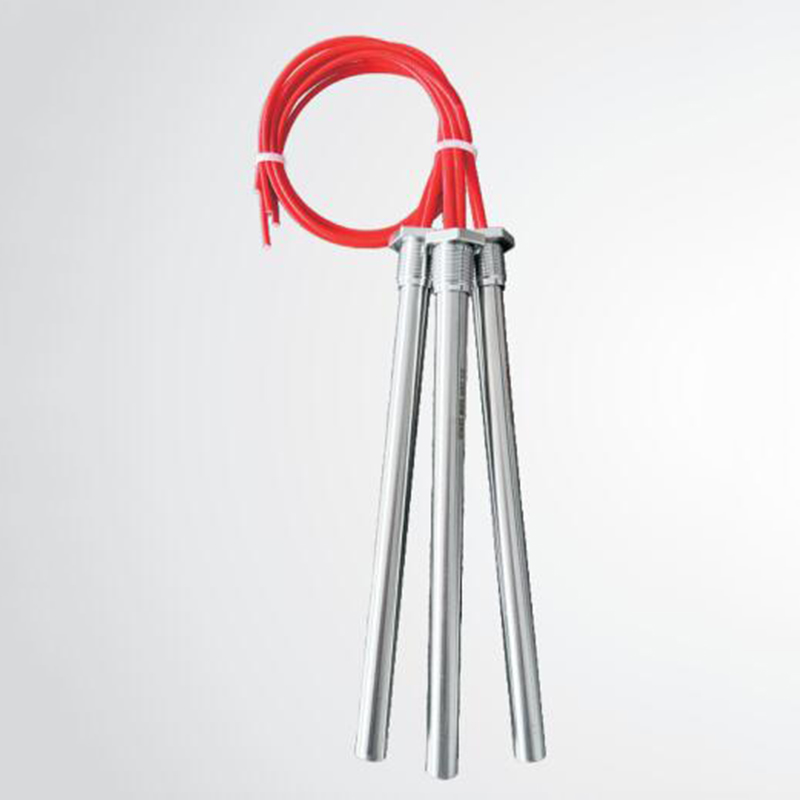
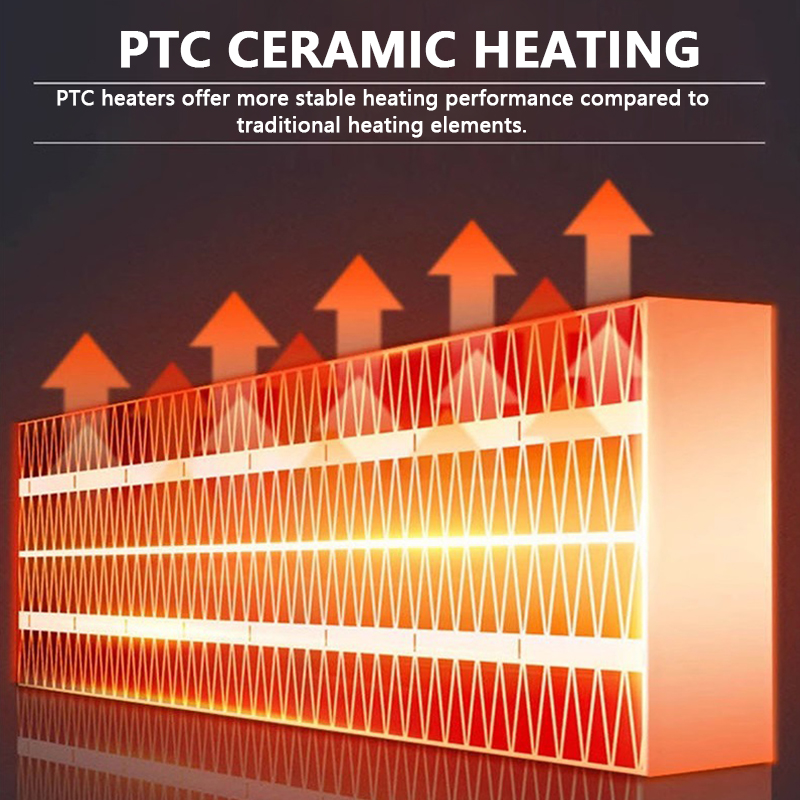
PTC (Positive Temperature Coefficient) air heaters are advanced electric heating devices built around PTC thermistor technology. Unlike traditional resistive heaters, their resistance increases exponentially with temperature, enabling self-regulating heat output that eliminates overheating risks. These heaters convert electrical energy into thermal energy efficiently, delivering rapid, consistent warmth for residential, automotive, industrial, and commercial use. Their compact design, reliability, and energy-saving properties have made them a preferred heating solution across diverse sectors, replacing outdated systems in applications where safety, efficiency, and stability are paramount.
Specification
| PTC Heater Types | |
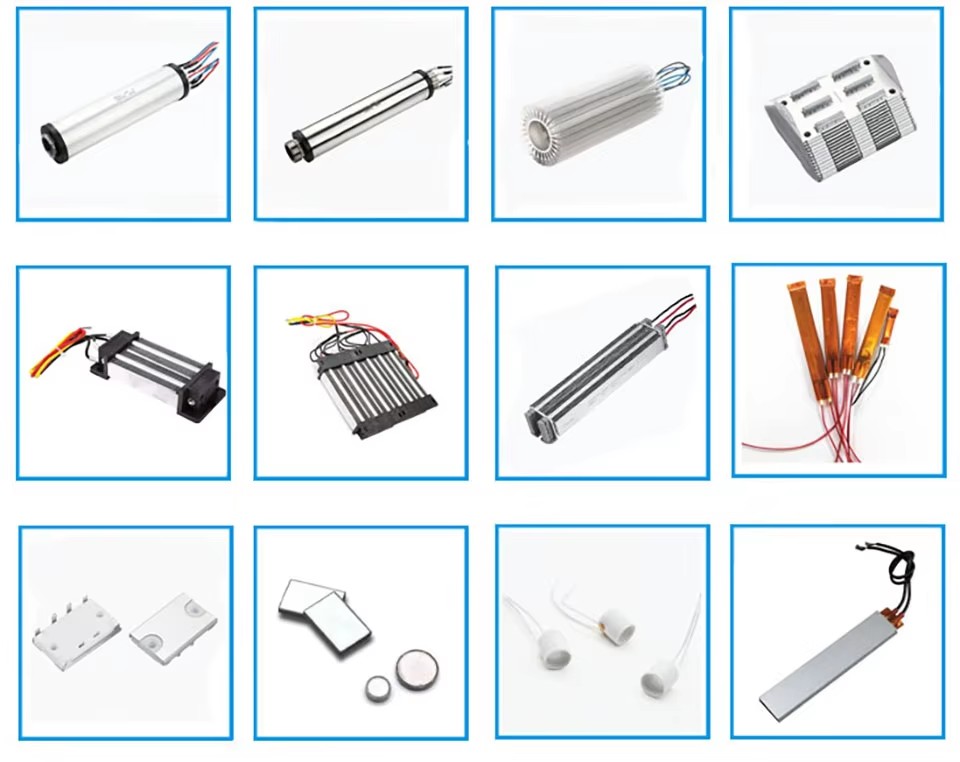
| Blow-type Air Heaters | Insulated corrugated heat sinks, non-insulated corrugated heat sinks, insulated finned heat sinks, and aluminum extruded heat sinks. |
| Fan-equipped Heaters | Insulated corrugated heat sink heaters with fans, and non-insulated corrugated heat sink heaters with fans. |
| Convection Air Heaters | Convection heat sink heaters with aluminum extruded heat sinks. |
| Air Heaters with Temperature Control | Air heaters of various structures, with added air temperature control, achieving a control accuracy of ±3℃. |
Product Show


| Insulated PTC Heater | ||||||||
| No. | Length(mm) | Width(mm) | Height(mm) | Number of Pieces | Operating Voltage(V) | Insulated Voltage(V) | Switching Temperature(℃) | Power/W(5m/S, wind speed) |
| 1 | 96 | 50 | 20 | 8 | 220 | 3750 | 250 | 640 |
| 2 | 120 | 50 | 20 | 10 | 220 | 3750 | 250 | 800 |
| 3 | 96 | 75 | 20 | 12 | 220 | 3750 | 250 | 960 |
| 4 | 120 | 75 | 20 | 15 | 220 | 3750 | 250 | 1200 |
| 5 | 96 | 50 | 20 | 8 | 110 | 2500 | 250 | 640 |
| 6 | 120 | 50 | 20 | 10 | 110 | 2500 | 250 | 800 |
| 7 | 72 | 75 | 20 | 9 | 110 | 2500 | 250 | 720 |
| 8 | 96 | 75 | 20 | 12 | 110 | 2500 | 250 | 960 |
Precautions for Use
Blowering Type:
1) Requires airflow during use. Airflow speed significantly affects heating power; generally, higher airflow speed results in higher power.
2) Power may drop considerably at extremely low temperatures; custom-made units are recommended.
3) The heater will not be damaged without airflow, but power will decrease significantly, approximately 1/8 of the blowing power.
4) Output power can be adjusted by changing the airflow speed, voltage, or by group heating.
5) The surface temperature of the heat sink is relatively high in the absence of airflow. To prevent damage to external components from the heater's temperature in the absence of airflow, a temperature switch can be added.
6) The surface temperature of the heat sink is approximately equal to the switch temperature in the absence of airflow; the surface temperature is much lower in the blowing state.
7) The heat sink of non-insulated air heaters is electrically charged; avoid contact with the heat sink by people, electrical wires, etc.
Convection Type:
1) Heating power is related to the installation location and the orientation of the heater;
2) Allowing air to circulate freely facilitates heat dissipation;
3) When air is blown onto the heater, the heating power can increase by 2 to 4 times, while the surface temperature of the radiator also drops significantly;
4) When the heater's radiator contacts the metal support, the output power will also increase.

Application
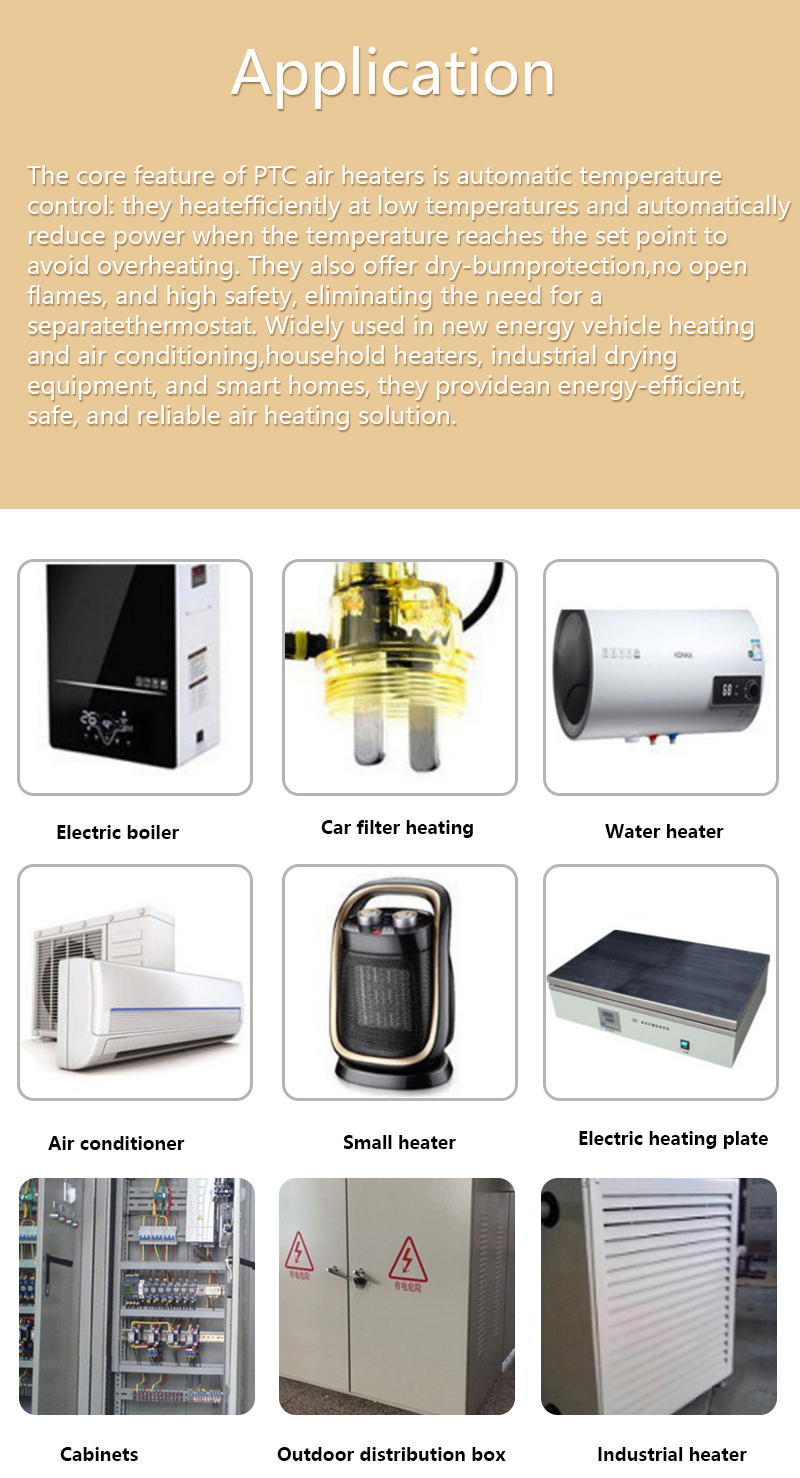
Blowering Type: Room heating, bathroom heating, air conditioner heating, drying room heating, clothes dryer, hand dryer, electric vehicle air conditioning, battery capacitor discharge load;
Convection Type: Moisture-proof and anti-condensation for electrical instruments, electrical control cabinet heating, room heating.
More PTC Heaters for Options