


产品描述
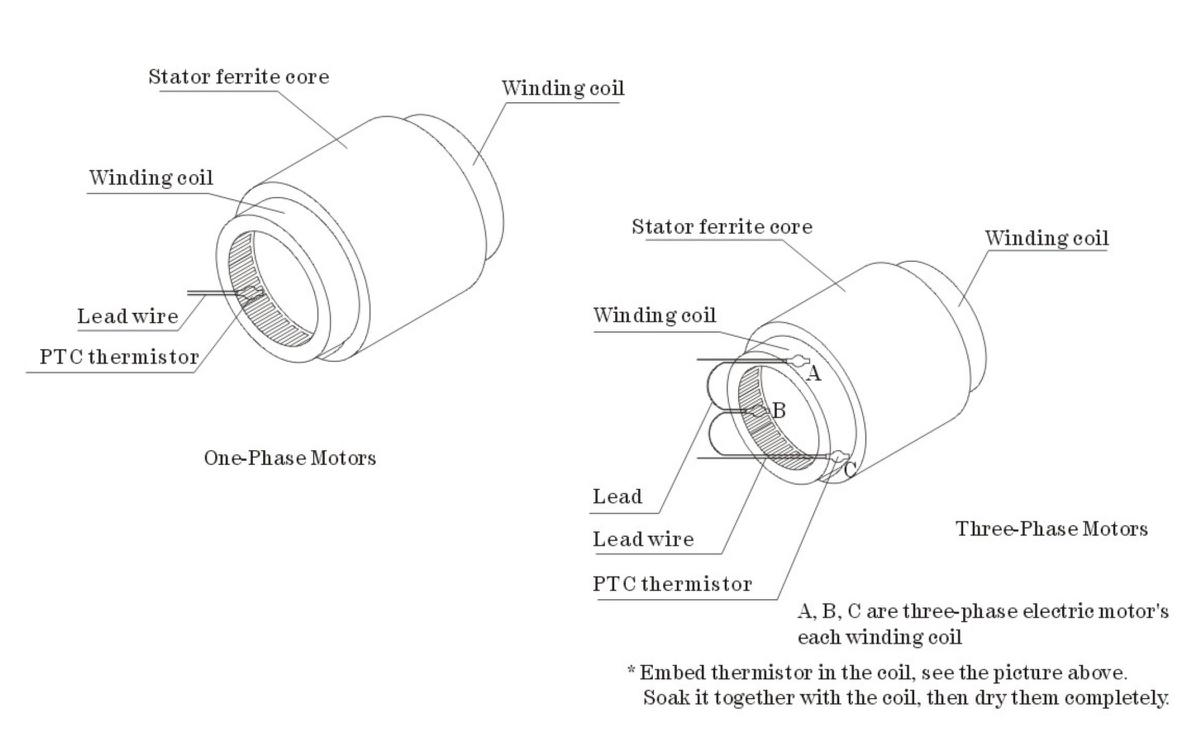
MZ6型PTC热敏电阻专为电动机保护而设计。其关键技术于20世纪90年代从美国引进,至今已有10多年的生产经验。该产品适用于不同的产品,并能为电动机内部的主要部件提供过热保护。例如,PTC热敏电阻嵌入三相电动机定子绕组中。当电动机定子绕组的温度达到绝缘材料的绝缘等级温度时,PTC热敏电阻的阻值会同时上升,并将信号传输到保护器,切断电动机电流,最终防止电动机烧毁。这种方式在世界范围内被广泛应用。
规格
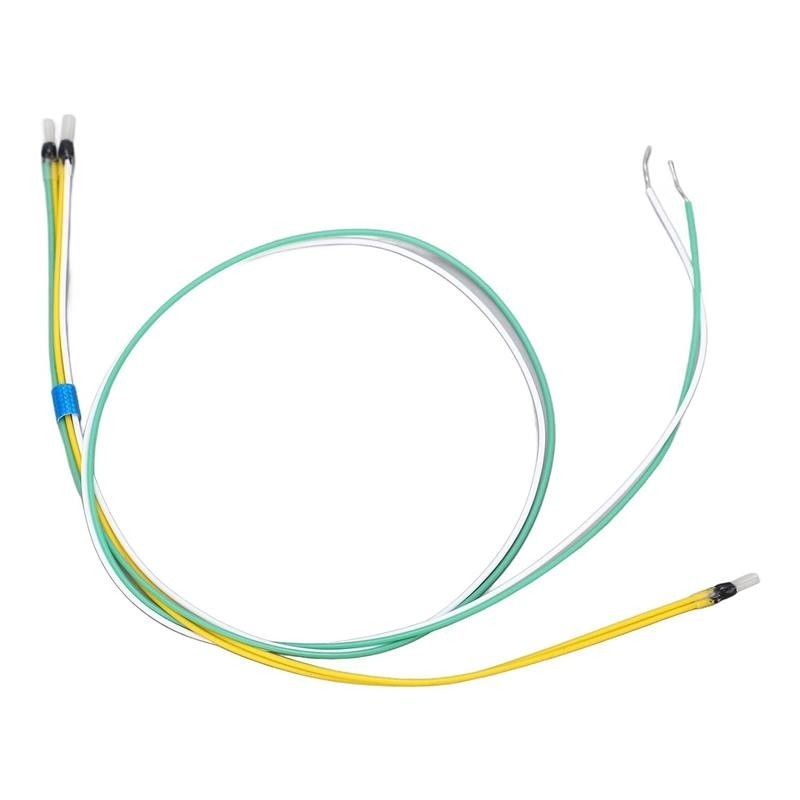
产品名称:三重PTC热敏电阻传感器
R25:≤300Ω
额定动作温度:60-180℃
公差:±5%
应用:电机保护
最大工作电压:30V
| Technical Specifications | Single PTC | Single PTC | Units | |
| Max working voltage | Umax | 30 | 30 | V |
| Normal using voltage | V | ≤2.5 | ≤2.5 | V |
| Rated action temperature | Tk | 60-180 | 60-180 | ℃ |
| Tk tolerance | ±5 | ±5 | ℃ | |
| Tk repeatability | T | ±0.5 | ±0.5 | ℃ |
| Resistance in normal temperature T=25±1℃ (V≤2.5V) | R25 | ≤100 | ≤300 | Ω |
| PTC resistance at some temperature (V≤2.5V) | TK-5℃ | ≤550 | ≤1650 | Ω |
| PTC resistance at some temperature (V≤2.5V) | TK+5℃ | ≥1330 | ≥3990 | Ω |
| PTC resistance at some temperature (V≤2.5V) | TK+15℃ | 4 | 12 | KΩ |
| -20℃~TK-20℃ | ≤250 | ≤750 | Ω | |
| TK reaction time | Td | <5 | <5 | S |
| Insulation strength | V | 2.5 | 2.5 | KV |
| Maximum Storage temperature | T1max | 125 | 125 | ℃ |
| Miniimum Storage temperature | T1min | -25 | -25 | ℃ |
| Lead Wire Color | See the colorful coding below | |||
| Weight | Wt | 2 | 3.5 | G |
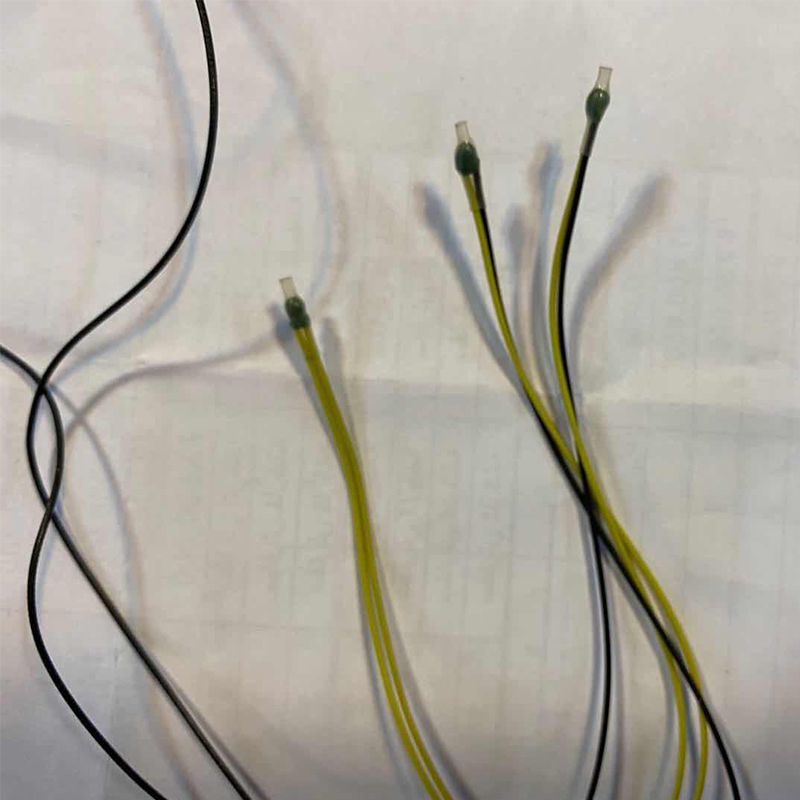
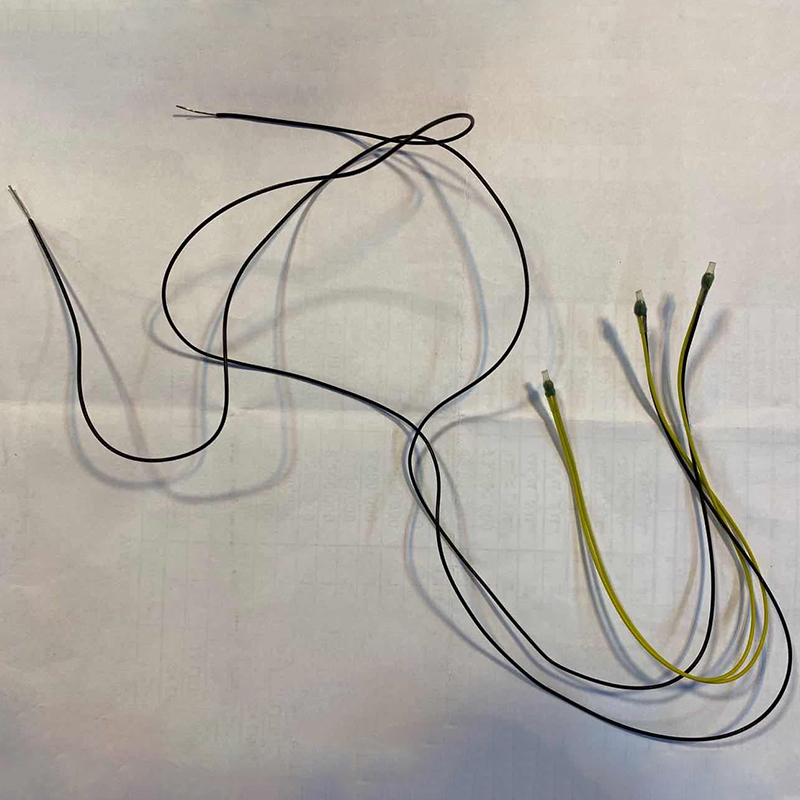
Color Coding

Dimension

特征
Mz6型电动机保护用PTC热敏电阻符合DN440S1/DIN44S0S>国际标准,
芯片尺寸小(1.5X0.6mm),响应速度快,品种齐全,性能稳定,长期使用可靠,尤其在缺相时能快速响应,保护电动机。
Operating Instruction
The electric motor of different insulation rank selects the different Tk temperature thermistor, itsparameter is shown at following table(only reference).
| Electric motor insulation rank | Limited Working Temperature | Thermistor(TK) |
| Y | 90 | 80~85℃ |
| A | 105 | 95~100℃ |
| E | 120 | 110~115℃ |
| B | 130 | 120~125℃ |
| F | 155 | 145~150℃ |
| H | 180 | 170~175℃ |
| C | Above 180 | Above 180℃ |
安装注意事项
1. 将导线插入电机的绕线槽内,整理整齐,然后将PTC热敏电阻安装到电机线圈内(如图所示)。2. 安装时,请勿用力敲击或按压热敏电阻的感应区域,以免损坏产品内部精密结构。3. 安装时,请勿用力拉扯产品的引出线,以免将引出线拉断。4. 接线前,请仔细阅读PTC温控模块(原GRB电机过热保护器)的技术资料,以免损坏热敏电阻。5. 将引出线牢固地连接到指定的连接位置。