
Dongguan Tianrui Electronics Co., Ltd.
Dongguan Tianrui Electronics Co., Ltd. logo
Understanding PTC Heater Types: A Guide to Classification and Applications

Understanding PTC Heater Types: A Guide to Classification and Applications

PTC Heater
Nov 13, 2025Posted by Dongguan Tianrui Electronics Co., Ltd.

PTC (Positive Temperature Coefficient) heaters are not a one-size-fits-all solution. Their performance and suitability for an application depend heavily on their construction and design. Understanding the different types of PTC heaters is the first step in selecting the perfect component for your project. This guide breaks down the most common classifications.

1. By Structure and Form Factor

This is the most practical way to categorize PTC heaters, as it directly relates to how they are used and installed.

A. Ceramic Disc PTC Heaters

  • Description: These are the fundamental building blocks. They consist of a small, coin-shaped ceramic disc with electrodes printed on opposite sides.

  • Characteristics: Compact, fast thermal response, and very high power density.

  • Applications: Primarily used as the heating core inside other assemblies. You'll find them embedded in plastic housings for hair dryers, soldering irons, or water dispensers.

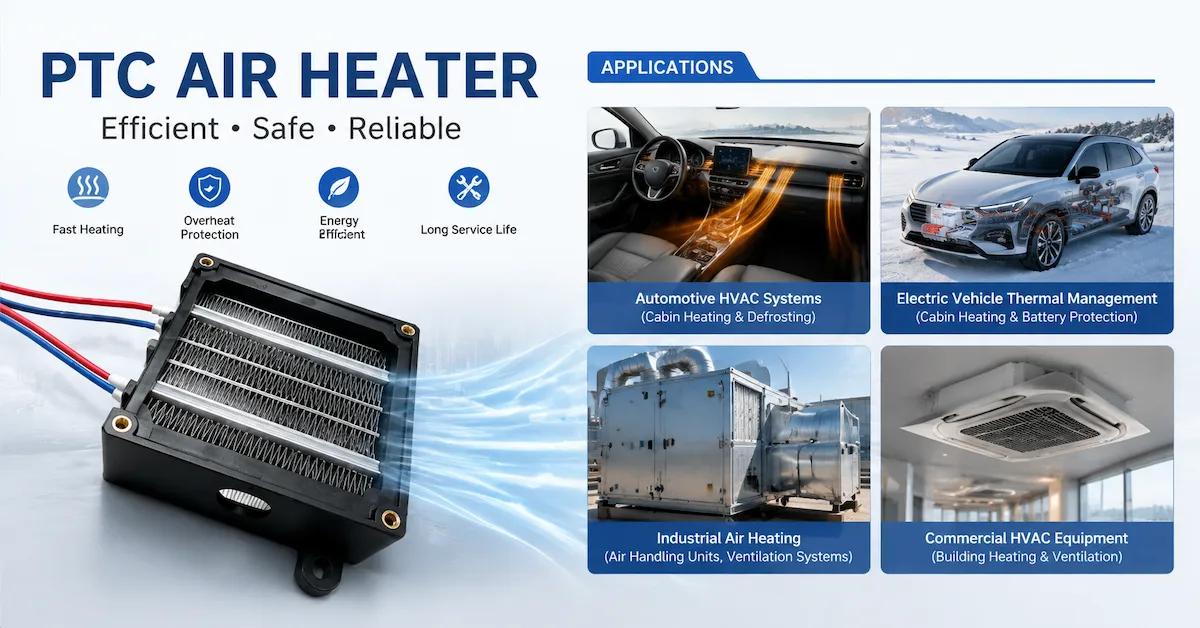
B. PTC Air Heaters

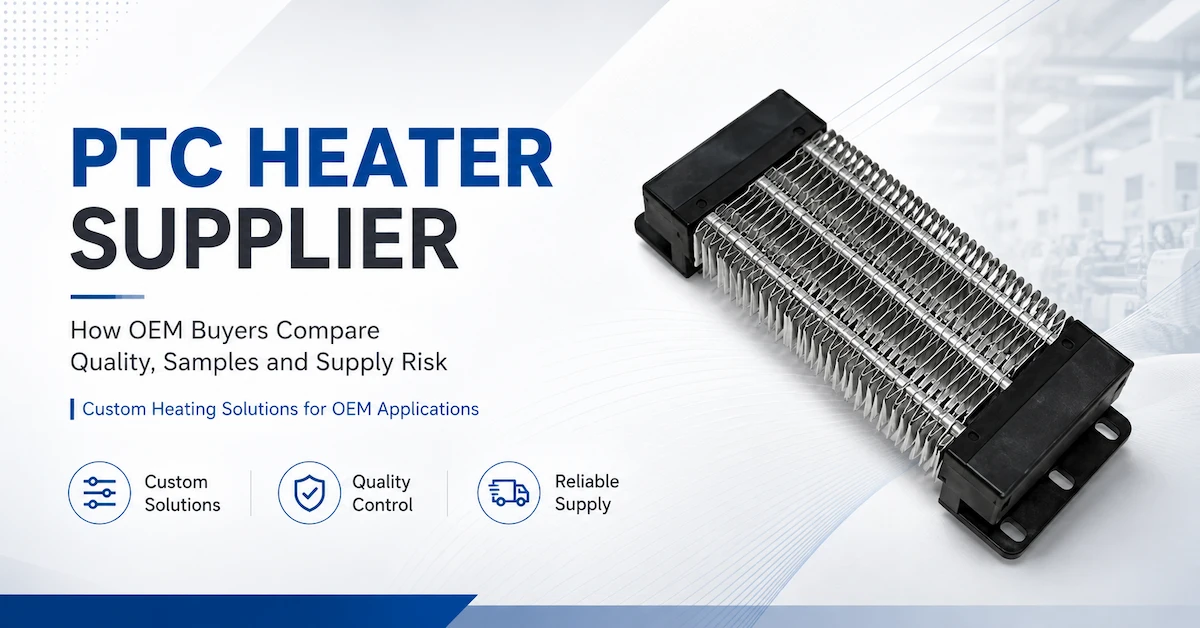
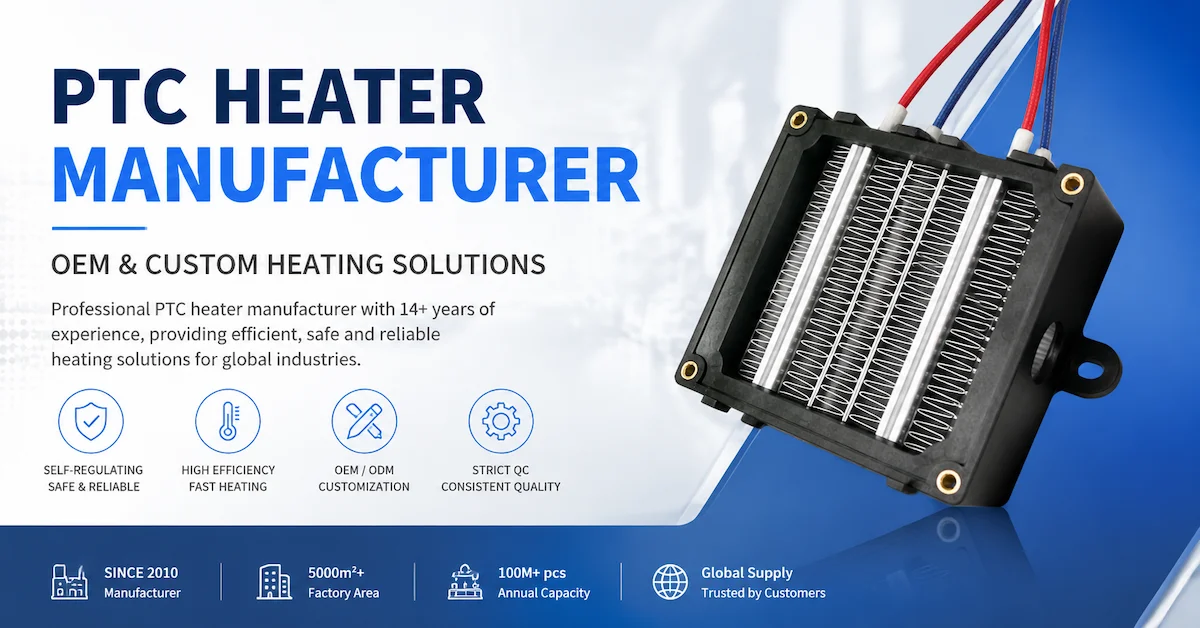
  • Description: These heaters are specifically designed for air heating. Multiple ceramic PTC discs are arranged in a grid and housed in a metal (often aluminum) frame with fins.

  • Characteristics: The fins act as a heat exchanger, maximizing surface area for efficient convection heating. They are self-regulating and safe for ducted systems.

  • Applications: Hand dryers, fan heaters, air conditioners (for auxiliary heat), and automotive cabin heaters.

C. PTC Liquid Heaters

  • Description: Engineered for direct immersion in or contact with liquids. They have a fully insulated and sealed metal casing to prevent electrical conduction.

  • Characteristics: Highly corrosion-resistant, waterproof, and designed to handle the thermal demands of liquids.

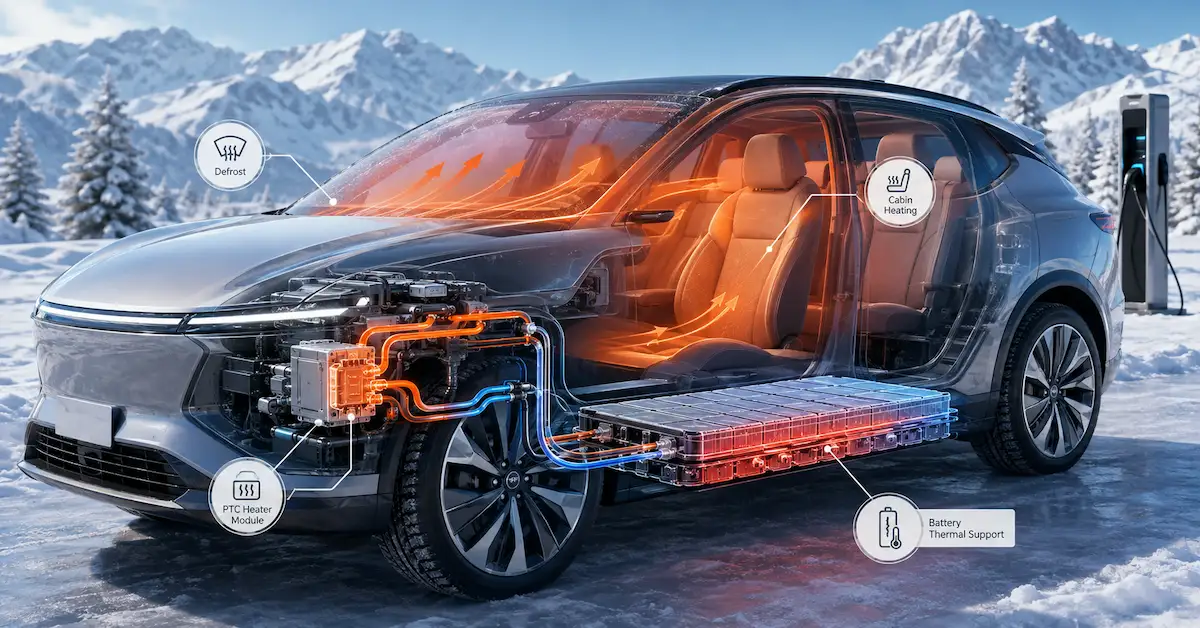
  • Applications: Instant water heaters, electric vehicle battery thermal management, beverage makers, and aquarium heaters.

D. Flexible PTC Heaters

  • Description: These use a PTC material (often a conductive polymer or ceramic-filled composite) printed or laminated onto a flexible substrate like silicone rubber or a polyimide film (Kapton).

  • Characteristics: Thin, lightweight, and can conform to curved surfaces. They provide gentle, even heat over a large area.

  • Applications: Seat warmers in cars and motorcycles, medical warming devices, and battery pack warming.

E. Honeycomb PTC Heaters

  • Description: A specialized type of air heater where the PTC material is formed into a multi-channel honeycomb structure.

  • Characteristics: Offers an extremely large surface area in a compact volume, allowing for very high airflow with low resistance and rapid heat transfer.

  • Applications: High-power air heating like electric vehicles, industrial equipment, and powerful fan heaters.

2. By PTC Material Type

The core material also defines the heater's capabilities.

  • Barium Titanate-Based Ceramics: The most common type. They offer a sharp rise in resistance at a specific Curie temperature, providing excellent self-regulation.

  • Polymer PTCs (PPTC): Made from conductive particles in a polymer matrix. They are often used as resettable fuses but can also function as low-power, flexible heating elements.

How to Choose the Right Type

Selecting the right PTC heater depends on your application's key requirements:

  • Heating Air? Choose a finned PTC Air Heater or Honeycomb Heater.

  • Heating a Liquid? A sealed PTC Liquid Heater is mandatory.

  • Need a Custom Shape on a Curved Surface? A Flexible PTC Heater is your best bet.

  • Building a Heater Assembly? Start with a core Ceramic Disc PTC.

  • Priority on Safety and Self-Regulation? All true PTC heaters offer this, but ceramic types are most robust for high-temperature applications.

Conclusion

From the simple ceramic disc to complex flexible sheets and high-power honeycombs, the world of PTC heaters is diverse. By understanding these classifications—primarily by structure and material—you can make an informed decision that ensures efficiency, safety, and reliability in your final product. Always consult with manufacturers and review datasheets to match the heater's specifications with your project's needs.
Featured Blogs

Ceramic PTC Heaters: The Smart Choice for Modern Heating

Ceramic PTC Heaters: The Smart Choice for Modern Heating

When it comes to efficient, safe, and compact heating solutions, ceramic PTC (Positive Temperature Coefficient) heaters are revolutionizing the industry. Unlike traditional heaters that rely on constant power and external controls, PTC heaters offer a built-in “brain” that makes them remarkably efficient and reliable.

Read More
Compact PTC Heaters: Your Efficient & Safe Solution for Instant Warmth

Compact PTC Heaters: Your Efficient & Safe Solution for Instant Warmth

Feeling a chill in your home office, bathroom, or a small living space? Traditional heaters often feel bulky, inefficient, or even unsafe. Enter the compact PTC heater – a modern marvel of heating technology that's changing how we stay warm.

Read More
PTC Heating Film: The Smart, Efficient Future of Warmth

PTC Heating Film: The Smart, Efficient Future of Warmth

Tired of cold floors, inefficient heaters, and high energy bills? Modern heating technology offers a superior solution: Positive Temperature Coefficient (PTC) Heating Film. This innovative material is revolutionizing how we deliver warmth in homes, offices, and industrial settings. But what exactly is it, and why is it gaining so much popularity?

Read More
Unlocking Efficiency: The Essential Guide to 220V 400W Insulated PTC Heaters

Unlocking Efficiency: The Essential Guide to 220V 400W Insulated PTC Heaters

In the world of electric heating, finding the perfect balance of safety, reliability, and energy efficiency is a constant pursuit. Enter the 220V 400W Insulated PTC Heater—a compact yet powerful component that is revolutionizing applications from industrial equipment to everyday appliances. But what exactly makes this specific heater so exceptional? Let's delve into its core technology, standout benefits, and practical uses.

Read More
PTC Heaters: The Smart Heart of Your Modern Clothes Dryer

PTC Heaters: The Smart Heart of Your Modern Clothes Dryer

Tired of long drying cycles, high energy bills, and worries about overheating your favorite clothes? The technology behind drying has evolved, and at the forefront is the PTC (Positive Temperature Coefficient) heater. It’s quietly revolutionizing how modern dryers work, making them more efficient, safer, and gentler on fabrics.

Read More
Insulated Corrugated PTC Heaters: The Safe and Durable Heating Solution

Insulated Corrugated PTC Heaters: The Safe and Durable Heating Solution

In industrial and commercial heating applications where safety, durability, and efficiency are non-negotiable, the insulated corrugated PTC heater stands out as an engineering masterpiece. Combining three key technologies—PTC self-regulation, corrugated metal construction, and specialized insulation—this heater delivers performance where others may fall short.

Read More
Air Electric PTC Heaters: Revolutionizing Modern Heating with Efficiency and Safety

Air Electric PTC Heaters: Revolutionizing Modern Heating with Efficiency and Safety

Explore the advanced Air Electric PTC Heater, designed for rapid, self-regulating, and energy-efficient heating. Ideal for industrial, automotive, and commercial applications.

Read More
Power Up Your Drying Process: The Ultimate Guide to Industrial PTC Air Heaters

Power Up Your Drying Process: The Ultimate Guide to Industrial PTC Air Heaters

In the demanding world of industrial drying—whether for food, textiles, coatings, or plastics—efficiency, reliability, and control are non-negotiable. Traditional heating elements often fall short, plagued by inefficiency, hotspots, and safety concerns. Enter PTC (Positive Temperature Coefficient) air heaters, a transformative technology redefining performance standards for drying applications.

Read More