Dongguan Tianrui Electronics Co., Ltd.
Dongguan Tianrui Electronics Co., Ltd. logo
Taming Moisture and Cold: The Power of Duct-Type PTC Air Heaters

Taming Moisture and Cold: The Power of Duct-Type PTC Air Heaters

PTC Heater
Oct 23, 2025Posted by Dongguan Tianrui Electronics Co., Ltd.

When controlling the environment in larger spaces—from industrial sites to modern HVAC systems—efficiency, safety, and integration are key. This is where the Duct-Type PTC Air Heater shines. This specialized heater isn't just a source of warmth; it's a core component for solving two major challenges: heating and dehumidification, all within the sleek, hidden framework of a ducted system.

What is a Duct-Type PTC Air Heater?

Imagine a powerful, self-regulating heating element designed to fit seamlessly into the ductwork of your air handling system. That's a duct-type PTC heater. It leverages Positive Temperature Coefficient ceramic technology, which means it naturally prevents itself from overheating, making it exceptionally safe for enclosed, unattended operation.

Unlike standalone heaters, these units are engineered to work in-line with fans and blowers, heating the air as it passes through the ducts before being distributed evenly throughout the space.

The Dual-Action Hero: Heating and Dehumidification

This is where the true power of this technology becomes apparent.

1. Powerful, Even Heating:
The primary function is to provide consistent, forced-air warmth. As the system's fan pushes air through the ducts, it passes over the dense, honeycomb-like PTC ceramic elements. These elements heat up instantly and transfer their energy to the air, resulting in a rapid and efficient temperature rise. This is ideal for large warehouses, workshops, commercial buildings, and even in specialized vehicles like trains or RVs.

2. Effective Moisture Removal (Dehumidification):
This is the critical secondary benefit. Warm air can hold more moisture than cold air. When cold, humid air enters the system and is warmed by the PTC heater, its relative humidity drops. Essentially, the air changes from being cold and saturated to being warm and dry.

While the PTC heater itself doesn't "remove" water like a desiccant, it creates the perfect conditions for dehumidification to occur. In many systems, this warm, low-humidity air is then circulated. When it contacts cooler surfaces (like walls or stored products), it doesn't release its moisture as condensation, effectively keeping the space dry. In more advanced HVAC systems, this warmed air can then be passed over a cooling coil, causing the moisture to condense and drain away much more efficiently than with cold air alone.

Key Advantages of Choosing a Duct-Type PTC Design

  • Unmatched Safety: The intrinsic self-limiting property of PTC technology is a game-changer for duct systems. It eliminates the extreme fire risk associated with traditional resistance heaters that could overheat if a fan fails or airflow is blocked.

  • High Efficiency & Fast Response: With no warm-up time, the heater provides maximum heat output the moment it's turned on, leading to significant energy savings.

  • Compact & Integrated Design: It fits directly into your existing or planned ductwork, saving space and providing a clean, centralized heating solution.

  • Built-in Redundancy: Many duct PTC heaters are built with multiple independent heating cores. If one were to fail, the others continue to operate, ensuring system reliability.

  • Low Maintenance: With no moving parts and a robust solid-state design, these heaters are incredibly durable and require minimal upkeep.

Where Are They Used?

You'll find duct-type PTC heaters hard at work in:

  • Industrial Air Handling Units (AHUs)

  • Commercial HVAC Systems for offices and retail spaces

  • Drying and Curing Processes in manufacturing

  • Agriculture for greenhouse heating and humidity control

  • Public Transportation ventilation systems

Conclusion

A duct-type PTC air heater is more than just a heater; it's an intelligent climate control engine. By delivering safe, rapid, and efficient heat directly into an airflow, it provides the dual critical functions of raising the temperature and reducing relative humidity. For any project requiring reliable and safe in-duct environmental control, it is an exceptionally smart and powerful solution.
Featured Blogs

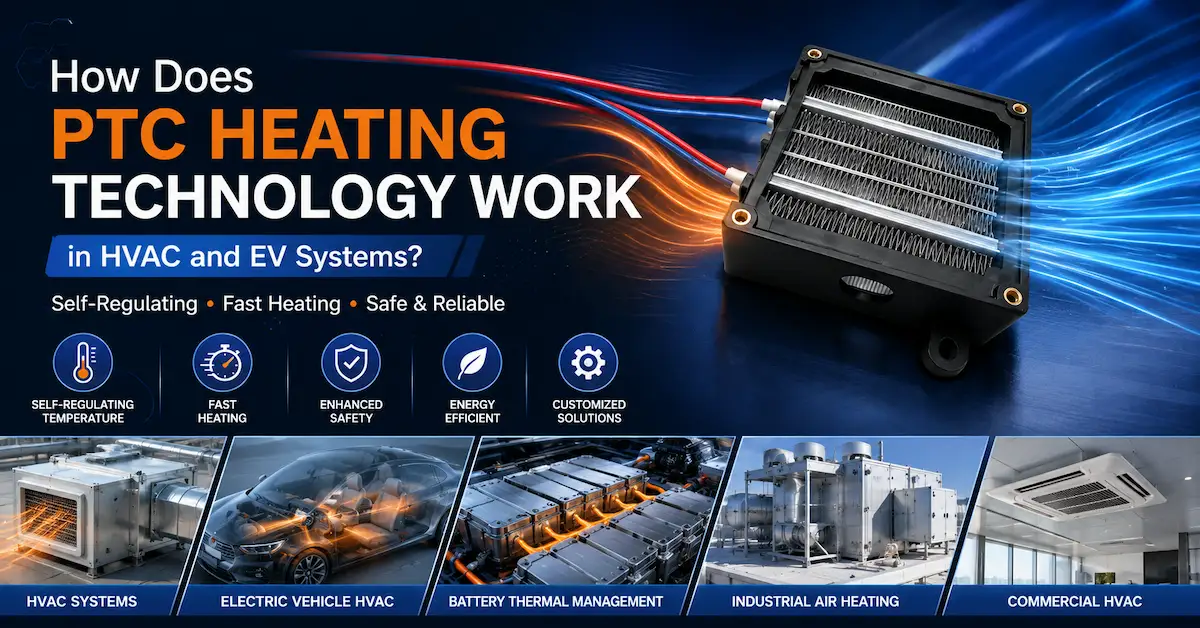
How Does PTC Heating Technology Work in HVAC and EV Systems?

How Does PTC Heating Technology Work in HVAC and EV Systems?

PTC Heating Technology provides self-regulating electric heating for HVAC, electric vehicles, industrial equipment and thermal management systems. This guide explains the ceramic heating principle, key advantages, heater types, application differences and selection factors that OEM engineers and buyers should evaluate before choosing a PTC heating solution.

Read More
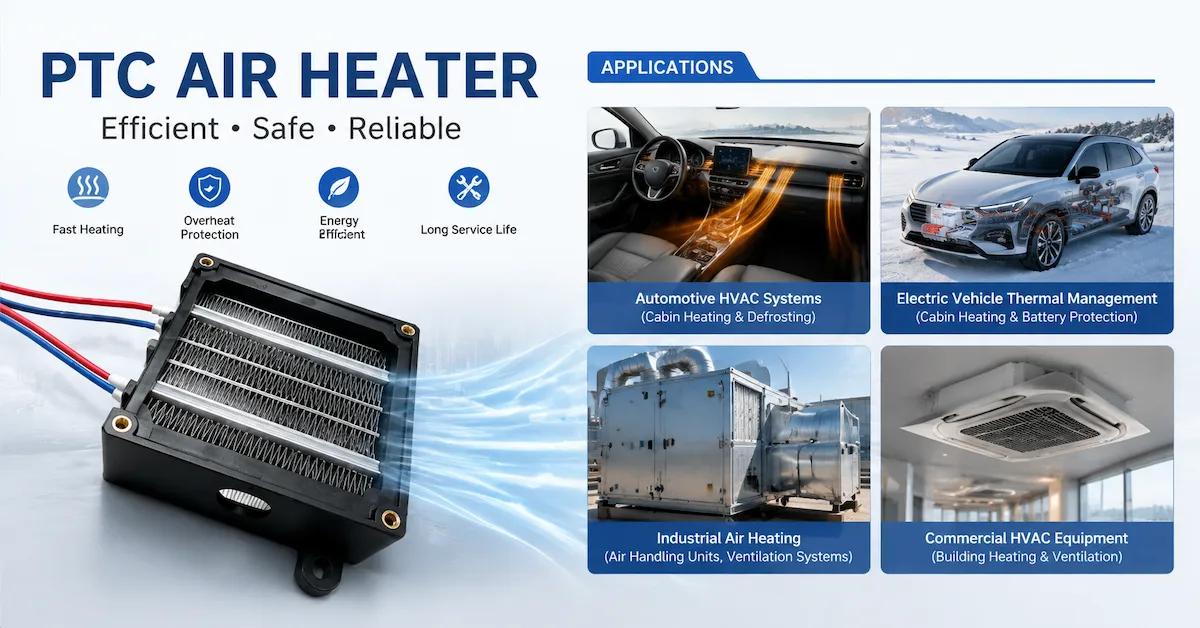
PTC Heater for HVAC System: Working Principle, Applications and Selection Guide

PTC Heater for HVAC System: Working Principle, Applications and Selection Guide

PTC heaters for HVAC systems provide efficient and reliable heating solutions for automotive, industrial and commercial applications. This guide explains how PTC heaters work, their advantages, applications and how to select a suitable supplier for customized HVAC heating requirements.

Read More
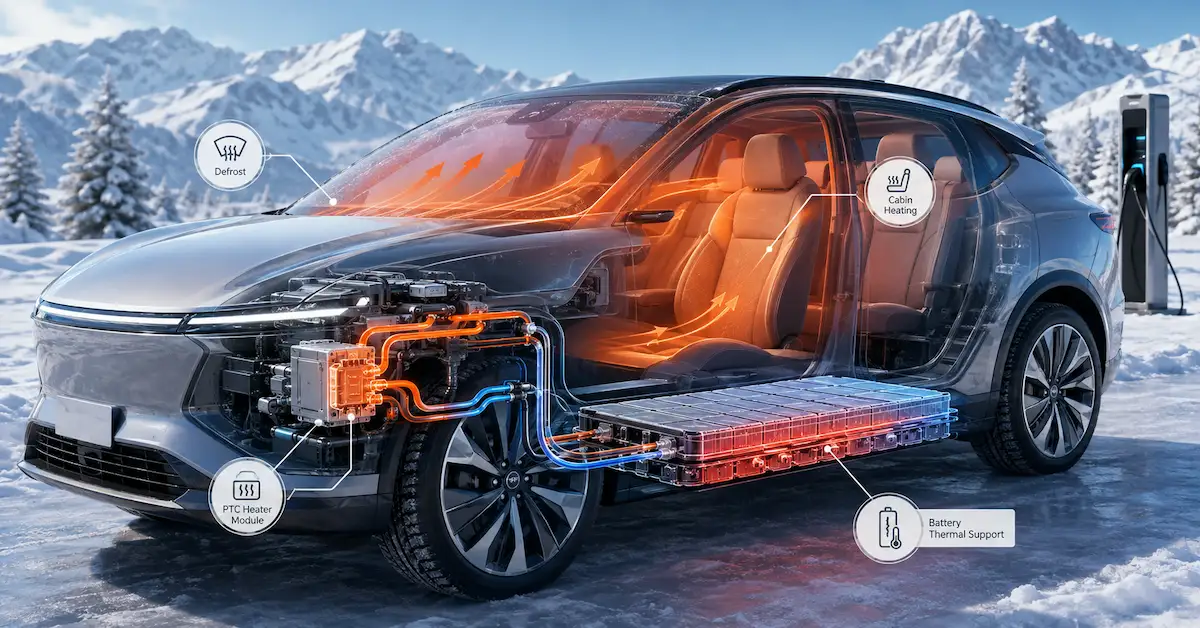
PTC Heater for Electric Vehicle: How to Choose the Right EV Heating Solution

PTC Heater for Electric Vehicle: How to Choose the Right EV Heating Solution

PTC heaters for electric vehicles provide efficient cabin heating and battery thermal management solutions in cold environments. This guide explains how EV manufacturers can select suitable PTC heaters based on heating performance, safety, energy efficiency, customization and supplier capability.

Read More
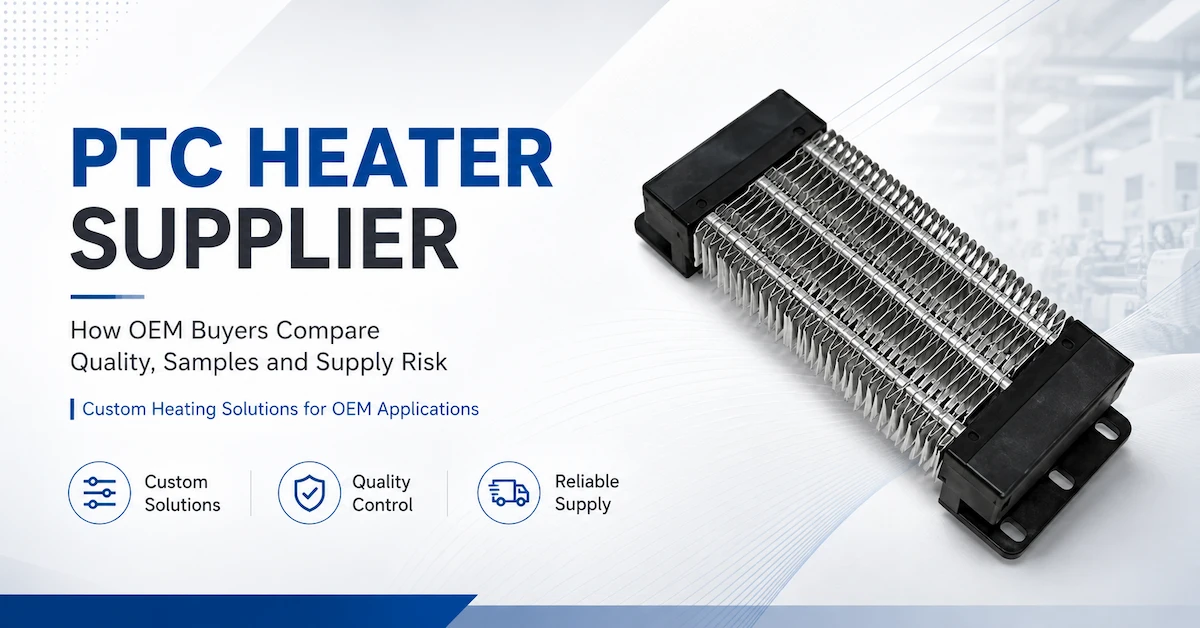
PTC Heater Supplier Guide: How OEM Buyers Compare Quality, Samples and Supply Risk

PTC Heater Supplier Guide: How OEM Buyers Compare Quality, Samples and Supply Risk

Choosing a PTC Heater Supplier involves more than comparing wattage and unit price. This guide helps OEM buyers evaluate technical support, customization, sample testing, quality control, quotations, lead time and long-term supply reliability before approving a heating partner.

Read More
PTC Heater Manufacturer: How to Choose the Right OEM Partner

PTC Heater Manufacturer: How to Choose the Right OEM Partner

Choosing the right PTC heater manufacturer requires more than comparing price and wattage. This guide explains how OEM buyers can evaluate engineering capability, customization, sample testing, quality control, production consistency, cost, and RFQ requirements before selecting a long-term supplier.

Read More
48256 Cross Flow Fan: The Ultimate Guide to Efficient, Low-Noise Airflow

48256 Cross Flow Fan: The Ultimate Guide to Efficient, Low-Noise Airflow

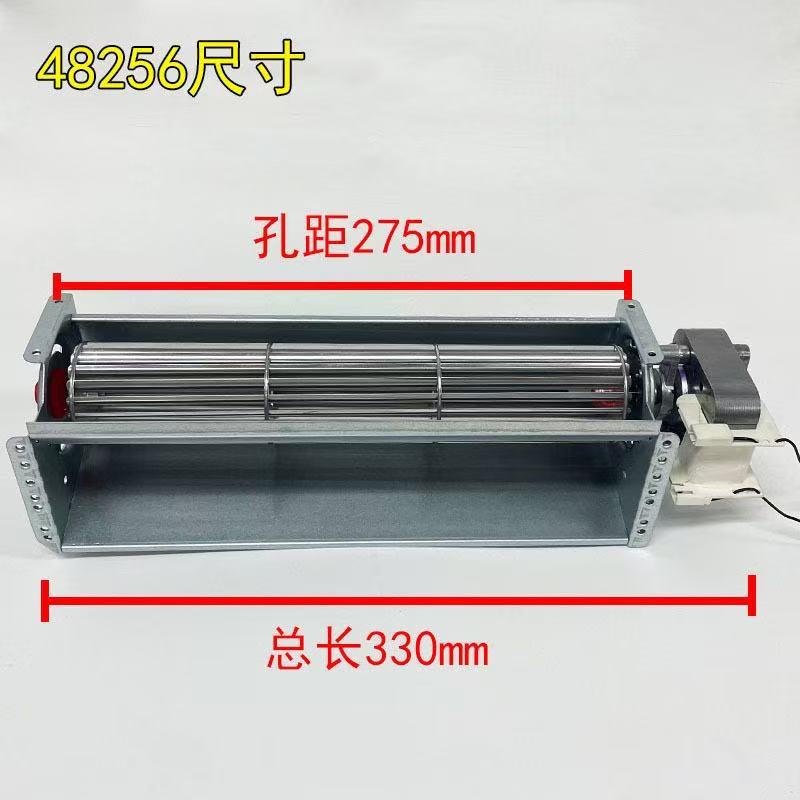
When it comes to moving air efficiently in tight spaces, few solutions match the performance of a cross flow fan (tangential fan). The 48256 model shown in the image is a prime example of this engineering marvel, designed to deliver consistent, low-noise airflow for a wide range of heating, ventilation, and industrial applications. Let’s break down what makes this fan such a versatile and reliable choice.

Read More
Why Our PTC Air Heaters Are the Smart, Safe Choice for Modern Air Heating

Why Our PTC Air Heaters Are the Smart, Safe Choice for Modern Air Heating

If you’ve ever dealt with unreliable heating elements, energy waste, or safety concerns in your air heating systems, it’s time to meet the solution: PTC (Positive Temperature Coefficient) air heaters. These compact, powerful modules are more than just heating components—they’re engineered to deliver consistent, safe, and efficient heat across countless applications, and our line of customizable models (as seen in the image) is built to exceed expectations.

Read More
The Complete Guide to PTC Fan Heaters for Industrial Cabinet Protection

The Complete Guide to PTC Fan Heaters for Industrial Cabinet Protection

Industrial automation relies on sensitive electronics housed within control cabinets, but these enclosures face a constant threat: temperature fluctuations. Condensation in humid conditions, freezing in cold climates, and component stress from temperature swings can lead to malfunctions, downtime, and costly repairs. To solve this, engineers are increasingly turning to integrated PTC Fan Heaters – a robust, intelligent solution designed for reliability. Available in key power ratings like 150W, 300W, 400W, and 600W, these units are the guardians of critical electrical systems.

Read More