Dongguan Tianrui Electronics Co., Ltd.
Dongguan Tianrui Electronics Co., Ltd. logo
The Science Behind the Switch: Understanding the Curie Point in PTC Thermistors

The Science Behind the Switch: Understanding the Curie Point in PTC Thermistors

PTC Heater
Sep 22, 2025Posted by Dongguan Tianrui Electronics Co., Ltd.

We’ve all seen the graphs: a PTC thermistor’s resistance sits low and stable, then, at a specific temperature, it skyrockets in a near-vertical line. This isn't just a gradual change; it's a dramatic phase transition. The inflection point of this cliff is known as the Curie Point (or Curie Temperature), and it is the very heart of what makes a ceramic PTC thermistor so unique and useful.

This article moves beyond the "what" and delves into the fascinating materials science behind the "why."

It All Starts with a Crystal: Barium Titanate
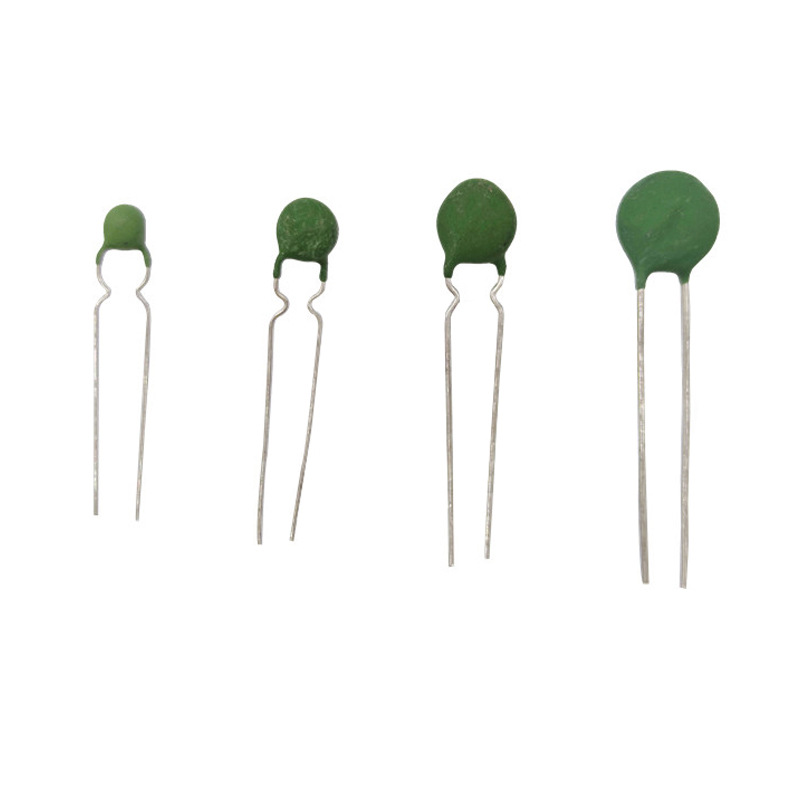
Most switching-type PTC thermistors are made from polycrystalline barium titanate (BaTiO₃). In its pure form, this material is an insulator. However, by "doping" it with specific rare-earth elements (e.g., yttrium, tantalum), we introduce donor atoms that turn it into a semiconducting ceramic. But the real magic lies in its crystal structure.

The Ferroelectric Phase: Below the Curie Point
At temperatures below the Curie Point, the barium titanate crystal has a tetragonal structure. In this state, the unit cell is asymmetric, meaning the center of positive charge (from the barium and titanium ions) and the center of negative charge (from the oxygen ions) do not coincide.

This separation creates a spontaneous electric dipole—a tiny, localized separation of positive and negative charges. Throughout the ceramic material, large regions of these aligned dipoles form, called ferroelectric domains.

How does this enable conduction?
The donor atoms from the doping process provide free electrons. These charge carriers can move relatively easily through the material, granting it a low electrical resistance.

aligned electric dipoles in ferroelectric domains below the Curie Point, allowing electron flow.
The Phase Transition: At the Curie Point
As the temperature rises and approaches the material-specific Curie Point (typically between 60°C and 140°C for commercial PTCs), thermal energy begins to disrupt the delicate order of the dipoles.

At the Curie Point, the crystal structure undergoes a phase transition from the asymmetric tetragonal structure to a symmetric cubic (perovskite) structure. In this new symmetric state, the centers of positive and negative charge coincide, and the spontaneous polarization vanishes. The ferroelectric domains break down.

The Paraelectric Phase: Above the Curie Point
Above the Curie Point, the material is in a paraelectric phase. With the disappearance of the spontaneous polarization, a critical change occurs at the boundaries between the ceramic grains.

The Potential Barrier:
Each grain in the polycrystalline material now has a surface charge that is no longer stabilized by the aligned dipoles. This creates high potential barriers at the grain boundaries.

Think of it like a series of tall walls between neighborhoods. The free electrons (the charge carriers) simply do not have enough energy to surmount these high barriers. The result is a catastrophic, exponential increase in electrical resistance—often by several orders of magnitude (e.g., from 10 ohms to 10,000 ohms).

Symmetric cubic structure above Curie Point with high barriers at grain boundaries, blocking electron flow.
Why the Sharp Switch? Positive Feedback.
This process contains a powerful positive feedback loop that creates the incredibly sharp resistance curve:

Current Flow → Heat: As current flows through the PTC, it generates heat (I²R heating).

Heat → Higher Resistance: As the temperature approaches the Curie Point, the resistance begins to increase slightly.

Higher Resistance → More Heat: This increase in resistance causes more power to be dissipated as heat (since P = I²R), which further raises the temperature.

Rapid Transition: This feedback loop causes an extremely rapid transition from the low to the high-resistance state, creating the characteristic "switch."

Engineering the Curie Point
A key advantage of this technology is that the Curie Point is not fixed. By altering the chemical composition of the ceramic—often by adding strontium or lead to the barium titanate base—material scientists can "tune" the Curie Temperature to precise values for specific applications. This is why you can get PTCs optimized for motor protection at 100°C or for soldering equipment at 240°C.

Conclusion
The Curie Point is far more than a spec on a datasheet. It is a fundamental materials science phenomenon—a phase transition that radically alters the electrical properties of a semiconductor. Understanding this shift from a ferroelectric to a paraelectric state, and the resulting creation of potential barriers at grain boundaries, reveals the elegant physics behind the PTC thermistor's behavior. This deep knowledge empowers engineers to not just use these components, but to truly harness their full potential in designing safer, smarter, and more reliable electronic systems.
Featured Blogs

The Complete Guide to PTC Fan Heaters for Industrial Cabinet Protection

The Complete Guide to PTC Fan Heaters for Industrial Cabinet Protection

Industrial automation relies on sensitive electronics housed within control cabinets, but these enclosures face a constant threat: temperature fluctuations. Condensation in humid conditions, freezing in cold climates, and component stress from temperature swings can lead to malfunctions, downtime, and costly repairs. To solve this, engineers are increasingly turning to integrated PTC Fan Heaters – a robust, intelligent solution designed for reliability. Available in key power ratings like 150W, 300W, 400W, and 600W, these units are the guardians of critical electrical systems.

Read More
The Smart Way to Heat Liquids: A Guide to PTC Immersion Heating Rods

The Smart Way to Heat Liquids: A Guide to PTC Immersion Heating Rods

When your application requires precise and reliable heating of a liquid—whether it's water in a tank, oil in a reservoir, or a chemical in a process bath—the heating element you choose is critical. Enter the Immersion Water Heater Element with PTC (Positive Temperature Coefficient) technology. This isn't your standard heating coil; it's an intelligent, self-regulating solution that offers superior safety and efficiency. Let's dive into what makes these tubular heating rods a game-changer for liquid temperature control.

Read More
High-Power PTC Heaters: The Future of Efficient, Self-Regulating Industrial Heating

High-Power PTC Heaters: The Future of Efficient, Self-Regulating Industrial Heating

When it comes to industrial heating, efficiency, safety, and reliability are not just benefits—they are necessities. Enter the High-Power PTC (Positive Temperature Coefficient) Heater, a game-changing technology that is redefining thermal management in demanding environments. Unlike traditional resistive heaters that require external controls to prevent overheating, PTC heaters are inherently smart. Their core ceramic material possesses a unique property: electrical resistance increases dramatically at a specific Curie temperature. This simple physical principle translates into powerful real-world advantages.

Read More
The 220VAC 300W PTC Aluminum Heating Plate: The Smart, Safe Heart of Modern Appliances

The 220VAC 300W PTC Aluminum Heating Plate: The Smart, Safe Heart of Modern Appliances

In the world of heating elements, efficiency, safety, and longevity are paramount. While traditional resistance wire heaters have served us for decades, a newer technology has emerged as the superior choice for countless applications: the PTC (Positive Temperature Coefficient) heating element. Specifically, the 220VAC 300W PTC Aluminum Heating Plate represents a perfect blend of intelligent design and robust performance. Let's explore why this component is revolutionizing appliance design.

Read More
Efficient and Safe Heating Solutions: In-depth Understanding of the 1200W/1800W 220V Cross-Flow Fan PTC Heater

Efficient and Safe Heating Solutions: In-depth Understanding of the 1200W/1800W 220V Cross-Flow Fan PTC Heater

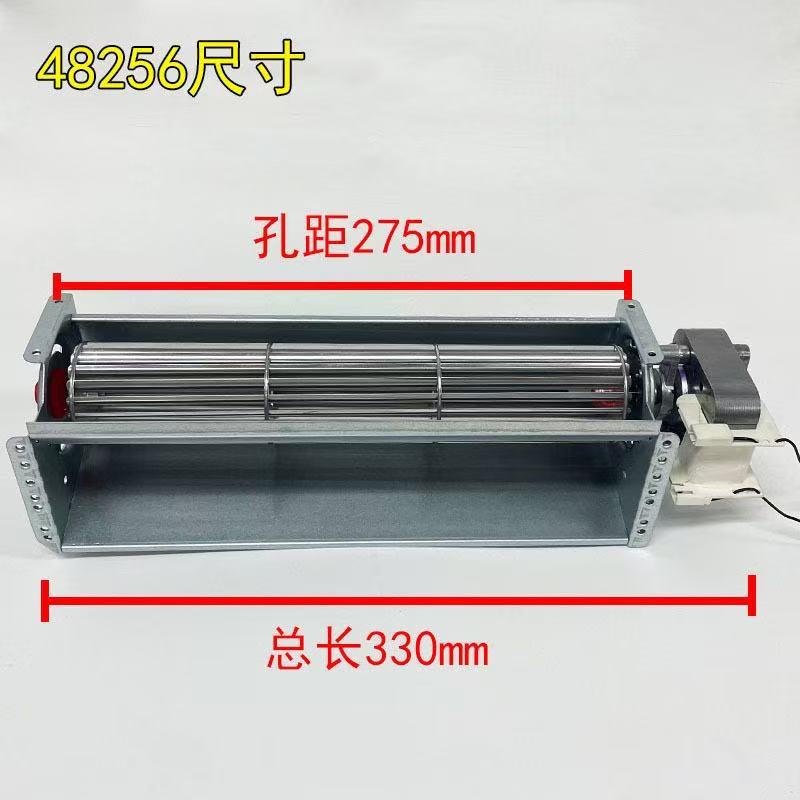
In applications requiring rapid, stable, and safe air heating, such as fresh air systems, air curtains, drying equipment, or duct heating, selecting the right heating component is crucial. Heater modules combining PTC ceramic heating technology with high-efficiency cross-flow fans are becoming a popular choice in modern HVAC and industrial applications. Today, we'll analyze this high-performance 1200W/1800W 220V cross-flow fan PTC heater in detail.

Read More
Ceramic PTC Heaters: The Smart Choice for Modern Heating

Ceramic PTC Heaters: The Smart Choice for Modern Heating

When it comes to efficient, safe, and compact heating solutions, ceramic PTC (Positive Temperature Coefficient) heaters are revolutionizing the industry. Unlike traditional heaters that rely on constant power and external controls, PTC heaters offer a built-in “brain” that makes them remarkably efficient and reliable.

Read More
Compact PTC Heaters: Your Efficient & Safe Solution for Instant Warmth

Compact PTC Heaters: Your Efficient & Safe Solution for Instant Warmth

Feeling a chill in your home office, bathroom, or a small living space? Traditional heaters often feel bulky, inefficient, or even unsafe. Enter the compact PTC heater – a modern marvel of heating technology that's changing how we stay warm.

Read More
PTC Heating Film: The Smart, Efficient Future of Warmth

PTC Heating Film: The Smart, Efficient Future of Warmth

Tired of cold floors, inefficient heaters, and high energy bills? Modern heating technology offers a superior solution: Positive Temperature Coefficient (PTC) Heating Film. This innovative material is revolutionizing how we deliver warmth in homes, offices, and industrial settings. But what exactly is it, and why is it gaining so much popularity?

Read More