Dongguan Tianrui Electronics Co., Ltd.
Dongguan Tianrui Electronics Co., Ltd. logo
An Engineer's Guide: Selecting the Perfect NTC Temperature Sensor for Your Project

An Engineer's Guide: Selecting the Perfect NTC Temperature Sensor for Your Project

PTC Heater
Oct 16, 2025Posted by Dongguan Tianrui Electronics Co., Ltd.

Selecting the right NTC (Negative Temperature Coefficient) thermistor is a critical step in ensuring the accuracy, reliability, and cost-effectiveness of your design. With a myriad of options available, how do you navigate the choices? This guide provides a structured decision-making framework to help you choose the ideal NTC sensor for your application.

Step 1: Define Your Core Requirements

Start by answering these fundamental questions:

  • What is the Target Temperature Range?
    Identify the minimum and maximum temperatures your sensor will need to measure. NTCs excel in a typical range of -55°C to 150°C. Pushing beyond this may require an RTD or thermocouple.

  • What Level of Accuracy is Needed?
    Determine the required precision. Is ±0.5°C critical, or is ±1°C acceptable? Remember, accuracy is often specified at 25°C and degrades at the extremes of the range. Consider both the resistance tolerance (e.g., ±1%) and the overall temperature tolerance.

  • How Fast Does the Sensor Need to React?
    Assess the required response speed. The Thermal Time Constant indicates how quickly the sensor can track temperature changes. A small, bead-type thermistor is ideal for fast-moving air or small liquid volumes, while a sealed probe is slower but more robust.

Step 2: Key Specification Deep Dive

With your requirements defined, map them to key datasheet parameters.

  • Select the Resistance Value (R₂₅):
    The resistance at 25°C (e.g., 10kΩ, 100kΩ) is your baseline. The choice depends on your circuit design and power considerations. Higher resistance values (like 100kΩ) are often preferred for battery-powered devices as they allow for higher resistor values in the voltage divider, reducing current draw and self-heating.

  • Understand the Beta Value (β) and Curve Matching:
    The Beta value defines the resistance-temperature slope over a range. For higher accuracy over a wide temperature range, look for sensors whose R-T curve is characterized with multiple Beta values or with Steinhart-Hart coefficients, allowing for more precise calculations in your firmware.

Step 3: Consider the Physical and Environmental Factors

The sensor's form and environment are as important as its electrical specs.

  • Choose the Right Package:

    • Chip/Surface Mount (SMD): For PCB mounting in consumer electronics.

    • Epoxy-Coated or Glass-Encapsulated: For moisture resistance and mechanical protection in harsh environments.

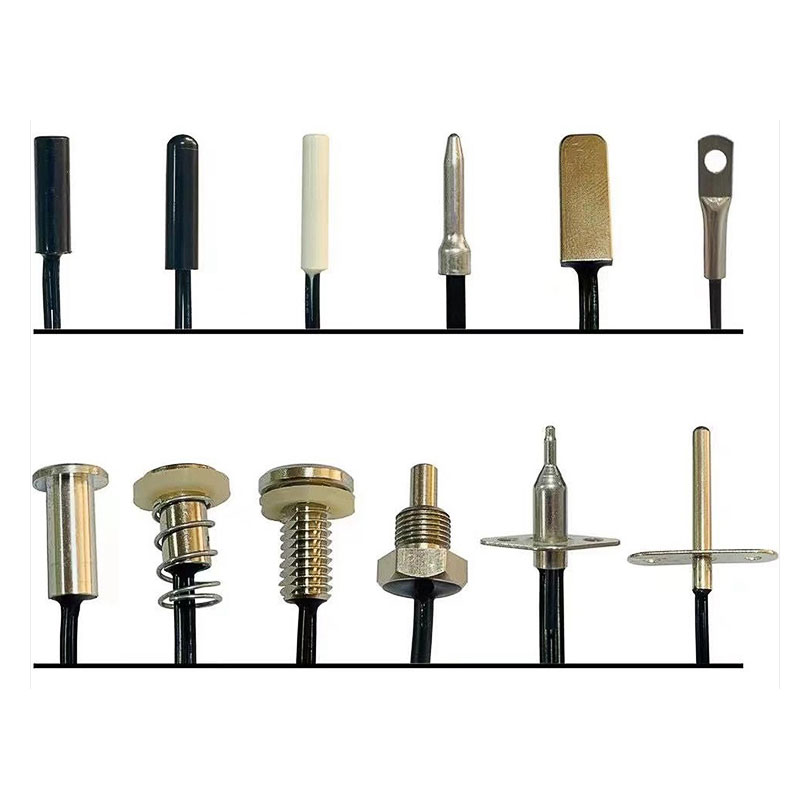
    • Housed Probes (Stainless Steel): For immersion in liquids, corrosive environments, or high-pressure systems.

  • Account for Self-Heating (Dissipation Constant, δ):
    In precision applications, the current through the thermistor can cause it to heat itself. Ensure your drive current is low enough to make this effect negligible. The Dissipation Constant in the datasheet is key for this calculation.

Step 4: Application-Specific Selection Tips

  • Battery Management System (BMS): Prioritize high R₂₅ values (100kΩ) to minimize power drain and ensure high accuracy around room temperature.

  • Automotive Sensing: Choose sensors with a wide operating temperature range and a robust, sealed package to withstand under-hood conditions.

  • Medical Thermometers: Focus on high initial accuracy, a tight tolerance, and a fast response time. Disposable probes are often small, glass-encapsulated thermistors.

Conclusion: A Balanced Decision

There is no single "best" NTC thermistor—only the best one for your specific project. By systematically evaluating your requirements against the electrical specifications, physical form, and environmental constraints, you can make a confident and optimal selection. A well-chosen NTC sensor will provide reliable performance for the life of your product.
Featured Blogs

Ceramic PTC Heaters: The Smart Choice for Modern Heating

Ceramic PTC Heaters: The Smart Choice for Modern Heating

When it comes to efficient, safe, and compact heating solutions, ceramic PTC (Positive Temperature Coefficient) heaters are revolutionizing the industry. Unlike traditional heaters that rely on constant power and external controls, PTC heaters offer a built-in “brain” that makes them remarkably efficient and reliable.

Read More
Compact PTC Heaters: Your Efficient & Safe Solution for Instant Warmth

Compact PTC Heaters: Your Efficient & Safe Solution for Instant Warmth

Feeling a chill in your home office, bathroom, or a small living space? Traditional heaters often feel bulky, inefficient, or even unsafe. Enter the compact PTC heater – a modern marvel of heating technology that's changing how we stay warm.

Read More
PTC Heating Film: The Smart, Efficient Future of Warmth

PTC Heating Film: The Smart, Efficient Future of Warmth

Tired of cold floors, inefficient heaters, and high energy bills? Modern heating technology offers a superior solution: Positive Temperature Coefficient (PTC) Heating Film. This innovative material is revolutionizing how we deliver warmth in homes, offices, and industrial settings. But what exactly is it, and why is it gaining so much popularity?

Read More
Unlocking Efficiency: The Essential Guide to 220V 400W Insulated PTC Heaters

Unlocking Efficiency: The Essential Guide to 220V 400W Insulated PTC Heaters

In the world of electric heating, finding the perfect balance of safety, reliability, and energy efficiency is a constant pursuit. Enter the 220V 400W Insulated PTC Heater—a compact yet powerful component that is revolutionizing applications from industrial equipment to everyday appliances. But what exactly makes this specific heater so exceptional? Let's delve into its core technology, standout benefits, and practical uses.

Read More
PTC Heaters: The Smart Heart of Your Modern Clothes Dryer

PTC Heaters: The Smart Heart of Your Modern Clothes Dryer

Tired of long drying cycles, high energy bills, and worries about overheating your favorite clothes? The technology behind drying has evolved, and at the forefront is the PTC (Positive Temperature Coefficient) heater. It’s quietly revolutionizing how modern dryers work, making them more efficient, safer, and gentler on fabrics.

Read More
Insulated Corrugated PTC Heaters: The Safe and Durable Heating Solution

Insulated Corrugated PTC Heaters: The Safe and Durable Heating Solution

In industrial and commercial heating applications where safety, durability, and efficiency are non-negotiable, the insulated corrugated PTC heater stands out as an engineering masterpiece. Combining three key technologies—PTC self-regulation, corrugated metal construction, and specialized insulation—this heater delivers performance where others may fall short.

Read More
Air Electric PTC Heaters: Revolutionizing Modern Heating with Efficiency and Safety

Air Electric PTC Heaters: Revolutionizing Modern Heating with Efficiency and Safety

Explore the advanced Air Electric PTC Heater, designed for rapid, self-regulating, and energy-efficient heating. Ideal for industrial, automotive, and commercial applications.

Read More
Power Up Your Drying Process: The Ultimate Guide to Industrial PTC Air Heaters

Power Up Your Drying Process: The Ultimate Guide to Industrial PTC Air Heaters

In the demanding world of industrial drying—whether for food, textiles, coatings, or plastics—efficiency, reliability, and control are non-negotiable. Traditional heating elements often fall short, plagued by inefficiency, hotspots, and safety concerns. Enter PTC (Positive Temperature Coefficient) air heaters, a transformative technology redefining performance standards for drying applications.

Read More