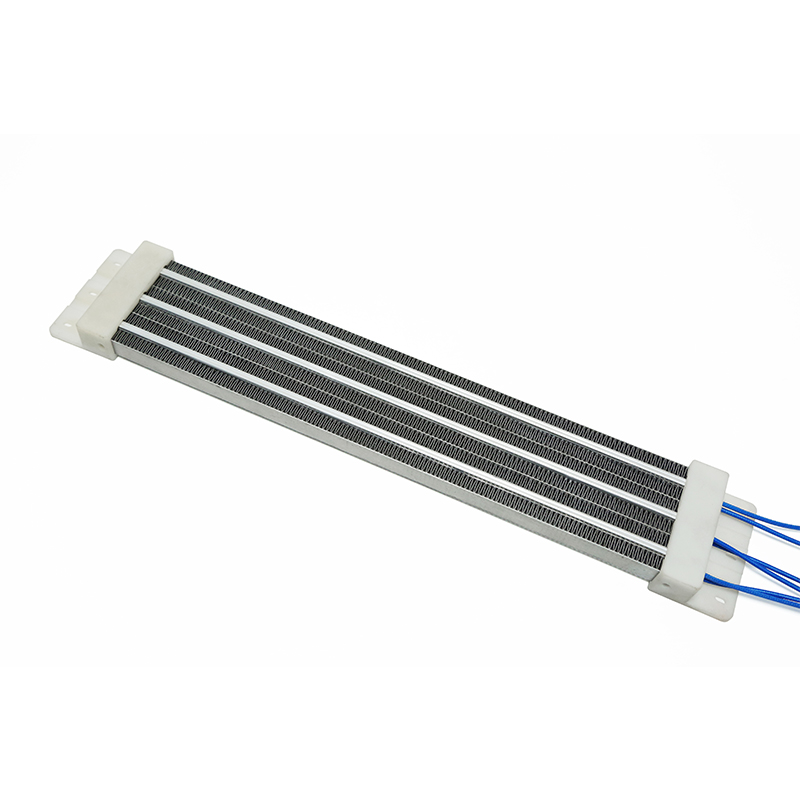
Custom PTC solutions from prototype to mass production.

Industrial Drying with PTC Air Heaters: Fast, Uniform Results for Manufacturing

Industrial Drying with PTC Air Heaters: Fast, Uniform Results for Manufacturing

PTC Heater
Nov 01, 2025•Posted by Dongguan Tianrui Electronics Co., Ltd.

In the world of manufacturing, consistency is king. Whether drying coatings, curing materials, or pre-heating components, any variation in temperature can lead to product defects, wasted energy, and production delays. Traditional heating elements often struggle with hotspots and slow response times. However, PTC (Positive Temperature Coefficient) air heaters are revolutionizing industrial drying by delivering precisely what the process demands: fast, safe, and remarkably uniform heat.

The Limitations of Conventional Industrial Heating

Many manufacturing processes still rely on constant-wattage ceramic or metal-sheath heaters. These elements run at a fixed, high temperature, requiring complex external controllers and cooling systems to prevent damage to both the heater and the product. This setup can lead to uneven temperature distribution, creating hotspots that scorch materials and cold spots that leave processes incomplete. The result is inconsistent quality, high energy waste, and potential safety hazards.

How PTC Heaters Ensure Superior, Uniform Drying

The core innovation of a PTC heater is its self-regulating property. The heating element's resistance increases exponentially as its temperature rises, causing its power output to automatically decrease when a specific temperature is reached.

In an industrial drying tunnel or chamber, this means:

  • Automatic Temperature Stability: The heater naturally maintains a consistent maximum temperature without needing intricate feedback from external thermostats.

  • Elimination of Hotspots: Areas that heat up faster will self-limit, allowing other areas to catch up. This creates a uniform thermal profile across the entire product surface, ensuring even drying and curing.

  • Rapid Heat-Up: PTC heaters achieve their target temperature very quickly, reducing cycle times and increasing production throughput.

Key Benefits for Manufacturing Operations

Integrating PTC air heaters into industrial equipment delivers tangible operational advantages:

  1. Unmatched Process Consistency: Achieve perfect, repeatable results for every batch by eliminating temperature variations that cause defects.

  2. Enhanced Energy Efficiency: Since PTC heaters draw maximum power only during heat-up and then reduce it for maintenance, they consume significantly less energy than constantly-running traditional heaters.

  3. Inherent Operational Safety: The self-limiting design prevents overheating, even if airflow is accidentally restricted. This drastically reduces the risk of fire or damage to sensitive products, protecting both your equipment and your workforce.

  4. Reduced Maintenance & Downtime: With no need for over-temperature protection systems and with a robust solid-state design, PTC heaters are highly reliable and require less maintenance than their traditional counterparts.

From food processing and plastics manufacturing to printing and textile production, PTC air heaters are setting a new standard for industrial thermal management. By providing fast, uniform, and intelligent heat, they are not just improving product quality—they are building a more efficient, safe, and profitable manufacturing floor.
Featured Blogs

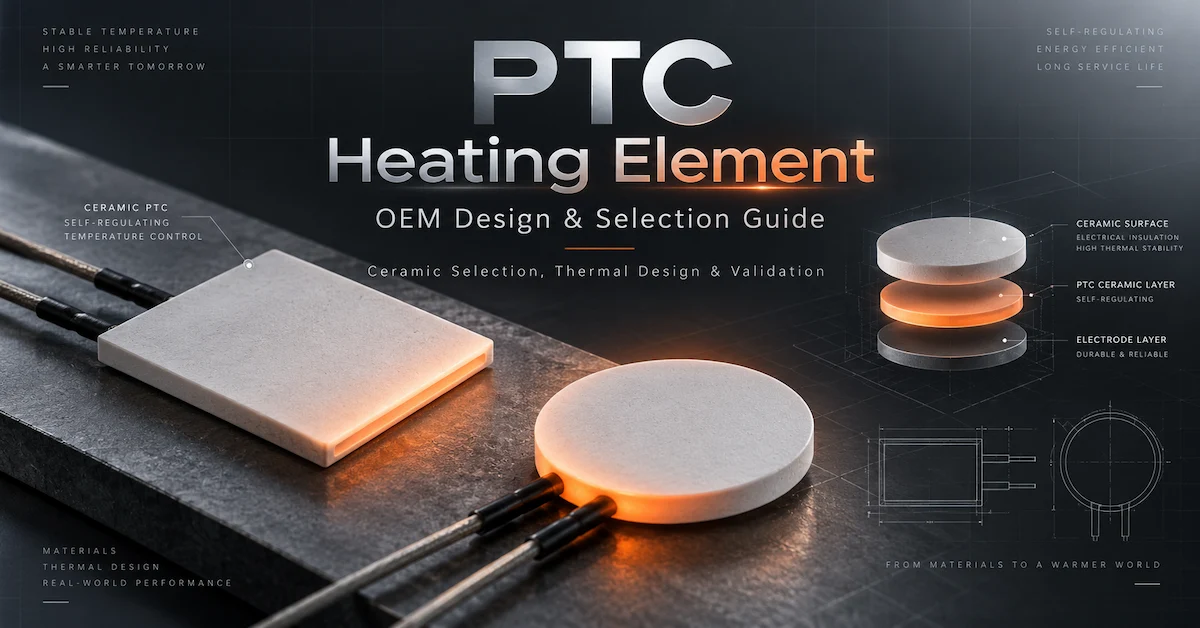
PTC Heating Element for OEM Equipment: Ceramic Selection, Thermal Design, and Validation Guide

PTC Heating Element for OEM Equipment: Ceramic Selection, Thermal Design, and Validation Guide

Selecting the right PTC Heating Element requires more than matching a voltage or Curie temperature: ceramic geometry, electrical behavior, thermal contact, and operating conditions determine the result inside an OEM product. This engineering-focused guide explains how to choose PTC ceramic elements for appliance, HVAC, and industrial designs, evaluate Tianrui product options, validate prototypes, and prepare an actionable custom-heating RFQ.

Read More
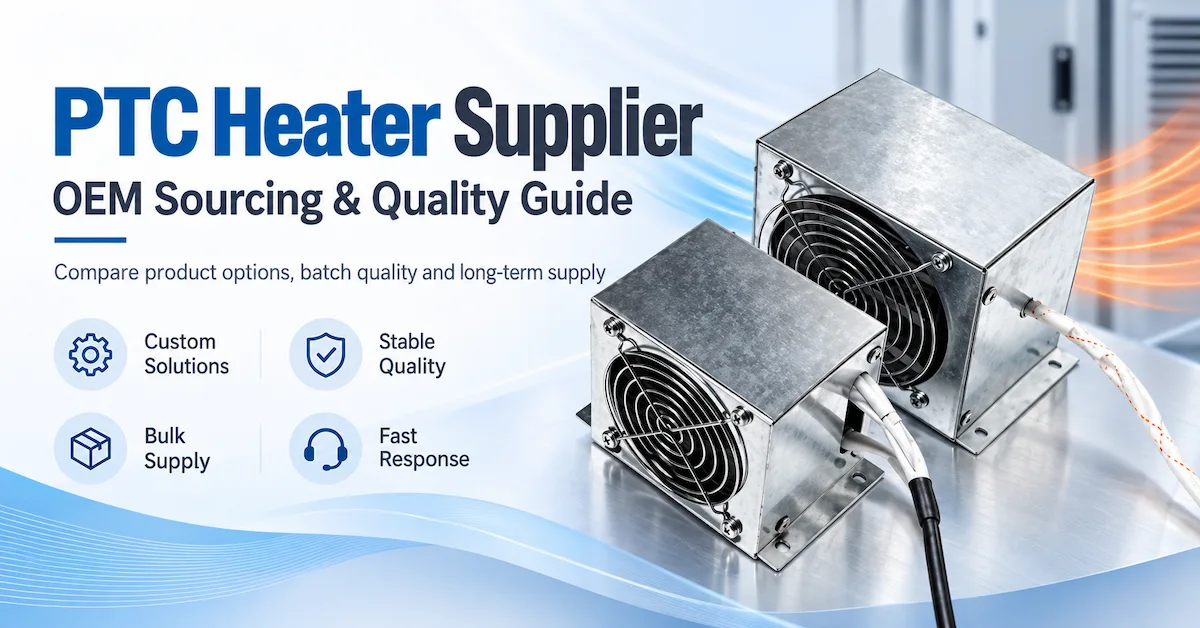
PTC Heater Supplier for OEM Production: How to Compare Quotations, Batch Quality, and Long-Term Supply

PTC Heater Supplier for OEM Production: How to Compare Quotations, Batch Quality, and Long-Term Supply

Choosing the right PTC Heater Supplier is essential for OEM manufacturers that need consistent heating performance, competitive procurement costs, and dependable repeat deliveries. This comprehensive sourcing guide explains how to compare PTC heater suppliers, evaluate product configurations, negotiate quotations, verify batch quality, manage supply risks, and establish reliable OEM/ODM purchasing relationships for household appliances, HVAC systems, industrial equipment, and electric vehicle applications.

Read More
PTC Heater Manufacturer for OEM Equipment: Engineering Validation, Quality Control, and Sourcing Guide

PTC Heater Manufacturer for OEM Equipment: Engineering Validation, Quality Control, and Sourcing Guide

Choosing a reliable PTC Heater Manufacturer requires more than comparing heating power, unit price, and catalog specifications. This comprehensive OEM sourcing guide explains how to evaluate PTC heater designs, calculate application requirements, validate thermal performance, assess manufacturing quality, and prepare technical RFQs for household appliances, industrial equipment, HVAC systems, and electric vehicle applications.

Read More
PTC Heating Element Manufacturer: OEM Guide for Custom Heating Solutions

PTC Heating Element Manufacturer: OEM Guide for Custom Heating Solutions

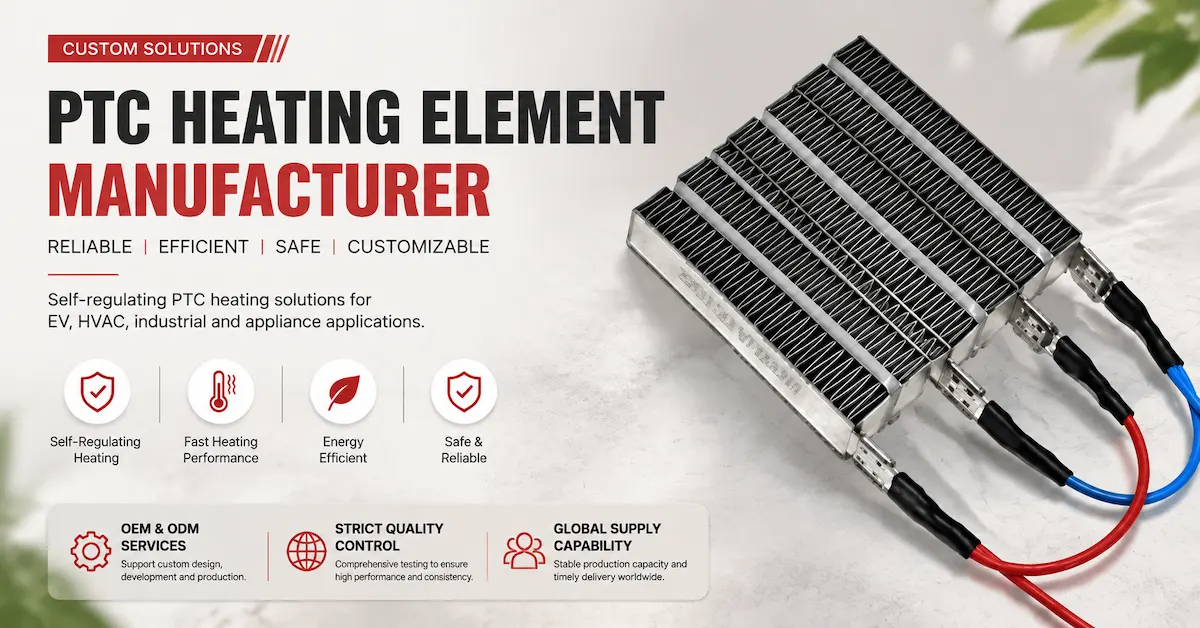
Choosing the right PTC Heating Element Manufacturer is essential for stable heating performance, safety and long-term supply reliability. This guide explains PTC heating element structures, applications, customization options, manufacturing processes and key factors OEM buyers should evaluate before selecting a supplier.

Read More
How Does PTC Heating Technology Work in HVAC and EV Systems?

How Does PTC Heating Technology Work in HVAC and EV Systems?

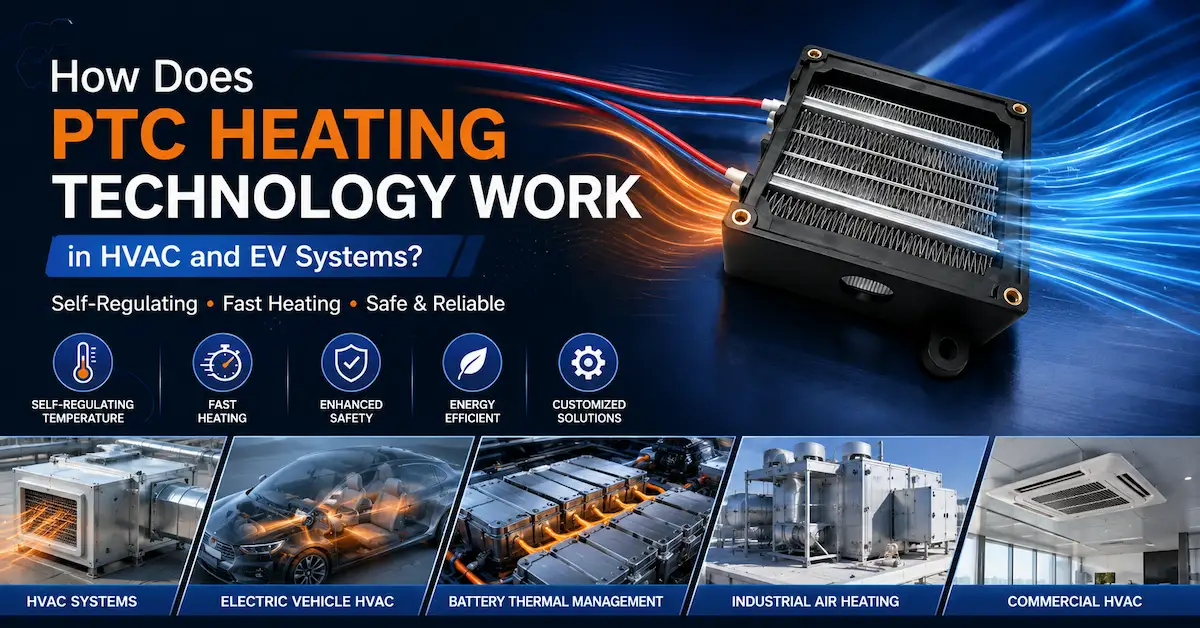
PTC Heating Technology provides self-regulating electric heating for HVAC, electric vehicles, industrial equipment and thermal management systems. This guide explains the ceramic heating principle, key advantages, heater types, application differences and selection factors that OEM engineers and buyers should evaluate before choosing a PTC heating solution.

Read More
PTC Heater for HVAC System: Working Principle, Applications and Selection Guide

PTC Heater for HVAC System: Working Principle, Applications and Selection Guide

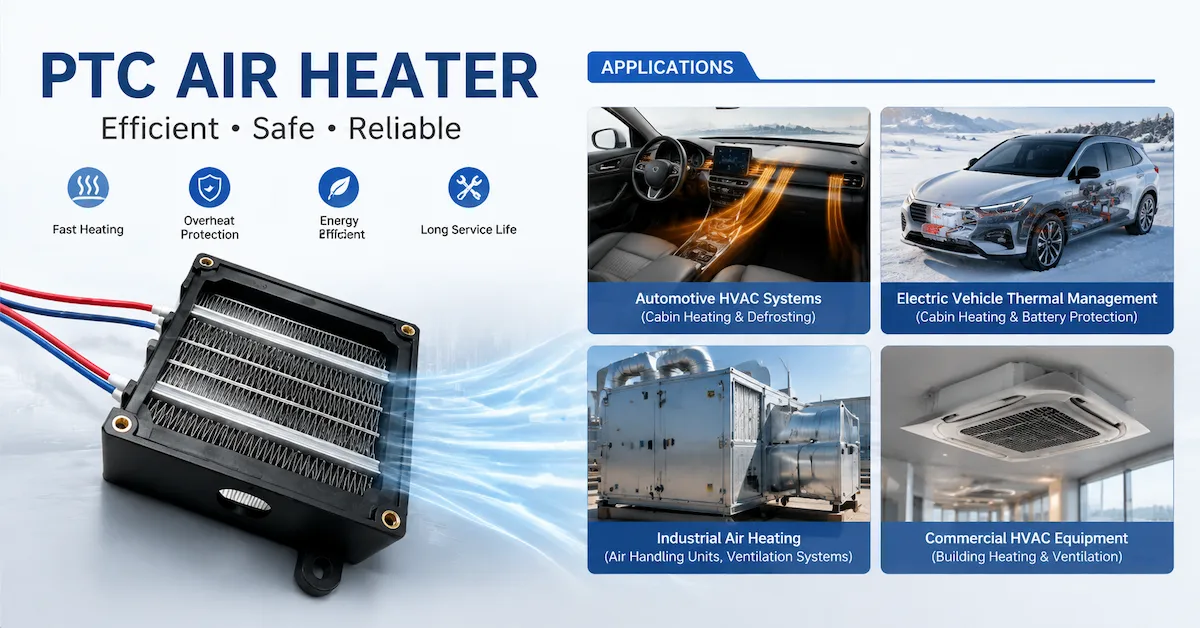
PTC heaters for HVAC systems provide efficient and reliable heating solutions for automotive, industrial and commercial applications. This guide explains how PTC heaters work, their advantages, applications and how to select a suitable supplier for customized HVAC heating requirements.

Read More
PTC Heater for Electric Vehicle: How to Choose the Right EV Heating Solution

PTC Heater for Electric Vehicle: How to Choose the Right EV Heating Solution

PTC heaters for electric vehicles provide efficient cabin heating and battery thermal management solutions in cold environments. This guide explains how EV manufacturers can select suitable PTC heaters based on heating performance, safety, energy efficiency, customization and supplier capability.

Read More
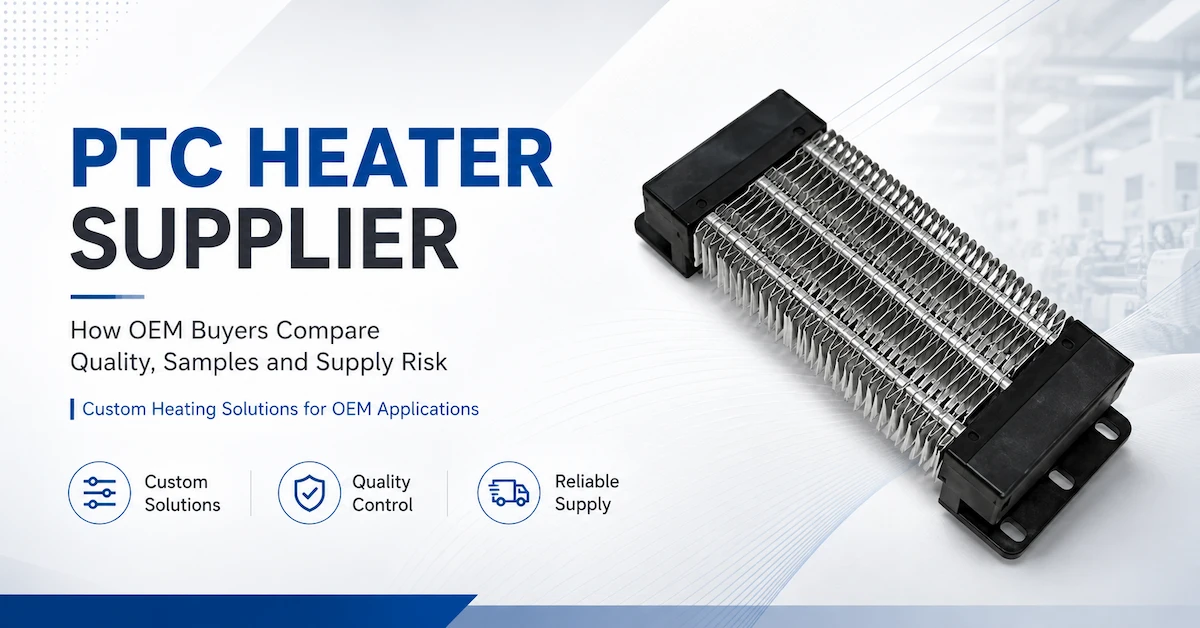
PTC Heater Supplier Guide: How OEM Buyers Compare Quality, Samples and Supply Risk

PTC Heater Supplier Guide: How OEM Buyers Compare Quality, Samples and Supply Risk

Choosing a PTC Heater Supplier involves more than comparing wattage and unit price. This guide helps OEM buyers evaluate technical support, customization, sample testing, quality control, quotations, lead time and long-term supply reliability before approving a heating partner.

Read More