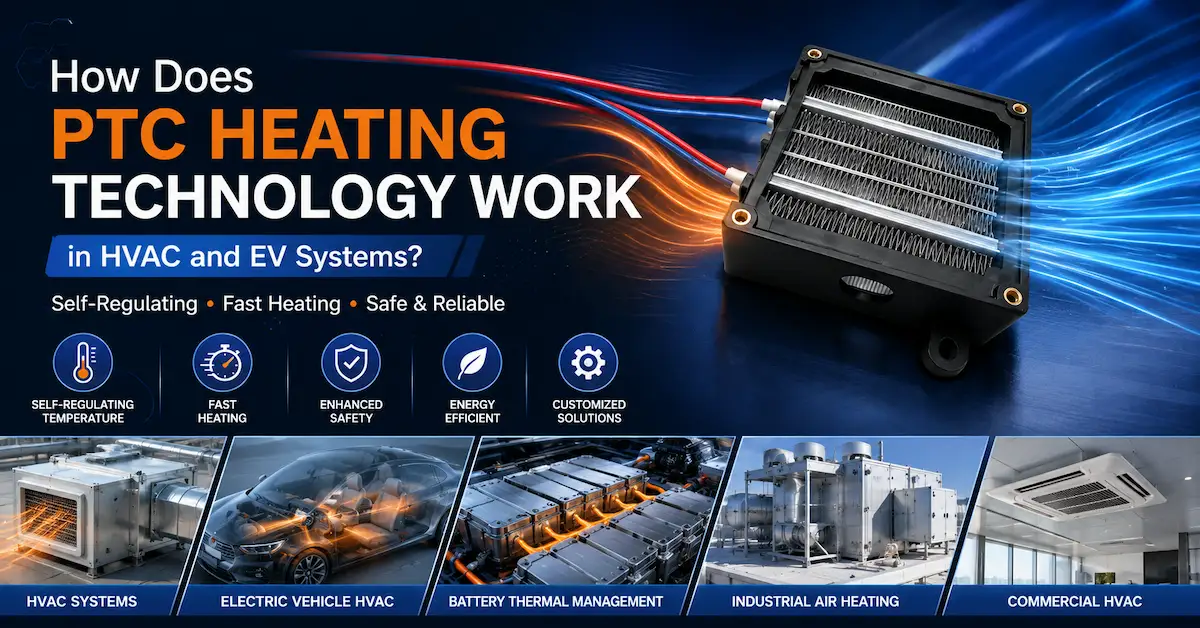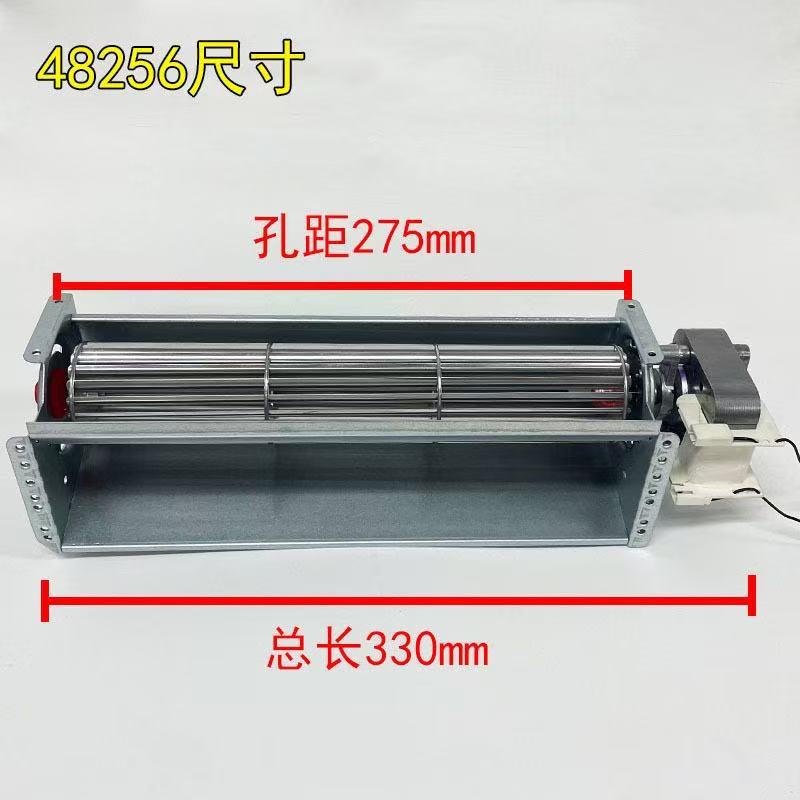

In applications requiring rapid, stable, and safe air heating, such as fresh air systems, air curtains, drying equipment, or duct heating, selecting the right heating component is crucial. Heater modules combining PTC ceramic heating technology with high-efficiency cross-flow fans are becoming a popular choice in modern HVAC and industrial applications. Today, we'll analyze this high-performance 1200W/1800W 220V cross-flow fan PTC heater in detail.

What is PTC Heating Technology?
PTC (Positive Temperature Coefficient) is a special ceramic material with a positive temperature coefficient. Its core characteristics are self-temperature control and self-protection. When the temperature is low, the PTC element has low resistance and generates a large amount of heat; when the temperature rises to its Curie point (design temperature), the resistance increases sharply, and the power automatically decreases, thus stabilizing the temperature within a safe range. This fundamentally avoids the fire risk caused by overheating of traditional electric heating wires, achieving flameless, safe, and reliable operation.
Why use a cross-flow fan?
A cross-flow fan, also known as a cross-flow heater, is characterized by airflow passing radially along the impeller, producing a flat, uniform, and stable wide airflow with moderate air pressure and relatively low noise. Combined with a PTC heating element, the air propelled by the fan can evenly and fully exchange heat with the PTC heating surface, instantly converting cold air into warm air output. This results in extremely high thermal efficiency and avoids localized heat accumulation inside the heater.
Core Product Advantages:
Instant Heating, High Efficiency and Energy Saving: After power-on, the PTC element reaches operating temperature within seconds, and the cross-flow fan simultaneously and rapidly carries the heat out, achieving rapid heating. Power can be selected according to needs (1200W or 1800W) to adapt to different spaces and airflow requirements.
Built-in Safety Protection: The self-limiting temperature characteristic of PTC is a natural safety barrier. Even if the fan unexpectedly stops, the heater will not heat up indefinitely, greatly improving the overall safety of the system.
Compact Structure and Easy Integration: This module is typically designed as an integrated unit, with a compact structure and easy installation, making it ideal for embedding into air ducts, chassis, or equipment as a core heating component.
Quiet Operation and Long Lifespan: PTC elements have no oxidation loss, resulting in a lifespan far exceeding that of traditional heating wires. Combined with a smoothly operating cross-flow fan, the entire system operates with low noise and is durable and reliable.
High Compatibility: Designed for standard 220V voltage, widely applicable to commercial and industrial environments.
Typical Applications:
Fresh Air Systems and Heat Recovery Units: Rapidly preheat incoming cold fresh air.
Industrial Ovens and Drying Equipment: Provide uniform hot air circulation.
Commercial Air Curtains/Air Curtains: Create a warm airflow barrier at doorways, preventing cold air intrusion.
Air Conditioning Auxiliary Heating Modules: Enhance the heating capacity of air conditioners in winter.
Various Customized Heating Equipment.
Selection Guide: When choosing the power (1200W or 1800W), consider your duct size, target temperature rise, and airflow. For larger ducts or applications requiring higher outlet air temperatures, the 1800W model is recommended; for smaller equipment or gentler heating needs, the 1200W model may be more energy-efficient.
Summary: The 1200W/1800W 220V cross-flow fan PTC heater represents a smart, safe, and efficient air heating solution. It perfectly combines self-regulating heating with efficient airflow, providing engineers and equipment manufacturers with a reliable, easy-to-use, standardized heat source component. If you are looking for the ideal heating solution for your next project, this PTC heater module is undoubtedly an excellent choice worth considering.