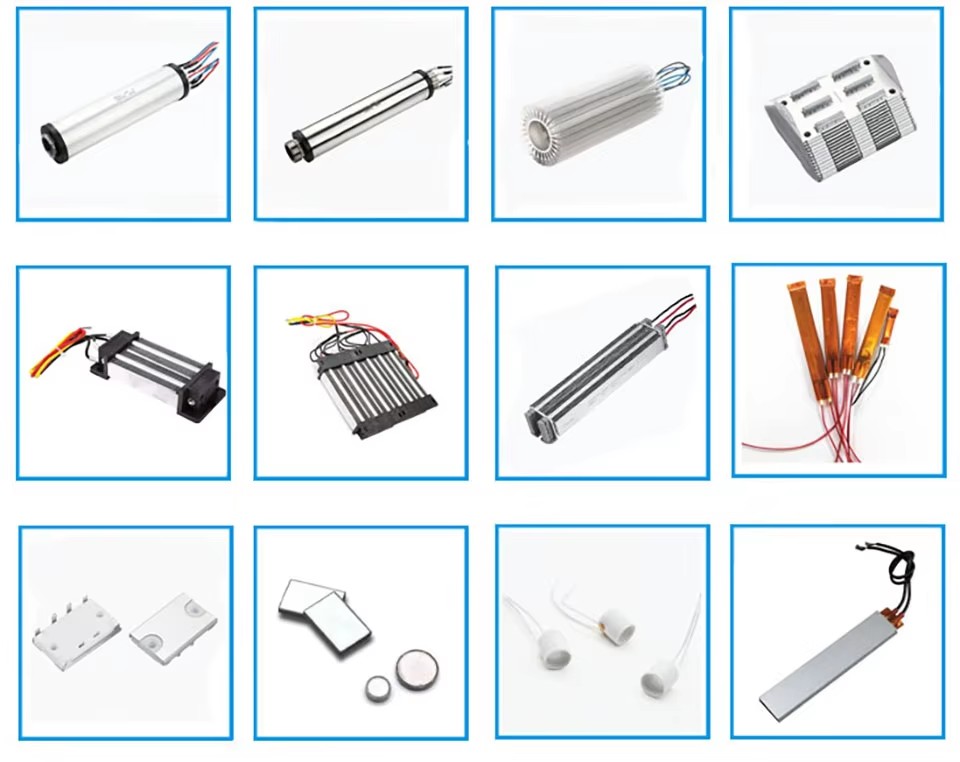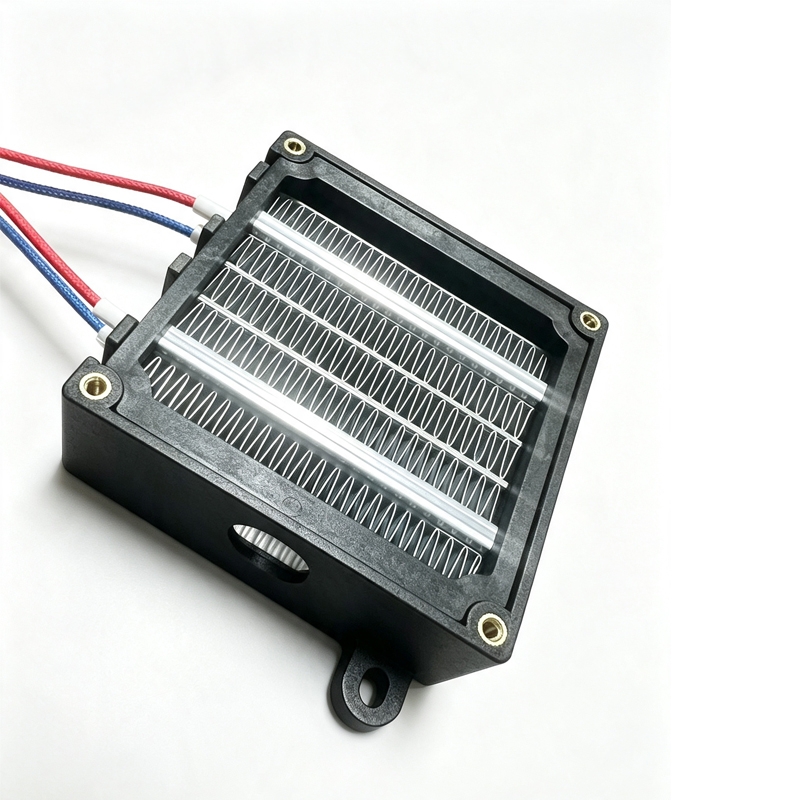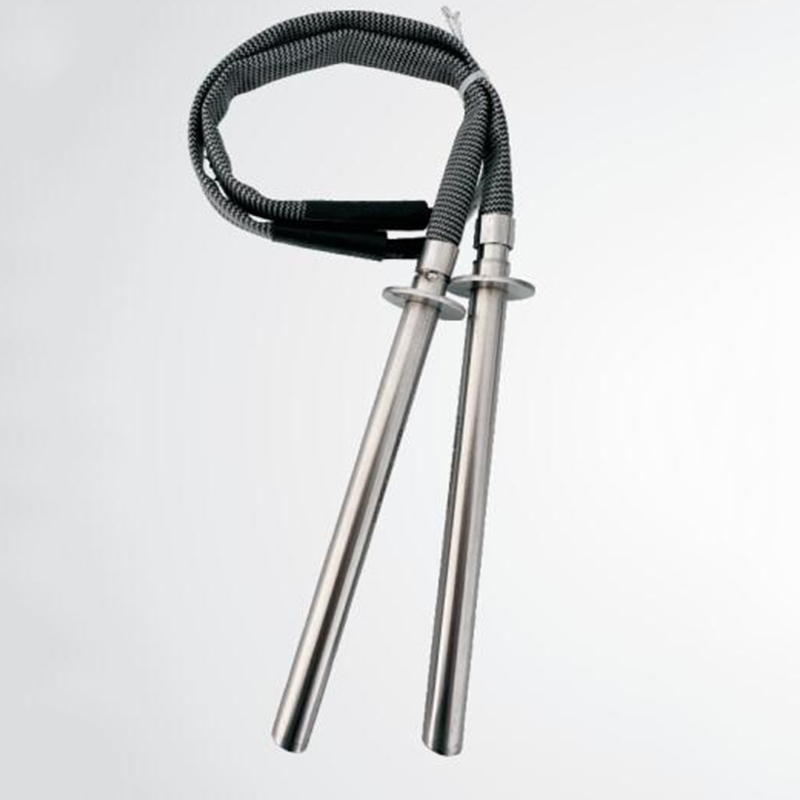

Description
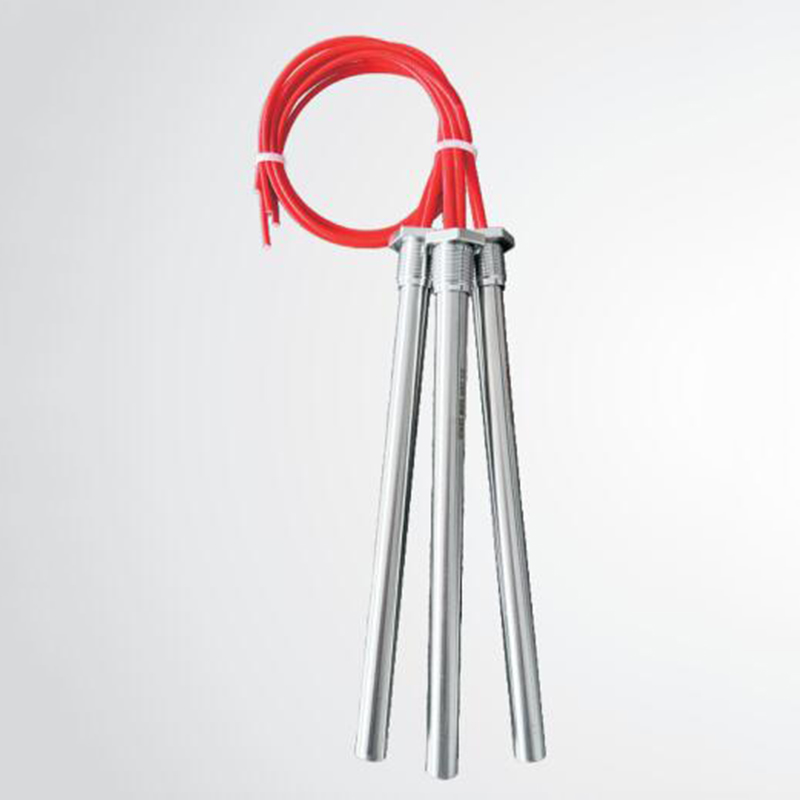
PTC heaters consist of PTC ceramic heating elements and aluminum tubes. This type of PTC heater has the advantages of low thermal resistance and high heat exchange efficiency, making it an automatic temperature-controlled and energy-saving electric heater. A key feature is its safety performance: when the fan fails and stops, the PTC heater, unable to dissipate heat sufficiently, will automatically and rapidly reduce its power. At this time, the surface temperature of the heater will remain around the Curie temperature (generally around 250℃), thus preventing the surface from "reddening" as seen in electric heating tube heaters.
Specification
| Product Name | PTC Air Heater |
| Model | 345x50 |
| Voltage | 220V |
| Power | 1500W 2000W or Customized |
| Size | Hole spacing: 345mm; Hole width: 40mm; Total length: 363mm; Total width: 52mm; Aluminum length: 282mm; Aluminum width: 43mm |


Features
1. Intelligent Self-Controlling Temperature Technology
Adopts advanced PTC ceramic heating elements with a positive temperature coefficient
Automatic temperature regulation: Rapidly heats up at low temperatures and automatically maintains a constant temperature once the set temperature is reached
Built-in overtemperature protection prevents overheating without the need for an external thermostat
2. Corrugated Heat Dissipation Design
Unique corrugated aluminum alloy fins increase heat dissipation area by over 40%
Optimized air flow reduces wind resistance and improves heat exchange efficiency
Evenly distributes heat, preventing localized overheating and extending service life
3. Multiple Insulation Protection System
Utilizes high-performance ceramic insulation material to achieve complete electrical isolation between the heating element and the housing
Dielectric strength exceeds 1500V, meeting international safety standards
Moisture-resistant and corrosion-resistant design allows for stable operation in environments with humidity up to 95%
4. Highly Efficient Energy Savings
Heat conversion efficiency exceeds 98%, far exceeding that of traditional resistive heaters
Automatic power regulation intelligently adjusts energy consumption based on ambient temperature
Zero standby power consumption and no maintenance current required, resulting in significant energy savings
5. Rugged and durable construction
All-metal housing for shock and vibration resistance
High-temperature resistant design, stable operation in environments ranging from -40°C to 200°C
Oxidation- and corrosion-resistant materials, with a service life exceeding 10,000 hours

Application
It is mainly used in air conditioners, hot air curtains, dehumidifiers, dryers, clothes dryers, heaters, automobiles and other equipment that require warm air.
Points for Attention
(1) PTC heating elements have automatic temperature control, eliminating the need for a temperature control system; simply power on the PTC heating element directly.
(2) When used to heat liquids (such as water), the PTC heating element will not be damaged even if the liquid boils dry.
(3) If used to heat cold air, the PTC heating element will not be damaged when no air is being supplied.
(4) Long service life: Under normal conditions, its lifespan can reach over 10 years.
(5) Reliable operation: Utilizing the internal characteristics of the PTC heating element for temperature control, it will never overheat.
(6) Very wide operating voltage range: When the operating voltage changes by a factor of 2, the surface temperature change is minimal.
(7) When using multiple PTC heating elements together, they should be connected in parallel, not in series.
(8) Different heat dissipation conditions result in significant differences in the heating power of the PTC heating element.
(9) The heating power decreases after power-on and eventually stabilizes. The stable power is related to the operating conditions; the power of the same PTC heater may differ by several times depending on the operating conditions. The faster the heat dissipation, the greater the stable power; the higher the surface temperature of the PTC, the higher the power.
(10) The surface temperature of the PTC heating element is controlled by the PTC itself, and can also be controlled by disconnecting the circuit, but cannot be controlled by adjusting the voltage.
(11) PTCs themselves have high reliability and long lifespan, but if improperly assembled, the product may experience unstable power and temperature.
(12) When multiple PTCs are used together, they should be connected in parallel, not in series.